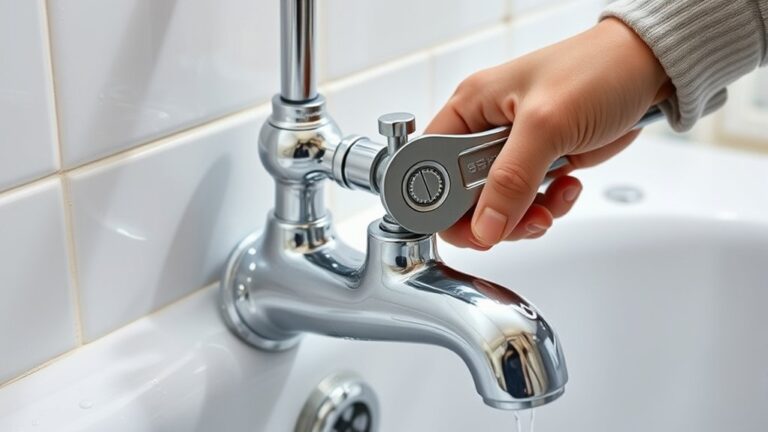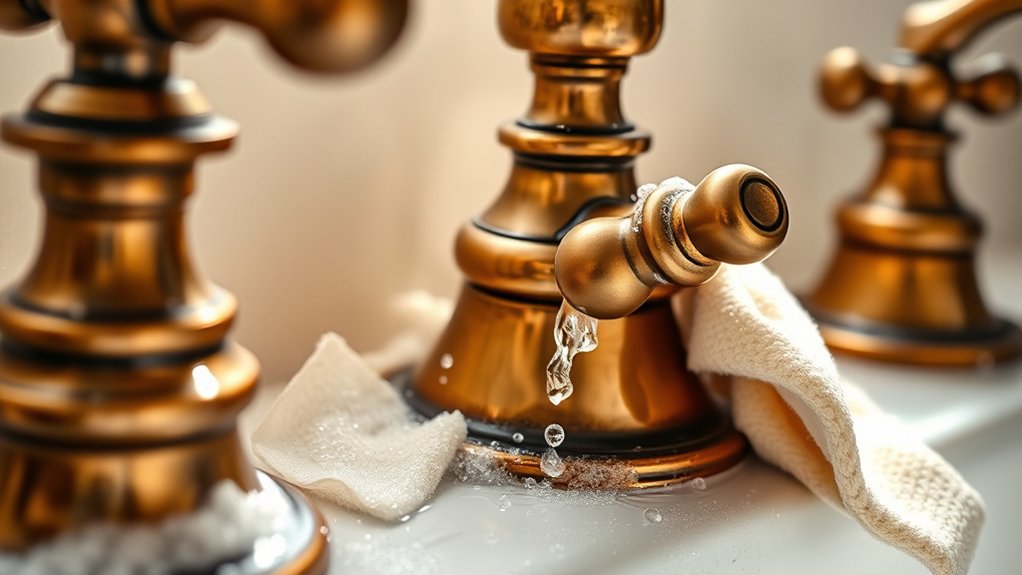
How to Clean Bronze Faucets
You should clean your bronze faucets gently to protect their unique patina and avoid damage.
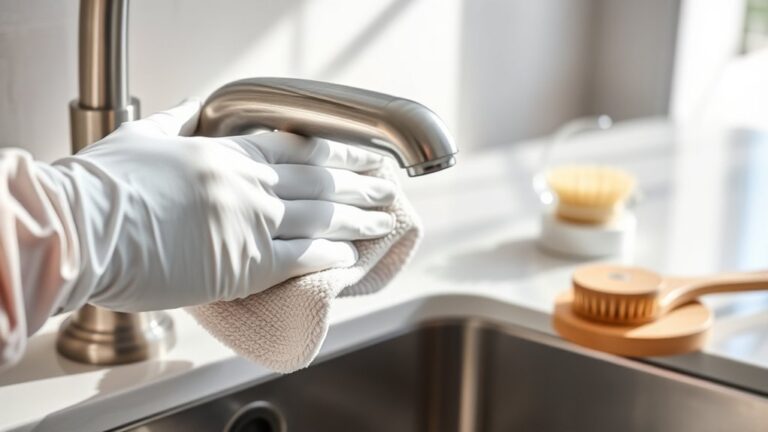
Start by wiping with a soft cloth dampened in a mild soap and warm water solution, then rinse and dry thoroughly with a microfiber cloth.
Avoid abrasive pads or harsh chemicals like ammonia or bleach.
For polishing, use a non-abrasive cleaner with light circular motions. Following these careful steps preserves both the finish and durability.
Uncover more techniques to keep your bronze faucets looking their best.
Why You Need to Clean Bronze Faucets Differently
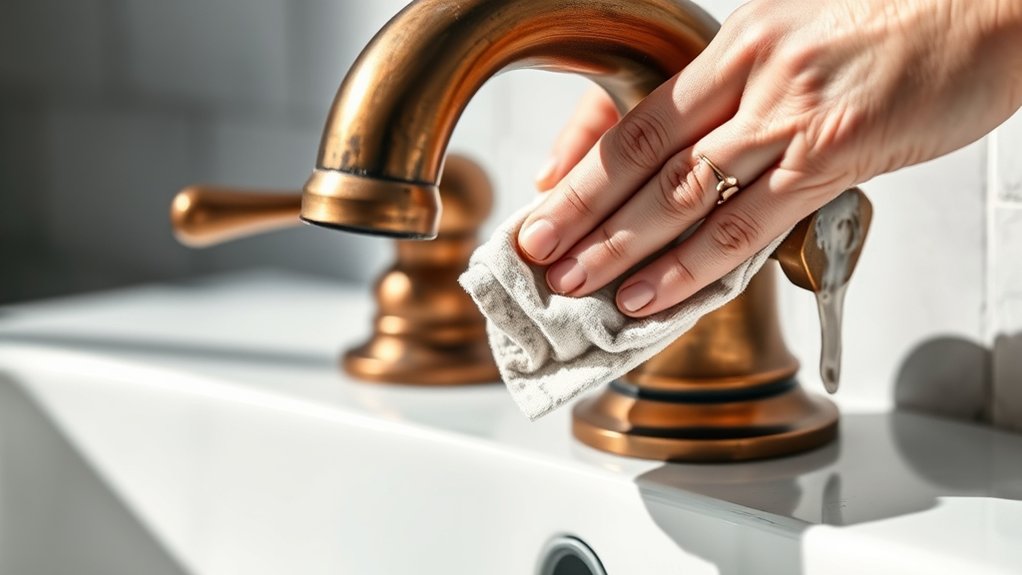
Because bronze reacts differently to cleaning agents than other metals, you need to use specific methods to preserve its finish and prevent damage. When cleaning bronze faucets, your goal is patina preservation, as this natural layer protects the metal and adds aesthetic value.
Harsh chemicals can strip this patina, exposing the metal underneath and accelerating wear. You should avoid abrasive cleaners that can scratch the surface and disrupt the patina’s integrity.
Instead, focus on gentle cleaning techniques that maintain the protective layer while ensuring corrosion prevention. Proper cleaning routines reduce moisture and contaminants, which cause oxidation and tarnishing.
What Supplies Work Best for Cleaning Bronze Faucets
You’ll want to choose gentle cleaning agents that won’t damage the bronze’s protective patina. Use a soft cloth, like microfiber or cotton, to avoid scratching the surface. These supplies help maintain the faucet’s finish while effectively removing dirt and grime.
Gentle Cleaning Agents
When cleaning bronze faucets, selecting gentle cleaning agents is essential to preserve their finish and prevent damage. You should opt for natural alternatives like diluted white vinegar or a mild dish soap mixed with warm water.
These eco friendly solutions effectively remove grime without harsh chemicals that can strip the protective coating. Avoid abrasive cleaners or anything with ammonia or bleach, as they can corrode the bronze surface.
To prepare your cleaning agent, mix one part vinegar with three parts water or a few drops of dish soap in a spray bottle. Apply sparingly and rinse thoroughly with clean water afterward.
This method maintains the faucet’s patina while ensuring it stays spotless. Using gentle agents keeps your bronze faucet both beautiful and durable over time.
Soft Cloth Selection
Selecting the right cloth plays a significant role in protecting the bronze faucet’s finish after applying gentle cleaning agents. You should opt for soft, non-abrasive materials to avoid scratching or dulling the surface.
Microfiber cloths are ideal because they trap dirt and moisture effectively without causing damage. Their fine fibers allow you to clean thoroughly while preserving the faucet’s patina. Alternatively, clean cotton rags work well if they’re lint-free and soft.
Avoid rough fabrics or towels with harsh textures that can mar the finish. When using either microfiber cloths or cotton rags, make sure they’re clean and free of debris that might scratch the bronze.
How to Clean and Polish Bronze Faucets Safely
You’ll want to start by using gentle cleaning methods, like a soft cloth and mild soap, to avoid damaging the bronze surface. When polishing, choose a safe, non-abrasive polish specifically designed for bronze to restore its shine without scratching.
Always work in small sections, applying polish carefully and buffing with a clean, dry cloth for the best results.
Gentle Cleaning Methods
Although bronze faucets are durable, their delicate patina requires careful attention to maintain its natural beauty. To preserve the patina, clean your faucet gently and regularly. Start by rinsing with warm water to remove loose dirt.
Use a soft cloth or sponge dipped in a mild soap solution. Avoid harsh chemicals or abrasive materials that strip the finish. Gently wipe the surface, focusing on areas with buildup, then rinse thoroughly.
Dry the faucet completely with a microfiber cloth to prevent water spots. Maintain a consistent cleaning frequency, ideally once every one to two weeks, to prevent grime accumulation without damaging the patina.
Safe Polishing Techniques
Maintaining the patina on your bronze faucet goes beyond gentle cleaning and includes careful polishing to restore its shine without causing damage. Start by selecting an eco friendly cleaner specifically designed for bronze; avoid harsh chemicals that strip the patina.
Apply a small amount of polish with a soft, lint-free cloth, working in gentle circular motions. Use minimal pressure to prevent abrasion and preserve the natural aging that adds character.
After polishing, wipe off any residue with a clean, damp cloth and dry thoroughly. Polish only when necessary, as over-polishing can erode the protective layer.
How to Protect and Maintain the Patina on Bronze Faucets
Since the natural patina on bronze faucets adds character and protects the metal, you should take deliberate steps to preserve it. Begin by cleaning the faucet gently with a soft cloth dampened in mild soap and water, avoiding harsh chemicals that can strip the patina.
For patina preservation, apply a thin layer of eco friendly wax or a specialized bronze sealant every few months. This creates a protective barrier against moisture and contaminants. Always dry the faucet thoroughly after cleaning to prevent water spots or corrosion.
Avoid abrasive pads or acidic cleaners, which damage the patina. By following these careful, eco friendly options, you maintain the faucet’s unique finish and extend its lifespan, ensuring it remains both beautiful and resilient with minimal effort.
How to Troubleshoot Common Bronze Faucet Issues
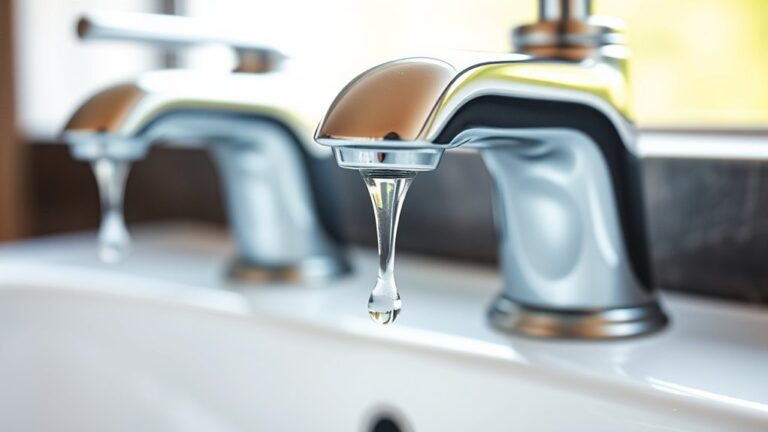
Why does your bronze faucet sometimes drip, corrode, or lose its finish? These common issues often arise from a leaky faucet or mineral buildup. To troubleshoot, first identify the problem source.
A leaky faucet usually results from worn-out washers or seals, while corrosion or finish loss often stems from harsh cleaners or water quality.
| Issue | Cause |
|---|---|
| Leaky Faucet | Worn washers/seals |
| Corrosion | Harsh cleaners |
| Finish Loss | Water quality/minerals |
| Mineral Buildup | Hard water deposits |
Address leaks by replacing washers promptly. For mineral buildup, use gentle descaling agents to avoid damaging the bronze.
Avoid abrasive materials that could worsen finish loss or corrosion.
Tips to Keep Your Bronze Faucets Looking Their Best
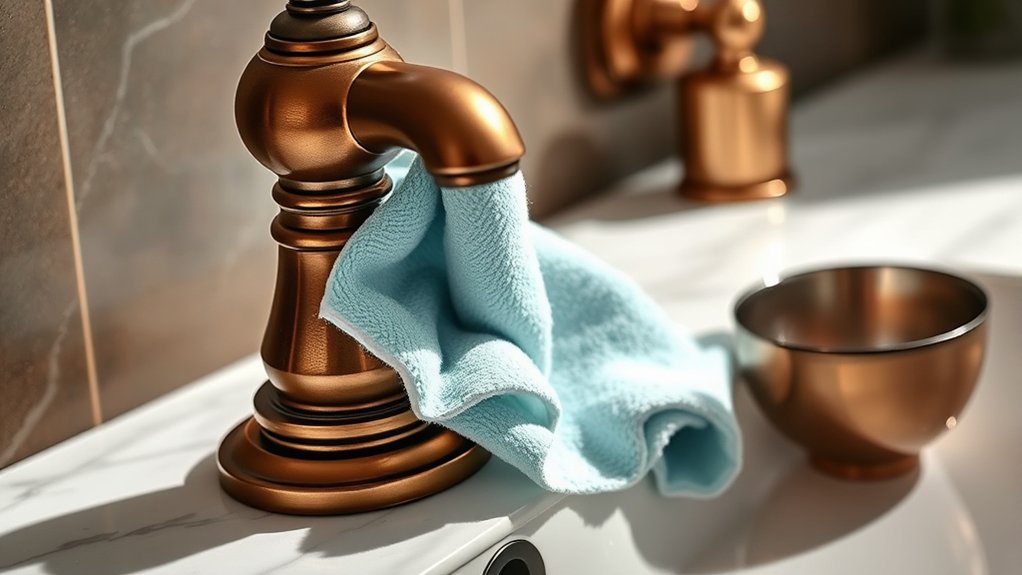
To keep your bronze faucets looking their best, you need to clean them regularly with the right products and techniques. Start by using a soft cloth and mild soap to avoid damaging the finish. Avoid harsh chemicals that can strip the patina preservation layer, which protects the bronze and enhances its character.
Establish a maintenance frequency based on your faucet’s exposure to water and usage. Typically once a week or biweekly works well. After cleaning, dry the faucet thoroughly to prevent water spots.
Apply a thin layer of wax or a specialized bronze sealant every few months to maintain its protective coating. By following these steps consistently, you’ll preserve both the appearance and durability of your bronze faucets, keeping them elegant and functional for years to come.
Frequently Asked Questions
Can Bronze Faucets Be Cleaned With Vinegar?
You shouldn’t use vinegar for cleaning bronze faucets because its acidity can damage the finish. Instead, focus on gentle cleaning techniques like mild soap and water to maintain the patina and avoid compromising the faucet’s surface.
How Often Should I Replace Bronze Faucet Parts?
You should replace bronze faucet parts every 5-7 years or sooner if you notice leaks or corrosion.
Follow faucet maintenance tips and bronze care techniques to extend lifespan and maintain peak function effectively.
Are Bronze Faucets Environmentally Friendly?
Imagine you’re choosing fixtures for a green home; bronze faucets offer sustainability benefits by using eco friendly materials with high durability. This reduces waste and resource use, making them a smart, environmentally conscious choice for your plumbing.
Can I Use a Dishwasher to Clean Bronze Faucet Parts?
You shouldn’t use a dishwasher to clean bronze faucet parts because dishwasher safety doesn’t apply to delicate faucet materials. The harsh detergents and high heat can damage the bronze’s finish, causing discoloration and corrosion over time.
Do Bronze Faucets Require Special Installation Tools?
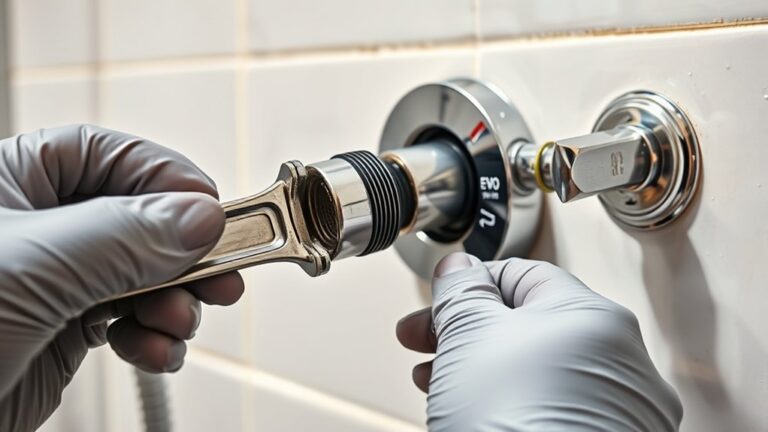
Think of the installation process like assembling a delicate puzzle. You don’t need special tools, but precise wrenches and plumber’s tape are essential.
Carefully follow instructions to guarantee secure fitting and avoid damaging your bronze faucet’s finish.