How to Clean Brushed Nickel Faucets
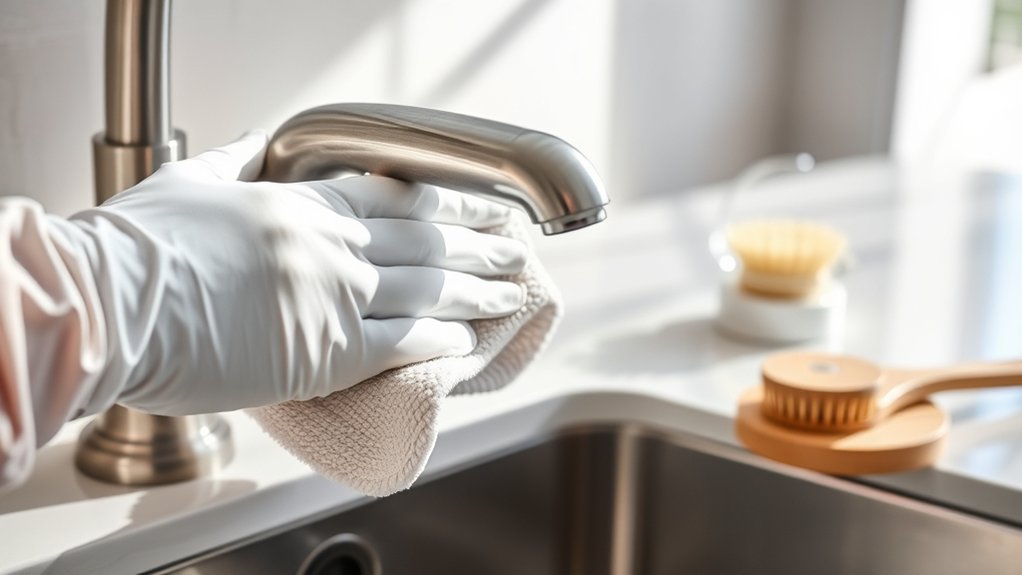
To clean your brushed nickel faucet, start by rinsing it with warm water to remove loose dirt.
Using a mild soap mixed with water and a soft cloth, gently wipe the surface. Avoid abrasive pads or harsh chemicals that can damage the finish.
For mineral deposits, apply a diluted vinegar solution carefully.
Then rinse thoroughly and dry with a microfiber cloth to prevent spots.
Keep this routine for lasting shine, and you can explore more tips to maintain its elegance.
What Cleaning Products Are Safe for Brushed Nickel Faucets
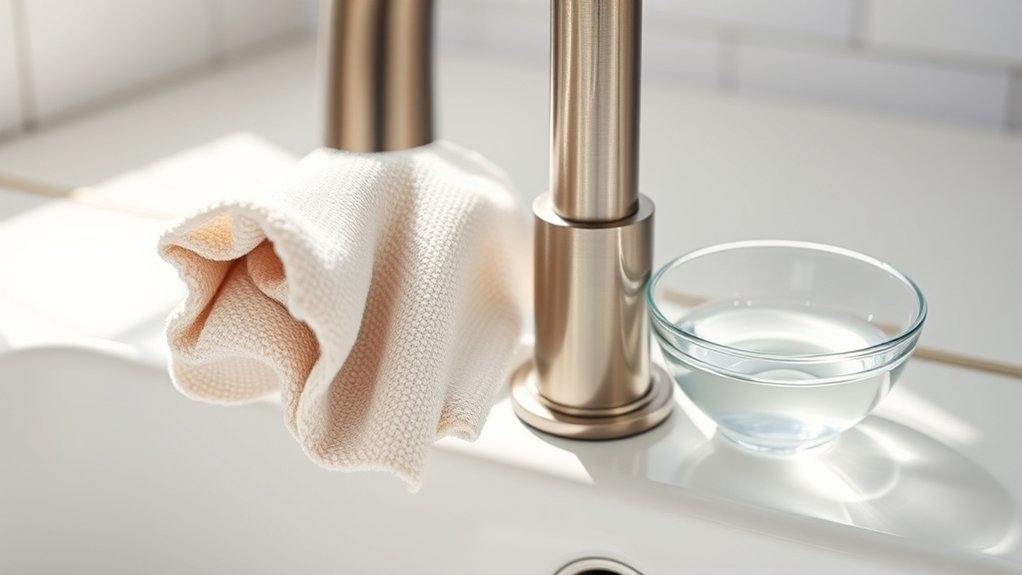
When cleaning brushed nickel faucets, you’ll want to choose products that won’t damage their protective finish. Avoid harsh chemicals, abrasive pads, and acidic cleaners, as they can strip or dull the surface.
Instead, use a mild soap mixture. Combine a few drops of gentle dish soap with warm water to effectively remove everyday dirt and grime without causing harm.
Use a mild soap and warm water to gently clean dirt and grime without damaging your faucet.
For mineral deposits or water spots, a diluted vinegar solution works well. Mix equal parts white vinegar and water to gently dissolve buildup.
Always test any solution on a small, inconspicuous area first to ascertain compatibility. After applying, rinse thoroughly with clean water and dry with a soft cloth to prevent water spots and preserve the brushed nickel’s appearance.
Stick to these safe products to maintain your faucet’s durability and shine.
Step-by-Step Cleaning Guide for Brushed Nickel Faucets
Follow these five essential steps to clean your brushed nickel faucet effectively. Regular faucet maintenance improves longevity and appearance.
Adjust your cleaning frequency based on usage; generally, weekly light cleaning prevents dirt buildup.
| Step | Action | Tip |
|---|---|---|
| 1 | Rinse with warm water | Removes loose debris |
| 2 | Apply mild soap solution | Use a soft cloth or sponge |
| 3 | Gently scrub surface | Avoid abrasive pads |
| 4 | Rinse thoroughly | Prevent soap residue |
| 5 | Dry with microfiber cloth | Avoid water spots |
Stick to this routine for effective cleaning and consistent faucet maintenance without damaging the finish.
Removing Tough Spots From Brushed Nickel Faucets
You’ll often find tough spots like mineral deposits and soap scum on brushed nickel faucets. To remove these, use a gentle, non-abrasive cleaner like a vinegar solution or a mild dish soap mix.
Target these areas carefully to avoid damaging the finish while restoring the faucet’s appearance.
Identifying Common Stubborn Spots
Three common stubborn spots you’ll encounter on brushed nickel faucets are mineral deposits, water spots, and soap scum. Mineral buildup typically appears as white or chalky crusts, especially near the faucet base and aerator.
These deposits result from hard water and require targeted removal to avoid damage. Water spots show up as translucent, circular marks caused by evaporated water droplets leaving behind mineral residues.
Soap scum, a combination of soap and minerals, forms a filmy layer that dulls the finish and resists simple wiping. Understanding these distinctions helps you address each issue effectively without harming the brushed nickel surface.
Recognizing mineral buildup and water spots early lets you maintain your faucet’s appearance and function, preventing long-term corrosion or staining.
Effective Cleaning Solutions
Although brushed nickel is durable, removing tough spots like mineral deposits, water spots, and soap scum requires specific cleaning solutions to avoid damaging the finish. You’ll want to use eco friendly alternatives and homemade solutions that are gentle yet effective. Here are three practical options:
- White vinegar and water: Mix equal parts, apply with a soft cloth, and rinse thoroughly to dissolve mineral buildup.
- Baking soda paste: Combine baking soda with water, gently scrub stubborn spots, then wipe clean to remove soap scum without scratching.
- Mild dish soap solution: Dilute a few drops in warm water for routine cleaning of water spots and light grime.
Avoid harsh chemicals or abrasive tools to preserve the brushed nickel’s protective coating.
Why You Should Clean Brushed Nickel Faucets Differently
Because brushed nickel has a unique matte finish, it requires cleaning methods that preserve its texture and prevent damage. Unlike polished metals, its brushed nickel benefits include resistance to fingerprints and water spots, but harsh cleaners can dull this finish.
Proper faucet maintenance means using gentle, non-abrasive products and soft cloths to maintain appearance and longevity.
| Aspect | Traditional Faucets | Brushed Nickel Faucets |
|---|---|---|
| Finish | Glossy, reflective | Matte, textured |
| Cleaning Agents | Can tolerate stronger chemicals | Requires mild, pH-neutral agents |
| Scrubbing Tools | Abrasive pads acceptable | Soft cloths only |
| Water Spots | More visible | Less noticeable |
| Maintenance Focus | Shine restoration | Texture preservation |
You should clean brushed nickel differently to protect these benefits and guarantee peak faucet maintenance.
Common Cleaning Mistakes That Could Hurt Your Brushed Nickel Faucet
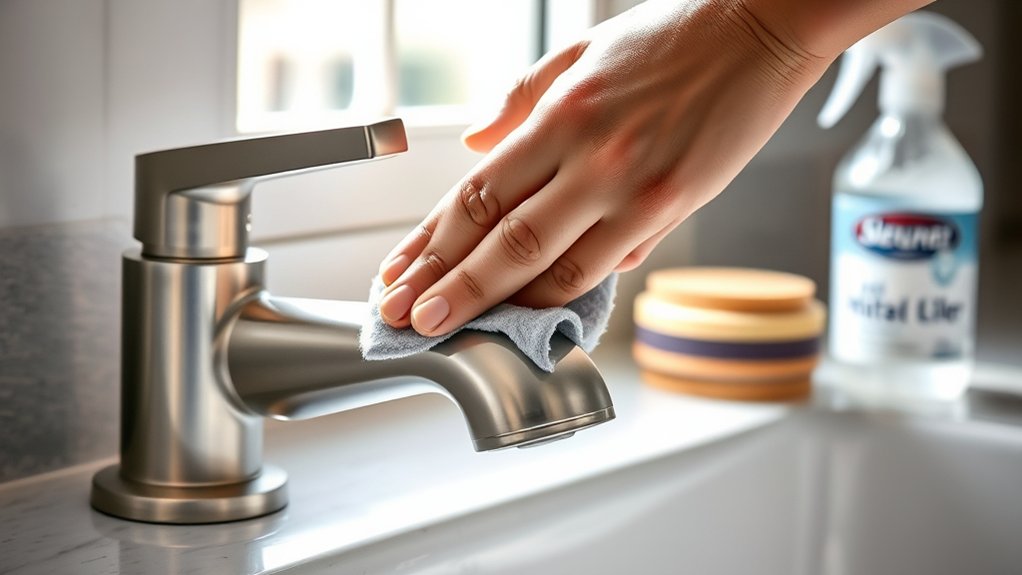
You should avoid abrasive cleaners because they can scratch the brushed nickel surface and damage its finish. Also, skip harsh chemicals like bleach or ammonia, which can cause discoloration or corrosion.
Using the wrong products will shorten your faucet’s lifespan and ruin its appearance.
Avoid Abrasive Cleaners
One key mistake to avoid when cleaning brushed nickel faucets is using abrasive cleaners. These harsh substances can damage the protective finish, leading to dullness and corrosion.
For effective brushed nickel care, follow these maintenance tips:
- Use a soft cloth or non-abrasive sponge to clean the surface gently.
- Opt for mild soap and warm water solutions instead of abrasive powders or scrubbing pads.
- Rinse thoroughly and dry immediately with a microfiber cloth to prevent water spots.
Avoiding abrasive cleaners preserves the faucet’s satin texture and extends its lifespan. Adhering to these brushed nickel care guidelines guarantees your faucet stays in prime condition without compromising the finish.
This practical approach keeps your fixtures looking new while minimizing maintenance efforts.
Skip Harsh Chemicals
Although harsh chemicals may promise quick cleaning results, they can severely damage your brushed nickel faucet’s finish. Avoid using bleach, ammonia, or strong acids, as they strip the protective coating and cause discoloration or corrosion.
Instead, choose eco friendly alternatives that maintain the faucet’s integrity. Natural solutions like diluted vinegar or mild soap mixed with water effectively remove grime without compromising the surface.
Apply these with a soft cloth or sponge, then rinse thoroughly and dry to prevent water spots. By skipping harsh chemicals, you preserve the faucet’s durability and appearance, extending its lifespan.
Prioritize gentle, non-toxic cleaners to protect both your fixture and the environment, ensuring your brushed nickel faucet stays pristine without risking irreversible damage.
Simple Tips to Keep Your Brushed Nickel Faucet Shiny Between Cleanings
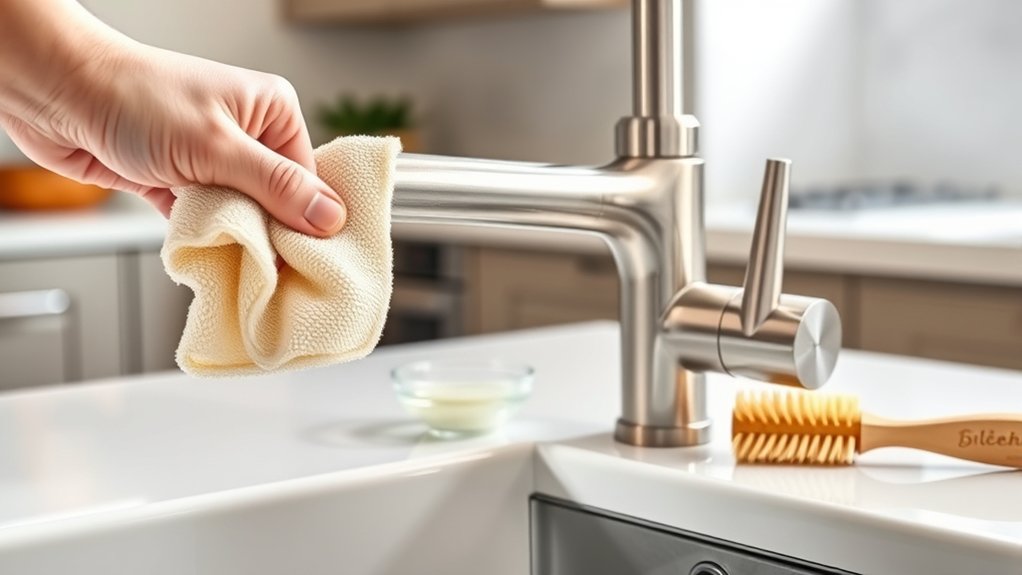
Since brushed nickel finishes resist fingerprints and water spots better than polished metals, maintaining their shine requires consistent, simple care. To keep your faucet looking pristine between deep cleanings, integrate these steps into your maintenance routine:
- Wipe the faucet dry after each use with a soft microfiber cloth to prevent water spots and mineral buildup.
- Use a mild soap solution weekly to gently remove oils and residues, avoiding abrasive cleaners that can dull the finish.
- Apply a thin layer of car wax or a specialized metal protectant monthly to create a barrier against moisture and contaminants.
Following these practices guarantees your brushed nickel faucet retains its matte luster and durability, reducing the frequency of intensive cleanings while preserving its elegant appearance.
Frequently Asked Questions
How Durable Are Brushed Nickel Faucets Compared to Other Finishes?
You’ll find brushed nickel offers excellent durability and brushed nickel longevity, resisting scratches and corrosion better than chrome or polished finishes.
In a finish comparison, it maintains a matte look longer, requiring less frequent maintenance.
Can Hard Water Damage Brushed Nickel Faucets Over Time?
Think hard water effects won’t harm your brushed nickel? Actually, mineral deposits can dull its finish over time.
To prevent damage, you’ll need regular cleaning and maintenance tips like wiping dry and using gentle, non-abrasive cleaners.
Are There Eco-Friendly Alternatives to Clean Brushed Nickel Faucets?
You can use natural cleaning methods like a vinegar solution diluted with water to clean brushed nickel faucets effectively. This eco-friendly approach removes buildup without harsh chemicals, preserving the finish while being safe for your home and the environment.
How Often Should I Replace a Brushed Nickel Faucet?
You should replace a brushed nickel faucet every 10-15 years, depending on faucet lifespan and wear. Follow maintenance tips like regular cleaning and checking for leaks to extend its usability and avoid premature replacement.
Do Brushed Nickel Faucets Show Fingerprints More Than Other Finishes?
Brushed nickel faucets generally show fewer fingerprints due to their matte finish, offering better fingerprint resistance compared to polished or chrome finishes. This finish comparison makes them practical for busy kitchens or bathrooms needing low-maintenance surfaces.