Should I Drip My Faucets Tonight
If temperatures drop near or below 20°F (-6°C) tonight, you should drip your faucets to prevent pipes from freezing and bursting.
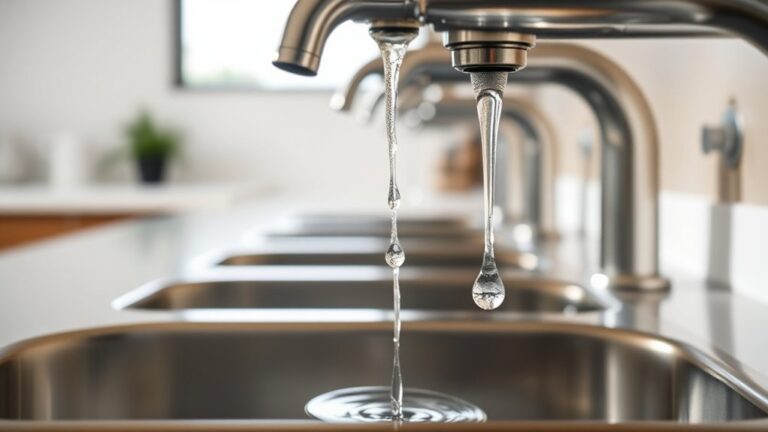
This is especially important for exterior cold-water faucets. Focus on faucets located on exterior walls or those farthest from your main water supply. Aim for about one drip per second to keep water moving.
Avoid dripping faucets that are insulated or heated, as this can save water.
Keep local water restrictions and your plumbing system’s condition in mind before starting.
For more practical tips and alternatives, you can explore effective freeze protection strategies.
Why Dripping Your Faucets Helps Prevent Frozen Pipes
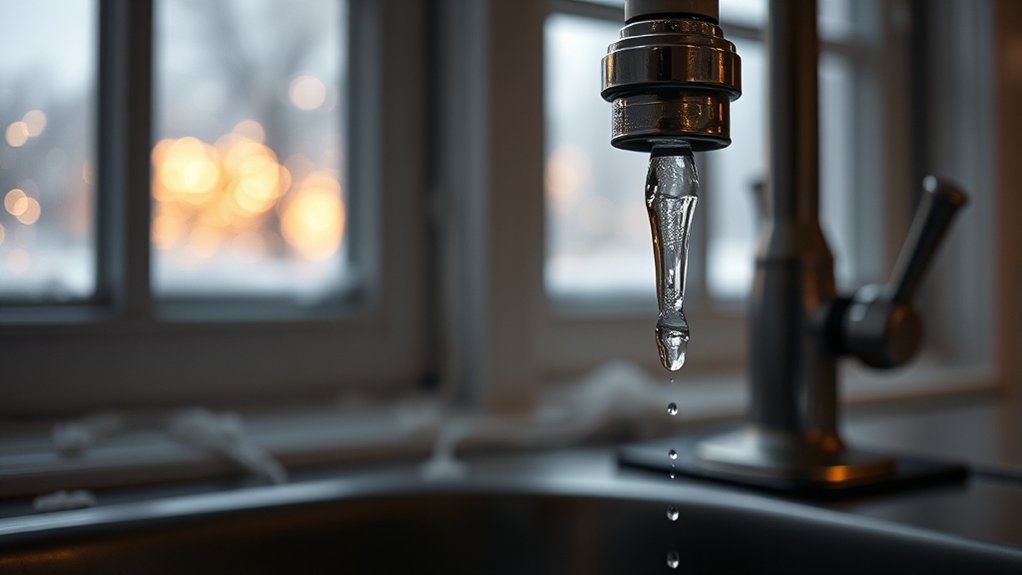
Although it may seem minor, dripping your faucets plays an essential role in preventing frozen pipes. When water keeps moving, it’s less likely to freeze, especially during cold snaps.
Dripping faucets help prevent frozen pipes by keeping water moving during freezing temperatures.
As part of your winter preparation, combining faucet dripping with proper pipe insulation considerably reduces freeze risk. Insulation keeps pipes warmer, while dripping maintains flow, addressing two critical factors.
You should also engage in temperature monitoring to identify when freezing conditions approach, enabling timely action. While dripping uses some water, it’s minimal and far outweighs the cost of burst pipes and water damage.
Practicing water conservation, you can drip faucets strategically, targeting vulnerable areas rather than running all taps continuously. This method balances safety and efficiency, helping you avoid costly repairs during winter.
When Should You Drip Your Faucets to Avoid Freezing?
To effectively prevent your pipes from freezing, you should start dripping your faucets once temperatures consistently drop near or below 20°F (-6°C). Monitor local weather forecasts carefully during cold spells, especially overnight lows, to determine when to begin.
Even with proper pipe insulation, extreme cold can cause damage, so don’t rely solely on insulation. Start dripping faucets connected to vulnerable plumbing, particularly those on exterior walls or unheated areas.
Maintain a slow but steady drip to keep water moving, reducing freeze risk. Continue dripping until temperatures rise above freezing for a sustained period.
When Might Dripping Faucets Not Be the Best Solution?
While dripping faucets can prevent freezing in many cases, they’re not always the best solution for every situation. Drip considerations must include your local weather impact and the severity of the freeze.
In areas with mild temperatures, dripping may waste water unnecessarily. Furthermore, during extended power outages, dripping faucets might not be feasible if water pressure drops.
If pipes are well insulated or located indoors, dripping provides minimal benefit. Also, in regions with water restrictions, continuous dripping could violate regulations.
You should evaluate whether the water supply system can handle the additional flow without stress. To conclude, before deciding to drip, assess weather forecasts, pipe insulation, water availability, and local guidelines to determine if dripping faucets is the most efficient and practical freeze prevention method for your situation.
Which Faucets Should You Drip and How Much Water to Use?
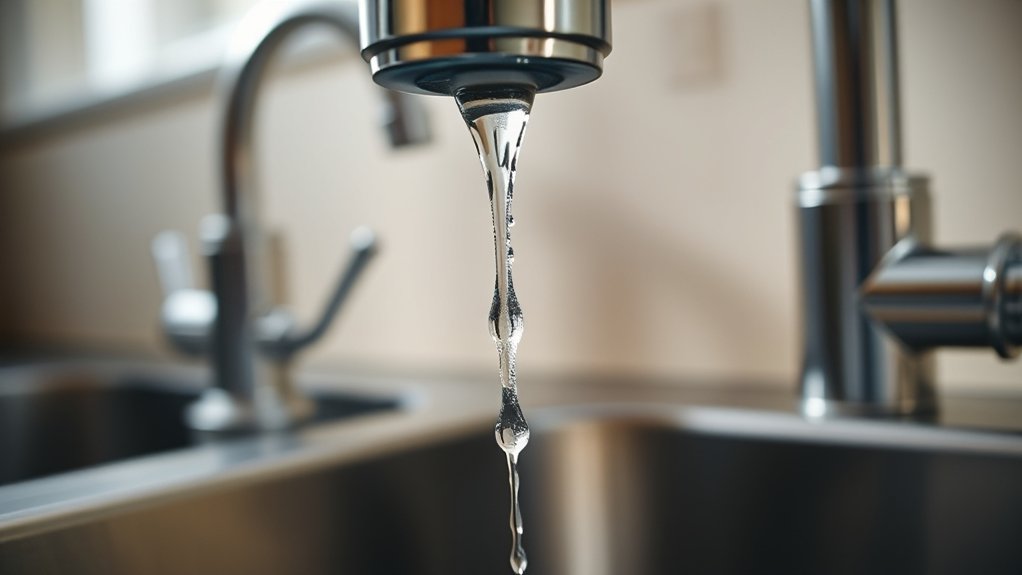
You should drip faucets located on exterior walls or those furthest from your main water supply to prevent freezing. Aim for a slow, steady drip, about one drip per second, to minimize water waste while keeping pipes moving.
Adjust the flow based on pipe size and outdoor temperature for ideal protection.
Faucets To Drip
Although dripping faucets may seem wasteful, targeting specific faucets can prevent costly pipe freezes. Focus on faucets connected to vulnerable pipes, especially those on exterior walls, unheated basements, crawl spaces, or garages.
Prioritize faucets with older faucet types prone to freezing, such as traditional compression valves, as they offer less frost resistance. Consider faucet location and exposure to cold drafts.
Also, assess your water pressure. Higher pressure can push water through pipes more effectively, reducing freeze risk. Drip only cold-water faucets, since hot-water lines typically run through warmer areas.
Avoid dripping faucets that are already insulated or inside heated spaces. By selectively dripping faucets based on type, location, and water pressure, you optimize protection while minimizing water waste and potential damage.
Optimal Water Flow Amount
Determining the ideal water flow when dripping faucets requires balancing freeze prevention with water conservation. You want enough flow to keep water moving but not wasteful amounts. Follow these steps:
- Set the drip rate to about one drip per second; this steady flow helps prevent freezing without excessive water use.
- Focus on faucets furthest from the main water supply, as these pipes are more prone to freezing.
- Use cold water taps only, since hot water lines are less likely to freeze and dripping hot water wastes energy.
- Monitor your water bill and adjust drip rate accordingly to optimize water conservation while maintaining protection.
How to Drip Faucets Efficiently to Save Water
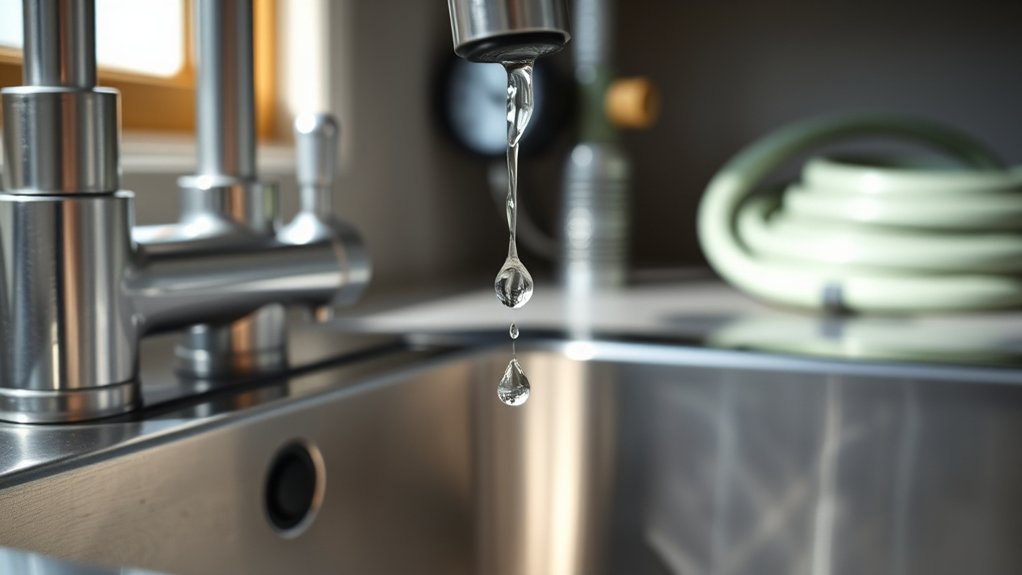
When temperatures drop below freezing, dripping faucets helps prevent pipes from bursting by keeping water moving. To drip faucets efficiently and support water conservation, target faucets furthest from the main water supply. This reduces overall water flow while maintaining circulation in vulnerable pipes.
Use a slow, steady drip, about one drip per second, to minimize water waste while preventing freezing. Check that your plumbing is insulated and in good repair to enhance efficiency.
Avoid dripping hot water faucets unnecessarily; cold water lines are usually more at risk. Efficient plumbing practices like sealing leaks and insulating pipes complement faucet dripping, reducing water loss and energy costs.
Alternatives to Dripping Faucets for Freeze Protection
If you want to protect your pipes from freezing without constantly dripping faucets, several effective alternatives exist. You can:
- Install pipe insulation around vulnerable pipes to retain heat and prevent freezing.
- Use electric heating cables; they actively warm pipes and maintain a safe temperature.
- Seal gaps and cracks near pipes to block cold air infiltration, improving overall freeze protection.
- Maintain a consistent home temperature, especially overnight, to keep pipes warm.
These methods reduce water waste and can be more energy-efficient compared to dripping faucets. Combining pipe insulation with heating cables offers robust freeze prevention, especially in extremely cold areas. Choose the option that best fits your setup to guarantee your plumbing stays safe throughout winter.
Frequently Asked Questions
Can Dripping Faucets Increase My Water Bill Significantly?
Dripping faucets minimally impact your water bill, but over time, they add up. Conduct a cost analysis to balance water conservation benefits against expenses.
Fix leaks promptly to optimize savings and resource efficiency.
Is Dripping Faucets Safe for All Types of Plumbing Materials?
Wonder if dripping faucets suit all plumbing materials? You’ll find most faucet types handle it safely, but some older or delicate plumbing materials might corrode or weaken with constant moisture.
Always check your system’s compatibility first.
How Long Does It Take for Pipes to Freeze Without Dripping?
Pipes can freeze within hours in freezing temperatures, especially without pipe insulation. You should act quickly to insulate exposed pipes and consider dripping faucets to prevent freezing, reducing burst risks and costly damage.
Can I Use Hot Water Instead of Cold to Drip Faucets?
You shouldn’t use hot water for dripping faucets; hot water usage wastes energy and may damage pipes.
Cold water dripping guarantees faucet efficiency by preventing freezing without unnecessary heat loss or increased utility bills.
Should I Drip Outdoor Faucets During Freezing Temperatures?
Yes, you should drip outdoor faucets during freezing temperatures. Combining faucet insulation with dripping prevents pipe bursts, ensuring proper pipe maintenance.
This practical practice preserves plumbing, preventing pricey repairs and protecting your property from winter’s wrath.