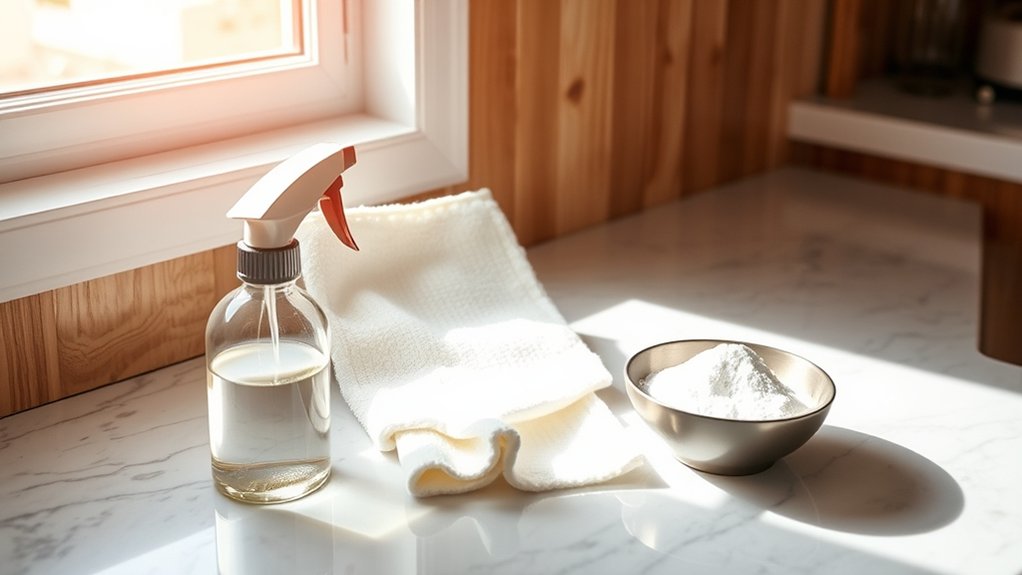
What Is the Best Cleaner for Kitchen Cabinets
For the best kitchen cabinet cleaner, it’s important to match your cleaner to your cabinet material.
Use gentle, eco-friendly solutions like diluted vinegar and mild soap on wood to protect finishes.
For laminate or painted cabinets, choose pH-balanced, non-abrasive cleaners to avoid damage.
Avoid harsh chemicals like ammonia or bleach, which can ruin surfaces.
Soft cloths or microfiber work best for cleaning without scratches.
Keep your cabinets looking great by understanding these key care tips—there’s more to learn about protecting and maintaining your cabinets.
Why Picking the Right Cleaner Makes a Big Difference
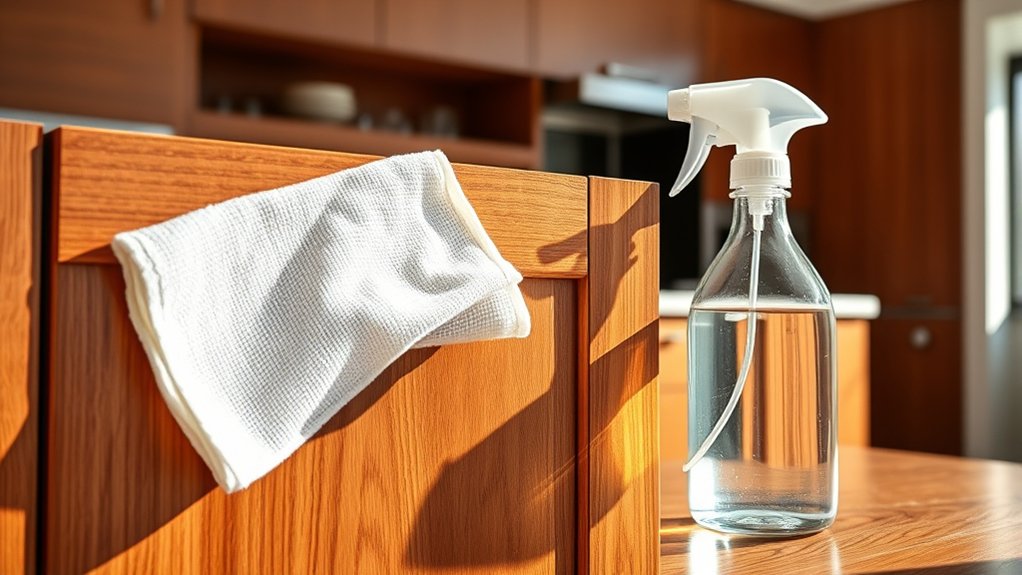
When you choose the right cleaner for your kitchen cabinets, you protect their finish and extend their lifespan. Selecting a cleaner that matches your cabinets’ needs maximizes cleaning efficiency, removing grease, dirt, and grime without damaging surfaces.
Using harsh chemicals or abrasive tools can degrade finishes, leading to premature wear and costly repairs. By opting for a product designed specifically for kitchen cabinets, you preserve their appearance and structural integrity.
This careful choice directly impacts cabinet longevity, ensuring your investment lasts longer and stays attractive. Don’t settle for generic cleaners; they often fall short in cleaning power or cause damage over time.
Prioritize cleaners that balance effectiveness with gentleness to maintain your cabinets’ condition and keep your kitchen looking pristine for years to come.
Identifying Your Kitchen Cabinet Material
To clean your kitchen cabinets effectively, you need to know what material they’re made of. Common options include wood, laminate, and veneer. Each material has unique cleaning requirements, so identifying the finish is essential to avoid damage.
Let’s explore how to recognize these materials and their specific care needs.
Common Cabinet Materials
Understanding the material of your kitchen cabinets is essential for choosing the right cleaner and maintaining their appearance. Different cabinet styles often use various materials, each with unique durability and care requirements.
Knowing the material durability helps you avoid damage when cleaning.
| Material | Durability | Common Cabinet Styles |
|---|---|---|
| Solid Wood | High | Traditional, Shaker |
| MDF | Moderate | Modern, Painted Styles |
| Laminate | Moderate to High | Contemporary, Budget-friendly |
| Thermofoil | Moderate | Contemporary, Sleek |
Identify your cabinet material to match cleaning methods with material durability. This guarantees long-lasting beauty and prevents costly repairs.
Material-Specific Cleaning Needs
Knowing your cabinet material sets the foundation for choosing the right cleaning approach. Different materials like wood, laminate, or metal respond uniquely to cleaning agents.
For example, solid wood cabinets benefit from gentle, eco-friendly options such as mild soap and water to avoid drying or damaging the surface. Laminate cabinets tolerate stronger cleaners but still require non-abrasive solutions to maintain cabinet longevity.
Metal cabinets demand products that prevent corrosion while cutting through grease effectively. Identifying your cabinet material helps you avoid harsh chemicals that can degrade finishes or cause warping.
Identifying Cabinet Finishes
How can you tell what finish your kitchen cabinets have? Start by examining the surface closely. Common finish types include lacquer, polyurethane, varnish, paint, and laminate.
Lacquer feels smooth and glossy but can be sensitive to harsh chemicals. Polyurethane offers a tough, clear coat with a slight sheen. Varnish may appear slightly amber and provides durability.
Painted cabinets often show brush marks or a uniform color, while laminate feels plastic-like and is easy to spot.
Understanding your cabinet finish is essential for effective cabinet care. Using the wrong cleaner can damage the surface, so identify your finish before cleaning.
For example, solvent-based cleaners suit lacquer, while mild soap works for painted or laminate surfaces. Knowing your finish types guarantees you protect your cabinets and maintain their appearance over time.
Best Wood Cabinet Cleaners: What to Use and Avoid
When cleaning wood cabinets, choose products with gentle, safe ingredients that protect the finish. Steer clear of harsh chemicals like ammonia or bleach, which can damage the wood over time.
Instead, consider natural alternatives like diluted vinegar or mild soap solutions to keep your cabinets looking their best.
Safe Ingredients for Wood
Although wood cabinets can withstand many cleaning products, you should choose cleaners with safe, gentle ingredients to protect their finish and grain. Opting for eco-friendly solutions not only supports wood care but also prevents damage from harsh chemicals.
Ingredients like mild soap and natural oils clean effectively without stripping the wood’s natural moisture.
Here’s a quick guide to safe ingredients:
| Safe Ingredient | Benefit |
|---|---|
| Mild Dish Soap | Gently removes dirt |
| Olive or Lemon Oil | Nourishes and shines wood |
| Vinegar (Diluted) | Disinfects without damage |
Stick to these ingredients to maintain your cabinets’ beauty and longevity. Using safe, eco-friendly solutions guarantees your wood stays vibrant and durable while keeping your kitchen environment healthy.
Avoid Harsh Chemicals
Why risk damaging your wood cabinets with harsh chemicals? These substances can strip finishes, dull surfaces, and shorten your cabinets’ lifespan.
Instead, opt for eco friendly options that clean effectively without compromising wood integrity. Many chemical alternatives provide powerful cleaning while being gentle on your cabinets and safer for your indoor environment.
Avoid cleaners with ammonia, bleach, or abrasive agents, as they erode wood finishes and leave residues. Choose products formulated specifically for wood that maintain the natural beauty of your cabinets.
Natural Cleaning Alternatives
Since harsh chemicals can harm your cabinets, turning to natural cleaning alternatives offers a safer, effective solution. You can rely on eco friendly products designed specifically for wood surfaces to clean without stripping the finish or causing damage.
Look for cleaners with gentle, plant-based ingredients that break down grime while preserving your cabinet’s integrity.
Homemade solutions also work well and cost less. A simple mix of warm water, mild dish soap, and a splash of vinegar can tackle grease and dirt effectively.
Use a soft cloth to apply and wipe dry immediately to avoid moisture buildup. Avoid abrasive tools that can scratch wood. By choosing natural methods, you maintain your cabinets’ beauty while protecting your home environment.
Best Cleaners for Laminate and Painted Cabinets
When cleaning laminate and painted kitchen cabinets, you need a cleaner that effectively removes grease and grime without damaging the surface. Choose a gentle, pH-balanced cleaner specifically designed for laminate care to maintain its smooth finish and prevent warping or discoloration.
For painted cabinets, opt for a non-abrasive cleaner that respects painted protection, preserving the cabinet’s color and sheen. Avoid harsh chemicals and abrasive scrubbing pads that can strip paint or cause surface scratches.
A microfiber cloth paired with a mild detergent solution often works best, delivering thorough cleaning while safeguarding the cabinetry. Consistently using appropriate cleaners not only keeps your cabinets spotless but also extends their lifespan, maintaining both functionality and aesthetic appeal in your kitchen.
The Best Ingredients to Protect Your Cabinets
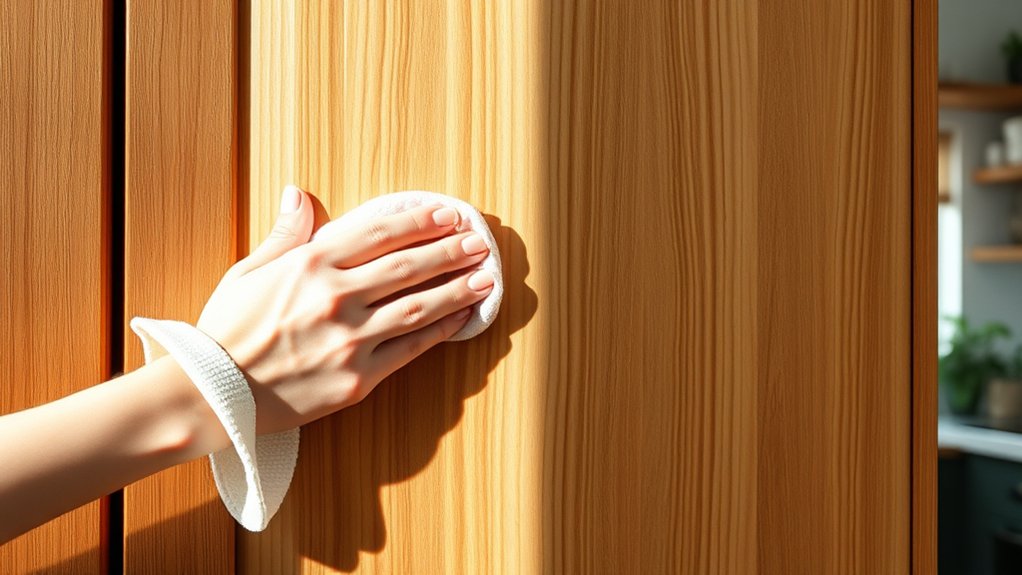
Three key ingredients can dramatically extend the life of your kitchen cabinets while keeping them looking fresh and vibrant. First, wax creates a thin, protective coating that repels moisture and dirt, enhancing cabinet longevity.
Second, oils like tung or linseed penetrate wood surfaces, nourishing the material and preventing drying or cracking. Third, polyurethane finishes form a hard, transparent protective coating that resists scratches and stains, providing durable defense.
Using these protective coatings regularly guarantees your cabinets withstand daily wear and environmental damage. Choose products designed specifically for your cabinet material to avoid discoloration or damage.
Removing Grease and Grime From Kitchen Cabinets Safely
Although kitchen cabinets add style and storage, they also attract grease and grime from cooking, which can dull their finish and harbor bacteria. For effective grease removal, you need safe products that won’t damage your cabinets’ surfaces.
Choose cleaners specifically formulated to cut through grease without harsh chemicals such as ammonia or bleach, which can erode finishes or cause discoloration. Use a soft cloth or sponge to apply the cleaner gently, avoiding abrasive tools that might scratch the wood or laminate.
Always test any product on a small, inconspicuous area before full use. After cleaning, dry the cabinets thoroughly to prevent moisture damage. By using safe products and proper techniques, you’ll maintain your cabinets’ appearance and hygiene without compromising their integrity.
DIY Natural Cleaners for Kitchen Cabinets
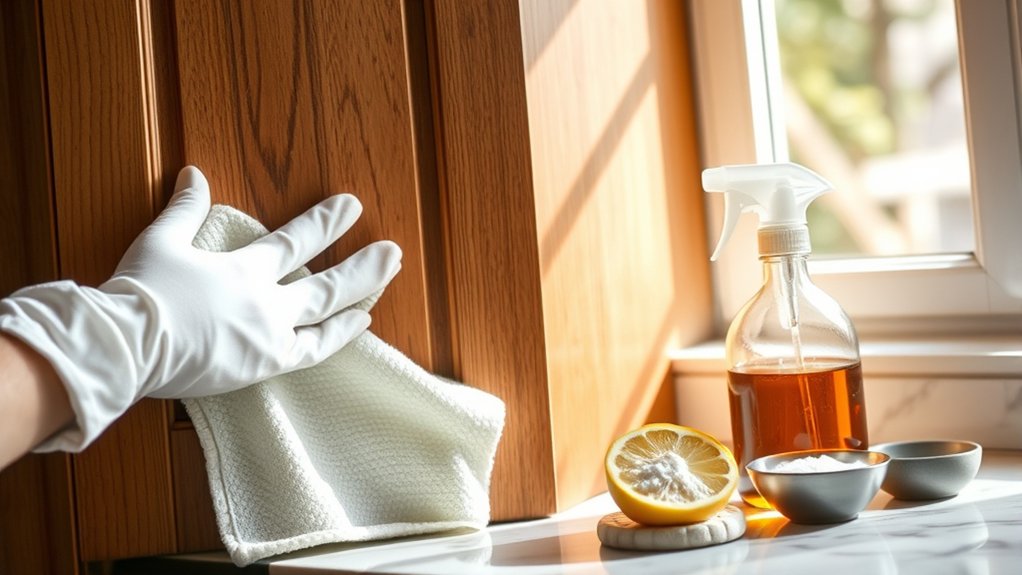
You can create effective natural cleaners for your kitchen cabinets using simple ingredients like vinegar, baking soda, and lemon juice. Follow a straightforward process to mix and apply these solutions safely without damaging your cabinet finish.
This approach saves money and keeps your kitchen fresh without harsh chemicals.
Essential Ingredients Overview
When tackling kitchen cabinet cleaning with natural solutions, understanding the essential ingredients is crucial to achieving effective results. You’ll want to focus on eco-friendly options like white vinegar, baking soda, and castile soap.
White vinegar cuts through grease and grime without harsh chemicals, making it a top choice for cleaning effectiveness. Baking soda acts as a gentle abrasive, perfect for lifting stubborn stains while protecting your cabinet surfaces.
Castile soap provides a natural, biodegradable cleansing base that’s safe for wood and laminate finishes. Essential oils such as tea tree or lemon not only add a fresh scent but also offer antimicrobial properties.
Cleaning Steps Guide
Since kitchen cabinets endure daily exposure to grease and dirt, following a systematic cleaning process guarantees thorough results without damage. Start by removing all items to improve cabinet organization and access every surface.
Use a soft cloth or sponge with a DIY natural cleaner: mix equal parts white vinegar and water, adding a few drops of mild dish soap. Apply the solution using appropriate cleaning tools like microfiber cloths to avoid scratches.
Wipe down cabinet exteriors, focusing on handles and edges where buildup is common. For stubborn stains, gently scrub with a soft-bristle brush. Rinse with a damp cloth and dry immediately to prevent moisture damage.
Finally, reorganize your cabinets thoughtfully, maintaining order to simplify future cleaning and prolong the cabinets’ lifespan.
Cleaning Mistakes That Could Ruin Your Cabinets
Although cleaning your kitchen cabinets may seem straightforward, common mistakes can quickly damage their finish and reduce their lifespan. One major error is using harsh cleaning tools like abrasive scrubbers or rough sponges, which can scratch surfaces and strip protective coatings.
Avoid excessive water or soaking, as moisture seeps into wood, causing warping or swelling. Neglecting proper cabinet organization leads to clutter buildup, making cleaning less effective and increasing wear on cabinet interiors.
Using inappropriate cleaners such as bleach or ammonia can discolor finishes and deteriorate materials. Stick to gentle, cabinet-safe products and soft cloths. By avoiding these pitfalls, you protect your cabinets’ appearance and function, ensuring your cleaning efforts genuinely preserve their condition rather than inadvertently harming them.
Tips for Maintaining Your Kitchen Cabinets’ Finish
Protecting your kitchen cabinets’ finish starts with a consistent care routine tailored to their material. To maintain their look and durability, follow cabinet protection tips like wiping spills immediately to prevent stains and damage.
Use a soft cloth and mild cleaner suited for your cabinet’s surface. Harsh chemicals can strip finishes and cause discoloration. Avoid abrasive scrubbers that scratch and dull wood or laminate.
Routine maintenance advice also includes dusting regularly to prevent buildup and checking for any signs of wear or moisture damage. Applying a protective wax or polish occasionally can restore shine and add a barrier against everyday wear.
How Often to Clean Your Kitchen Cabinets for Best Results
Regularly cleaning your kitchen cabinets is essential to keep them looking fresh and prevent buildup that can damage the finish. Establishing the right cleaning frequency is key to effective cabinet upkeep. You don’t want to clean too often and risk wear, nor too infrequently and allow grime to accumulate.
For most households, a weekly wipe-down paired with a deeper monthly clean strikes the perfect balance.
| Cleaning Frequency | Task | Purpose |
|---|---|---|
| Weekly | Wipe with mild cleaner | Remove daily dirt/grime |
| Monthly | Deep clean | Eliminate buildup |
| Quarterly | Inspect & touch up | Maintain finish & fix damage |
Stick to this schedule to protect your cabinets and extend their lifespan, ensuring they always look their best.
Frequently Asked Questions
Can I Use a Pressure Washer on Kitchen Cabinets?
You might think a pressure washer saves time, but it’s risky. For pressure washer safety, avoid it on delicate wood or laminate cabinets. Moisture and force can damage finishes.
Consider your cabinet material carefully before using one.
Are Vinegar-Based Cleaners Safe for Antique Cabinets?
You shouldn’t use vinegar-based cleaners on antique wood. Their acidity can damage finishes and wood fibers.
Instead, rely on gentle cleaning techniques like diluted soap and water or specialized wood cleaners to preserve your cabinets’ integrity.
How Do I Remove Water Stains From Cabinet Wood?
To remove water stains from cabinet wood, gently rub with a mixture of baking soda and water or use a wood cleaner.
Regular cabinet maintenance and water stain prevention guarantee your cabinets stay pristine longer.
Can Cabinet Cleaners Damage Hardware or Hinges?
You’re right to be cautious. Over 40% of homeowners report damage from harsh cleaner types on hardware materials like brass or chrome. Avoid abrasive or acidic cleaners to protect hinges and keep your cabinet hardware looking pristine.
Is It Necessary to Reseal Cabinets After Cleaning?
You don’t always need to reseal cabinets after cleaning, but following cabinet maintenance tips is essential.
Resealing frequency depends on wear and tear, so inspect surfaces regularly and reseal when finishes start to dull or chip.