How Tall Are Kitchen Cabinets
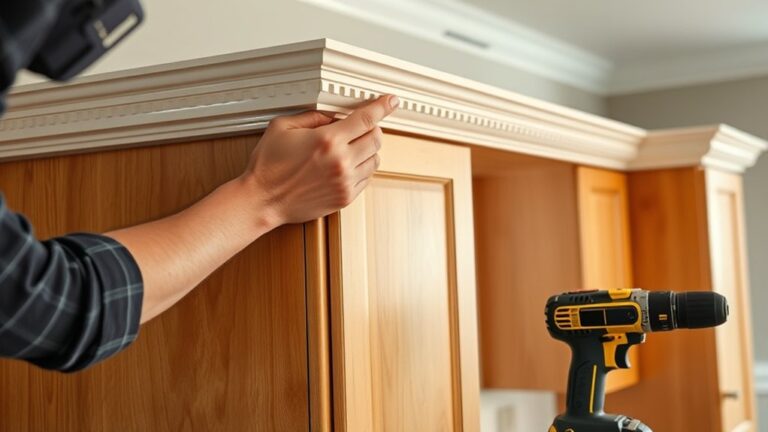
Kitchen cabinets typically range from 30 to 42 inches tall for upper units and stand about 34.5 inches high for base cabinets, including the countertop.
These standard heights balance ergonomics and storage, fitting most users comfortably while aligning with countertops and appliances.
Adjustments may be needed based on your height, countertop thickness, or ceiling height.
Understanding these dimensions helps you design a kitchen that’s both functional and visually balanced.
Explore how customization and ceiling height impact your choices next.
Standard Kitchen Cabinet Heights: An Overview
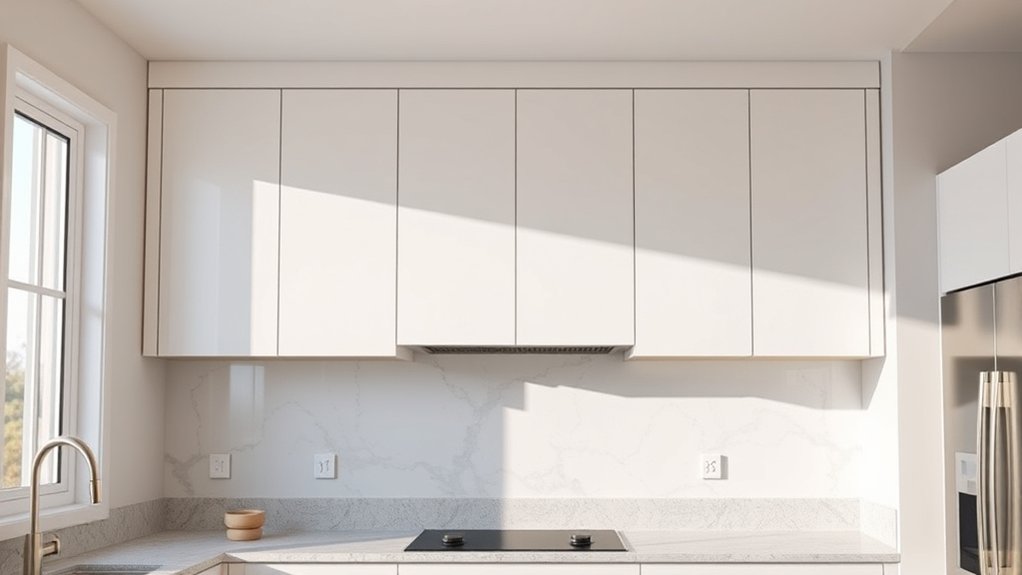
When planning your kitchen layout, understanding standard kitchen cabinet heights is vital for both function and aesthetics. You’ll find that upper cabinets typically range from 30 to 42 inches tall, balancing accessibility with ideal storage solutions.
This range supports efficient kitchen design, allowing you to customize cabinet height based on ceiling height and personal reach. It’s important to take into account alignment with appliances and countertops to maintain visual harmony and ergonomic efficiency.
Standard heights also facilitate modularity, making it easier to replace or upgrade components without major remodeling. By mastering these dimensions, you can enhance your kitchen’s usability and create a cohesive, streamlined appearance that maximizes your storage while maintaining comfortable access throughout your workspace.
Standard Heights for Base Kitchen Cabinets
You’ll find that typical base kitchen cabinets stand around 34.5 inches tall, including the countertop. However, height variations depend on factors like desired countertop thickness and ergonomic preferences.
Understanding these dimensions helps you tailor your kitchen for both function and style.
Typical Base Cabinet Dimensions
Base kitchen cabinets typically measure 34.5 inches in height, providing a practical and ergonomic workspace. This standard dimension aligns with cabinet height guidelines to accommodate most users comfortably.
You’ll find various base cabinet styles, such as drawer bases, sink bases, and corner cabinets, that adhere to these dimensions for seamless installation and uniformity. Below is a concise table outlining typical base cabinet dimensions to help you visualize their size and structure:
| Cabinet Type | Height (inches) | Depth (inches) |
|---|---|---|
| Standard Base | 34.5 | 24 |
| Sink Base | 34.5 | 24 |
| Drawer Base | 34.5 | 24 |
| Corner Base | 34.5 | 24 |
| Appliance Base | 34.5 | 24 |
These dimensions guarantee functional design and consistent aesthetics throughout your kitchen.
Height Variations and Factors
While the standard height for base kitchen cabinets is generally 34.5 inches, various factors can influence adjustments to this measurement. When refining your cabinet design, you must consider ergonomic considerations such as the user’s height and the kitchen’s intended function.
For taller users, increasing cabinet height to 36 inches or more can reduce strain during food preparation. Conversely, shorter users might benefit from lower cabinets to enhance accessibility. Additionally, countertop thickness and flooring type affect the final height, requiring precise calibration.
Customizing base cabinet height guarantees ideal comfort and efficiency, blending functionality with aesthetics. By integrating these height variations thoughtfully, you create a kitchen environment tailored to user needs, improving workflow and maintaining balanced proportions within the overall cabinet design.
Typical Heights for Wall Kitchen Cabinets
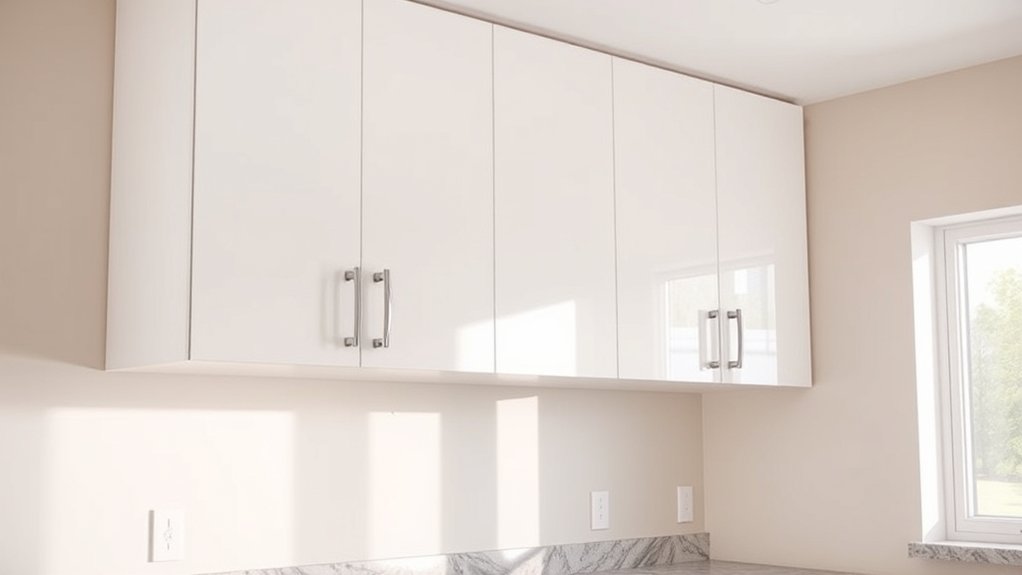
You’ll find standard wall cabinet heights typically range from 12 to 42 inches, depending on your kitchen’s design. Different styles may alter these dimensions, so measuring carefully guarantees your cabinets fit both functionally and visually.
Let’s explore how to select and position wall cabinets for ideal use and balance.
Standard Wall Cabinet Heights
Wall cabinets typically come in several standard heights, ranging from 12 to 42 inches, to accommodate various kitchen designs and storage needs. When selecting your cabinets, cabinet height considerations are essential to guarantee functionality and visual harmony.
Common heights include 30, 36, and 42 inches, each serving different storage purposes and spacing requirements above countertops. Wall cabinet variations also depend on ceiling height and appliance placement, affecting the cabinet’s vertical dimension.
For example, 30-inch cabinets suit standard 8-foot ceilings, while 42-inch models maximize storage in taller kitchens. Understanding these heights helps you balance accessibility with maximizing storage space, assuring your kitchen layout is both practical and aesthetically pleasing.
Precise measurement and planning prevent awkward gaps or cramped spaces in your kitchen design.
Height Variations By Style
Several distinct cabinet styles influence the height variations you’ll encounter in kitchen design. For example, traditional wall cabinets typically range from 30 to 42 inches in height, catering to classic height preferences that balance accessibility and storage.
Contemporary styles often favor taller cabinets up to 48 inches to create a sleek, streamlined look and maximize vertical space. Shaker-style cabinets commonly measure around 36 inches tall, offering a versatile middle ground.
Your height preferences should also consider ceiling height and countertop clearance to maintain ergonomic efficiency. Keep in mind, the cabinet style you choose directly affects not only the aesthetic but also the functional height range available.
Measuring For Optimal Placement
Determining the ideal height for kitchen cabinets involves balancing ergonomic comfort with design functionality. When measuring for best placement, start by evaluating your countertop height—typically 36 inches—and allow an 18-20 inch gap between the countertop and the bottom of wall cabinets.
Use precise measuring techniques, such as laser levels or tape measures, to guarantee consistent alignment. Ergonomic placement means positioning cabinets so you can easily reach shelves without strain, generally placing wall cabinets between 54 and 66 inches from the floor.
Remember to factor in appliance heights and backsplash dimensions. By combining accurate measuring techniques with ergonomic placement principles, you’ll achieve a kitchen layout that’s both visually harmonious and highly functional, tailored to your specific space and daily use.
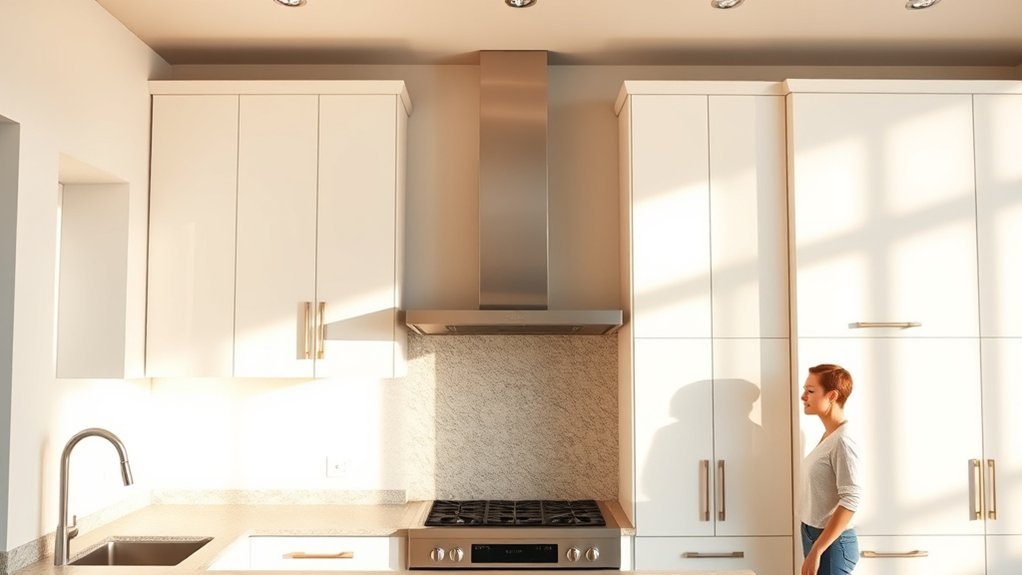
How Tall Are Tall Kitchen Cabinets?
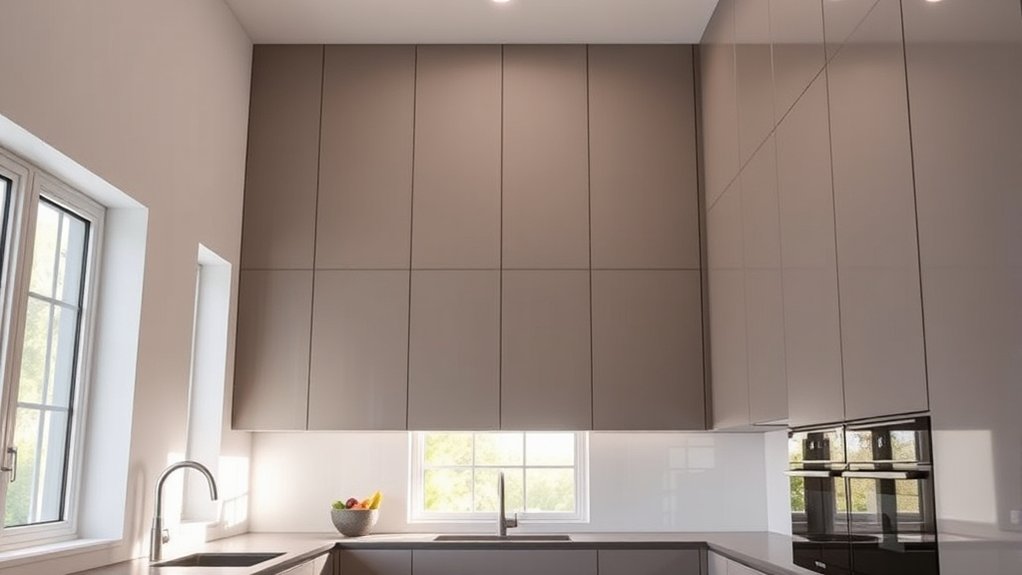
Tall Kitchen cabinets typically range between 84 and 96 inches in height, providing ample storage space by extending from the floor almost to the ceiling. When selecting tall cabinet styles, consider your height preferences and the kitchen’s ceiling height to optimize both function and design.
You’ll find options like pantry cabinets, broom closets, and oven cabinets in this size range, each tailored to specific storage needs. These cabinets maximize vertical space, reducing clutter while maintaining a sleek profile.
Precision in measuring is essential, ensuring your tall cabinets integrate seamlessly with existing cabinetry and appliances. By aligning height preferences with architectural constraints, you create a harmonious, efficient kitchen layout that enhances both aesthetics and practicality.
Why Kitchen Cabinet Height Matters for Comfort
Because kitchen cabinets directly impact your daily interactions with the space, their height plays an essential role in comfort and ergonomics. An ergonomic design guarantees you reach items effortlessly, reducing strain and enhancing user comfort.
Incorrect cabinet height forces awkward postures, causing discomfort over time.
| Cabinet Height (inches) | User Interaction Effect |
|---|---|
| 12 – 18 | Ideal for frequently used items |
| 24 – 30 | Comfortable reach zone |
| 36 – 42 | Requires stretching or step stool |
| Above 42 | Often inaccessible, inconvenient |
Choosing the right cabinet height aligns with your natural reach, optimizing workflow and minimizing physical stress. This precision in design supports prolonged comfort during kitchen tasks.
Adjusting Kitchen Cabinet Heights to Fit Everyone
Adjusting kitchen cabinet heights guarantees the space functions well for every user, regardless of their stature or mobility. You can implement ergonomic adjustments by customizing the height of wall cabinets to reduce strain during use and improve reachability.
Incorporate accessibility features such as pull-down shelves or adjustable mounting brackets, enabling effortless access for individuals with limited reach or mobility challenges. When planning, measure the primary users’ heights and consider countertop-to-cabinet clearances to optimize comfort and efficiency.
Modular cabinet systems allow you to fine-tune vertical placement without compromising aesthetics. Prioritize precise alignment to maintain a sleek, cohesive look while enhancing functionality. By focusing on these practical modifications, you affirm the kitchen accommodates diverse users seamlessly, blending ergonomic design with visual harmony.
How Ceiling Height Affects Kitchen Cabinet Heights
When designing your kitchen, ceiling height directly influences the ideal dimensions and placement of cabinets, impacting both functionality and visual balance. Higher ceilings offer more vertical space, allowing you to install taller cabinets or add a second tier, enhancing storage without overcrowding.
Conversely, standard 8-foot ceilings require careful ceiling considerations to avoid cramped or top-heavy designs. You’ll want to maintain adequate clearance between countertops and upper cabinets, typically 18 inches, but adjust cabinet height to complement ceiling height for maximum reachability.
Paying attention to design aesthetics, you should guarantee cabinets align proportionally with your ceiling to create a cohesive, balanced look. Properly integrating ceiling height into your cabinet planning elevates your kitchen’s efficiency and style, preventing awkward gaps or visual imbalance.
Custom vs. Standard Kitchen Cabinet Heights: Which to Choose?
Considering how ceiling height shapes your cabinet design, the next step is deciding between custom and standard kitchen cabinet heights. Standard cabinets offer uniform dimensions that fit most spaces, simplifying installation and reducing costs.
However, if your kitchen has unique ceiling heights or specific functional needs, custom cabinets provide significant customization benefits. You can tailor heights to optimize storage while enhancing aesthetic harmony with your space.
Custom cabinets adapt to unique ceiling heights and needs, optimizing storage and enhancing your kitchen’s aesthetic harmony.
Ergonomic considerations also favor custom options; by adjusting cabinet height, you minimize strain during food prep and maximize accessibility. Choosing custom cabinets means you control proportions precisely, ensuring comfort and style align.
Conversely, standard cabinets suit typical layouts and budgets. Ultimately, weigh your kitchen’s architectural demands and ergonomic preferences to decide which option best elevates your design and functionality.
Measuring and Planning Your Kitchen Cabinet Heights
Before you finalize your kitchen cabinet heights, you’ll need to accurately measure your space and plan for both functionality and design flow. Proper cabinet ergonomics promote comfort and efficiency, so consider countertop height relative to your stature. Use precise installation tips to avoid misalignment and maximize storage.
Measure wall heights, appliance clearances, and ceiling trims before ordering cabinets. The table below highlights essential measurements and considerations:
| Measurement Aspect | Key Consideration |
|---|---|
| Wall Height | Provide sufficient upper cabinet space |
| Countertop Height | Align with ergonomic standards (34-36″) |
| Appliance Clearances | Allow space for fridge, oven, etc. |
| Ceiling Trim & Molding | Factor in decorative elements |
Following these steps guarantees a balanced, ergonomic, and visually cohesive kitchen cabinet layout.
Frequently Asked Questions
What Materials Are Commonly Used for Kitchen Cabinets?
You’ll find wood types like maple, oak, and cherry commonly used for kitchen cabinets, paired with finish options such as lacquer, stain, or paint. These choices guarantee durability while enhancing your kitchen’s precise, aesthetic appeal.
How Do Cabinet Door Styles Affect Kitchen Design?
You’ll find cabinet styles set the tone, acting as the cherry on top to your kitchen’s design impact. They shape aesthetics and functionality, influencing light, space perception, and overall harmony with precision and style.
What Is the Average Cost of Kitchen Cabinets?
You’ll find the average cost of kitchen cabinets ranges from $3,000 to $10,000. Custom cabinet options increase expenses, while budget-friendly alternatives like stock or semi-custom cabinets help you stay within your financial plan efficiently.
How Do I Maintain and Clean Kitchen Cabinets?
Want your cabinets to stay pristine? Use gentle cleaning techniques like mild soap and microfiber cloths. Avoid excess moisture to prevent damage.
Follow maintenance tips such as tightening hinges and applying protective finishes to preserve their sleek, lasting appeal.
Can I Install Kitchen Cabinets Myself or Hire a Professional?
You can attempt DIY installation if you have precise measuring skills and tools, but for flawless alignment and secure mounting, hiring professional help guarantees technical accuracy and aesthetic appeal. This reduces errors and saves time.