What Is a Toaster Oven and How to Use It
A toaster oven is a compact countertop appliance designed for toasting, baking, and reheating food quickly and efficiently.
This versatile kitchen tool is perfect for small meals and snacks, making it a popular choice for busy households. Understanding how to use a toaster oven can help you maximize its benefits.
To use it, adjust the rack height based on your cooking needs—top for broiling, middle for baking or toasting—then preheat before placing your food inside.
You can use oven-safe cookware like ceramic or aluminum and should leave space for air circulation. This ensures even cooking and prevents overheating.
Toaster ovens save energy and cook faster than regular ovens, making them an eco-friendly and convenient option.
They are ideal for small kitchens or when you don’t want to heat up a large oven.
Keep exploring to find tips on cleaning, safety, and cooking tricks to get the most out of your toaster oven.
Key Takeaways
- A toaster oven is a compact electric appliance for toasting, baking, and reheating small meals quickly and efficiently.
- It heats up faster than conventional ovens, saving time and energy with preheat times of 5 to 10 minutes.
- To use, plug it in, close the door, select temperature and function, preheat, then place food inside on the adjustable rack.
- Use oven-safe cookware and allow space for air circulation to ensure even cooking and avoid overheating.
- Clean regularly by removing crumb trays and racks, wiping spills with a damp cloth, and checking for damage to maintain safety.
What Is a Toaster Oven?
While you might think a toaster oven is just a toaster, it’s actually a small electric appliance that combines toasting and baking functions in one compact unit. Toaster ovens are versatile countertop appliances that let you toast bread, reheat leftovers, cook frozen foods, and even bake small batches of cookies or other dishes. Their compact design means they preheat quickly and fit perfectly in kitchens with limited space.
You’ll find many models come with adjustable racks and multiple settings for baking, broiling, and toasting. Some higher-end toaster ovens have convection fans to improve cooking efficiency. Plus, they’re easier to clean than traditional ovens, thanks to removable racks and crumb trays that catch debris and grease.
This makes toaster ovens a convenient, space-saving choice for many cooking tasks.
Key Features and Functions of a Toaster Oven
A toaster oven offers a range of features that make it a versatile tool in your kitchen. Toaster ovens offer more than just basic toasting; they bake, broil, and reheat food with precision. As a compact countertop oven, it fits easily on your counter without taking up much space.
Here are three key features to know:
- Adjustable rack heights let you customize cooking space for different foods, ensuring even heat distribution.
- Convection fans in some models circulate hot air, speeding up cooking and delivering consistent browning.
- Multiple settings tailored to specific foods help you set precise times and temperatures for better results.
These features make a toaster oven ideal for a variety of meals, from toast to pizza and veggies.
Differences Between Toaster Ovens and Countertop Ovens
When choosing between a toaster oven and a countertop oven, size and cooking functions play a big role. Toaster ovens are compact and great for small tasks like toasting or reheating, while countertop ovens handle larger meals and offer more cooking options.
Understanding these differences helps you pick the right appliance for your kitchen needs.
Size and Capacity
Many toaster ovens are compact enough to fit in tight kitchen spaces and handle quick tasks like toasting or reheating. When comparing size and capacity between a toaster and a countertop oven, consider these points:
- Size: Toaster ovens are smaller, making them perfect for limited counter space, while countertop ovens are bulkier but offer more room.
- Capacity: Toaster ovens suit small batches or single servings, but countertop ovens can cook full meals thanks to their larger interiors.
- Shelving: Toaster ovens generally have one shelf, limiting cooking options, whereas countertop ovens often include multiple racks for versatile cooking.
Choosing between the two depends on your kitchen space and cooking needs. If you want quick, simple tasks done efficiently, a toaster oven is ideal. For larger meals, a countertop oven serves you better.
Cooking Functions
Although toaster ovens are great for quick tasks like toasting and reheating, you’ll find countertop ovens offer a wider range of cooking functions. Toaster ovens are perfect for small batches and simple tasks such as toasting bread or baking small items quickly.
Countertop ovens, however, excel in versatility—they can handle full meal preparation, roasting larger dishes, and baking casseroles or bread thanks to their larger size. Many countertop ovens also come with convection cooking, which promotes even heat distribution, a feature usually missing in toaster ovens.
While modern toaster ovens have improved, their focus remains on quick cooking and smaller portions. So, if you need more extensive cooking and baking options, a countertop oven will better suit your needs than a standard toaster oven.
How to Adjust Racks and Preheat Your Toaster Oven
Since different cooking methods require specific rack positions, you’ll want to adjust your toaster oven rack accordingly—higher for broiling and centered for baking or toasting. Adjusting rack height properly guarantees even cooking and ideal results.
Before plugging in your toaster oven, set the rack position based on your recipe. Preheating is essential for baking or cooking that requires steady heat but can be skipped for reheating or toasting.
Follow these steps to adjust and preheat efficiently:
- Choose the rack height: top for broil, middle for bake or toast.
- Plug in the toaster oven and close the door fully.
- Select temperature and function using controls, then allow it to preheat before placing food inside.
This process guarantees your toaster oven performs safely and cooks evenly every time.
Placing Food and Choosing Suitable Cookware
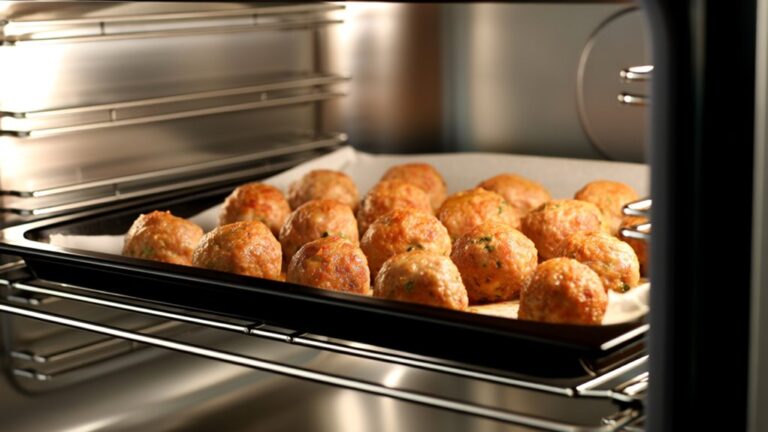
When placing food in your toaster oven, make certain it fits comfortably on the included tray or in a suitable pan without blocking the door from closing fully. Using suitable cookware like steel, ceramic, stone, aluminum, or silicone is key since these materials are safe and effective for toaster oven use. Rimmed sheet pans work great for roasting vegetables or meats because they catch drippings and help with even cooking.
Always verify your pan or tray is oven-safe, as toaster ovens operate much like conventional ovens. Proper placing food techniques also include allowing enough space around your dish for air circulation, which guarantees even heat distribution and consistent cooking results every time.
Selecting Settings and Cooking Times
When selecting settings, pick the function that best matches your food, like bake for cookies or broil for steaks. You’ll need to adjust cooking times and temperatures based on the recipe and your toaster oven’s features.
Always keep an eye on your food to avoid overcooking or undercooking.
Choosing the Right Function
How do you know which toaster oven setting is best for your meal? Toaster ovens offer various functions like bake, broil, toast, and warm, each suited for different foods. Choosing the right one helps you cook efficiently and get the best results.
Here’s a quick guide:
- Baking: Use the bake setting for cookies, pastries, or casseroles. Preheat first to maintain consistent temperature for even cooking.
- Broiling: Place food close to the top heating element to brown or crisp. Keep an eye on it to avoid burning.
- Toasting and Warming: Use toast for bread and warm to keep food heated without further cooking.
Always check your toaster oven’s manual for specific instructions to match your model’s features and guarantee success.
Adjusting Time and Temperature
After selecting the right function for your meal, the next step is to adjust the time and temperature settings to match your recipe. When using toaster ovens, adjusting time and temperature correctly guarantees your food cooks evenly and tastes great. Most recipes suggest temperatures between 300°F and 450°F, but always check your toaster oven’s manual for specific settings, especially for items like cookies or leftovers.
Preheat your toaster oven when baking or cooking foods that need consistent heat, but it’s usually unnecessary for reheating or toasting. Keep an eye on your food through the window and use oven mitts or tongs when removing hot dishes. Remember, cooking times can vary by model, so start with recommended times and adjust as needed for perfect results every time.
Cooking Tips for Common Foods in a Toaster Oven
Wondering how to get the best results with your toaster oven? These appliances are perfect for cooking small batches quickly and efficiently. Here are three tips to maximize your toaster oven’s potential:
- Reheat leftovers in your toaster oven instead of the microwave to preserve texture and flavor.
- Bake small batches of cookies or muffins without the hassle of heating a full-size oven—ideal for small households.
- Roast vegetables or meats on a rimmed sheet pan in a single layer to guarantee even cooking and catch drippings.
You can also toast nuts evenly by stirring them every few minutes at 350°F or use the broil function to melt cheese beautifully on dishes like French Onion Soup.
Cleaning and Maintaining Your Toaster Oven
Keeping your toaster oven clean helps it perform well and last longer. You don’t need to clean it after every use, but regular cleaning and maintaining are essential.
Always let it cool fully before cleaning. Remove racks and crumb trays for easy washing with warm water and dish soap; dry thoroughly to avoid rust.
Wipe spills inside with a damp cloth, steering clear of abrasive cleaners.
| Task | Frequency | Tips |
|---|---|---|
| Remove crumbs | Weekly | Use crumb tray for easy cleanup |
| Wash racks & tray | Monthly | Dry completely to prevent rust |
| Wipe interior | After spills | Use damp cloth, avoid abrasives |
| Cool before cleaning | Every time | Prevent burns and damage |
| Inspect parts | Periodically | Check for wear or damage |
Energy Efficiency and Benefits of Using a Toaster Oven
You’ll notice that a toaster oven uses considerably less energy than a full-sized oven, thanks to its faster preheat times and smaller cooking space. This makes it perfect for whipping up single servings or small batches without wasting power.
Plus, its compact size fits conveniently in your kitchen, saving both space and energy.
Lower Energy Consumption
Although conventional ovens are great for large meals, using a toaster oven can cut your energy consumption by up to 50% when cooking small to medium portions. Toaster ovens offer lower energy consumption by focusing heat on a smaller space, so you don’t waste power heating an entire oven.
Here’s why they’re more efficient:
- They heat up quickly, minimizing preheating time and energy use.
- Their compact design heats food directly, reducing overall power consumption.
- Many models include convection technology, improving cooking efficiency without using more energy than a full-sized oven.
Faster Preheat Times
Since toaster ovens are smaller than traditional ovens, they heat up much faster, often reaching cooking temperatures in just 5 to 10 minutes. This quick preheat time saves you both time and energy, making toaster ovens ideal for smaller spaces where efficiency matters.
Unlike full-sized ovens that can take 15 to 20 minutes to preheat, toaster ovens concentrate heat effectively, reducing cooking durations and energy consumption.
| Appliance Type | Preheat Time | Energy Use |
|---|---|---|
| Toaster Oven | 5-10 minutes | Up to 50% less |
| Traditional Oven | 15-20 minutes | Higher energy use |
| Microwave Oven | Instant | Low energy use |
Using a toaster oven helps you cook faster and smarter, perfect for small to medium meals in compact areas.
Compact Kitchen Convenience
When space and energy efficiency matter most, a toaster oven is a smart choice for your kitchen. Perfect for small spaces, toaster ovens save up to 50% of the energy used by conventional ovens, making them both eco-friendly and cost-effective. Here’s why they’re so convenient:
- They preheat quickly, cutting down cooking time and energy use.
- Their compact size keeps your kitchen cooler by not heating the entire room.
- They replace multiple appliances by baking, toasting, and broiling efficiently.
Using a toaster oven means you get high-quality results without the bulk and high energy costs of full-sized ovens. Ideal for singles or anyone wanting a streamlined cooking process, toaster ovens bring compact kitchen convenience right to your countertop.
Safety Precautions When Using a Toaster Oven
To keep yourself and your kitchen safe, you’ll want to follow some essential precautions while using your toaster oven. Always place your toaster oven on a heat-resistant surface and keep it clear of flammable materials. Use oven mitts or tongs when handling hot trays to avoid burns, as the exterior can get very hot.
Be sure the food doesn’t block the heating elements, which can cause uneven cooking or fire hazards. Regularly clean the crumb tray to prevent buildup, since crumbs can ignite when heated. Avoid using aluminum foil or metal cookware unless specifically designed for toaster ovens, as these can spark or cause fires if they touch the heating elements.
Following these tips will help you use your toaster oven safely and effectively.
Frequently Asked Questions
What Is the Purpose of a Toaster Oven?
The purpose of a toaster oven is to give you a quick, convenient way to toast, bake, broil, or reheat food without needing a full-sized oven. You’ll save time and energy since it heats up faster and cooks smaller portions efficiently.
It’s perfect for everything from crisping toast to roasting veggies or baking small batches of treats. Plus, it’s versatile enough to handle various cooking tasks right on your countertop.
Can You Use a Toaster Oven Like a Regular Oven?
Can you use a toaster oven like a regular oven? Absolutely—if your idea of “regular” means fitting a whole turkey inside and hosting a Thanksgiving feast for twenty.
But seriously, you can bake, broil, and toast just like a big oven, just on a smaller scale. It heats up faster and handles small meals or snacks perfectly.
What Is the Disadvantage of a Toaster Oven?
The main disadvantage you’ll face with a toaster oven is its limited size, which means you can’t cook large meals all at once. It often lacks advanced features like convection, so your food might cook less evenly or take longer. You’ll also need to watch for hot spots and rotate your food to avoid uneven cooking.
Plus, baking big items like cakes can be tricky due to its compact design.
How to Properly Use a Toaster Oven?
To properly use your toaster oven, first adjust the rack height depending on what you’re cooking—higher for broiling, center for baking or toasting. Preheat it when needed for even cooking. Use the right pans that fit well inside to avoid blocking the door.
Choose the correct cooking function and set the timer based on your recipe. Always use oven mitts or tongs to safely remove your food once it’s done.
Conclusion
Now that you know how to use your toaster oven, imagine popping in a small pizza on a busy weeknight—no need to heat up the whole kitchen or wait forever. With its quick preheat and versatile cooking options, your toaster oven becomes a time-saving hero. Just remember to adjust racks, use the right cookware, and keep it clean.
It’s the perfect little appliance that makes everyday meals easier and more energy-efficient. A toaster oven is ideal for baking, broiling, and toasting without the hassle of a full-sized oven. By mastering how to use a toaster oven, you unlock a convenient and efficient way to prepare your favorite dishes.