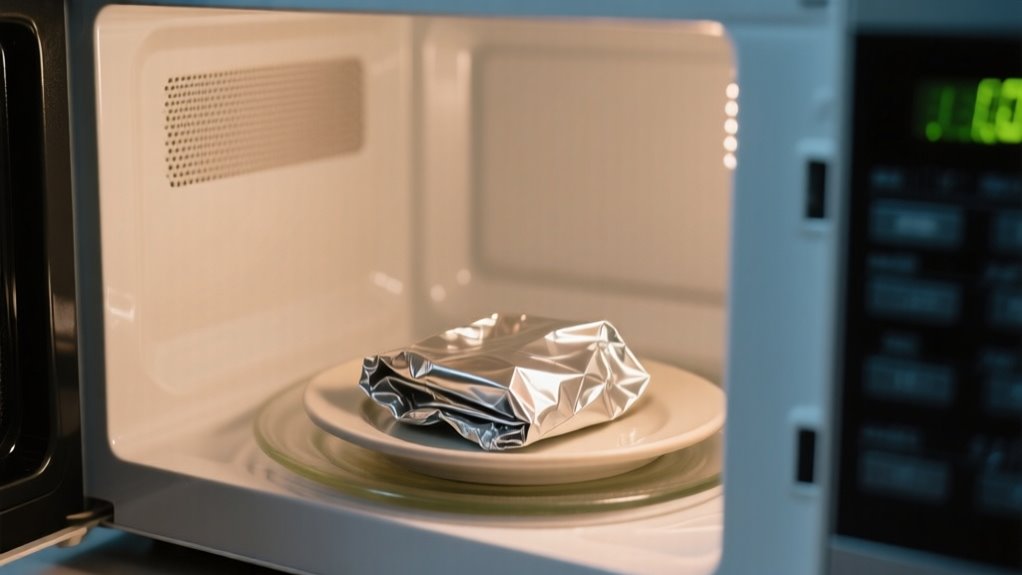
Can Aluminum Foil Go in the Microwave Oven?
You can use aluminum foil in your microwave, but only if you’re careful.
Make sure the foil is smooth and flat—wrinkles can cause sparks. Keep it at least an inch away from the microwave walls to avoid damage or fire.
Always check your microwave’s manual first, since some models don’t allow foil.
Using foil improperly can lead to uneven cooking or hazards. If you want to understand the safest ways to handle foil in microwaves, keep exploring these tips.
Key Takeaways
- Aluminum foil can be used in microwaves only if it is completely flat and wrinkle-free to prevent sparks.
- Keep aluminum foil at least one inch away from microwave walls to avoid arcing and fire hazards.
- Always consult the microwave’s owner’s manual for specific guidance on using aluminum foil safely.
- Stop the microwave immediately if sparks or arcing occur when using aluminum foil.
- Consider microwave-safe alternatives like glass or ceramic dishes to avoid risks associated with foil use.
Safety Considerations for Using Aluminum Foil in Microwaves
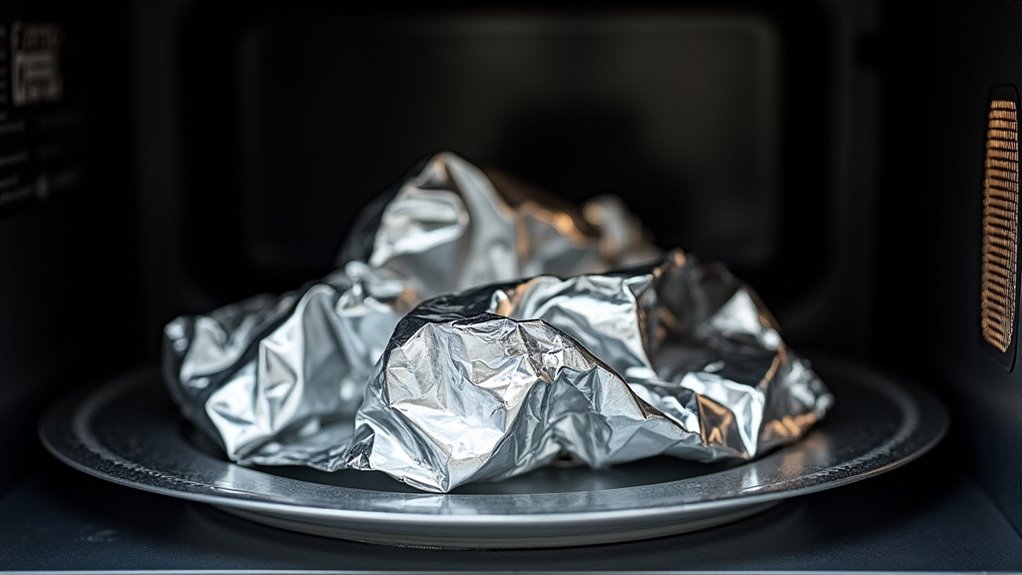
Although aluminum foil can be used in microwaves, you need to be extremely careful to avoid sparks and fire hazards. When using aluminum foil, make certain it’s completely flat—wrinkles can cause dangerous sparks. Always check your microwave’s owner’s manual for specific safety instructions because not all models allow foil use.
Position the foil at least one inch away from the microwave’s walls, top, and bottom to prevent arcing. If your manual advises against it, it’s best to avoid using aluminum foil altogether to guarantee safety. Following these guidelines helps you minimize risks and use your microwave safely when foil is involved.
Risks of Fire When Using Aluminum Foil in Microwaves
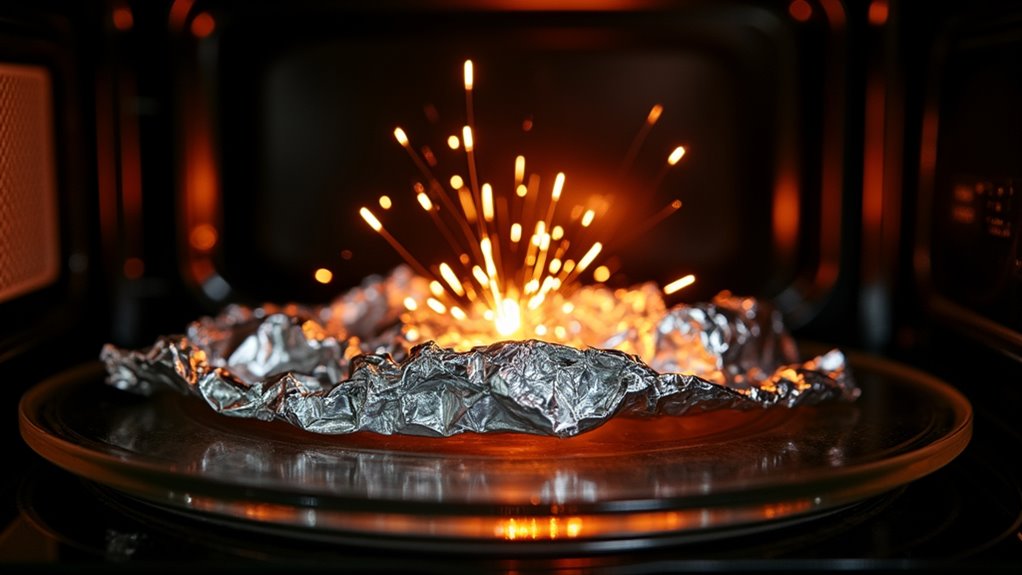
You need to be careful when using aluminum foil in the microwave because it can cause sparking, which might start a fire. Always keep the foil flat and away from the microwave’s walls to prevent sparks.
If you see any sparks, stop the microwave immediately to avoid a fire hazard.
Sparking Hazards
When aluminum foil isn’t used properly in a microwave, it can cause sparks that might ignite nearby materials and start a fire. This sparking hazard happens because aluminum foil reflects microwaves, leading to arcing—electrical sparks jumping between parts of the foil or the microwave’s interior. Wrinkled or crinkled aluminum foil increases this risk, so you should always use it flat.
To reduce sparking hazards, keep the foil at least one inch away from the microwave walls, top, and bottom. If you notice any sparks or arcing while the microwave is running, stop it immediately and remove the foil carefully. Ignoring these warnings can not only create a serious fire hazard but also damage your microwave, causing costly repairs or replacement.
Fire Prevention Tips
Since aluminum foil can easily spark in the microwave, taking fire prevention seriously is essential. To minimize fire hazards, avoid placing aluminum foil too close to the microwave walls, top, or bottom—keep it at least one inch away. Always keep the foil flat and smooth; crinkles or sharp edges increase the risk of arcing and sparks.
Never leave the microwave unattended when using aluminum foil, and stop heating immediately if you see any sparks. Before using foil, check your microwave’s owner’s manual to see if it’s safe to put aluminum foil inside. If the manual doesn’t mention it or advises against it, it’s best to avoid using foil altogether to prevent potential fire hazards and keep your kitchen safe.
Guidelines for Using Metal in Microwave Ovens
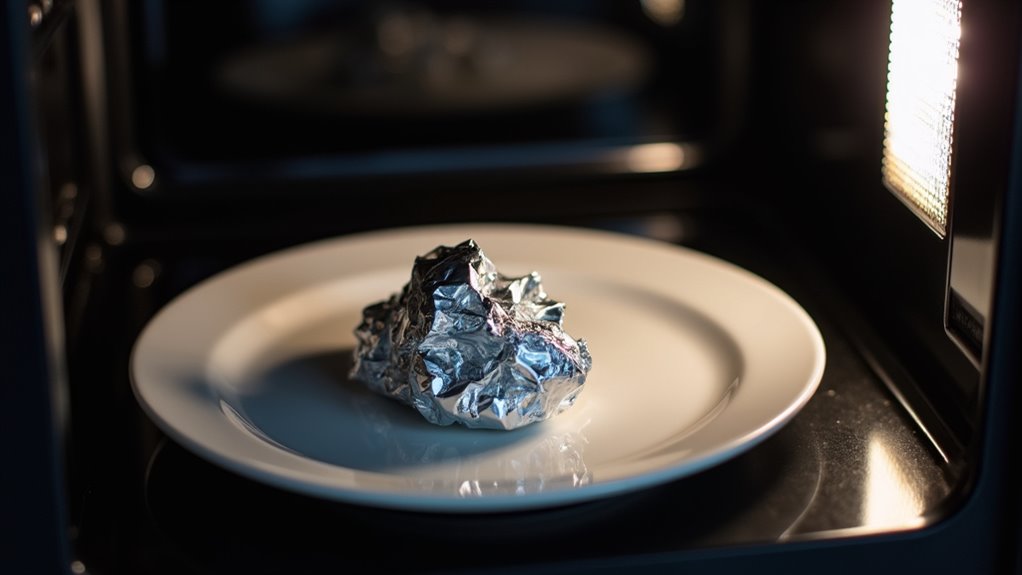
You should be careful when using metal in your microwave, as most traditional models don’t allow it due to sparking risks. If you must use aluminum foil, keep it smooth and away from the walls to avoid damage.
Always check your microwave’s manual to see what metal items, if any, are safe to use.
Safe Metal Usage
Although metal is generally discouraged in microwave ovens, you can safely use aluminum foil if it’s flat and kept at least an inch away from the microwave’s walls, ceiling, and floor to prevent sparks. Always check your owner’s manual to see what’s safe to put inside. Avoid crumpled foil or pieces that touch the microwave’s interior surfaces.
Use metal cookware only if it’s approved and free of metallic accents like gold or silver. Monitor the microwave closely when using any metal and stop immediately if sparks appear.
| Do’s | Don’ts |
|---|---|
| Use flat aluminum foil | Avoid crumpled or touching foil |
| Keep foil 1 inch from surfaces | Don’t use metal with metallic trim |
| Follow the owner’s manual | Avoid unattended microwave use |
| Monitor for sparks | Don’t ignore sparks |
Microwave Metal Restrictions
When using metal in your microwave, it’s important to know the restrictions that help prevent damage and safety hazards. Generally, you should avoid placing metal objects inside, as they can cause sparking and damage. However, aluminum foil can be safe to put aluminum in if it’s completely flat, not crinkled, and kept at least one inch away from the microwave’s walls or other metal items.
Some convection microwaves may allow limited metal use, but you should always check your owner’s manual for specific guidance. Items made from steel, iron, or copper are unsafe since they reflect microwaves and increase sparking risks. Always watch your microwave closely when using any metal, and stop immediately if sparks appear.
Following these restrictions helps keep your microwave safe and functional.
Best Practices for Handling Aluminum Foil in Microwaves
How can you safely use aluminum foil in your microwave without risking sparks or damage? First, make certain the aluminum foil is completely flat and wrinkle-free since creases can cause sparking. When you use aluminum foil, position it away from the walls, bottom, and top of the microwave by at least one inch to prevent arcing.
Use foil sparingly—only to shield parts of food rather than wrapping it entirely. Always consult your microwave’s user manual before use, as recommendations can vary by model. Most importantly, monitor the microwave closely while it’s running.
If you see or hear any sparks, stop the microwave immediately to avoid damage or fire hazards. Following these best practices guarantees safer use of aluminum foil in your microwave.
Differences Between Microwave and Oven Use of Aluminum Foil
Using aluminum foil in your microwave requires careful attention, but its use in conventional ovens is quite different. In ovens, aluminum foil is generally safe and helps with cooking or baking, as long as it doesn’t touch heating elements to avoid fire risks.
However, in a microwave, the use of aluminum foil is more restricted. Because microwaves operate with electromagnetic energy, foil can spark or cause arcing if it’s crinkled or too close to the microwave walls. You must follow the manufacturer’s instructions carefully to use aluminum foil safely in a microwave, ensuring it stays flat and away from the interior surfaces.
Understanding these differences is key to preventing hazards and using aluminum foil correctly in each appliance.
Compatible Materials for Microwave Cooking
Although microwaves can heat many materials, not all containers are safe to use. When it comes to compatible materials for microwave cooking, glass, paper, and some ceramics without metal accents or coatings are your best bet. Most ceramic and glass dishware works well, but avoid crystal or handmade pottery.
Certain plastics are microwave-safe, but steer clear of single-use plastics that might melt or leach chemicals. Paper plates generally work unless they have plastic coatings, so always check the instructions or microwave-safe symbols. While aluminum foil isn’t typically recommended, understanding compatible materials helps you avoid hazards and guarantees safe cooking.
Always follow the microwave’s instructions to protect your food and appliance.
Manufacturer Recommendations and Support Resources
Knowing which materials work safely in your microwave is important, but it’s just as important to check your appliance’s specific guidelines. Always start by consulting the owner’s manual for manufacturer recommendations on using aluminum foil. If the manual lacks clear instructions, it’s best to avoid using foil altogether to guarantee safe operation.
Some key support resources can help you:
- Customer service contacts for direct assistance
- Online guides tailored to your microwave model
- Tips on proper foil application, like keeping it flat
- Information about extended service plans for added support
Frequently Asked Questions
Is It Safe to Put Aluminum Foil in the Microwave?
It’s generally not safe to put aluminum foil in the microwave unless you follow specific guidelines. If you use it, make sure the foil is completely flat and doesn’t touch the microwave’s walls or ceiling.
Always check your microwave’s manual first. If you see any sparks, stop the microwave right away. To be safe, you might want to avoid using aluminum foil altogether to prevent any fire risks or damage.
Is Aluminum Foil Good for a Microwave Oven?
You know what they say: “Better safe than sorry.” Aluminum foil isn’t really good for your microwave oven because it can cause sparks or even damage if you’re not super careful.
If you do use it, keep it smooth, away from the walls, and watch it closely. Otherwise, it’s best to avoid it altogether to protect your microwave and keep your food safe.
Is Aluminum Safe in a Microwave Oven?
Aluminum isn’t inherently unsafe in a microwave, but you’ve got to be careful. If you use aluminum foil, make sure it’s smooth and doesn’t touch the microwave walls—otherwise, sparks can fly. Always keep it at least an inch away from the interior surfaces.
If you hear any popping or see sparks, stop immediately. To stay safe, it’s best to check your microwave’s manual before using aluminum foil inside.
What Two Things Should You Not Put in a Microwave?
Did you know that nearly 30% of microwave fires start from improper materials? You shouldn’t put metal objects like aluminum foil or skewers in your microwave, as they can cause dangerous sparks.
Also, avoid items with metallic paint or gold trim, which can lead to arcing. Sticking to microwave-safe containers helps keep you safe and your appliance intact.
Always check your microwave’s manual for approved materials before heating.
Conclusion
So, can you safely use aluminum foil in your microwave? While it’s tempting, you’ve got to be careful—improper use can cause sparks or even fires. Remember, not all metals behave the same, and following manufacturer guidelines is key.
If you want to avoid risks, stick to microwave-safe materials and use foil only as recommended. Isn’t it worth a little extra caution to keep your kitchen safe and your food perfectly cooked? When considering if aluminum foil can go in the microwave oven, always prioritize safety and proper usage.