Where to Put Handles on Kitchen Cabinets
You should place kitchen cabinet handles near the edges opposite the hinges, about 2-3 inches from the door’s edge for easy reach and balance.
Position handles between one-third and halfway down vertically on doors, while placing drawer handles near the top edge, aligned consistently for a polished look.
For base cabinets, align handles horizontally near the top; on wall cabinets, place them on the bottom corners vertically.
This thoughtful placement enhances comfort and style. Exploring more can help you perfect both function and design.
Key Principles for Cabinet Handle Placement
When you install handles on kitchen cabinets, placing them thoughtfully guarantees both style and functionality. Start by considering the ergonomic height. Handles should be easy to reach without strain, typically around 30-36 inches from the floor. This confirms comfort during daily use.
Next, focus on aesthetic balance. Handles should complement the cabinet design and create visual harmony. Aligning handles consistently across drawers and doors prevents a chaotic look and highlights your kitchen’s design flow. Keep spacing uniform to maintain an orderly appearance.
Also, choose handle sizes proportional to your cabinets, avoiding oversized or tiny pulls that disrupt the balance. By prioritizing ergonomic height and aesthetic balance, you’ll create a kitchen that feels inviting and looks impeccably polished, enhancing both usability and style.
Where to Position Cabinet Handles on Doors
A key step in positioning cabinet handles on doors is to place them where your hand naturally falls, typically near the edge opposite the hinges. For a balanced look, measure the door width and position the handle around 2 to 3 inches from the edge.
Handle height should be comfortable for most users, usually centered vertically between one-third and halfway down the door’s height. This placement guarantees ease of use without awkward reaching.
Consider the door width carefully. Wider doors may require a slightly lower handle height for ergonomic access. By aligning handle height consistently across all doors, you create a cohesive, visually pleasing kitchen design.
Thoughtful handle placement enhances function and aesthetics, making your kitchen cabinet doors both stylish and user-friendly.
Best Places for Cabinet Handles on Drawers
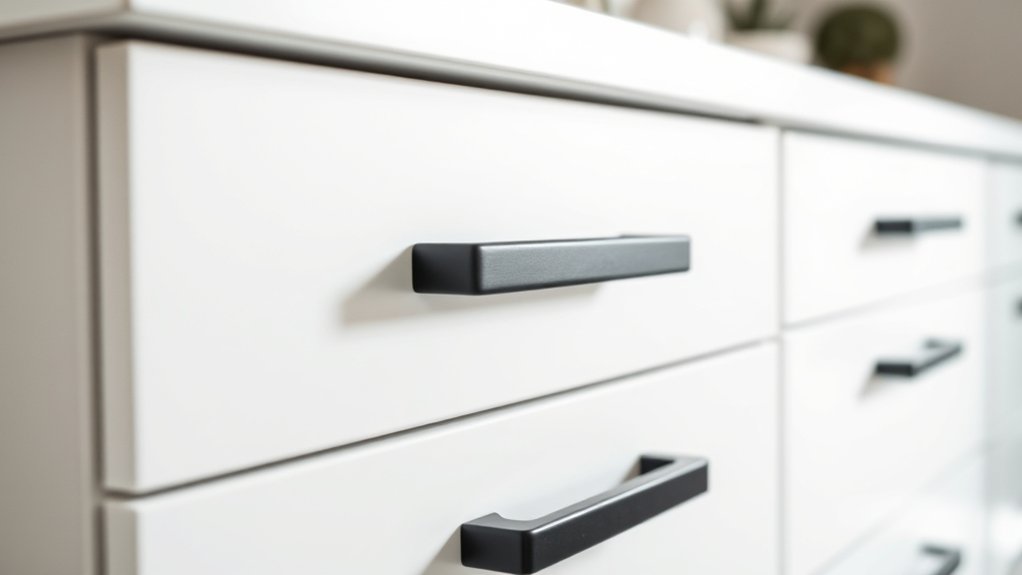
Although drawer handles serve a similar purpose as door handles, their placement requires a different approach to maximize both functionality and visual harmony. You want to position handles near the top edge of the drawer front, allowing easy grip without awkward bending. For taller drawers, placing handles slightly lower, around one-third down, can improve accessibility.
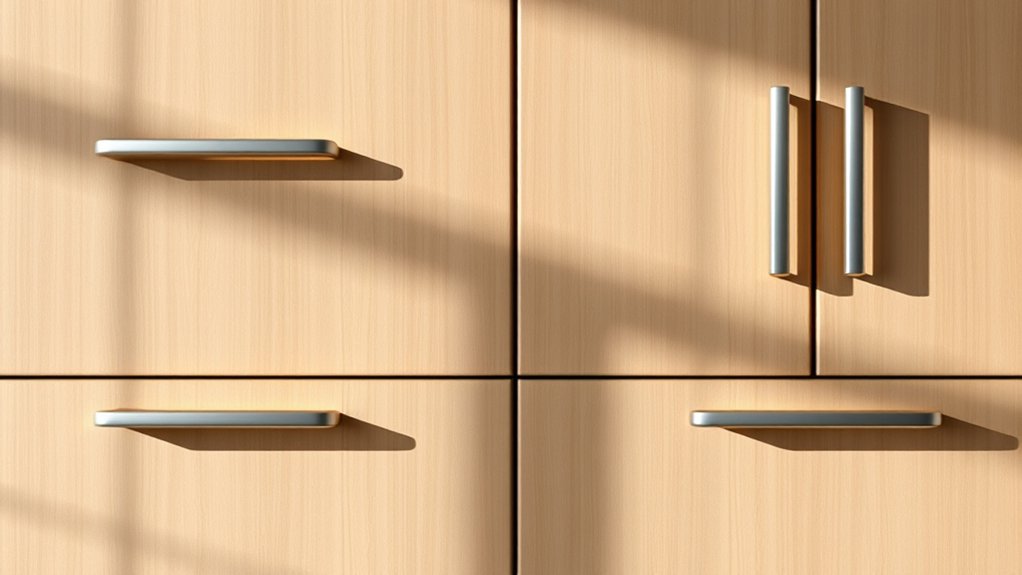
Consider drawer height carefully; consistent placement across drawers of varying sizes creates a balanced look. When selecting handle styles, slim bar pulls suit modern kitchens and align well with horizontal placement, while cup pulls work best centered for a classic feel. Whichever style you choose, make sure the handle complements the drawer height and overall cabinet design, enhancing both utility and aesthetic appeal in your kitchen.
Choosing Cabinet Handle Placement for Different Cabinet Types
Getting the handle placement right on different cabinet types can elevate your kitchen’s overall look and functionality. You’ll want to take into account handle types, aesthetic balance, and ergonomic considerations for each cabinet style.
Here’s a quick guide to help you install handles with precision:
| Cabinet Type | Handle Placement | Installation Tips |
|---|---|---|
| Base Cabinets | Near top edge, horizontal | Align handles consistently for flow |
| Wall Cabinets | Bottom corner, vertical | Use smaller handles for balance |
| Tall Cabinets | Mid-height, vertical | Make sure handles are easy to reach |
| Drawers | Center or upper edge | Match handle style with cabinet type |
Following these tips guarantees your kitchen handles not only look great but also function smoothly every day.
How Cabinet Handle Placement Affects Kitchen Style
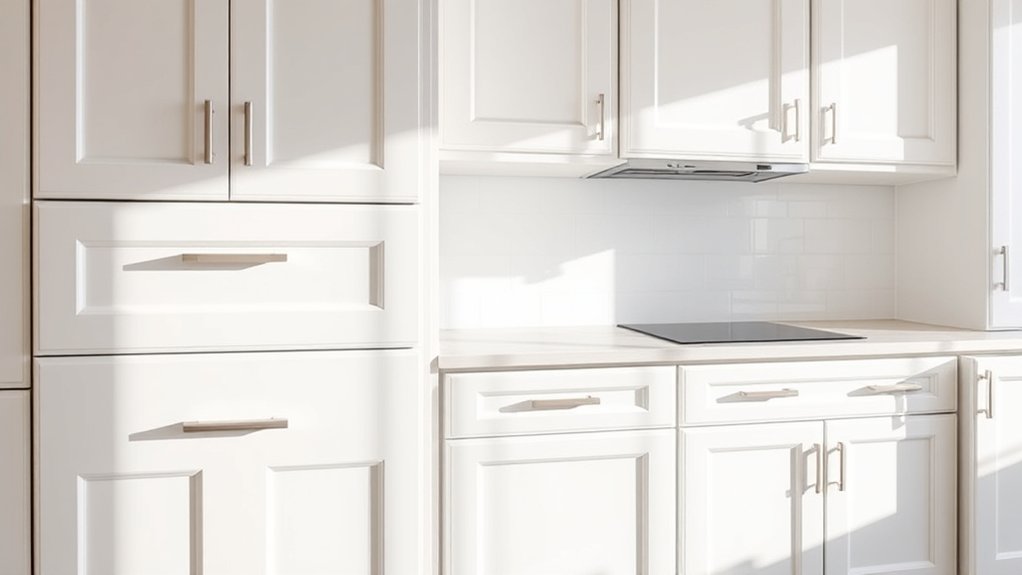
When you carefully choose where to place your cabinet handles, you directly influence the kitchen’s overall style and atmosphere. Placing handles horizontally on drawers emphasizes sleek, modern aesthetics, creating clean lines that complement minimalist designs.
Vertical handles on cabinet doors add a classic touch, but positioning them near the edges enhances accessibility and maintains visual balance. You’ll also want to take into account ergonomic considerations. Handles should be easy to grasp without awkward stretching, especially in high-use areas.
For example, placing handles closer to the top of lower cabinets improves comfort and efficiency. Thoughtful handle placement not only elevates your kitchen’s look but also streamlines daily use, blending form and function seamlessly to suit your style and lifestyle.
Frequently Asked Questions
What Tools Do I Need to Install Cabinet Handles?
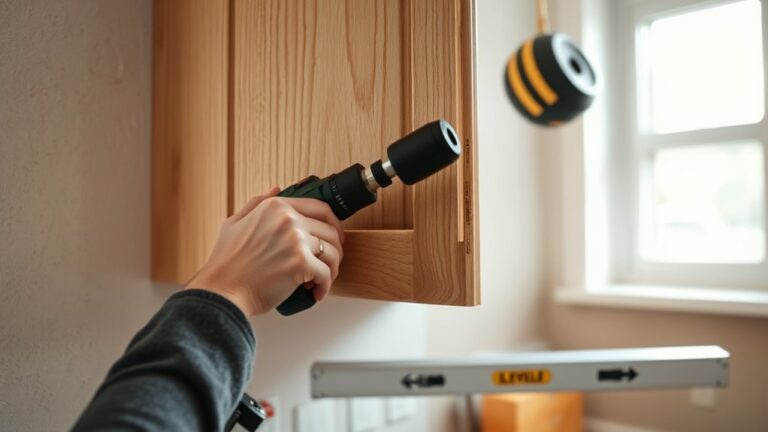
You’ll need a drill, measuring tape, pencil, and screwdriver to install handle types like knobs or pulls. Use installation tips like double-checking measurements and drilling pilot holes for precise, aesthetic, and secure cabinet handle placement.
How Do I Measure for Cabinet Handle Placement Accurately?
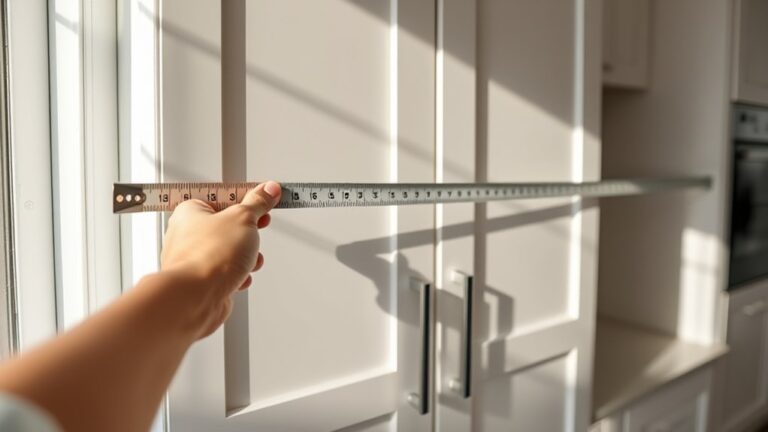
You’ll measure handle height by aligning with placement guidelines: typically 2.5 to 3 inches from the cabinet edge and 34 to 36 inches from the floor.
Use a tape measure and level for precise, aesthetic placement.
Can I Use the Same Handles for Cabinets and Drawers?
You can absolutely use the same handles for cabinets and drawers, but mixing handle styles or finishes adds flair. Choose consistent handle finishes for harmony, yet vary handle styles to balance aesthetics with practical grip and function.
What Materials Are Best for Durable Kitchen Cabinet Handles?
You’ll want handle materials like stainless steel, brass, or zinc alloy for durability. Finish options such as brushed nickel or matte black not only look sleek but resist fingerprints and wear, keeping your kitchen stylish and practical.
How Do I Remove Old Cabinet Handles Without Damaging Doors?
You’ll want to use gentle handle removal techniques. Start by unscrewing handles carefully with a screwdriver.
Support cabinet door care by avoiding force, cleaning residue, and checking for paint chips to keep surfaces flawless during removal.