How Long Does It Take to Paint Kitchen Cabinets
Painting your kitchen cabinets usually takes two to five days, depending on your kitchen size, cabinet condition, and paint type. The time it takes to paint kitchen cabinets can vary significantly based on these factors.
Smaller kitchens and well-maintained cabinets speed up prep and painting, while larger kitchens or damaged surfaces require more time for sanding and repairs.
Oil-based paints need longer drying between coats, unlike quick-drying acrylics.
Efficient tool use and careful layering help guarantee a smooth, durable finish.
Learn how to break the process into manageable steps and speed it up without compromising quality.
How Long Does Painting Kitchen Cabinets Usually Take?
How long does painting kitchen cabinets usually take? Typically, the process spans two to five days, depending on your efficiency and preparation quality. Your first step is color selection, which influences drying time and the number of coats needed.
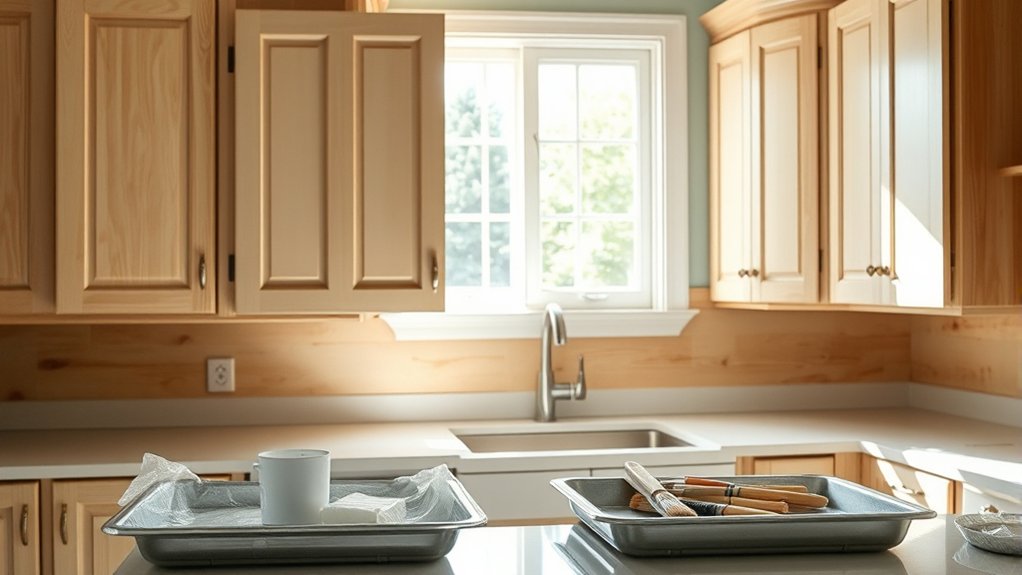
Lighter colors may require more coats for full coverage, extending the timeline. Next, tool preparation is essential. Gather brushes, rollers, sandpaper, and spray equipment in advance to avoid delays.
Proper sanding and cleaning between coats also impact overall duration. You’ll spend significant time on priming to guarantee adhesion and durability. While you might think painting itself is quick, drying and curing times between layers are the real time consumers.
Efficient tool preparation and informed color selection can streamline the process, helping you finish within your projected timeframe.
How Does Kitchen Size Affect Painting Time?
Your kitchen’s size directly impacts how long painting takes. Smaller spaces generally require less time for both prep and painting.
Larger kitchens mean more cabinets, which increases sanding, cleaning, and taping efforts. Understanding this helps you plan your project timeline more accurately.
Small Vs. Large Kitchens
Although kitchen size directly influences the scope of work, the difference in painting time between small and large kitchens can be significant. In smaller kitchens, the compact kitchen layout means fewer cabinets and less surface area, allowing you to complete painting faster.
Large kitchens, with more extensive cabinet runs and often varied cabinet styles, require more time for each coat and drying period. Additionally, complex kitchen layouts with multiple angles or islands increase the time needed for careful brushwork and spray techniques.
Keep in mind that cabinet styles also affect timing; flat panels are quicker to paint than intricate raised panels or glass inserts. Ultimately, the larger the kitchen and the more detailed the cabinet styles, the more time you should allocate for a thorough, professional paint job.
Impact On Prep Time
Preparing your kitchen cabinets for painting can take considerably longer in larger spaces due to the increased number of surfaces that need cleaning, sanding, and masking. The size directly influences your surface preparation workload, requiring meticulous attention to detail for every cabinet door, drawer, and frame.
Here’s how kitchen size impacts prep time:
- Larger kitchens demand more extensive prep techniques, including repeated sanding to guarantee even adhesion.
- Masking off hardware and adjacent areas takes longer as you cover more edges and corners.
- Cleaning surfaces thoroughly to remove grease or residues increases with cabinet quantity, which is critical for paint longevity.
Understanding these factors helps you plan realistic timelines and guarantees your surface preparation meets professional standards before painting.
Why Does Cabinet Condition Change the Project Length?
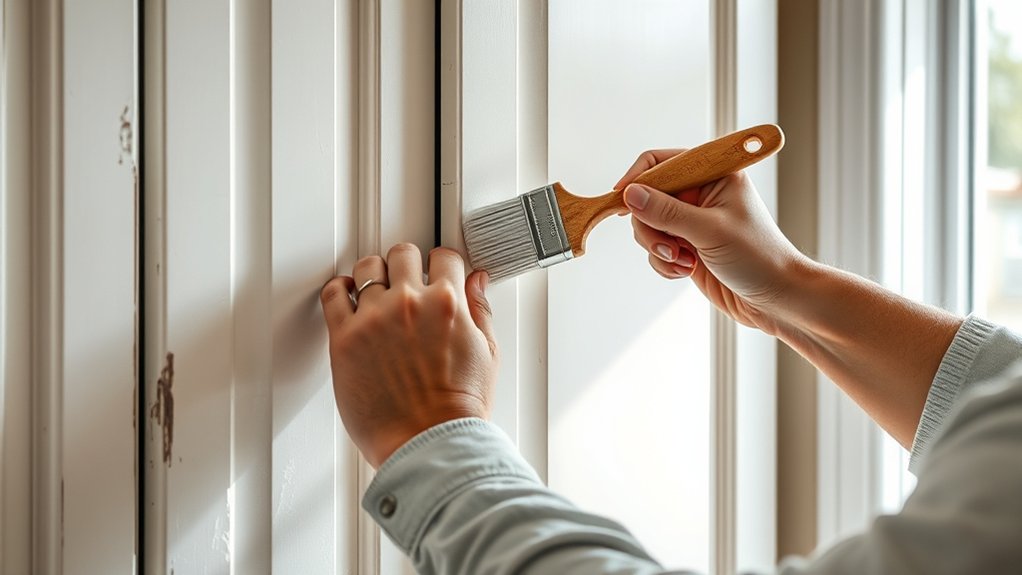
Because cabinet condition directly affects the amount of prep work required, it influences the overall project timeline considerably. If your cabinets are made from a porous or softer cabinet material, such as MDF or particleboard, they often need more sanding and priming to guarantee finish durability.
Conversely, hardwoods with existing durable finishes might require less surface prep but demand careful cleaning and deglossing. Damaged surfaces, cracks, chips, or peeling paint also extend project length since you’ll need to repair and smooth these areas before painting.
Ignoring these factors can lead to poor adhesion and reduced durability, causing costly touch-ups later. By evaluating cabinet condition upfront, you can better estimate how much time prep and repairs will add, allowing you to plan your painting project more accurately and avoid unexpected delays.
How Does Paint Type Affect Drying Time?
When you choose a paint type, you directly influence how long your kitchen cabinets need to dry before you can apply additional coats or use them. Different paint formulations affect drying time due to their chemical composition and finish type. For example:
Selecting your paint type directly affects drying time and the overall finish of your kitchen cabinets.
- Oil-based paints offer superior paint durability but require longer drying times, typically 6-8 hours between coats.
- Water-based acrylics dry faster, often within 1-2 hours, but may sacrifice some durability compared to oil-based options.
- Alkyd paints combine quick drying with good durability, usually drying to the touch in 2-4 hours.
Understanding these differences helps you plan your project efficiently, balancing drying time with your desired finish type and the long-term durability of your cabinets.
How Does Cabinet Prep Add Time to Your Project?
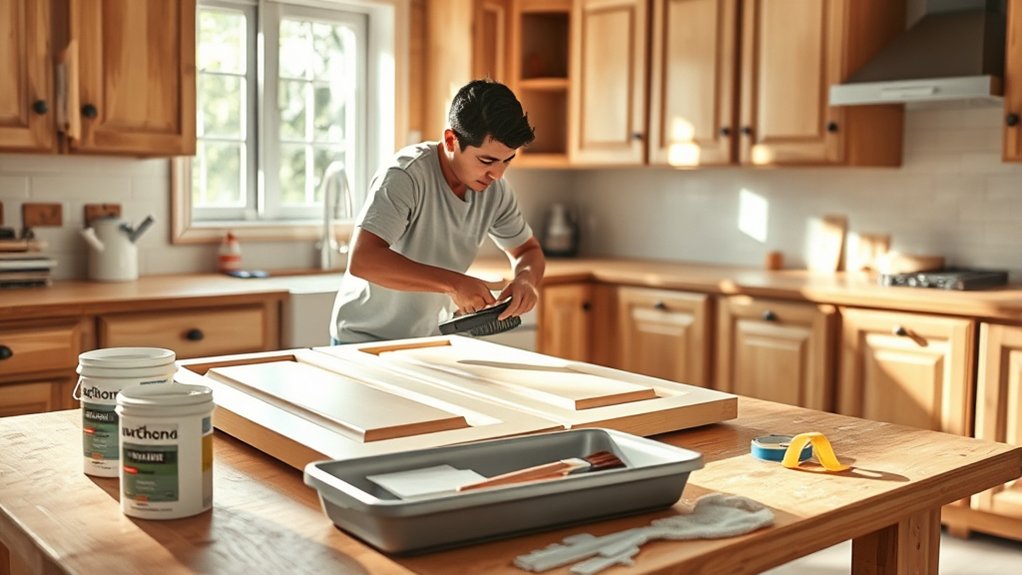
Although painting might seem straightforward, proper cabinet prep greatly extends your project timeline. You’ll spend significant time on surface cleaning to remove grease, dirt, and residues that prevent paint adhesion. Skipping this step risks peeling and uneven finish.
After cleaning, you’ll apply sanding techniques to smooth surfaces and dull the existing finish, ensuring the new paint bonds well. This involves hand-sanding corners and edges along with machine sanding flat areas, which can be time-consuming.
Additionally, you may need to fill holes or dents with wood filler and sand again once dry. Each stage demands patience and precision; rushing leads to subpar results.
Proper prep can add several hours or even days to your schedule but ultimately produces a durable, professional-looking finish that’s worth the extra effort.
Which Painting Steps Take the Longest?
The most time-consuming painting steps usually involve applying multiple coats and allowing sufficient drying time between each. You’ll find that mastering sanding techniques is essential. Proper sanding guarantees a smooth surface, which directly impacts the finish quality but can be labor-intensive.
Primer application is another step that demands patience. You need even coverage and adequate drying to prevent peeling or uneven paint adhesion. Finally, the actual paint application requires multiple thin coats, each needing time to dry thoroughly.
- Detailed sanding techniques to prep surfaces
- Careful, even primer application
- Multiple paint coats with drying intervals
Each step demands precision and time, so expect these to extend your project timeline considerably. Skipping or rushing them compromises durability and appearance.
How Can You Break the Project Into Manageable Time Blocks?
You’ll want to divide the project into clear phases: prep work, painting sessions, and drying time. Plan each painting session around your available hours to maintain consistency without rushing.
Accounting for drying and curing guarantees you don’t overlap steps and compromise the finish.
Prep Work Time
Breaking the prep work into three focused sessions helps manage the overall project efficiently. Start by removing hardware and cleaning cabinet surfaces thoroughly.
Next, apply proper sanding techniques to guarantee smoothness and adhesion. Use fine-grit sandpaper for a consistent finish.
Finally, choose your primer selection carefully based on the cabinet material. This step is vital for durability and paint adherence.
You can divide prep work into these manageable blocks:
- Surface cleaning and hardware removal: eliminates grease and dust.
- Sanding techniques: promote better paint bonding and smooth texture.
- Primer selection and application: assures long-lasting coverage.
Painting Sessions Length
Three focused painting sessions help you maintain control over cabinet coverage and drying times. Start with the first session by applying a thin base coat using the spray technique for even coverage and minimal brush marks.
The second session involves a light sanding followed by a second coat, this time using brush application in detailed areas to guarantee full coverage and smooth edges. In the final session, inspect for imperfections and apply a touch-up coat where needed, focusing on corners and trim with a brush to avoid overspray.
Breaking the project into these manageable blocks prevents fatigue and reduces mistakes, letting each coat set properly before the next. This approach balances efficiency with quality, giving your cabinets a professional, durable finish.
Drying And Curing
After completing each painting session, allow adequate drying and curing time to confirm a durable finish. Proper drying techniques and understanding curing times prevent smudges and assure longevity.
Typically, you’ll want to:
- Use fans or dehumidifiers to speed up drying techniques without compromising the paint’s integrity.
- Wait at least 24 hours before applying additional coats, depending on paint type and environmental conditions.
- Allow full curing times of up to 7 days before reinstalling hardware or subjecting surfaces to heavy use.
Breaking your project into manageable time blocks means planning sessions around these drying and curing phases. This approach avoids rushes that can lead to imperfections and sets you up for a professional-quality result that lasts.
What Tips Help You Paint Kitchen Cabinets Faster and Better?
Although painting kitchen cabinets can be time-consuming, using the right techniques and tools will help you work faster and achieve a professional finish. Focus on brush techniques that minimize strokes and avoid over-brushing, such as using a high-quality angled brush for edges and a foam brush for flat surfaces.
Proper paint selection is essential. Opt for fast-drying, self-leveling cabinet paint with durable finishes like alkyd or water-based enamel. Prepare surfaces thoroughly by cleaning and sanding to promote better adhesion and fewer coats.
Remove hardware and label doors to streamline reassembly. Work in a well-ventilated area to speed drying times and use a paint conditioner to reduce brush marks. These steps promote efficiency without compromising quality in your kitchen cabinet painting project.
Frequently Asked Questions
What Tools Do I Need to Paint Kitchen Cabinets?
You’ll need the right tools to dance through cabinet preparation: sandpaper, degreaser, and painter’s tape. Choose quality brushes or a sprayer for smooth paint types like latex or oil-based.
Gloves and drop cloths protect your space.
Can I Paint Kitchen Cabinets Myself or Hire a Professional?
You can paint kitchen cabinets yourself using DIY tips to save money, but professional services offer quality and efficiency.
Conduct a cost analysis and consider time management to decide which approach best fits your skills and schedule.
How Much Does It Typically Cost to Paint Kitchen Cabinets?
You’d think painting cabinets costs peanuts, but cost factors like prep, materials, and labor add up quickly. To save, follow DIY tips: sand well, choose quality paint, and allocate time wisely for a professional finish.
What Colors Are Best for Kitchen Cabinets?
You’ll want to choose trending colors like navy blue, soft gray, or sage green for kitchen cabinets. Pair them with matte or satin finish types to guarantee durability and a modern, clean appearance that’s easy to maintain.
How Long Does the Paint Last on Kitchen Cabinets?
You can expect paint durability on kitchen cabinets to last 5-10 years with proper cabinet maintenance.
Regular cleaning and avoiding harsh chemicals help preserve the finish, ensuring your cabinets stay fresh and protected longer.