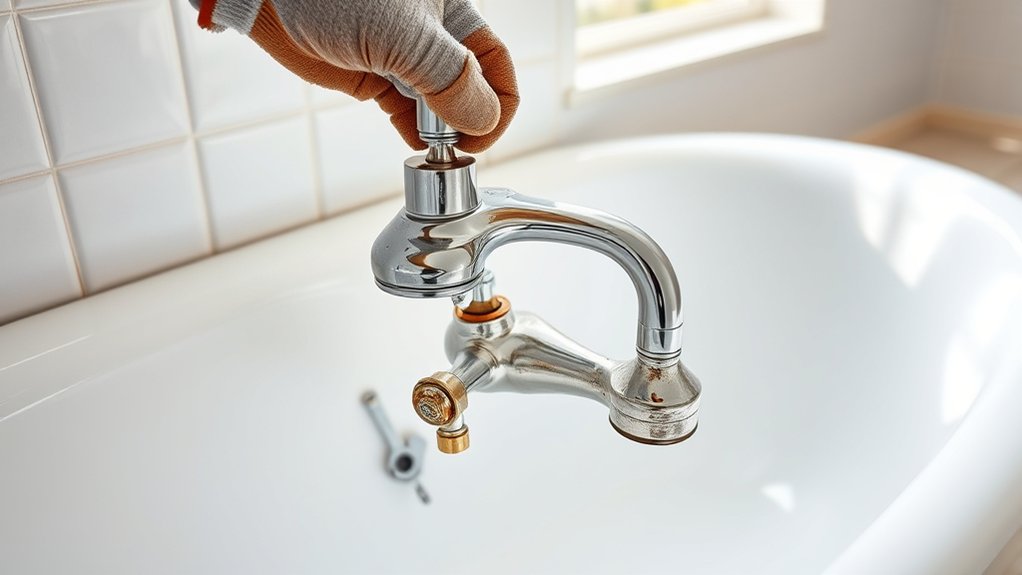
How to Replace Tub Faucet
To replace your tub faucet, start by turning off the main water supply and draining the tub by opening the faucet. This ensures no water will flow while you work on the fixture.
Gather all necessary tools such as an adjustable wrench, screwdrivers, plumber’s tape, and silicone sealant. Carefully remove the old faucet by loosening any screws or nuts holding it in place.
Then, inspect the mounting area to ensure it is clean and ready for the new installation.
Next, align the new faucet properly and apply plumber’s tape to the threads for a leak-proof seal. Securely install the faucet, making sure everything is tight and correctly positioned.
Finally, restore the water flow and check for any leaks. Adjust the faucet as needed to ensure proper function. Following these steps will guarantee a smooth, effective faucet replacement.
Turn Off Water and Drain the Tub
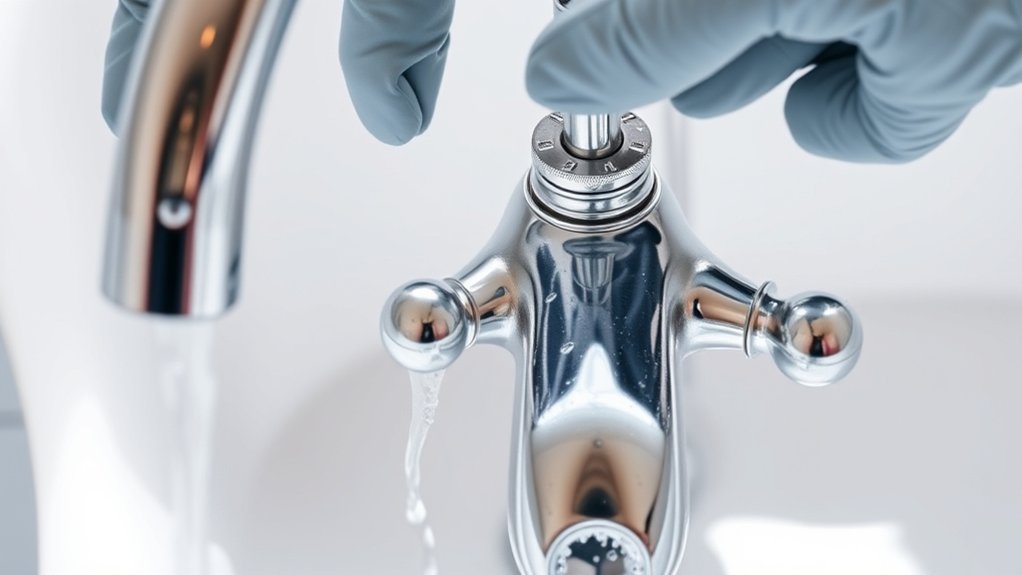
Before you begin replacing the tub faucet, turn off the main water supply to prevent leaks and water damage. Locate your home’s water supply valve, usually near the water heater or main line, and shut it off completely.
Next, open the tub faucet to drain any residual water from the pipes, reducing pressure and preventing spills during removal. Perform drain cleaning by removing the tub stopper and clearing any debris to guarantee smooth water flow when testing the new faucet.
If your tub has a separate drain valve, open it to expedite draining. Confirm that the water supply is fully off by checking for no water flow. Taking these preparatory steps guarantees a clean, dry workspace and minimizes complications during the faucet replacement process.
Gather Tools and Materials for Tub Faucet Replacement
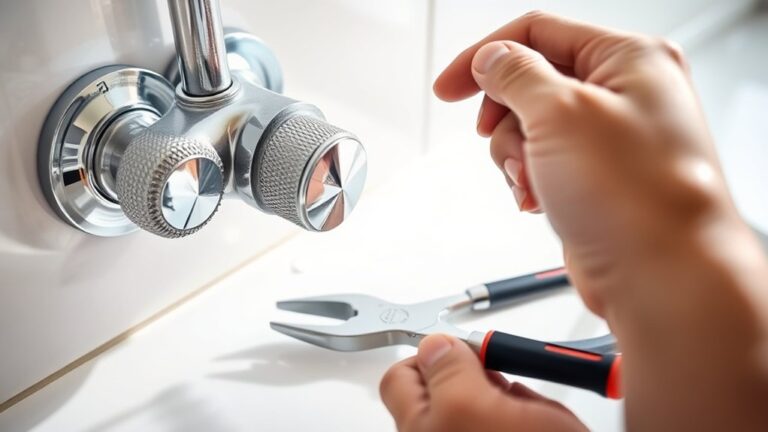
Once the water supply is securely shut off and the tub is drained, you can gather the necessary tools and materials to replace the tub faucet. Begin by identifying the correct faucet type to guarantee compatibility with your plumbing.
Choose between single-handle, dual-handle, or thermostatic models based on your needs. Gather essential plumbing tools and follow installation tips to streamline the process and avoid damage.
Key items include:
- Adjustable wrench
- Screwdrivers (flathead and Phillips)
- Plumber’s tape (Teflon tape)
- Replacement tub faucet matching your faucet type
- Silicone sealant for watertight installation
Having these tools and materials ready supports efficient faucet replacement and future maintenance advice, guaranteeing a secure, leak-free fit.
Remove the Old Tub Faucet Safely
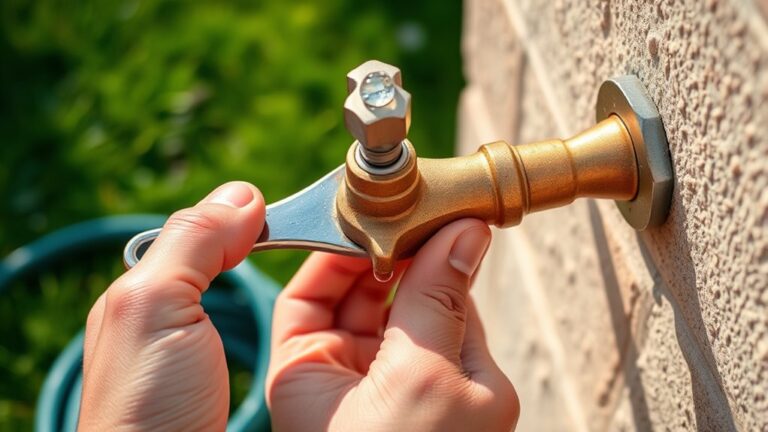
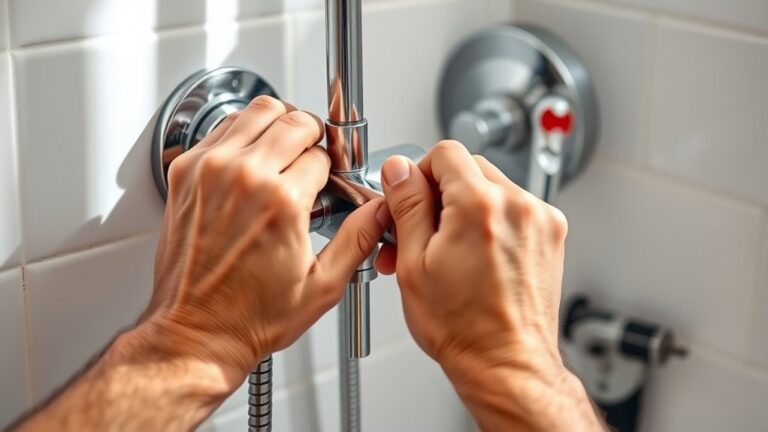
Start by carefully loosening the screws or nuts that secure the old tub faucet using the appropriate screwdriver or adjustable wrench. Different faucet types, like slip-on or threaded models, require specific tools and removal techniques.
For slip-on faucets, gently pry around the base to release the set screw; for threaded faucets, turn counterclockwise to unscrew. Be certain to shut off the water supply before starting to prevent leaks.
As you remove the faucet, inspect the mounting surface for damage or corrosion, which can affect installation. Keep installation tips in mind: handle parts gently to avoid damaging plumbing or wall surfaces.
Dispose of old components responsibly, and clean the area thoroughly before proceeding. This careful removal guarantees a smooth changeover to installing your new tub faucet.
Install the New Tub Faucet
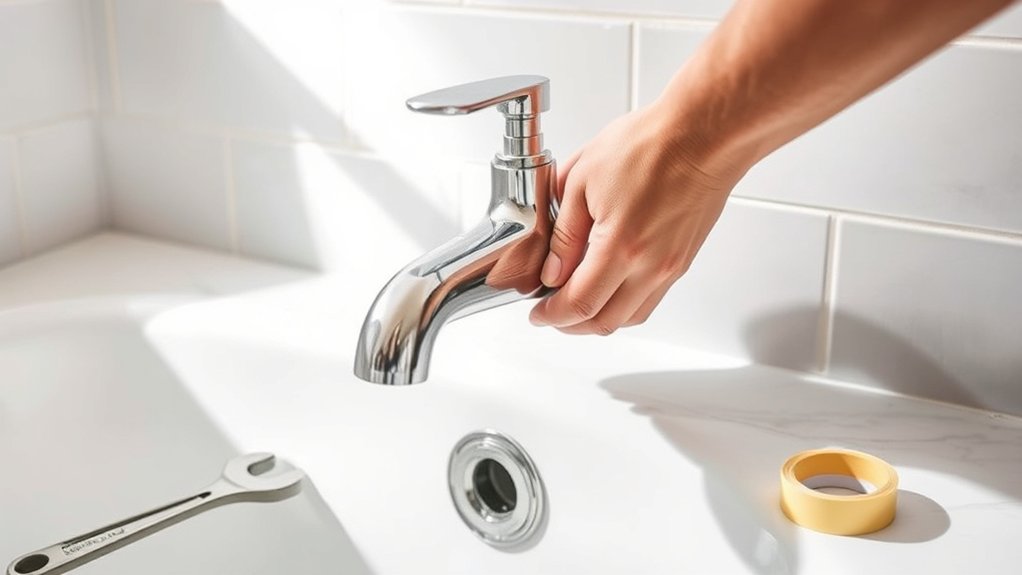
Align the new tub faucet with the mounting surface and guarantee all connections match the existing plumbing. Choose a faucet style compatible with your setup to avoid leaks or misalignment.
Secure the faucet using the provided hardware, making certain of tight, even fastening. Use plumber’s tape on threaded connections for a watertight seal.
Keep these installation tips in mind:
- Confirm faucet styles fit your pipe spacing.
- Clean mounting surfaces before installation.
- Apply plumber’s tape on all threaded joints.
- Tighten screws and nuts firmly but avoid overtightening.
- Check alignment before finalizing installation.
Following these practical steps guarantees a secure, leak-free fit and helps you avoid common issues during installation.
Test the New Tub Faucet and Troubleshoot Issues
After securing the new tub faucet and confirming all connections are tight, you need to test its operation to confirm proper function and detect any leaks. Turn on the water supply and run both hot and cold water, checking for consistent faucet performance.
Observe the spout and handle for smooth operation and proper water flow. Inspect all joints and seals closely for common leaks, including drips from the spout or moisture around the base.
If you encounter leaks, tighten connections or replace faulty washers and O-rings. Should water pressure be uneven, verify the cartridge installation or clear any debris in the valve.
Testing now prevents damage and guarantees reliable faucet operation. Address issues promptly to avoid costly repairs and maintain ideal tub faucet performance.
Frequently Asked Questions
What Types of Tub Faucets Are Available for Replacement?
You’ll find compression, cartridge, ball, and disc faucets for tub replacements. Choose tub spout types like slip-on or threaded.
Popular faucet brands include Moen, Delta, Kohler, and Pfister, offering reliable, durable options.
How Do I Choose the Right Faucet Finish for My Bathroom?
Don’t put all your eggs in one basket. Choose a faucet finish balancing durability and finish maintenance. Opt for finishes like brushed nickel or chrome that resist corrosion and fingerprints, ensuring long-lasting, low-maintenance bathroom appeal.
Can I Replace a Tub Faucet Myself Without Plumbing Experience?
Yes, you can replace a tub faucet yourself. Use DIY tips like turning off the water and having the tools needed, such as an adjustable wrench, plumber’s tape, and screwdriver. Follow step-by-step guides carefully to avoid leaks and guarantee proper installation.
How Long Does a Typical Tub Faucet Replacement Take?
Time’s of the essence when replacing a tub faucet. You’ll typically spend 1 to 2 hours. Use faucet installation tips and time-saving techniques like prepping tools and shutting water off first to streamline the job efficiently.
What Are Common Signs That My Tub Faucet Needs Replacement?
You’ll know your tub faucet needs replacement if you notice a leaky faucet, inconsistent water pressure, corrosion, or visible damage. These issues indicate worn-out parts that can waste water and reduce performance. Replace promptly.