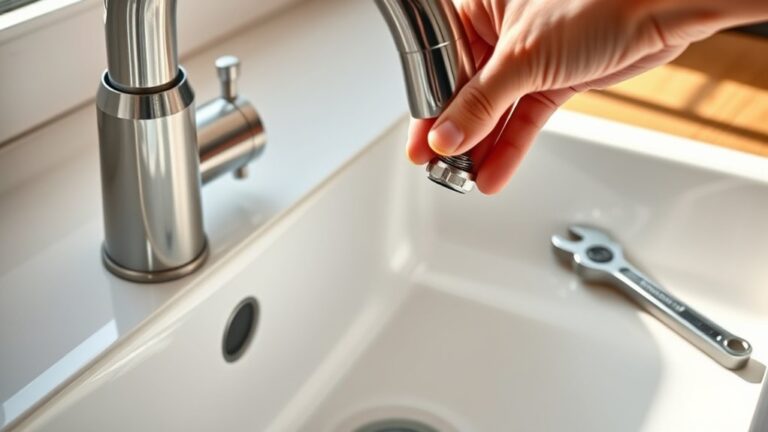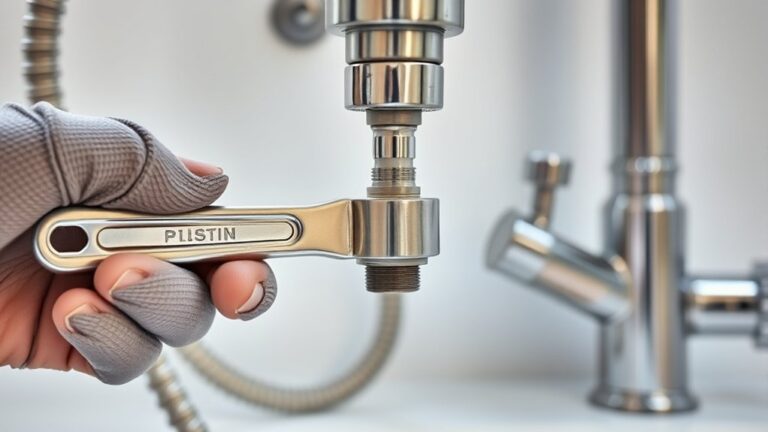
How to Replace Faucet Cartridge
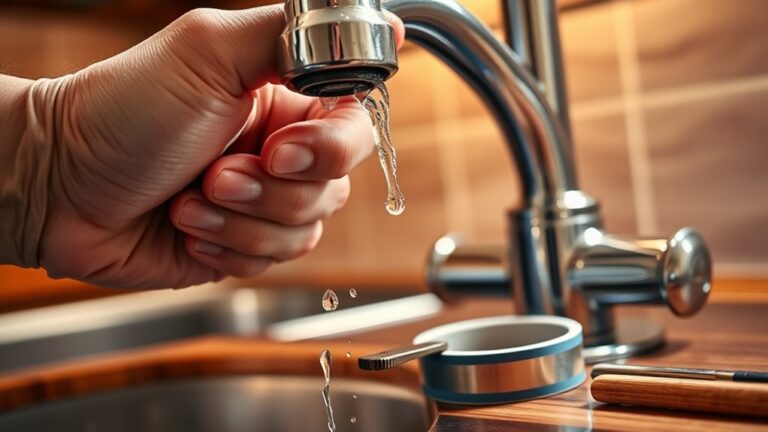
To replace your faucet cartridge, first shut off the water supply and open the faucet to relieve pressure. This step is crucial to avoid water spills and ensure safety during the replacement process.
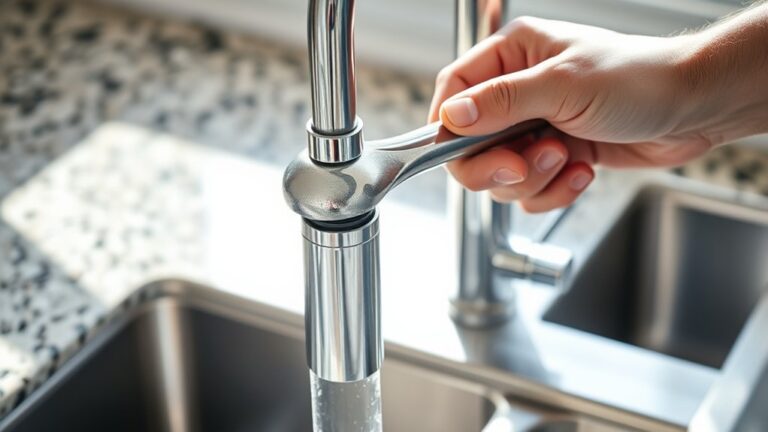
Next, remove the handle by unscrewing the set screw. Then, extract the old cartridge using pliers or a cartridge puller.
Insert the new cartridge carefully, making sure it aligns properly with the slots. Reassemble the handle, applying plumber’s grease to the seals to ensure a tight fit.
After reattaching everything, test the faucet for leaks and smooth operation. Following this method guarantees restored faucet function and prevents leaks, with detailed guidance available ahead.
Quick Overview: What Is Faucet Cartridge Replacement?
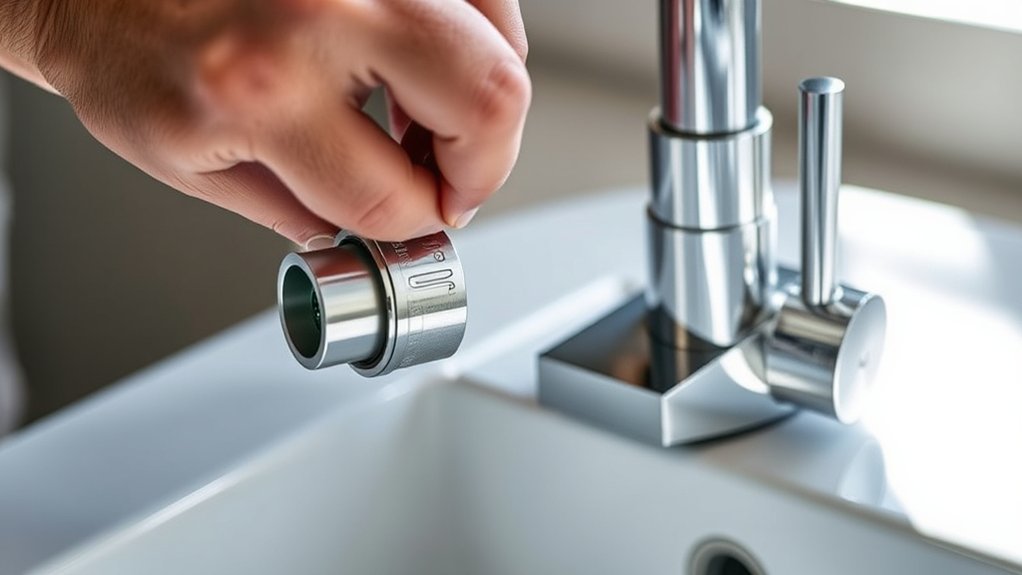
Although faucet designs vary, replacing a cartridge generally involves removing the handle, extracting the old cartridge, and installing a new one to restore proper water flow and control. You’ll encounter several cartridge types, including ceramic, ball, and disk cartridges, each designed for specific faucet models and functions.
Understanding these cartridge types helps you guarantee compatibility and peak performance. The replacement benefits are significant: it stops leaks, improves water pressure, and restores smooth handle operation.
How to Identify and Choose the Right Faucet Cartridge
Replacing a faucet cartridge effectively depends on correctly identifying the type and size you need. Start by recognizing your faucet types, such as single-handle, double-handle, or ball-type, as each requires a specific cartridge design.
Next, measure the cartridge dimensions precisely, focusing on the diameter and stem height to confirm compatibility. Finally, consider cartridge materials; opt for ceramic cartridges for durability and resistance to wear, or plastic for budget-friendly replacements.
Measure cartridge dimensions carefully and choose ceramic for durability or plastic for cost-effective replacement.
- Identify your faucet type to narrow down cartridge options.
- Measure cartridge size to assure a proper fit.
- Select cartridge materials based on durability and water quality needs.
Tools Needed and Step-by-Step Guide to Cartridge Replacement
Gather the essential tools before you begin to guarantee a smooth faucet cartridge replacement. You’ll need an adjustable wrench, screwdriver set, pliers, and plumber’s grease. Depending on your faucet types, single-handle or double-handle, removal steps may vary slightly.
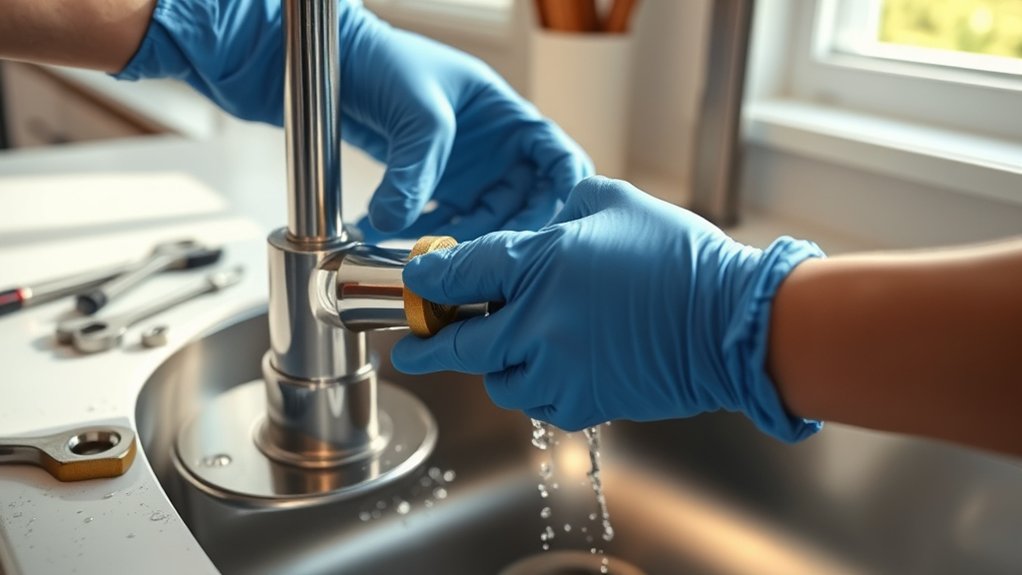
Start by shutting off the water supply and opening the faucet to relieve pressure. Remove the handle by locating and unscrewing the set screw, then lift off the handle to access the cartridge. Use pliers or a cartridge puller to extract the old cartridge, taking note of cartridge materials such as plastic or brass that affect handling.
Insert the new cartridge, making sure it aligns correctly with the slots. Reassemble the handle and tighten screws securely. Apply plumber’s grease to seals to guarantee smooth operation and prevent leaks.
Testing Your Faucet and Troubleshooting Common Issues
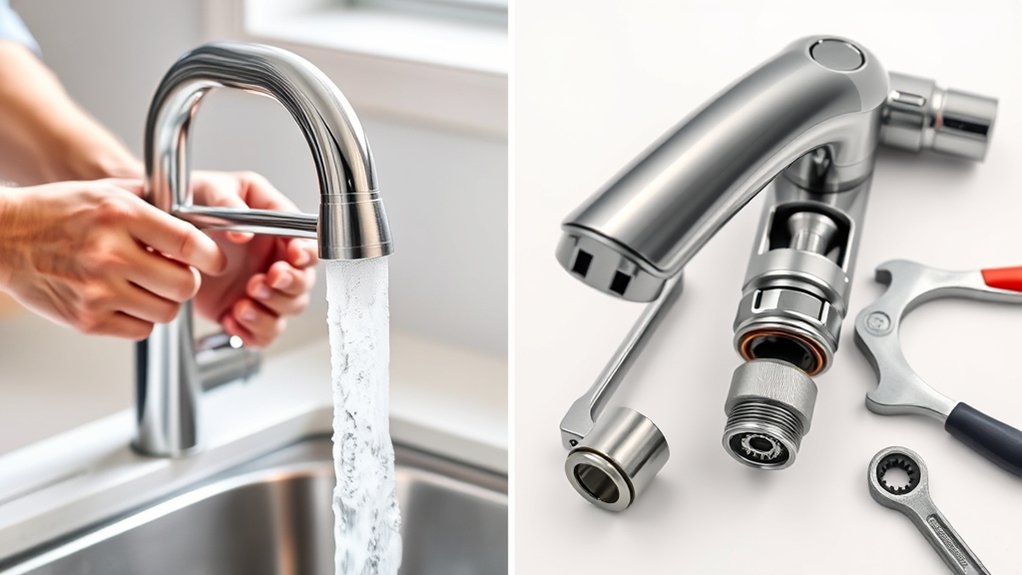
How can you guarantee your faucet functions correctly after replacing the cartridge? Testing and troubleshooting are essential steps. First, turn on the water supply and operate the faucet to check for leaks or a dripping faucet, indicating a poor cartridge seal.
Second, observe water flow; if you experience low pressure, inspect the cartridge alignment and confirm debris isn’t obstructing the flow path. Third, toggle the hot and cold settings to verify smooth temperature control without resistance or irregular flow.
If issues persist, re-seat the cartridge or check O-rings for damage. Follow these steps precisely to restore peak faucet performance and avoid further complications.
Frequently Asked Questions
How Long Does a Faucet Cartridge Typically Last?
A faucet cartridge typically lasts 5 to 10 years, though some feel like they last a lifetime. Regular faucet maintenance extends this.
Different cartridge types wear differently, so check your specific model to guarantee peak performance and longevity.
Can I Use Plumber’s Tape When Installing a Cartridge?
You shouldn’t use plumber’s tape on a faucet cartridge unless specified by the manufacturer. Focus on cartridge compatibility and proper sealing methods during installation.
Follow installation tips to avoid leaks and guarantee smooth operation.
Is It Safe to Replace a Cartridge Without Shutting off Water?
You don’t want to jump in at the deep end. Always shut off water before cartridge replacement. Proper faucet maintenance guarantees water safety and prevents leaks or flooding, protecting your plumbing and avoiding costly damage.
What Materials Are Faucet Cartridges Commonly Made From?
Faucet cartridge types commonly use brass, plastic, or ceramic materials. You’ll choose based on material properties like durability, corrosion resistance, and smooth operation.
This ensures the cartridge fits your faucet’s specific design and performance requirements precisely.
Can a Faulty Cartridge Cause Low Water Pressure?
Yes, faulty cartridges reduce water flow by up to 40%. Different cartridge types, such as ceramic, brass, and plastic, can clog or wear out, causing pressure drops.
Regular inspection guarantees peak performance and prevents low water pressure issues.