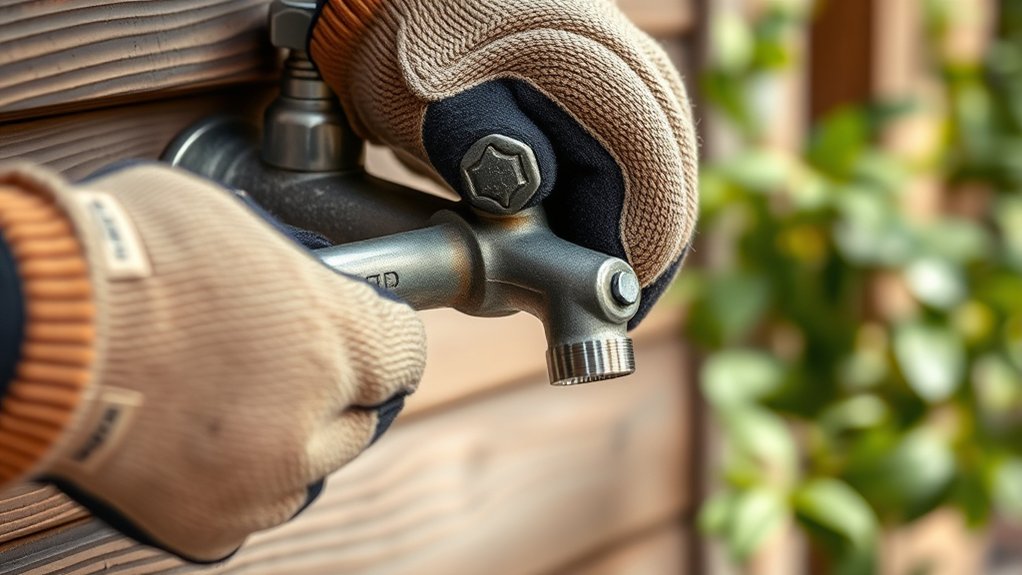
How to Repair a Frost Free Faucet
To repair a frost-free faucet, first shut off your water supply to avoid flooding.
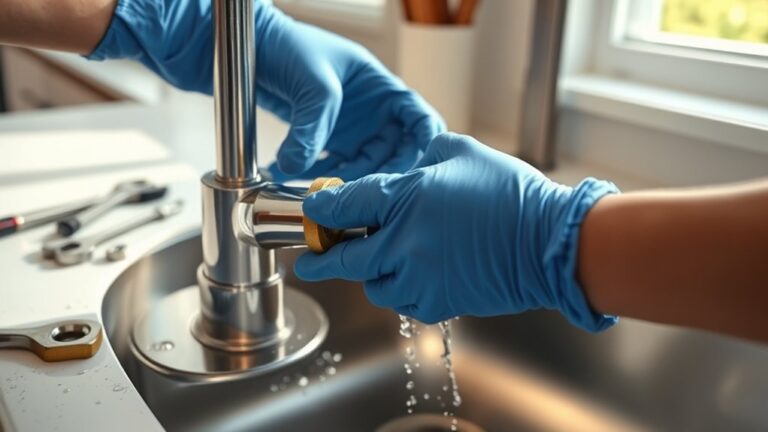
Identify leaks around the stem or handle and check for signs of freezing. Using an adjustable wrench and screwdrivers, remove the handle and packing nut.
Next, inspect the valve stem carefully and replace any damaged washers or O-rings.
Reassemble the faucet components, turn the water back on slowly, and check for leaks.
Finally, apply insulation and drain water from the faucet before winter arrives to prevent future damage.
You can explore detailed steps to guarantee a reliable fix.
Identifying Common Frost-Free Faucet Problems
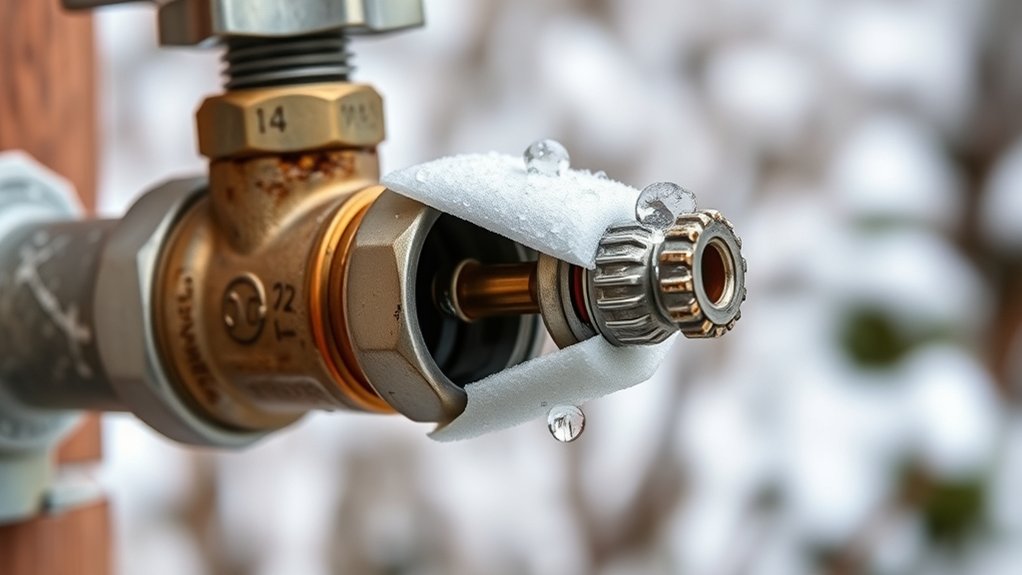
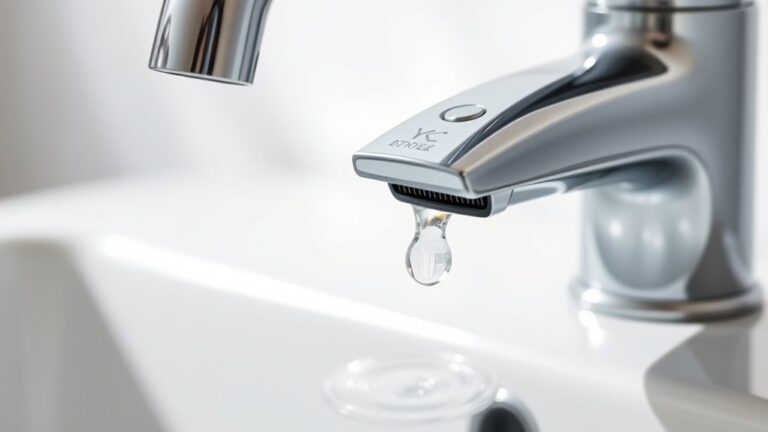
When you start troubleshooting your frost-free faucet, focus on three common issues: leaks, freezing, and reduced water flow. First, check for leaks around the faucet stem and handle, which often result from improper faucet installation or worn washers.
Next, inspect the faucet for freezing signs, especially after severe cold snaps. Inadequate winter maintenance can cause water to freeze inside the pipe, leading to damage.
Check for freezing signs after cold snaps to prevent pipe damage from trapped water.
Finally, assess water flow; diminished output may indicate internal blockages or sediment buildup within the faucet. Effective faucet installation includes ensuring the valve sits well inside the heated portion of your home’s plumbing to prevent freezing.
Consistent winter maintenance, such as draining the faucet before freezing temperatures, helps avoid these problems and extends the faucet’s functionality.
Tools You’ll Need to Fix Your Frost-Free Faucet
To successfully repair your frost-free faucet, gather a specific set of tools designed for plumbing tasks. These tools accommodate different faucet types and guarantee you apply proper installation tips. Having the right equipment helps you work efficiently and avoid damage.
| Tool | Purpose | Notes |
|---|---|---|
| Adjustable Wrench | Loosens/tightens nuts and bolts | Fits multiple faucet sizes |
| Screwdriver Set | Removes screws | Phillips and flathead included |
| Pipe Cutter | Cuts copper or PVC pipes | Necessary for pipe replacement |
| Plumber’s Tape | Seals threaded connections | Prevents leaks |
Using these tools correctly is vital for a successful repair and a durable installation.
Step-by-Step Repair of Frost-Free Faucet Leaks and Valve Issues
Begin by shutting off the water supply to the frost-free faucet to prevent any flooding during repairs. Identify the faucet type, compression or ball valve, as this determines the valve mechanisms you’ll encounter.
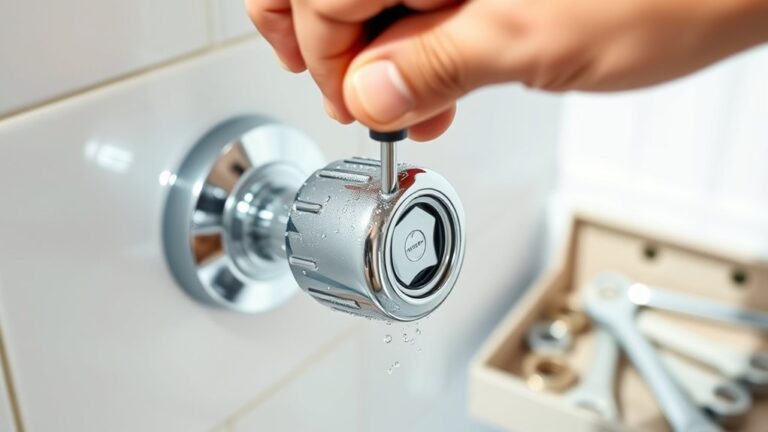
Remove the handle by loosening the screw, then unscrew the packing nut to access the valve stem. Inspect the valve stem and washers for wear or damage, common causes of leaks.
Replace worn washers or O-rings with exact matches for your faucet type. Reassemble the valve mechanisms carefully, ensuring all seals fit snugly to prevent leaks.
Turn the water supply back on slowly, checking for leaks at each connection. Tighten fittings as needed, avoiding overtightening which can damage components. This step-by-step approach restores proper function to frost-free faucets efficiently and reliably.
How to Prevent Future Frost-Free Faucet Freezing and Damage
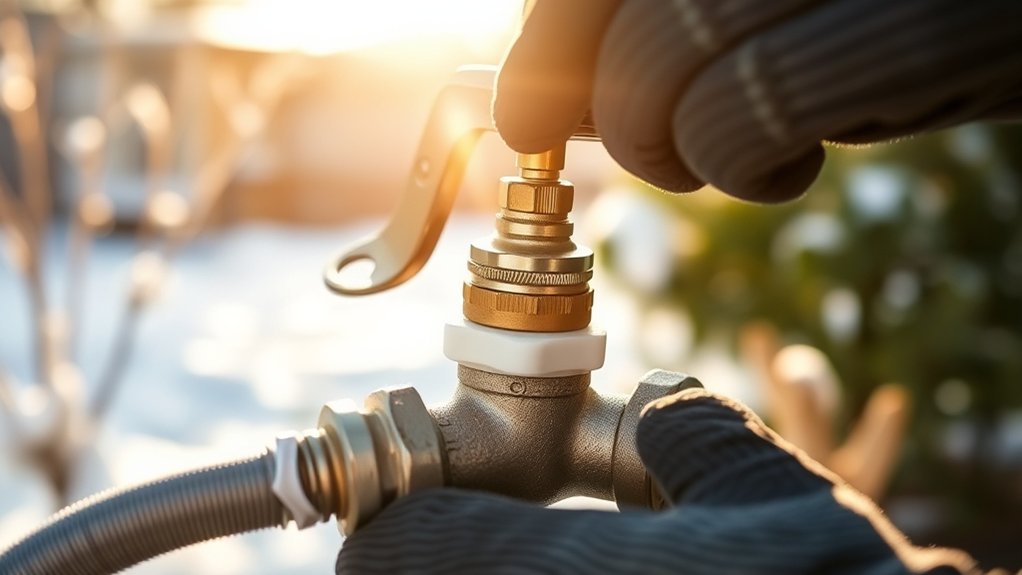
Although frost-free faucets are designed to resist freezing, you still need to take proactive steps to prevent ice buildup and damage during harsh weather. Start by applying faucet insulation, such as foam covers or insulated bags, to reduce heat loss and protect exposed components.
Make sure you shut off the water supply leading to the faucet and drain residual water before winter to prevent internal freezing. Incorporate regular winter maintenance by inspecting insulation for damage and replacing it as needed.
Additionally, check valve operation periodically to confirm it closes completely, preventing water retention. By combining faucet insulation with diligent winter maintenance, you minimize freeze risks and extend your faucet’s lifespan, avoiding costly repairs and water damage.
Frequently Asked Questions
Can I Convert a Frost-Free Faucet to a Standard Outdoor Faucet?
Yes, you can perform a faucet conversion by replacing the frost-free faucet with a standard one. Confirm proper outdoor plumbing adjustments, including insulation and drainage, to prevent freezing and maintain functionality during colder months.
How Do Frost-Free Faucets Differ From Regular Outdoor Faucets?
Frost-free faucets work like a long straw, drawing water from inside your warm house to prevent freezing. You’ll appreciate frost free benefits and must follow installation tips for proper slope and insulation to guarantee efficiency.
What Materials Are Frost-Free Faucets Typically Made From?
You’ll find frost-free faucets typically made from brass or stainless steel due to their faucet durability. These material types resist corrosion and withstand freezing temperatures, ensuring long-lasting performance and reliable protection against winter damage.
Are Frost-Free Faucets Suitable for All Climates?
Frost free faucets aren’t suitable for all climates; you’ll need to evaluate climate considerations carefully. Their frost free advantages excel in freezing zones but may be unnecessary or less effective in mild regions, impacting installation decisions.
Can Frost-Free Faucets Be Installed Indoors?
You can install frost-free faucets indoors, but make certain the indoor plumbing accommodates the longer stem and proper insulation.
During faucet installation, verify clearance and secure tight seals to prevent leaks and maintain efficient operation.