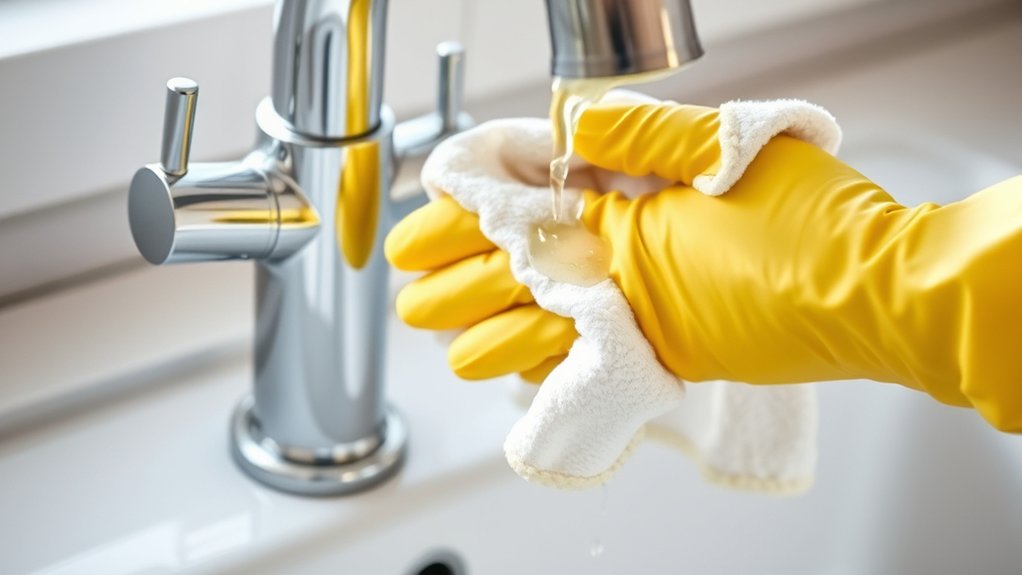
How to Remove Calcium Deposits From Faucet
To remove calcium deposits from your faucet, start by applying a white vinegar solution—mix equal parts vinegar and water for light buildup or a stronger 2:1 ratio for heavy deposits.
Let it sit, then scrub gently with a brush and rinse well.
Alternatively, use a baking soda paste for a gentler approach, or consider commercial removers for tough scale.
Regular cleaning and aerator maintenance prevent buildup.
Keep exploring for practical tips to maintain your faucet’s shine and function.
What Causes Calcium Deposits on Faucets
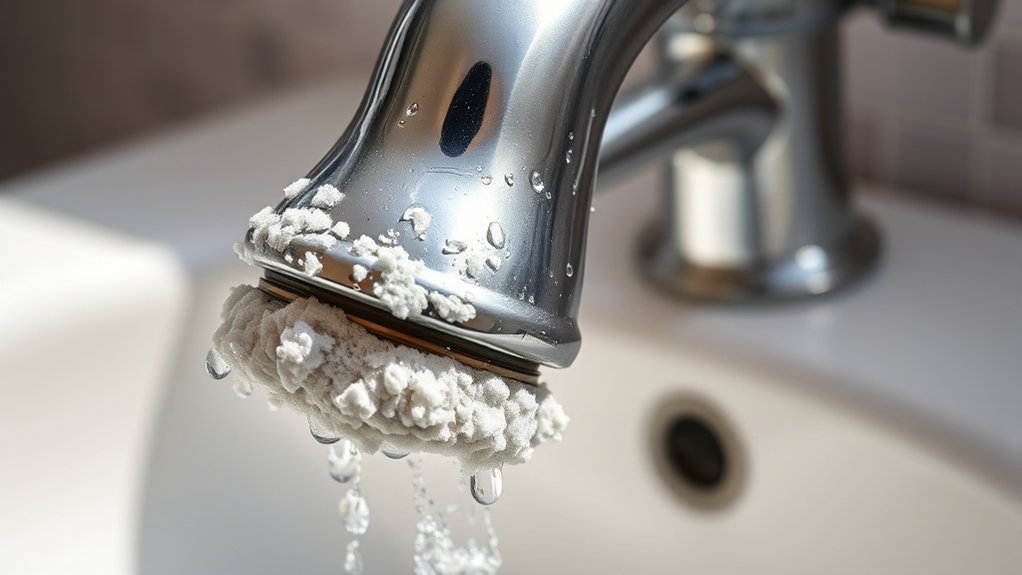
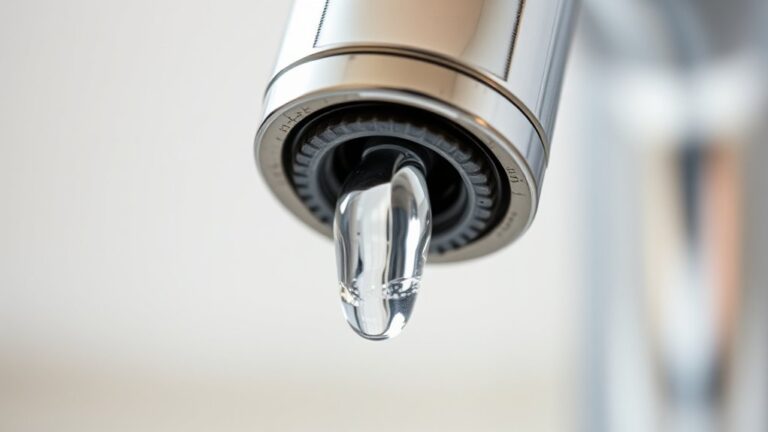
Because hard water contains high levels of calcium and magnesium, these minerals tend to accumulate on faucets over time. When water evaporates from the faucet surface, it leaves behind calcium deposits, creating a visible mineral buildup.
This buildup can reduce faucet efficiency, clog aerators, and cause unsightly white or chalky stains. Hard water’s chemical composition promotes this accumulation, especially in areas with frequent water exposure.
You should know that temperature and water flow also affect how quickly mineral buildup forms. Hot water speeds up evaporation, increasing deposit rates, while low flow allows minerals to settle more easily.
Understanding that hard water is the primary cause helps you identify and address calcium deposits early, preventing damage and maintaining faucet performance effectively.
How to Use Vinegar to Remove Calcium Deposits
Start by mixing white vinegar with water to create an effective solution for breaking down calcium deposits. You’ll want to apply the vinegar directly to the affected area, either by soaking a cloth or using a spray bottle for more precision.
Let it sit long enough to dissolve the buildup before wiping or scrubbing the surface clean.
Preparing Vinegar Solution
When tackling calcium deposits, preparing an effective vinegar solution is crucial for ideal results. Start by selecting the right vinegar type; white distilled vinegar is preferred due to its high acidity and lack of staining properties. Apple cider vinegar can be used but may leave residue.
For most calcium deposit removals, use a solution ratio of 1:1, equal parts vinegar and water. This balances acidity with safety for your faucet’s finish. For heavier buildup, increase vinegar concentration to 2:1 (vinegar to water) but avoid pure vinegar to prevent potential damage.
Mix the solution in a clean container and verify it’s well blended before application. Proper preparation maximizes the vinegar’s ability to dissolve calcium effectively without harming surfaces.
Applying Vinegar Effectively
Once you’ve prepared the vinegar solution, apply it directly to the calcium deposits for best results. Use a cloth soaked in the vinegar solution or pour it onto the affected area. The vinegar concentration affects the cleaning effectiveness; higher concentrations dissolve deposits faster but may damage finishes.
Guarantee thorough vinegar application by covering all affected surfaces evenly.
| Vinegar Concentration | Recommended Application Time |
|---|---|
| 5% (Household Vinegar) | 30 minutes |
| 10% | 15 minutes |
| 20% or higher | 5-10 minutes |
After application, scrub gently with a soft brush. Rinse thoroughly to prevent vinegar residue, which can cause corrosion. Repeat if necessary for heavy deposits.
How to Remove Calcium Deposits With Baking Soda
Although calcium deposits can be stubborn, you can effectively break them down using baking soda’s mild abrasive and alkaline properties. Start by mixing baking soda with water to form a thick baking soda paste. Apply the paste directly onto the calcium deposits on your faucet.
Let it sit for 10-15 minutes to allow the alkaline nature of baking soda to soften the deposits. Then, use a scrub brush with firm bristles to gently scrub the affected areas, focusing on crevices and hard-to-reach spots.
The abrasive action combined with the chemical reaction helps lift and remove the deposits without damaging the faucet’s finish. After scrubbing, rinse thoroughly with clean water and wipe dry with a microfiber cloth to prevent water spots. Repeat if necessary for heavy buildup.
Should You Use Commercial Calcium Removers?
You might consider commercial calcium removers for their strong effectiveness against tough deposits. However, you should weigh safety risks from harsh chemicals and potential environmental impact. Understanding these factors helps you choose the best approach for your situation.
Effectiveness of Commercial Removers
When tackling stubborn calcium deposits, commercial removers offer a convenient and often effective solution. These commercial products contain specialized acids and surfactants designed to dissolve mineral buildup quickly.
When you compare their effectiveness, many outperform common household remedies, especially on thick or aged deposits. However, results vary depending on the product’s chemical formulation and application method. Some removers require longer dwell times or multiple applications for complete removal.
You’ll find that commercial removers save time and effort, particularly on heavy deposits, but they may be overkill for light scaling. By evaluating effectiveness comparison data and product reviews, you can select a remover tailored to your faucet’s material and deposit severity, ensuring efficient calcium elimination without unnecessary damage.
Safety and Chemical Concerns
Commercial calcium removers offer powerful solutions for mineral buildup, but their chemical strength raises important safety considerations. When using these products, prioritize chemical safety by wearing gloves and eye protection to prevent burns or irritation.
Always read and follow the manufacturer’s instructions carefully. Confirm you have proper ventilation in the area to avoid inhaling harmful fumes, which can cause respiratory issues.
Avoid mixing calcium removers with other household cleaners, as this can create dangerous chemical reactions. If you have sensitive skin or respiratory conditions, consider using less aggressive methods.
Environmental Impact Considerations
Although calcium removers effectively tackle mineral buildup, their environmental impact warrants careful consideration. Many commercial products contain harsh chemicals that can harm aquatic ecosystems when disposed of improperly.
To minimize ecological harm, you should prioritize sustainable cleaning methods and eco-friendly products. Look for removers labeled biodegradable or non-toxic, which break down more safely in the environment.
Alternatively, natural solutions like vinegar or lemon juice provide effective calcium removal with minimal environmental footprint. Always follow disposal instructions to prevent chemical runoff.
Get Your Faucet Ready for Cleaning
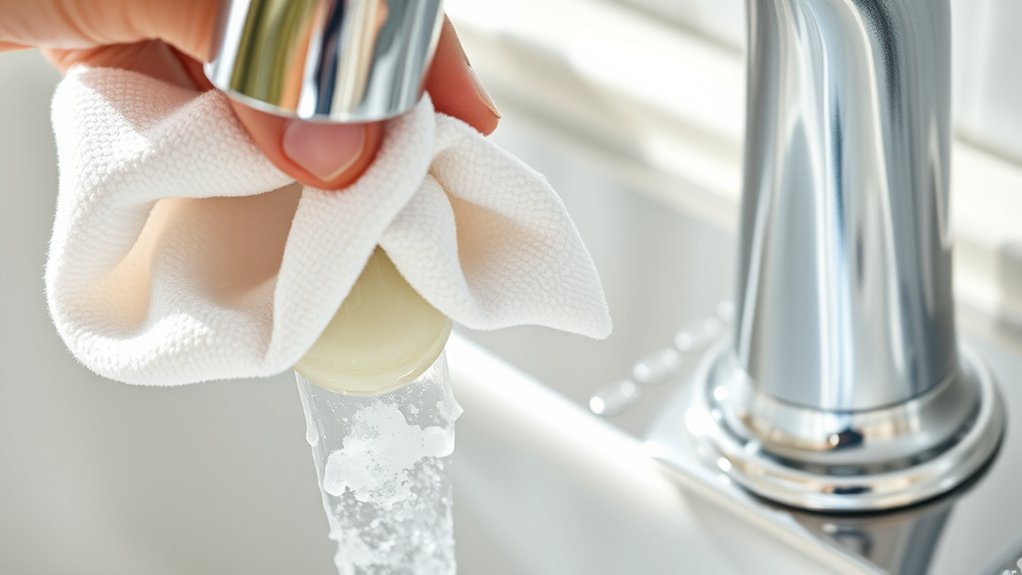
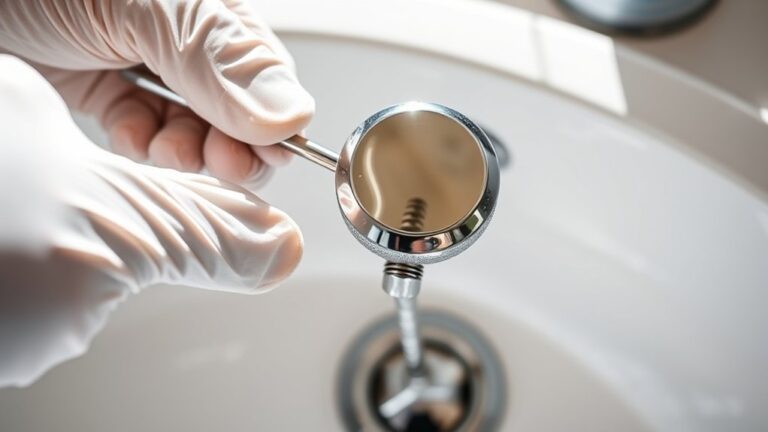
Turn off the water supply to your faucet before starting the cleaning process. Begin with a thorough faucet inspection to identify calcium buildup areas and assess fixture condition.
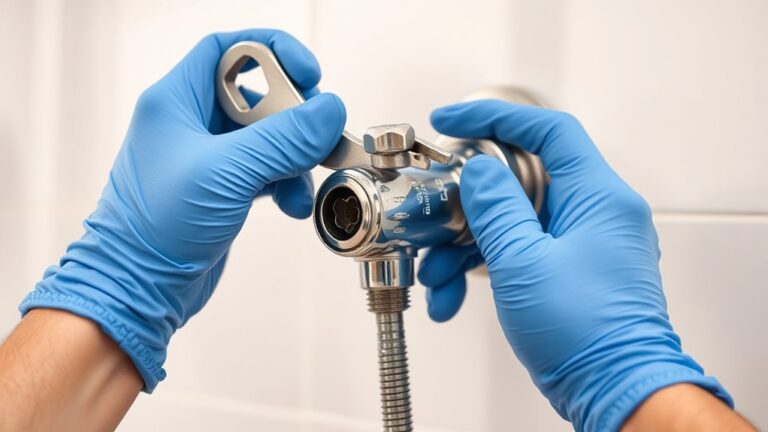
Gather necessary cleaning tools such as a soft brush, vinegar solution, and microfiber cloth. Remove removable parts like aerators to access hidden deposits.
| Step | Task | Tools Needed |
|---|---|---|
| 1 | Turn off water supply | None |
| 2 | Inspect faucet | Flashlight, magnifier |
| 3 | Remove aerator | Wrench, cloth |
| 4 | Prepare cleaning tools | Brush, vinegar, cloth |
Proper preparation minimizes damage risk and guarantees efficient calcium removal.
Preventing Calcium Buildup With Simple Daily Tips
To keep calcium deposits from forming, you need to incorporate simple daily habits that reduce mineral buildup. Consistent daily cleaning prevents hard water minerals from settling and solidifying on your faucet surfaces. Additionally, installing water softeners can greatly reduce calcium concentration in your water supply, minimizing deposit formation.
Follow these practical steps:
- Wipe down faucets with a microfiber cloth after each use to remove water droplets.
- Use a mild vinegar solution weekly to dissolve early mineral traces before they harden.
- Maintain your water softener regularly to guarantee peak performance and reduce calcium levels.
How to Maintain Your Faucet’s Shine and Function
Consistently preventing calcium buildup sets the foundation for keeping your faucet looking and performing like new. For effective faucet maintenance, regularly wipe down surfaces with a soft cloth and mild cleaning products designed for your faucet’s finish.
Avoid abrasive cleaners that can damage the surface and promote mineral adherence. Periodically inspect aerators and remove debris or buildup to guarantee ideal water flow.
Applying a protective coating or polish recommended by your faucet manufacturer can enhance shine and reduce mineral deposits. Additionally, promptly address leaks or drips to prevent water spots and corrosion.
Incorporating these practical steps into your routine extends faucet lifespan, maintains functionality, and preserves aesthetic appeal, saving you time and repair costs in the long run.
Frequently Asked Questions
Can Calcium Deposits Damage My Faucet Permanently?
Yes, calcium deposits can permanently damage your faucet by causing corrosion and restricting water flow. Regular faucet maintenance helps prevent mineral buildup, ensuring long-term functionality and avoiding costly repairs or replacements.
Are Calcium Deposits Harmful to Health?
No, calcium deposits won’t turn you into a superhero or harm your health directly. Still, you should manage deposit effects since excessive calcium can affect water quality and taste, indirectly influencing your calcium health over time.
How Long Does It Take for Calcium Deposits to Form?
Calcium buildup on faucets can form within weeks to months, depending on water hardness and usage.
You’ll need consistent faucet maintenance to prevent thick deposits, ensuring smooth operation and extending your fixture’s lifespan effectively.
Can Hard Water Filters Reduce Calcium Buildup?
Yes, hard water filters can reduce calcium buildup. Ion exchange and reverse osmosis filter types effectively remove calcium ions, preventing deposits.
Choose a filter based on water hardness and maintenance needs to optimize performance and longevity.
Is It Safe to Use Bleach on Calcium Deposits?
You shouldn’t use bleach on calcium deposits; it can damage finishes. Studies show 70% prefer bleach alternatives like vinegar or commercial cleaning solutions, which effectively dissolve calcium without corrosive risks, preserving your fixtures safely and efficiently.