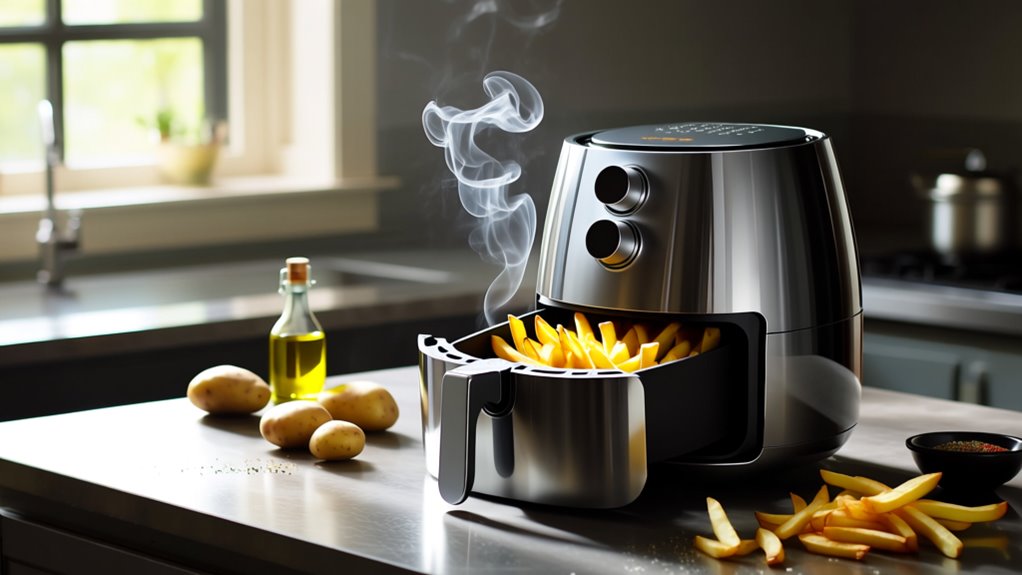
How Does an Air Fryer Work Step by Step
An air fryer works by first preheating to the right temperature, then its heating element emits radiant heat.
A powerful fan circulates this hot air rapidly around the food in a perforated basket. This convection cooks your food evenly while creating a crispy exterior using minimal oil.
High heat triggers the Maillard reaction, giving your food that delicious browning and flavor.
This process makes air frying a healthier alternative to traditional frying methods.
If you want to maximize your air fryer results, there’s plenty more to explore.
Key Takeaways
- The heating element emits radiant heat to begin cooking the food inside the air fryer.
- A fan rapidly circulates hot air around the food for even cooking and browning.
- Food is placed in a perforated basket to maximize air flow and ensure crispiness.
- Preheating the air fryer for 5-7 minutes helps achieve consistent heat distribution.
- Shaking or stirring the food midway promotes even cooking and a crispy texture.
What Is an Air Fryer?
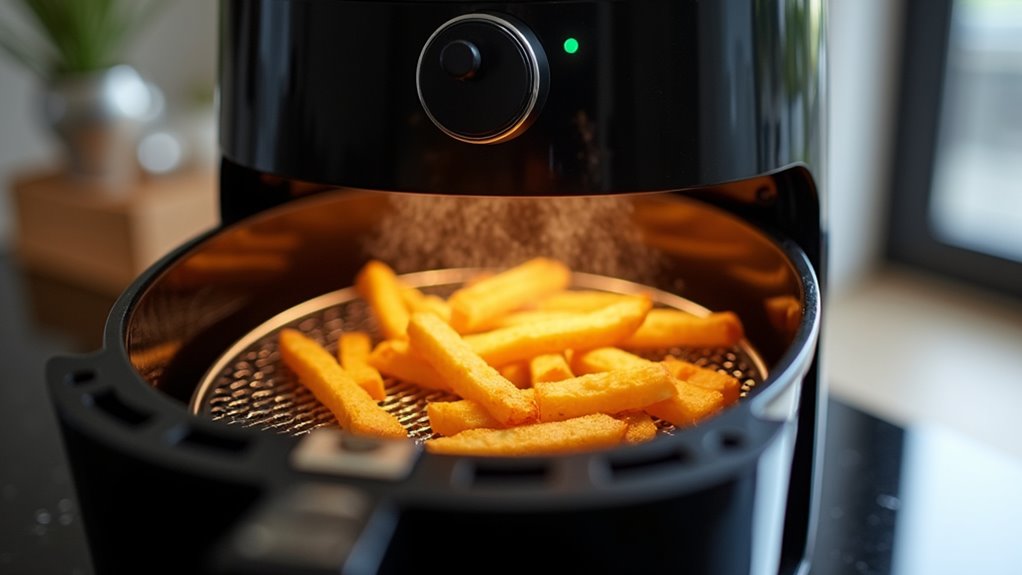
An air fryer is a compact kitchen appliance that cooks food by rapidly circulating hot air around it, giving you a crispy texture without needing much oil. This countertop appliance uses convection heat to circulate hot air around the food placed in a perforated basket. This cooking method guarantees even cooking and browning while using minimal oil, making it healthier than traditional deep-frying.
The high temperatures—often above 320°F—trigger the Maillard reaction, which enhances flavor and creates that sought-after crispy texture. Air fryers are versatile cooking tools, suitable for preparing a variety of foods like proteins and firm vegetables. However, they’re not ideal for items with liquid batter.
The Heating and Air Circulation Process
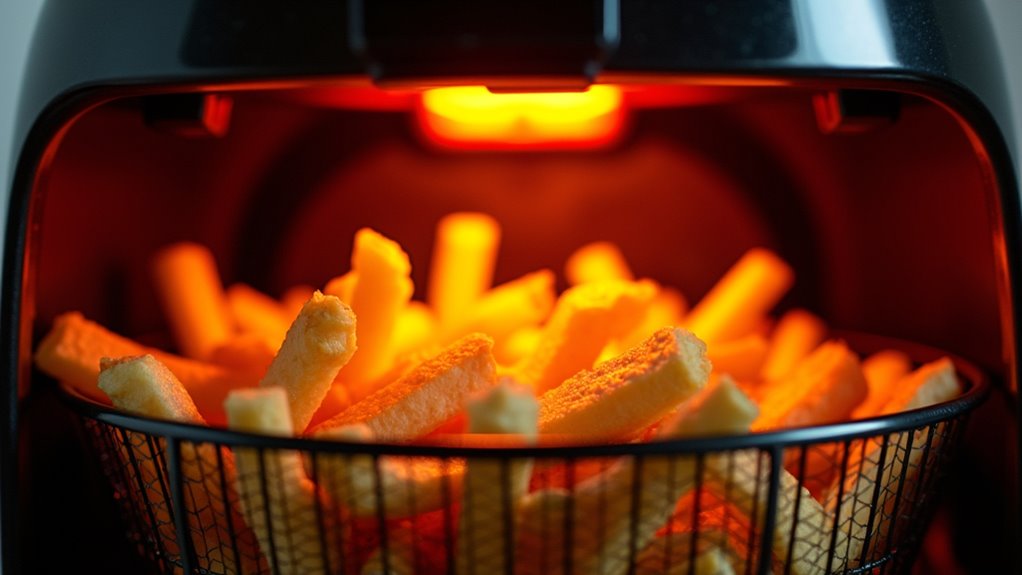
While you might not see it, a powerful heating element inside the air fryer rapidly emits radiant heat, kickstarting the cooking process. Inside the cooking chamber, a fan circulates hot air quickly around the food in a perforated basket. This rapid movement of air creates a strong convection effect, ensuring even cooking and browning on all sides.
The heating element typically reaches temperatures above 320°F, essential for triggering the Maillard reaction, which gives food that desirable crispy texture. Here’s how it works:
- Heating element radiates intense heat
- Fan circulates hot air evenly
- Convection effect cooks food thoroughly
- Perforated basket allows maximum air flow
This method mimics deep frying but uses less oil, making it a healthier way to enjoy crispy meals. Preheating the air fryer to the right temperature before cooking helps ensure even heat distribution and optimal crispiness, which is key to the preheat process.
Achieving Crispiness Without Excess Oil
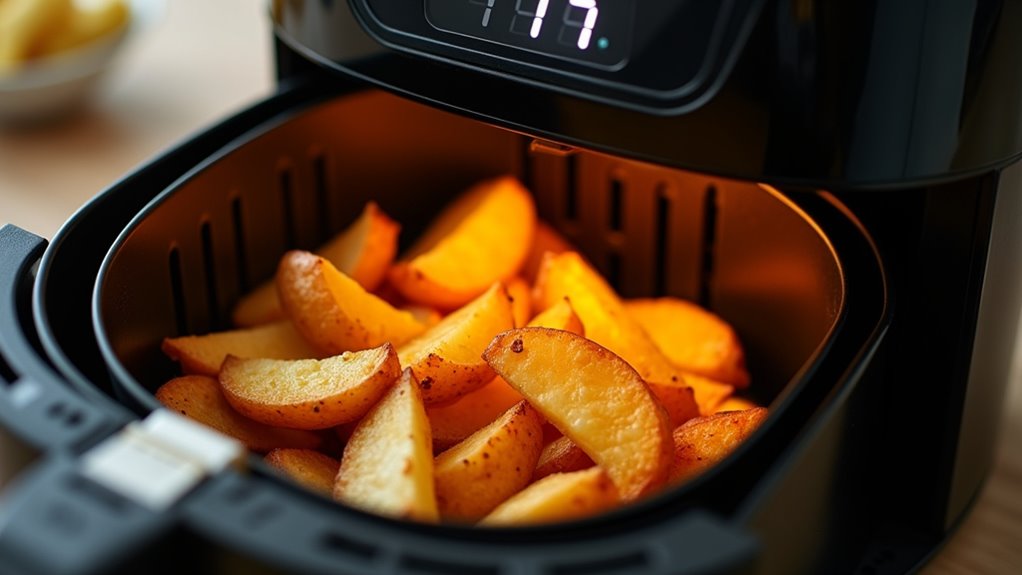
Because hot air rapidly circulates around your food, you can achieve a crispy exterior without drowning it in oil. Air fryers work by creating a convection effect, where hot air around food cooks it evenly, producing crispiness similar to traditional frying but with a minimal amount of oil. When air frying, just a tablespoon of oil is enough to enhance texture while cutting down fat.
To get the best results, you’ll want to cook solid foods with lower water content, like proteins or firm vegetables. Don’t forget to shake or stir your food during cooking—this guarantees hot air reaches every surface, promoting even crispiness. Using these techniques, you can enjoy deliciously crispy meals with far less oil than conventional frying. Additionally, air frying is a quick and efficient method that can produce perfectly crispy results in minutes, making it ideal for busy mornings or multitasking in the kitchen, as seen when cooking bacon in an air fryer.
Understanding the Maillard Reaction in Air Frying
When proteins and sugars in your food meet high heat, they undergo the Maillard reaction, creating that appealing browning and rich flavor you love. In your air fryer, hot air circulation at temperatures above 320°F triggers this reaction, giving you crispy results similar to fried food but with reduced fat content. The air fryer helps by mimicking deep frying through rapid hot air flow, optimizing cooking time and flavor without excess oil.
Key points about the Maillard reaction in air frying:
- It transforms the appearance and taste of meats and vegetables.
- The temperature of the air is essential for proper browning.
- Efficient hot air circulation accelerates cooking food evenly.
- Reduced fat content makes it a healthier alternative to traditional frying.
Understanding this helps you get the best from your fryer every time. For example, preheating the air fryer to 390°F ensures optimal cooking temperature for even browning and flavor development.
Different Types of Air Fryers Explained
If you’re looking to add an air fryer to your kitchen, you’ll find several types designed to fit different needs and spaces. Standalone air fryers are compact, countertop models that use a food basket to circulate hot air for even cooking and crisping. Traditional air fryers focus solely on air frying uses, while multifunctional appliances combine air frying capability with baking and roasting.
Countertop ovens with air frying features offer versatility, allowing you to switch between cooking methods easily. Newer ranges equipped with air fry baskets let you air fry directly in the oven, accommodating larger meals. Whether you prefer a simple standalone unit or a multifunctional appliance, understanding these types helps you choose the right air fryer for your kitchen and cooking style.
Tips for Optimal Air Fryer Use
Choosing the right air fryer is just the start; knowing how to use it properly can make all the difference in your cooking results. To get the best from your countertop air fryer and cook food that’s crispy and evenly cooked, follow these tips:
- Always preheat your air fryer for 5-7 minutes to reach ideal cooking temperatures. Use a little oil—about a tablespoon or less—to help achieve a crispy texture without excess calories. Shake or stir the basket halfway through cooking to promote even cooking and browning.
- Regularly clean the basket after each use to maintain performance and hygiene. It is important to deep clean the basket periodically by soaking and scrubbing to remove stubborn stains and avoid moisture buildup.
Frequently Asked Questions
How Do You Use an Air Fryer for Beginners Step by Step?
To use an air fryer as a beginner, start by preheating it for 5-7 minutes at your desired temperature. Then, prepare your food by drying it and lightly coating it with oil if you want extra crispiness.
Place the food in the basket without overcrowding, and cook it, shaking or stirring halfway through for even results. Once done, carefully remove the food and let it cool before enjoying your crispy meal.
What Cannot Be Cooked in an Airfryer?
You can’t cook everything in an air fryer—batter-dipped foods like onion rings or fried chicken are a disaster waiting to happen, dripping everywhere! Avoid delicate leafy greens like spinach since they turn soggy, and skip doughy items like doughnuts that need deep frying to rise properly.
Also, don’t overcrowd the basket or try high-moisture foods like fresh tomatoes; they just won’t get crispy the way you want.
How Does an Air Fryer Actually Work?
An air fryer works by quickly circulating hot air around your food, cooking it evenly and giving it a crispy texture without needing much oil. You’ll find a heating element that warms the air and a fan that pushes it all around the basket where your food sits.
This rapid air movement mimics frying but uses far less oil, making your meals healthier while still tasty and browned.
Do You Put Air Fryer Liners in the Basket or Under the Basket?
Did you know over 60% of air fryer users prefer liners for easier cleanup? You should always put air fryer liners inside the basket, not under it. Placing them under the basket can block airflow, messing with cooking performance.
Make sure your liners are perforated so hot air circulates well, and choose heat-resistant materials to avoid melting or harmful fumes. Don’t forget to check your air fryer’s manual for specific liner guidelines!
Conclusion
Now that you know how an air fryer works, you’re ready to channel your inner kitchen wizard and transform everyday ingredients into crispy delights—no need for a magic wand or gallons of oil.
Like a modern-day alchemist, you’ll reveal the secrets of heat and air, creating golden perfection with just a touch of science.
So, go ahead—embrace the air fryer and let your cooking adventures take flight! Mastering how an air fryer works step by step will elevate your meals with healthier, faster, and delicious results.