How Does a Faucet Work
When you turn your faucet handle, you open an internal valve that controls water flow and pressure from the supply lines.
This is how a faucet works to deliver water efficiently in your home. The valve’s cartridge or ball mechanism adjusts the mix of hot and cold water through a chamber, ensuring the temperature you want.
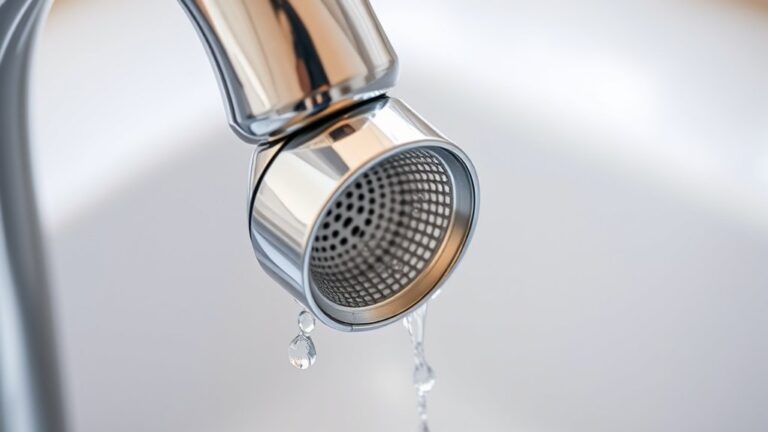
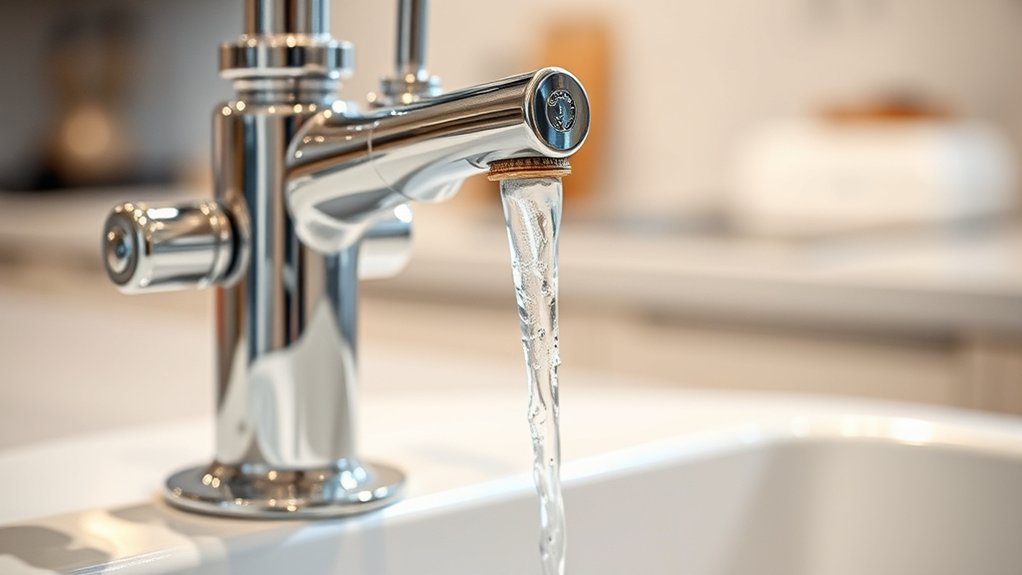
Water then flows out through the spout, often passing an aerator to reduce splashing and conserve water.
If you want to understand different faucet types and troubleshoot common issues, there’s more to explore.
What Are the Main Parts of a Faucet?
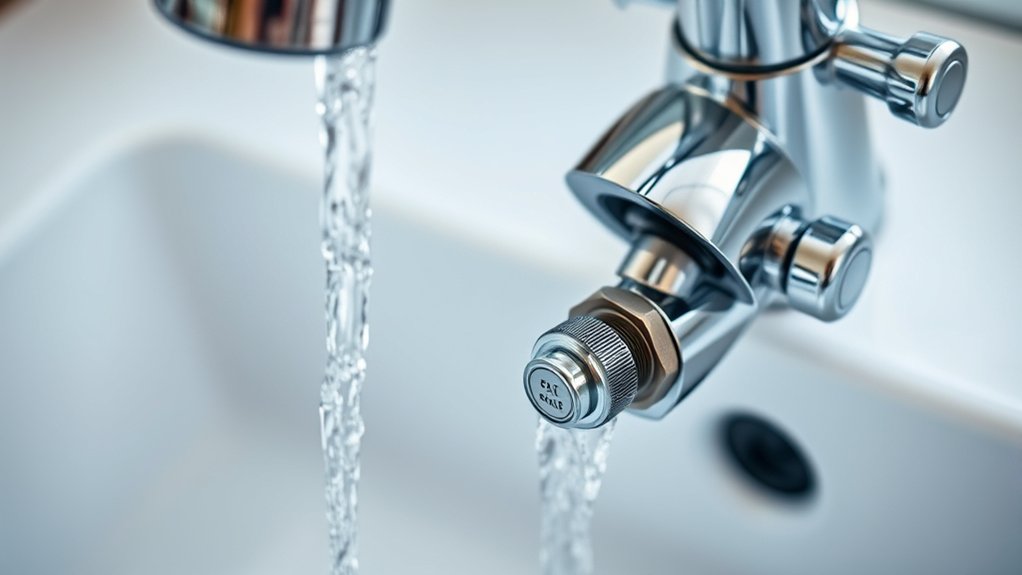
A faucet consists of several key components that work together to control water flow and temperature. You’ll find the spout, handle(s), cartridge or valve, and aerator as the main parts. The spout directs water, while the handle(s) regulate flow and temperature.
Inside, the cartridge or valve controls the mix of hot and cold water. The aerator at the tip reduces splashing and conserves water. When selecting faucet materials, consider durability and corrosion resistance. Brass, stainless steel, and zinc alloys are common choices.
Proper faucet maintenance involves regular cleaning and inspecting seals or washers to prevent leaks and extend lifespan. Understanding these parts helps you troubleshoot issues and guarantees effective faucet operation in your home or workspace.
How Does a Faucet Control Water Flow and Pressure?
Understanding the main parts of a faucet sets the stage for grasping how it controls water flow and pressure. When you turn the handle, it adjusts an internal valve that regulates the flow of water by opening or closing the passage through which water moves.
This valve directly influences flow regulation, allowing you to increase or decrease water volume. The faucet also responds to water pressure from your supply line; higher pressure pushes more water through, but the valve’s position limits the flow to prevent excess.
How Do Faucet Types Like Ball and Cartridge Work?
Explore how different faucet types like ball and cartridge models operate by focusing on their unique internal mechanisms. Ball faucet mechanics rely on a rotating metal or plastic ball inside the faucet body. You control water flow by turning the handle, which moves the ball to align holes that allow water to pass through.
Cartridge function, on the other hand, uses a movable cartridge inside the faucet. When you lift or turn the handle, the cartridge regulates flow by adjusting the alignment of internal openings.
- Feel confident repairing your faucet with clear knowledge
- Understand the distinct movements inside each faucet type
- Appreciate the precision engineered for smooth water control
- Avoid frustration by recognizing how parts interact
- Gain practical insight to troubleshoot leaks or drips efficiently
How Do Faucets Mix Hot and Cold Water for the Right Temperature?

Once you know how different faucet types regulate water flow, the next step is to see how they combine hot and cold water to achieve your desired temperature. Faucets use temperature regulation mechanisms within valves to adjust the ratio of hot and cold water, guaranteeing precise water mixing.
This process balances pressure and flow rate.
| Component | Function | Effect on Water Mixing |
|---|---|---|
| Hot water inlet | Supplies hot water | Increases temperature |
| Cold water inlet | Supplies cold water | Decreases temperature |
| Valve cartridge | Controls flow ratio | Adjusts temperature |
| Mixing chamber | Combines water streams | Assures uniform temperature |
| Spout | Delivers mixed water | Provides desired output |
How to Spot and Fix Common Faucet Problems
If your faucet starts dripping or the water flow weakens, it’s a sign that maintenance is necessary. Dripping faucets often stem from worn-out washers or valve issues, which you can fix by replacing these components.
A dripping or weak faucet signals it’s time to replace washers or valves for proper maintenance.
Low pressure may indicate clogged aerators or supply lines needing a thorough cleaning. Noisy operation usually points to loose parts or water hammer effects.
To maintain peak function, incorporate a maintenance routine that includes regular inspections and cleaning. Keep these installation tips in mind to prevent future problems:
- Replace washers and valves promptly
- Clean aerators to restore flow
- Tighten loose parts to reduce noise
- Check supply lines for blockages
- Schedule routine inspections to catch issues early
Frequently Asked Questions
What Materials Are Faucets Typically Made From?
You’ll find that 85% of faucets use brass due to durability. Faucet materials often include stainless steel and plastic, while faucet finishes like chrome or nickel resist corrosion, ensuring longevity and maintaining a clean, polished look.
How Do Touchless Faucets Detect Hand Movement?
You’ll find touchless faucets use infrared sensors to perform motion detection. When your hand interrupts the sensor’s light beam, it triggers the valve to open, delivering water without needing to touch the faucet.
Can Faucets Be Connected to Water Filtration Systems?
Think of your faucet as a gateway; yes, you can connect it to various filter types, like carbon or reverse osmosis. Installation methods vary, such as under-sink or inline, so choose precisely for effective contamination removal and ideal water flow control.
What Is the Average Lifespan of a Faucet?
You can expect your faucet to last around 15-20 years with proper faucet maintenance tips. Regularly check for leaks and replace washers to avoid common faucet repairs. This will help extend its lifespan efficiently.
How Does Water-Saving Technology Work in Faucets?
You’ll save gallons. A faucet with water-saving technology reduces flow rate using aerators or pressure-compensating valves, enhancing water conservation without sacrificing performance.
This smart design precisely controls water output, cutting waste efficiently every time you use it.