How to Remove Hard Water Buildup From Faucet
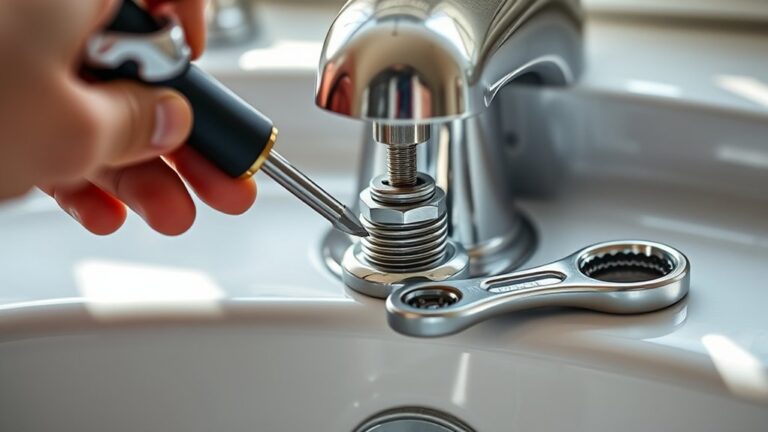
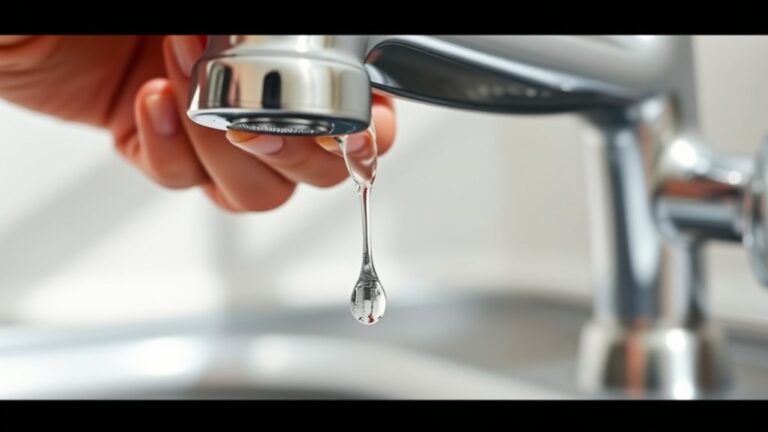
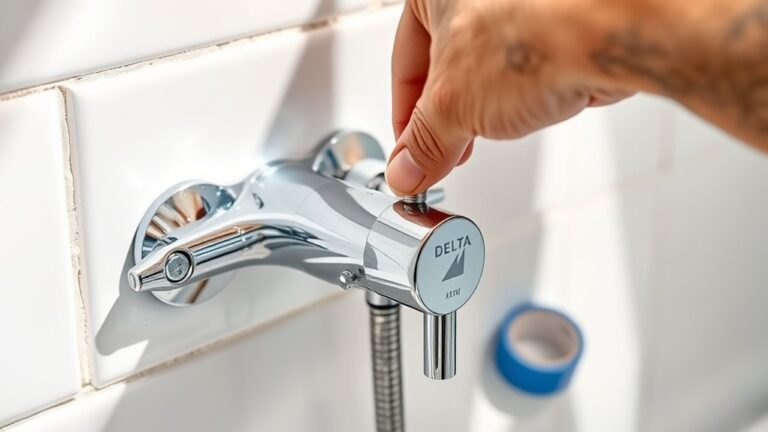
To remove hard water buildup from your faucet, first turn off the water supply and remove any detachable parts like aerators. This will give you better access to the affected areas and make cleaning easier.
Use a mixture of equal parts white vinegar and water, spraying it on affected areas and letting it sit for 15–20 minutes.
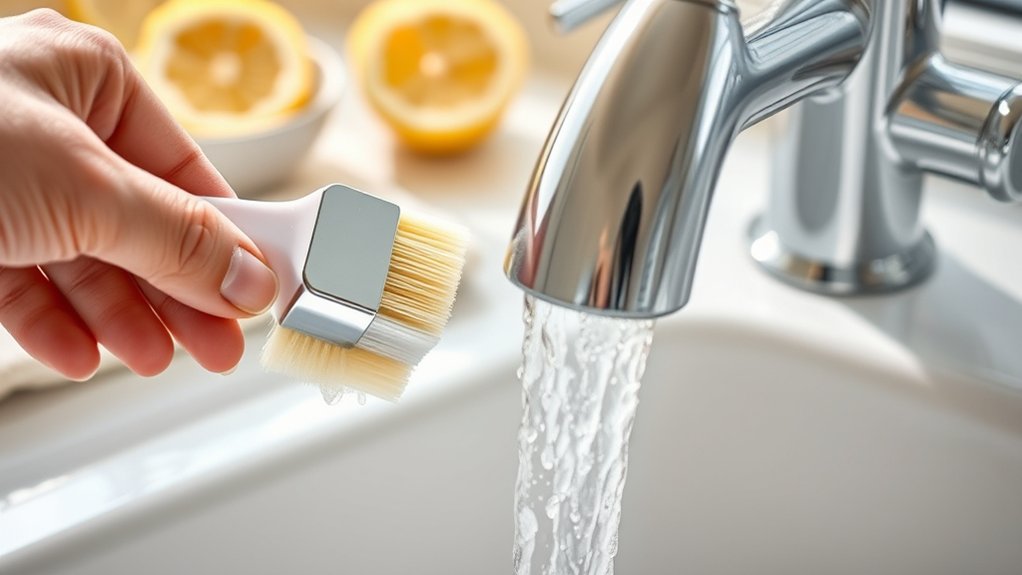
For tougher deposits, sprinkle baking soda before applying vinegar, then scrub gently with a soft brush.
Rinse thoroughly and dry to prevent spots.
Following these steps regularly will keep your faucet clean and functional—explore further to protect your fixtures longer.
Causes of Hard Water Buildup on Faucets
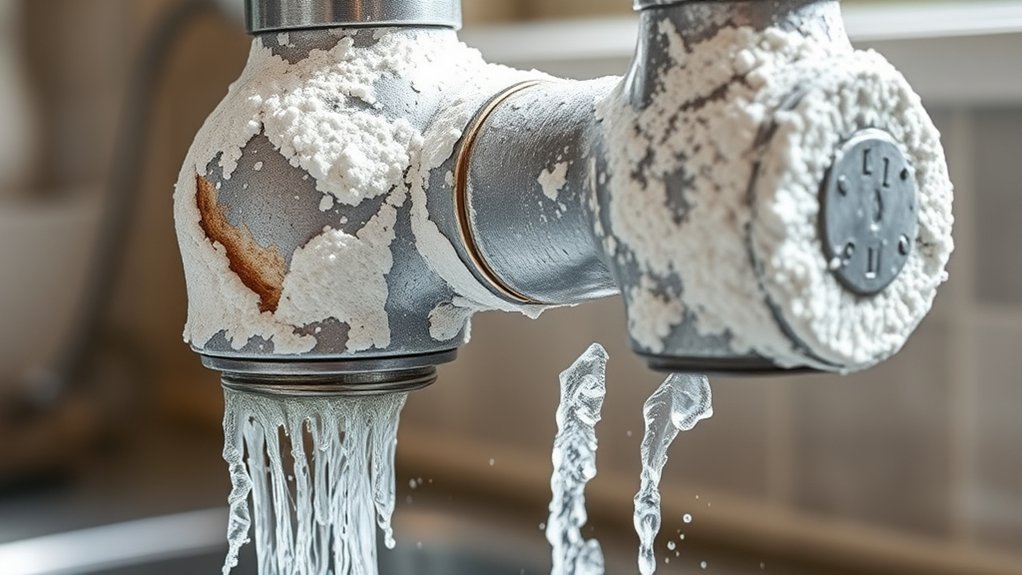
Although hard water can benefit your health, it causes mineral deposits to accumulate on faucets. Hard water sources typically contain high levels of calcium and magnesium ions. When water evaporates from your faucet surfaces, these minerals remain behind, forming deposits.
Over time, these mineral deposits build up, creating a visible, often stubborn layer that can clog aerators and reduce water flow. The hardness varies depending on local water supply and geological factors influencing the water source. You’ll notice buildup more quickly in areas with consistently hard water.
Understanding that these mineral deposits originate from dissolved minerals in your water helps in identifying problem areas and selecting appropriate removal methods. Addressing the issue early prevents damage to faucet finishes and maintains peak functionality.
Preparing Faucets for Hard Water Buildup Cleaning
Recognizing the mineral buildup on your faucets is the first step before tackling the cleaning process. Proper preparation guarantees effective faucet maintenance and prevents damage during cleaning.
Start by gathering appropriate cleaning supplies designed for mineral deposits. Next, clear the area to avoid water damage and protect surfaces. Follow these steps for ideal preparation:
- Turn off water supply valves to prevent leaks.
- Remove detachable parts like aerators for separate cleaning.
- Lay down towels to catch drips and debris.
- Wear gloves to protect your skin from harsh chemicals.
- Ventilate the area if using strong cleaning agents.
Easy Household Methods to Remove Hard Water Buildup
When hard water buildup starts affecting your fixtures, you can rely on common household items to dissolve mineral deposits effectively. Begin by applying a vinegar solution. Mix equal parts white vinegar and water in a spray bottle. Spray the affected areas and let it sit for 15–20 minutes to break down the calcium and magnesium deposits.
For tougher buildup, sprinkle baking soda directly onto the faucet, then spray the vinegar solution over it. The fizzing reaction helps loosen stubborn stains. Use a soft brush or cloth to scrub gently, avoiding abrasive tools that might damage the finish.
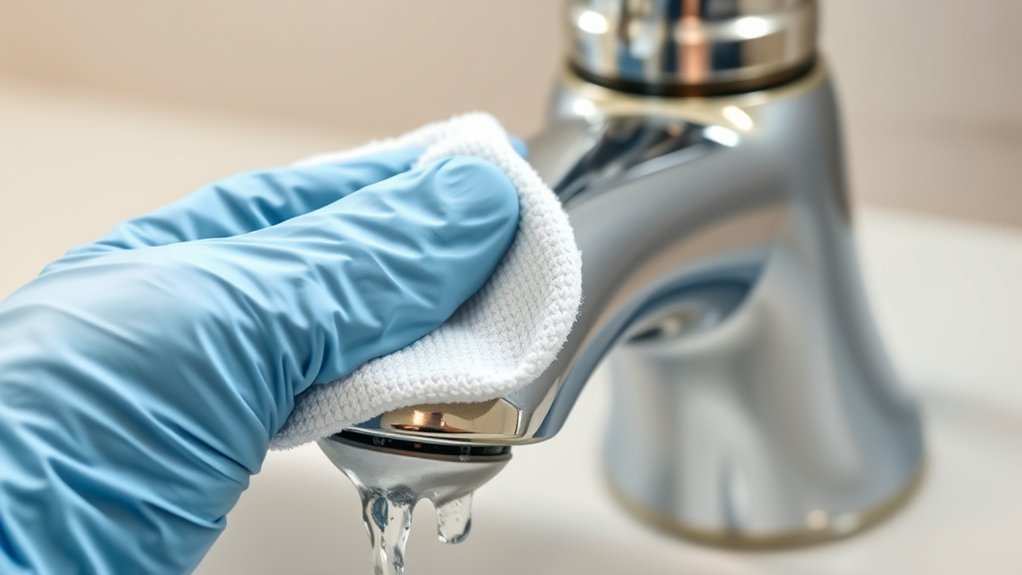
Rinse thoroughly with water and dry the faucet with a microfiber cloth to prevent water spots. These methods offer a safe, economical way to restore your faucet’s appearance without harsh chemicals.
Tips to Keep Hard Water Stains From Coming Back
To prevent hard water stains from returning, you need to establish a regular maintenance routine and minimize mineral buildup. Implementing preventive measures will save you time and protect your fixtures.
Follow these tips for effective regular maintenance:
- Wipe faucets dry after each use to prevent water spots.
- Use a water softener or filter to reduce mineral concentration.
- Apply a vinegar solution weekly to dissolve early mineral deposits.
- Install aerators with built-in filters to limit sediment accumulation.
- Schedule monthly inspections and cleanings to catch buildup early.
Frequently Asked Questions
Can Hard Water Buildup Damage My Faucet’s Internal Components?
Yes, hard water buildup can damage your faucet’s internal components by clogging valves and corroding parts.
Regular faucet maintenance and following plumbing tips help prevent buildup, ensuring smooth operation and extending your faucet’s lifespan.
Are There Commercial Products Specifically for Removing Hard Water Buildup?
Yes, you’ll find commercial products designed to remove hard water buildup, but vinegar solutions remain an effective, affordable alternative. Combining both approaches with proper cleaning methods guarantees thorough removal and maintains your faucet’s functionality.
How Does Hard Water Buildup Affect Water Flow and Pressure?
Hard water buildup acts like a stubborn dam, restricting your water flow and causing pressure reduction. It narrows passages inside your faucet, forcing water through smaller spaces, which decreases efficiency and reduces overall water pressure.
Is Hard Water Buildup Harmful to Health if Ingested?
You won’t face significant health risks ingesting hard water because its mineral content, primarily calcium and magnesium, is generally safe. However, excessive minerals might cause minor digestive issues, so monitoring your water’s hardness is practical.
Can Water Softeners Prevent Hard Water Buildup on Faucets?
Yes, water softeners prevent hard water buildup on faucets by reducing minerals. You’ll enjoy softener benefits like less scale and corrosion.
For best results, follow maintenance tips regularly to keep your system efficient and faucets clean.