How to Replace Faucet Aerator
To replace your faucet aerator, start by turning off the water supply or ensuring the faucet is completely off. This step is crucial to avoid any water spills during the replacement process.
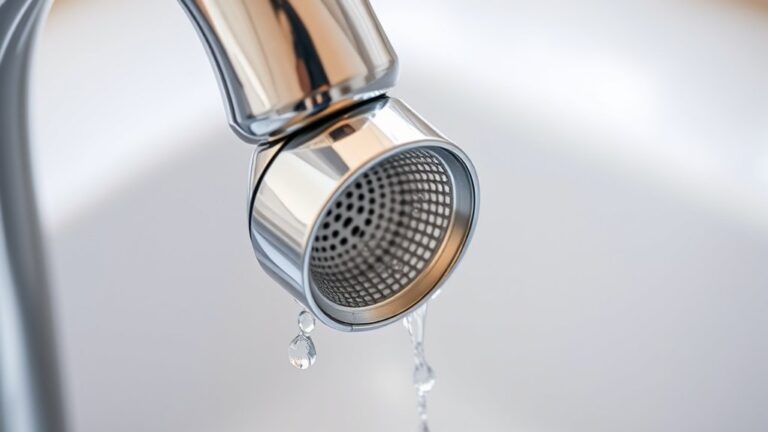
The faucet aerator is a small but important device that helps control water flow and reduce splashing.
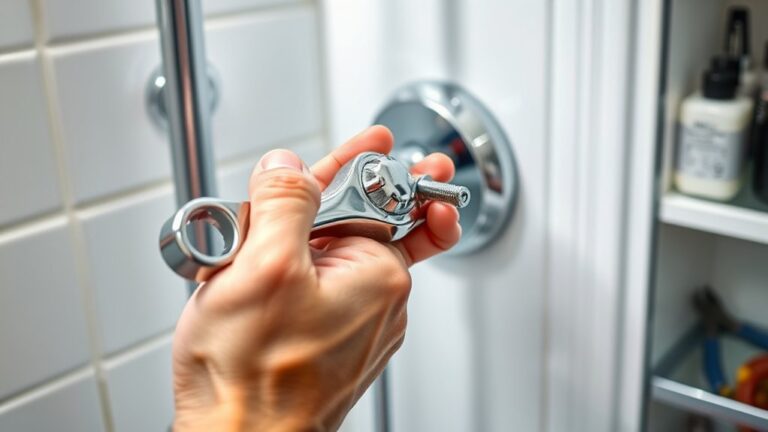
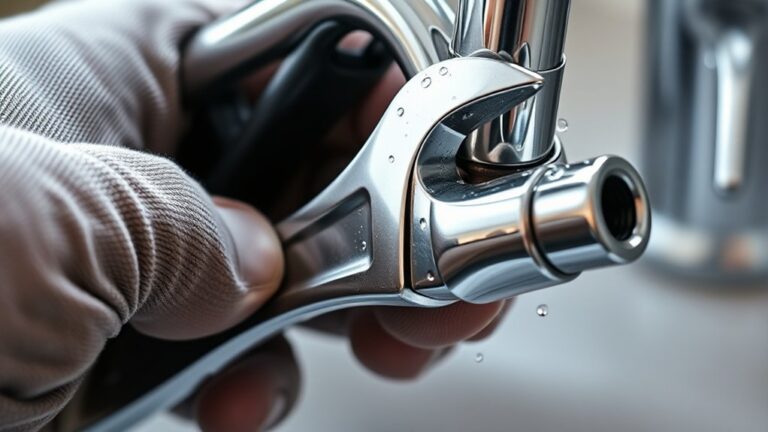
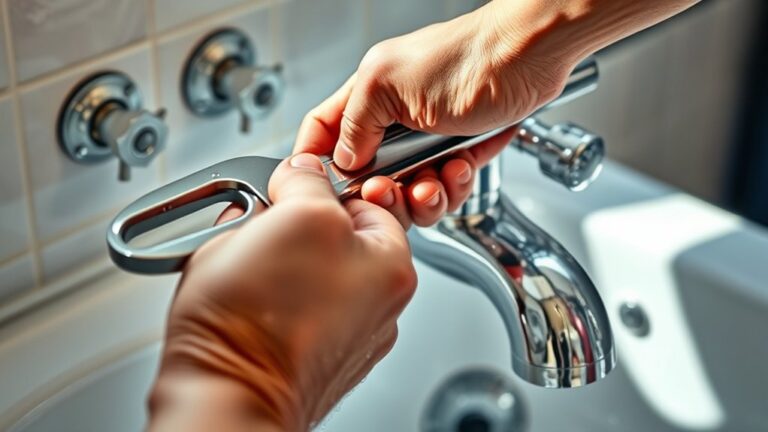
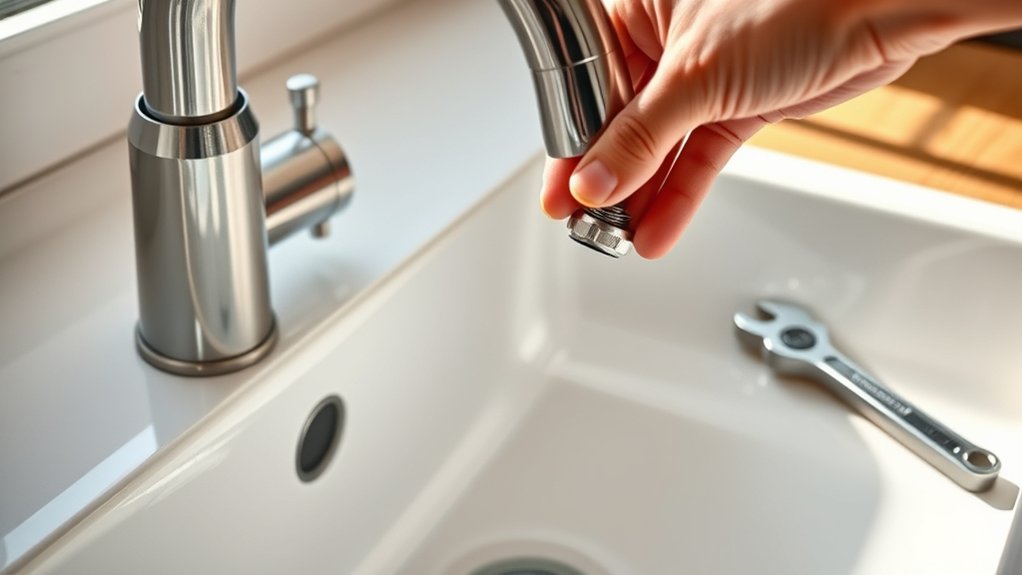
Use an adjustable wrench or pliers wrapped in a cloth to unscrew the old aerator by turning it counterclockwise. Be careful not to damage the faucet or surrounding fixtures.
Once removed, clean any debris or mineral buildup from the faucet tip to ensure a smooth fit for the new aerator.
Next, hand-tighten the new aerator onto the faucet. Finish by gently tightening it with a wrench, but avoid overtightening to prevent damage.
Checking the correct size and type of aerator beforehand guarantees compatibility with your faucet.
If you want to improve your faucet’s performance further, you’ll find practical tips and troubleshooting advice helpful during this process.
Proper maintenance of your faucet aerator can lead to better water efficiency and flow.
How to Replace Your Faucet Aerator Step-by-Step
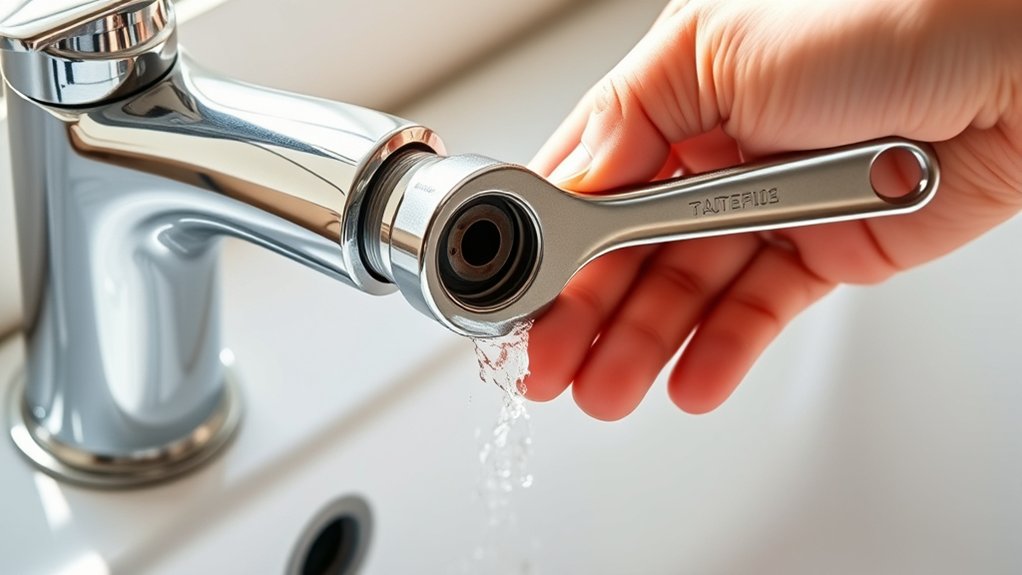
Replacing your faucet aerator involves a few straightforward steps that you can complete with minimal tools. First, gather basic installation tools: adjustable wrench, pliers, and a cloth to protect the finish.
Start by turning off the water supply or verify the faucet is off. Use the wrench or pliers to carefully unscrew the old aerator counterclockwise, placing the cloth between the tool and aerator to prevent scratches.
Begin by ensuring the water is off, then gently unscrew the old aerator using tools with a protective cloth.
Remove any debris or buildup inside the faucet tip. When installing the new aerator, align it properly and hand-tighten before using the wrench to secure it snugly. Avoid overtightening.
Regular aerator maintenance tips include cleaning mineral deposits periodically to maintain peak water flow and prolong your aerator’s lifespan.
How to Choose the Right Faucet Aerator for Your Sink
When selecting a faucet aerator for your sink, you’ll need to take into account factors such as thread size, flow rate, and spray pattern to confirm compatibility and ideal performance. First, identify your sink’s thread size, commonly 15/16″27 for standard faucets or 55/64″27 for kitchen sinks, to guarantee a proper fit.
Next, evaluate aerator types: standard, water-saving, or laminar flow, each affecting water pressure and usage differently. Pay close attention to flow rates, typically measured in gallons per minute (GPM); matching this to your local regulations and water needs is essential.
Finally, consider the spray pattern, stream or aerated, to balance water efficiency with user comfort. Choosing the correct aerator optimizes water conservation without sacrificing functionality.
Fix Common Faucet Aerator Problems Quickly
Anyone can encounter issues with their faucet aerator, such as reduced water flow, uneven spray, or leaks. To fix these problems quickly, follow practical aerator maintenance tips and avoid common installation mistakes.
Start by removing the aerator and inspecting it for debris or mineral buildup. Clean the screen and housing thoroughly with vinegar or a brush. Check the rubber gasket for damage or misalignment, which can cause leaks.
When reinstalling, confirm the aerator is correctly threaded to avoid cross-threading or overtightening. If uneven spray persists, replace the internal components or the entire aerator.
- Remove and clean the aerator regularly
- Inspect and replace worn gaskets
- Avoid cross-threading during installation
- Use vinegar to dissolve mineral deposits
- Replace damaged components promptly
Applying these steps helps restore proper function efficiently.
When and Why to Replace Your Faucet Aerator
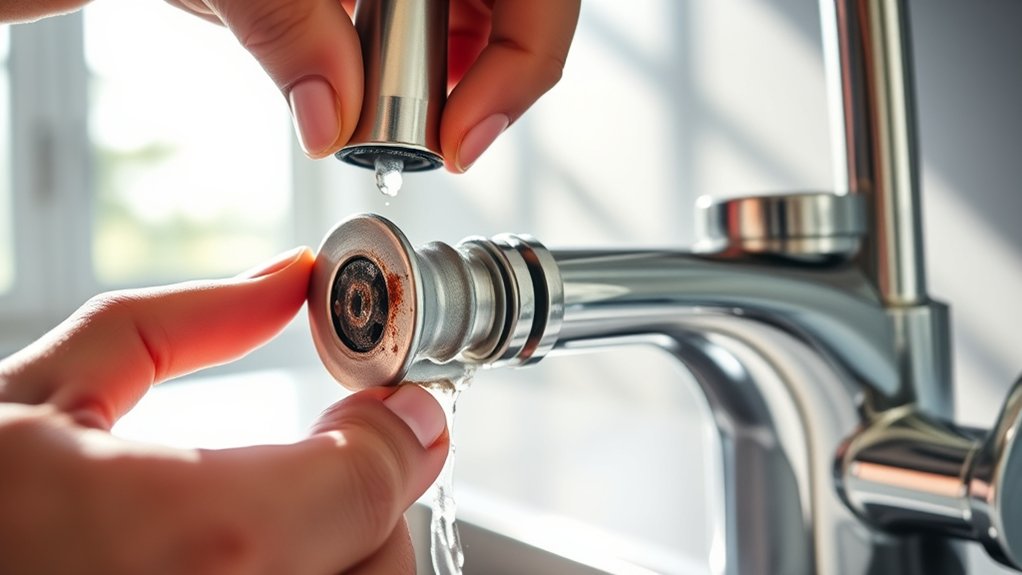
If cleaning and inspecting your faucet aerator doesn’t resolve flow issues or leaks, it may be time to replace it. The typical aerator lifespan ranges from one to three years, depending on water quality and usage.
When cleaning doesn’t fix leaks or flow issues, replacing your faucet aerator is often the best solution.
Over time, mineral buildup and wear degrade performance, reducing water efficiency and causing uneven flow or drips. Replacing the aerator restores proper water distribution, conserves water, and maintains consistent pressure.
Additionally, newer aerators often feature improved designs that enhance water efficiency and reduce splashing. You should also replace the aerator if you notice visible damage or corrosion.
Regular replacement guarantees your faucet operates effectively, prevents potential leaks, and supports water conservation efforts. Keep a replacement aerator handy to address these issues promptly and maintain system reliability.
Frequently Asked Questions
Can a Faucet Aerator Reduce Water Bills?
You don’t need a time machine to see that a faucet aerator boosts water conservation, cutting flow without losing pressure. This practical upgrade delivers real cost savings on water bills, optimizing efficiency effortlessly in your home plumbing.
Are Faucet Aerators Compatible With All Faucet Types?
You’ll find faucet aerators aren’t universally compatible with all faucet types. Before aerator installation, check your faucet’s threading and size to verify a proper fit.
Some specialty faucets require specific aerator designs or adapters.
How Often Should Faucet Aerators Be Cleaned?
You should perform aerator maintenance by cleaning every three months, preventing buildup that cuts water flow by up to 50%.
Keeping this cleaning frequency guarantees efficient water pressure and extends your faucet’s lifespan effectively.
Can a Clogged Aerator Affect Water Pressure?
Yes, a clogged aerator can reduce water pressure by restricting flow. You’ll notice decreased output and uneven spray.
Regularly cleaning or replacing the clogged aerator restores ideal water pressure and efficient faucet performance.
Do Faucet Aerators Improve Water Quality?
You’ll appreciate how faucet aerators subtly enhance water taste by gently filtering out sediment. While they’re no miracle filter, their practical sediment filtration improves your water’s clarity and overall drinking experience efficiently and reliably.