How to Fix Leaky Faucet Single Handle
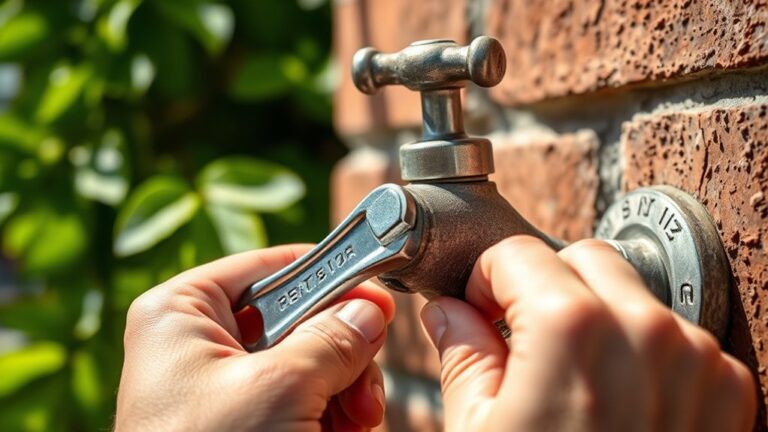
To fix your leaky single-handle faucet, first turn off the water supply under the sink.
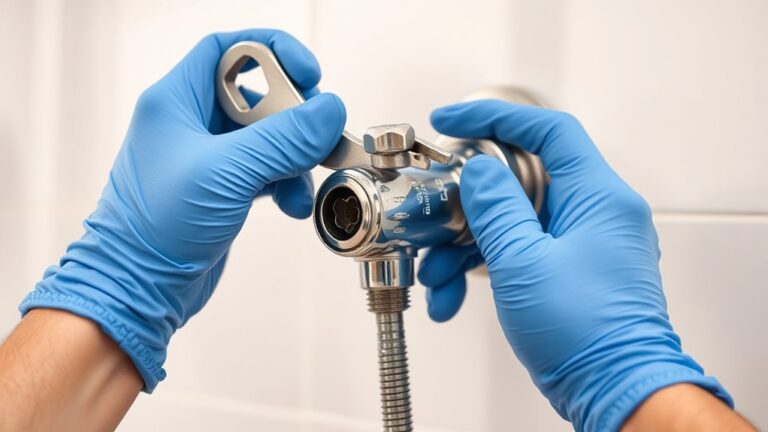
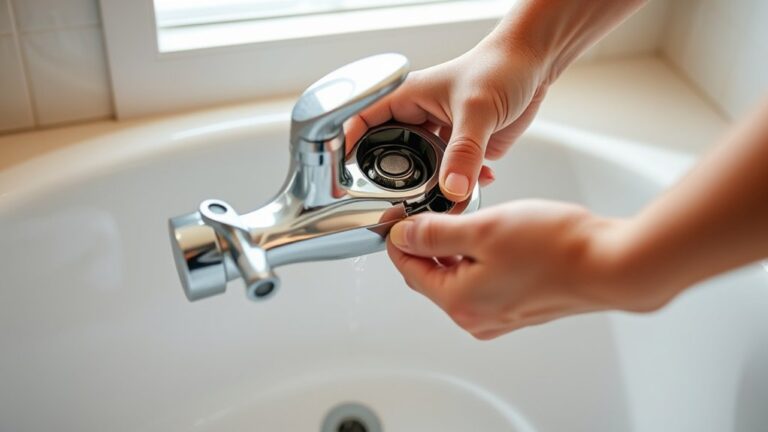
Removing the handle requires locating its set screw. Once removed, inspect the cartridge and O-rings for any damage or wear.
If you notice cracks or mineral buildup, replace the cartridge using a cartridge puller if needed.
Clean all parts thoroughly and apply plumber’s grease before reassembling the faucet.
Regular maintenance helps prevent leaks and ensures your faucet functions smoothly.
Keep going for detailed steps and expert tips to guarantee a lasting repair.
How to Fix a Leaky Single-Handle Faucet
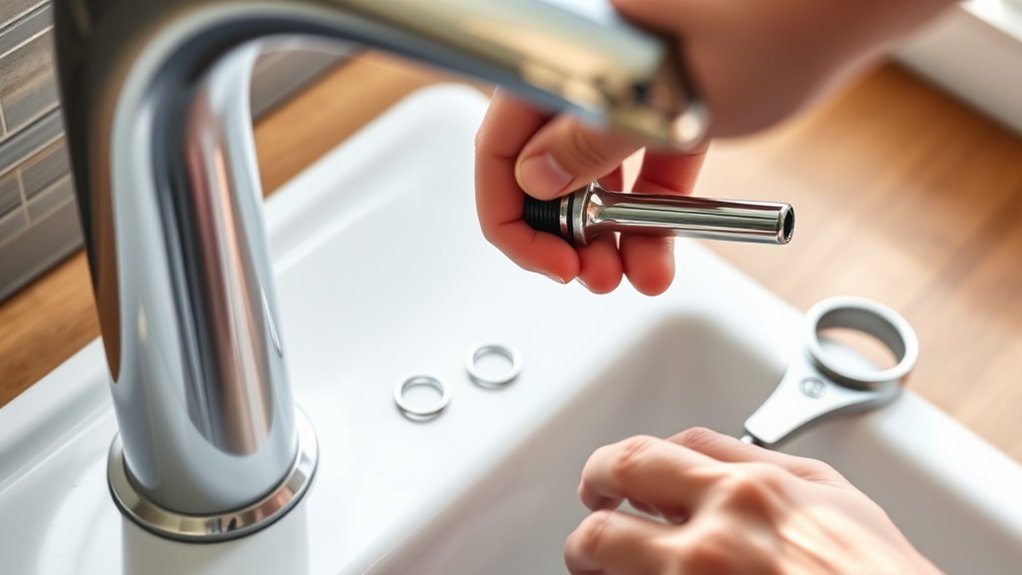
Start by turning off the water supply under the sink to prevent any spills. Next, remove the handle of your single-handle faucet, usually secured by a set screw hidden under a decorative cap.
Once the handle is off, inspect the cartridge inside, as it’s often the cause of leaks. A common faucet issue, replace the cartridge if it shows wear or damage. Clean all parts and reassemble the faucet carefully.
Regular faucet maintenance tips include checking seals and cartridges periodically to catch problems early. Tighten any loose parts and clean aerators to maintain water flow. By addressing these common faucet issues promptly, you’ll extend your faucet’s lifespan and avoid costly repairs or water waste.
Tools Needed to Fix a Leaky Single-Handle Faucet
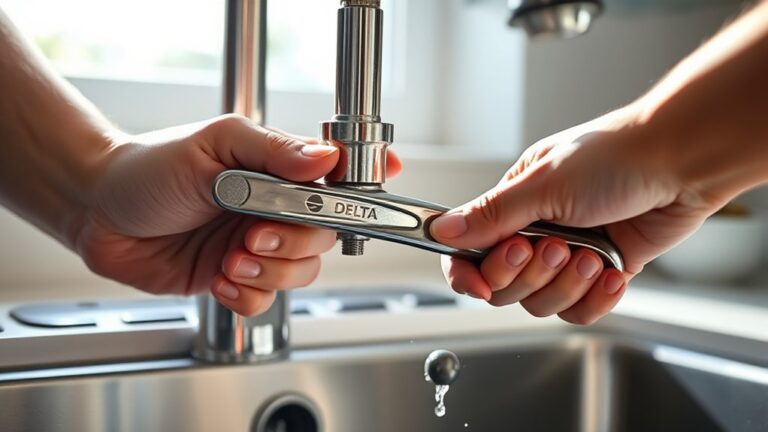
To fix a leaky single-handle faucet effectively, you’ll need a specific set of tools that guarantee precision and safety during the repair process. Proper faucet maintenance and leak prevention start with having the right equipment at hand, minimizing mistakes and securing a smooth repair.
Here’s what you should gather before beginning:
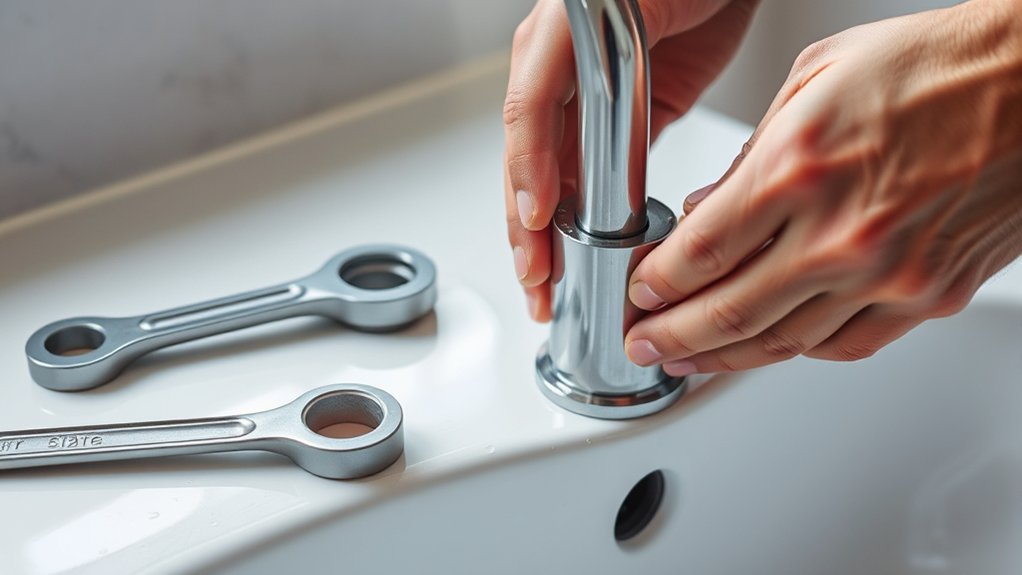
- Adjustable wrench: To loosen and tighten nuts without damaging fixtures
- Phillips and flat-head screwdrivers: For removing handle screws and retaining clips
- Allen wrench set: Commonly needed for set screws on faucet handles
- Replacement O-rings and cartridge puller: Essential for removing and replacing worn parts
- Plumber’s grease: To lubricate components, preventing future leaks
Using these tools secures you perform efficient, professional-grade faucet maintenance and leak prevention.
Diagnosing a Leaky Single-Handle Faucet
How can you pinpoint the cause of a leak in your single-handle faucet? Start by understanding the faucet anatomy: the handle controls water flow via a cartridge, sealed with O-rings and washers. Common causes of leaks include worn-out cartridges, damaged O-rings, or loose connections.
First, turn off the water supply and remove the handle to inspect the cartridge for cracks or mineral buildup. Check the O-rings and washers for signs of wear or deformation, as these often fail and cause dripping.
Also, examine the faucet base and spout for leaks, which may indicate loose or damaged seals. Identifying the exact source within these components allows you to target repairs precisely, preventing unnecessary replacements and ensuring efficient troubleshooting.
Replacing the Cartridge in Your Single-Handle Faucet

Remove the old cartridge carefully to prevent damaging the faucet assembly. Begin by identifying the cartridge type. Common ones include ball, ceramic disc, and compression. Choose the exact replacement to guarantee compatibility.
Follow these installation tips for a smooth process:
- Turn off water supply and relieve pressure by opening the faucet.
- Remove handle and retaining clip to access the cartridge.
- Use pliers or a cartridge puller to extract the cartridge without twisting.
- Insert the new cartridge, aligning it correctly with the faucet body.
- Reassemble the faucet, tighten screws, and restore water flow to test for leaks.
Selecting the right cartridge type and following precise installation tips guarantees a leak-free, durable repair. Avoid forcing parts to prevent damage during replacement.
Preventing Leaks in Single-Handle Faucets
Although fixing a leak addresses the immediate issue, preventing leaks in single-handle faucets requires regular maintenance and careful handling. To extend your faucet’s lifespan, follow key faucet maintenance tips: clean aerators to avoid debris buildup, inspect seals and O-rings for wear, and lubricate moving parts with plumber’s grease.
Avoid applying excessive force when operating the handle, as this stresses internal components and accelerates wear. Leak prevention strategies also include promptly addressing minor drips before they worsen and maintaining water pressure within manufacturer specifications.
When to Call a Plumber for a Persistent Leak
If your faucet continues to leak despite your efforts to fix it, it’s time to contemplate calling a professional plumber. Persistent leaks often indicate underlying issues beyond simple DIY repairs. Recognizing common causes and signs urgency can prevent further damage and costly repairs.
Persistent faucet leaks signal deeper problems—know when to call a professional and prevent costly damage.
Consider contacting a plumber if you notice:
- Leaks persisting after replacing washers or cartridges
- Corroded or damaged faucet components
- Water pressure issues linked to the faucet
- Signs of water damage under the sink or cabinet
- Unusual noises or dripping despite adjustments
These signs highlight problems that require specialized tools and expertise. Acting promptly can save water, reduce utility bills, and avoid structural damage. When in doubt, a licensed plumber guarantees accurate diagnosis and lasting repair of your single-handle faucet leak.
Frequently Asked Questions
What Types of Faucets Are Best for Water Conservation?
You should choose faucets with water saving technologies like aerators and flow restrictors. Efficient faucet designs, such as low-flow single-handle or sensor-activated models, reduce water use effectively, helping you conserve without sacrificing performance or convenience.
Can Hard Water Cause Faucet Leaks?
Yes, water hardness can cause faucet leaks by depositing minerals that wear seals and valves. To prevent leaks, you should regularly clean fixtures and consider water softeners for effective leak prevention and longer faucet lifespan.
How Often Should Faucet Cartridges Be Replaced?
Like clockwork, you should replace faucet cartridges every 3 to 5 years. Regular faucet maintenance guarantees smooth operation and extends cartridge lifespan, preventing leaks and costly water damage before small issues turn into big headaches.
Are There Eco-Friendly Faucet Repair Options?
You can use sustainable materials like ceramic cartridges and recycled metal parts to fix faucets. Follow plumbing tips that emphasize low-flow aerators and non-toxic sealants, reducing water waste and environmental impact while ensuring durable repairs.
What Is the Average Cost of Faucet Repairs?
Faucet repair costs vary like shifting tides, typically ranging $50 to $200. You can cut expenses by tackling DIY faucet fixes, saving labor fees while ensuring precision with the right tools and replacement parts.