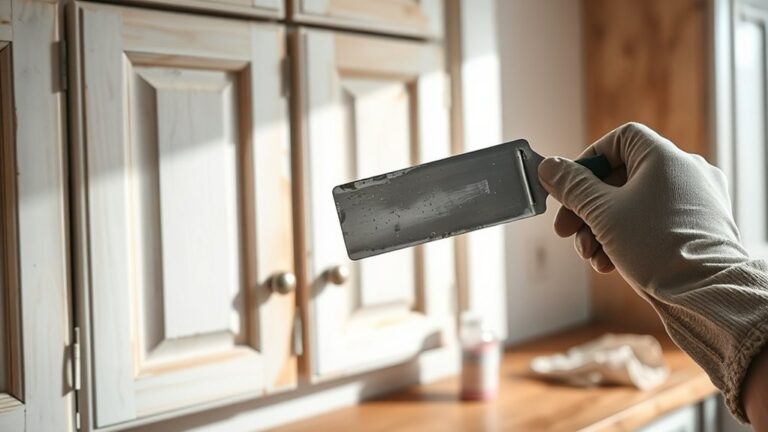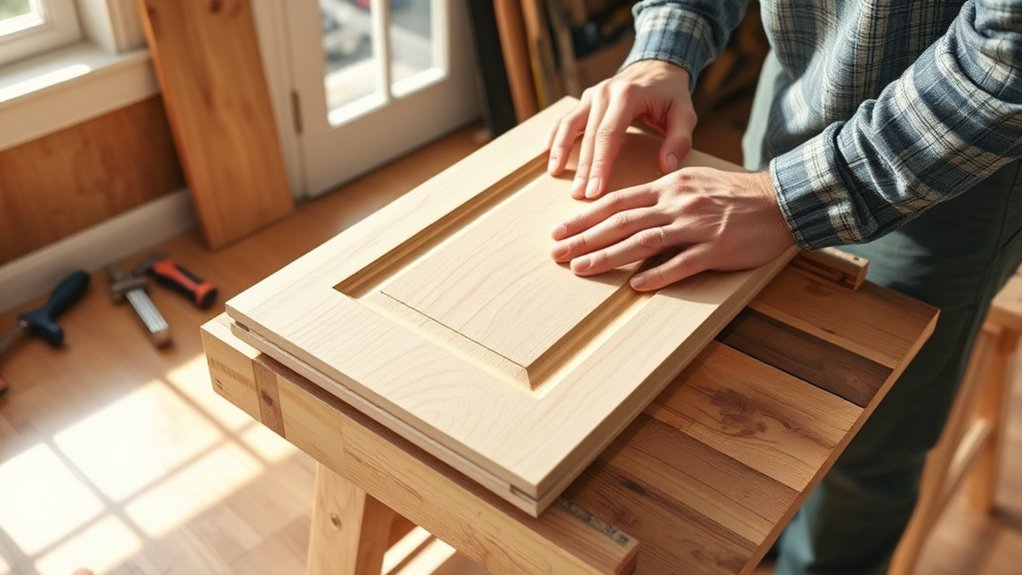
How to Make Kitchen Cabinet Doors
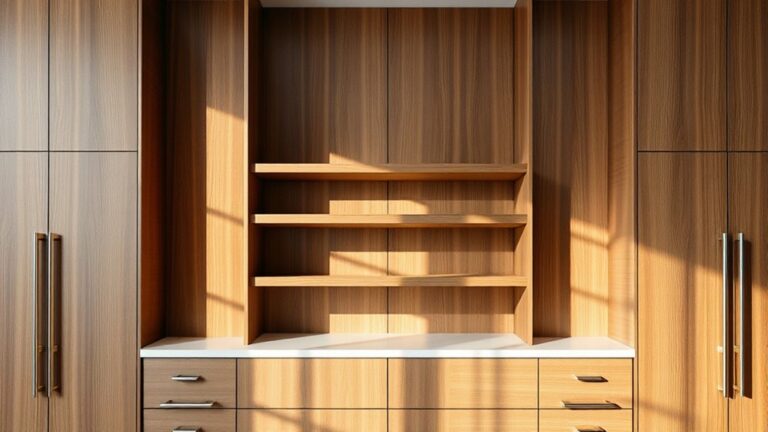
To make kitchen cabinet doors, start by measuring your cabinet openings accurately and choosing durable materials like hardwood or plywood.
Accurate measurements are crucial for a perfect fit and long-lasting results.
Next, cut frame components precisely with a miter saw, then securely join frames and insert panels using glue and clamps.
Sand all surfaces smoothly before applying primer and a durable finish to protect the wood and enhance appearance.
Finally, install the doors by aligning hinges carefully to ensure smooth operation and durability.
Following these steps guarantees a professional result. Exploring further details can help you perfect every stage of the process.
Measure and Plan Your Kitchen Cabinet Doors
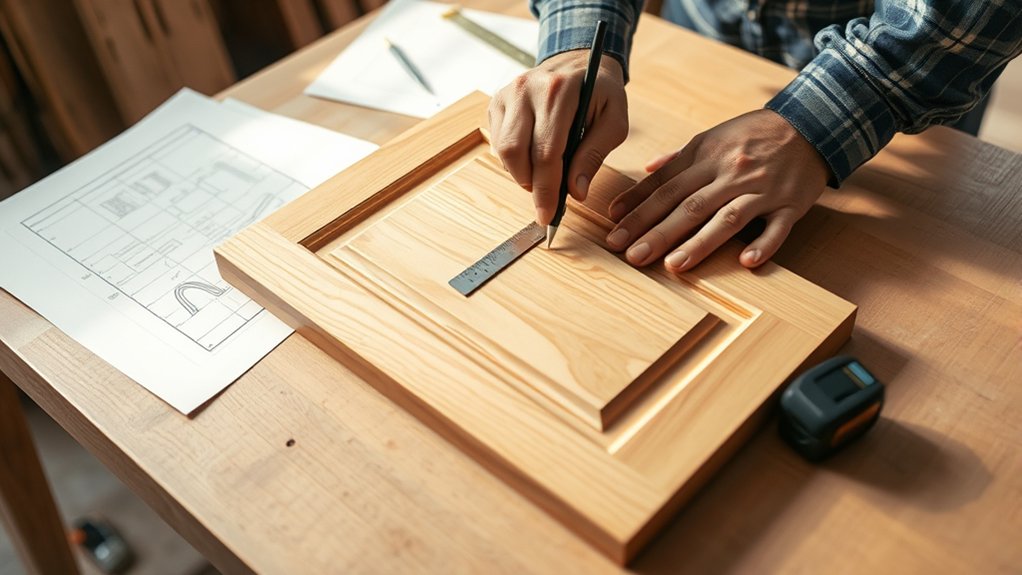
Start by measuring the height and width of each cabinet opening accurately with a tape measure. Record these dimensions carefully, as precision is essential for a proper fit.
Next, consider your preferred design styles; whether you want shaker, flat-panel, or raised-panel doors will impact your measurements slightly due to overlay or inset door types. Account for door thickness and clearance when planning to guarantee smooth operation.
Don’t forget to factor in door hardware placement. Hinges and handles require specific spacing and positioning that must be included in your planning stage. Create detailed sketches or digital plans reflecting these variables.
This methodical approach guarantees your custom kitchen cabinet doors align perfectly with your design intent and functional requirements, preventing costly errors during fabrication and installation.
Choose the Right Materials for Kitchen Cabinet Doors
After finalizing your measurements and design plans, selecting the right materials becomes the next key step in crafting your kitchen cabinet doors. Consider wood types and door styles carefully, as these determine durability and aesthetic.
Solid hardwoods like maple offer strength and a smooth finish, while plywood provides stability and resists warping. MDF suits painted door styles, guaranteeing a smooth surface. Veneers give a wood look at a lower cost.
| Wood Type | Ideal Door Style |
|---|---|
| Maple | Raised Panel |
| MDF | Shaker/Flat Panel |
| Plywood | Slab/Flat Panel |
Choose materials that complement your kitchen’s style and withstand moisture and wear. This precision guarantees your cabinet doors last and look professional.
Cut and Assemble the Cabinet Door Frames
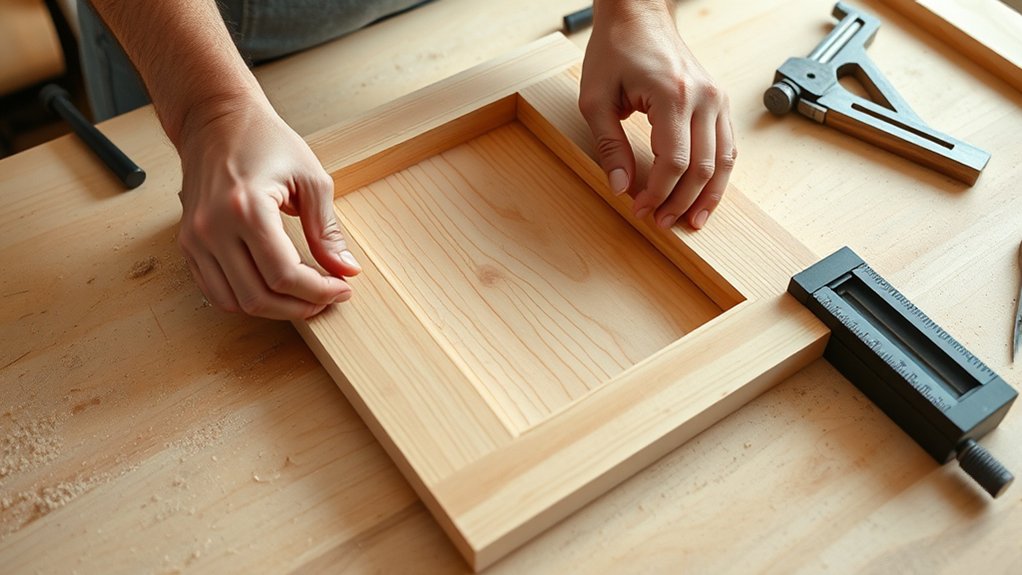
Start by accurately measuring and cutting each frame component to guarantee tight joints and proper door dimensions. Use precise tools like a miter saw to achieve clean, angled cuts for the frame corners.
Then, join the pieces securely using strong joints and clamps to maintain alignment during assembly.
Measuring and Cutting Frames
To guarantee a precise fit, carefully measure each side of your cabinet door frame before cutting. Consider the frame styles and door heights to determine exact dimensions. Use a reliable tape measure and mark your cuts clearly.
Account for the width of your saw blade to avoid undersized pieces. Double-check all measurements against your cabinet opening.
| Frame Part | Typical Length (inches) | Notes |
|---|---|---|
| Stiles | Door height minus rail thickness | Vertical frame pieces |
| Rails | Door width minus stile thickness | Horizontal frame pieces |
| Panel Groove | 1/4 inch deep | For panel insertion |
| Miter Cut Angle | 45 degrees | For frame corners |
| Allowance for Joinery | 1/8 inch | Guarantee snug joint fit |
Measure twice, cut once to maintain accuracy and optimize your cabinet door construction.
Joining Frame Components
Four key steps will guide you as you join and assemble the cabinet door frames: aligning, clamping, gluing, and fastening. Begin by precisely aligning the frame joints to guarantee a tight fit. Next, apply wood glue evenly along the joints to strengthen the bond.
Use clamps to hold the pieces firmly in place while the glue sets, preventing any movement that might weaken the frame. Finally, select appropriate fastening techniques, such as dowels, biscuits, or pocket screws, to reinforce the joints. These methods add lasting durability and stability to your doors.
- Experience the satisfaction of perfectly aligned, seamless frames
- Feel confident knowing your fastening techniques assure strength
- Watch your work transform into sturdy, professional-quality cabinet doors
Attach Panels and Add Decorative Details
Secure the panels firmly into the cabinet door frame using clamps and wood glue, guaranteeing a tight fit without gaps. Choose the appropriate panel types, such as MDF, plywood, or solid wood, based on durability and appearance.
Insert panels into the rabbet or groove of the frame, making sure they sit flush and allow for seasonal wood movement. Once panels are secure, attach decorative molding to enhance the door’s style and conceal seams.
Fit panels flush in the frame’s groove, then add decorative molding to conceal seams and enhance style.
Use precise measurements and miter cuts for molding to guarantee clean joints. Fasten molding with finishing nails or adhesive, avoiding over-application that can cause uneven surfaces.
This step not only strengthens the door but also adds a professional, finished look that complements your kitchen’s design.
Sand, Prime, and Finish Your Kitchen Cabinet Doors
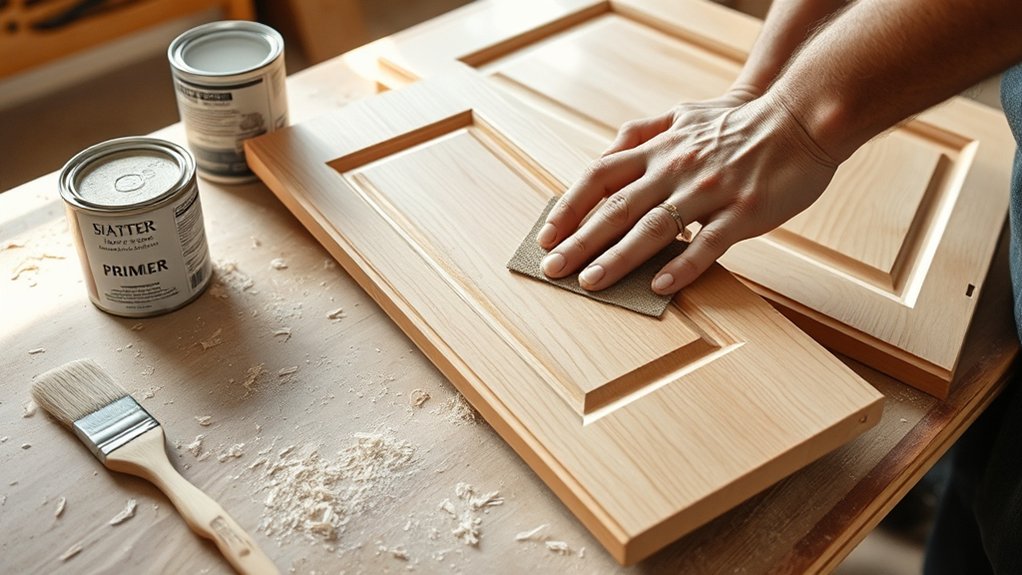
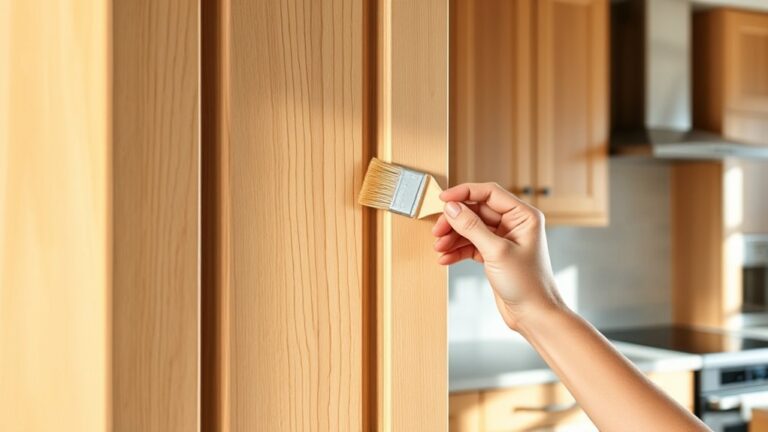
Start by selecting sandpaper with the right grit to smooth your cabinet doors without damaging the surface. Apply primer evenly to guarantee proper adhesion and a uniform base for your finish.
Finally, choose a durable finish that suits your kitchen’s use and style for long-lasting protection.
Choosing The Right Sandpaper
Selecting the right sandpaper grit is essential when preparing your kitchen cabinet doors for sanding, priming, and finishing. Proper grit selection impacts the surface smoothness and adhesion quality for primers and finishes.
Start with a medium grit (around 120) to remove imperfections using effective sanding techniques. Then, progress to a finer grit (220 or higher) to create a smooth, even surface without scratches. Avoid skipping grits, as uneven sanding can cause visible flaws later.
Choosing the right sandpaper guarantees you:
- Achieve flawless surfaces that enhance paint adhesion
- Save time by preventing rework due to improper sanding
- Enjoy professional-level results that boost your confidence
Applying Primer Evenly
Apply primer evenly to guarantee a smooth, durable base for your cabinet doors. Whether you use spray technique or brush application, consistency is key.
Spray technique offers a fine, uniform coat with minimal brush marks, while brush application allows precision in corners and edges. Maintain a wet edge to avoid lap marks, and apply thin layers to prevent drips.
After priming, inspect for missed spots and sand lightly before additional coats.
| Method | Advantages | Tips |
|---|---|---|
| Spray Technique | Fast, uniform coverage | Keep nozzle 8-12″ away, steady |
| Brush Application | Precision in detailed areas | Use a high-quality synthetic brush |
| Both | Control thickness, avoid runs | Apply multiple thin coats |
| Inspection | Identify imperfections | Sand between coats lightly |
| Dry Time | Varies by primer type | Follow manufacturer’s guidelines |
Selecting Durable Finish Options
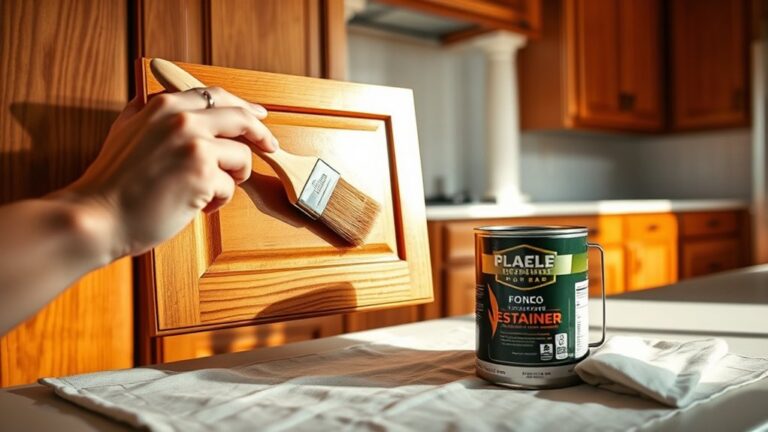
Once your cabinet doors are primed and sanded to a smooth finish, you need to choose a durable topcoat that withstands kitchen conditions like moisture, heat, and frequent handling. Selecting the right finish impacts finish durability and ease of finish maintenance over time. Consider finishes that form a hard, protective layer without yellowing or cracking.
Water-based polyurethane offers excellent finish durability with low odor and fast drying times.
Oil-based varnishes provide robust protection but require more ventilation and longer curing.
Acrylic lacquer dries quickly, resists moisture, and delivers a smooth surface but demands careful application.
Choose a finish that balances durability with your maintenance preferences to guarantee long-lasting, beautiful cabinet doors that hold up under daily kitchen wear.
Install Your Custom Kitchen Cabinet Doors Properly
Begin by aligning your custom kitchen cabinet doors carefully to guarantee smooth operation and a professional appearance. Use door alignment tips such as confirming even gaps between doors and cabinet frames. Check that doors sit flush with the cabinet face and adjust as needed.
Next, focus on hinge installation techniques. Secure hinges firmly to both the door and cabinet, using a drill for precise screw placement. Choose hinges that allow for fine adjustments to perfect door positioning after installation.
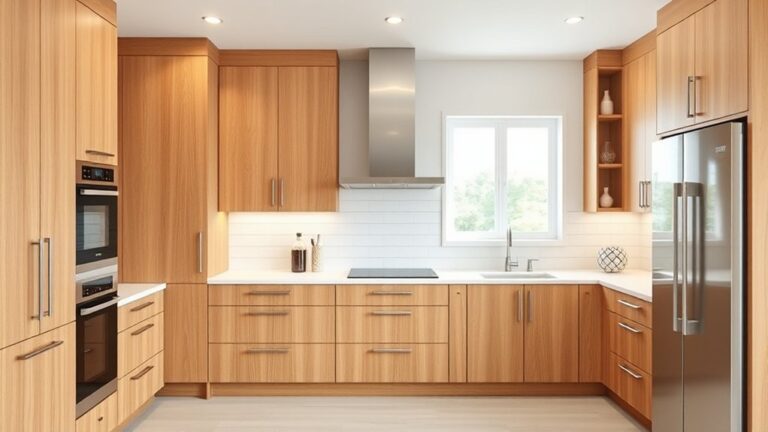
Test each door’s swing and close action, making incremental hinge adjustments to prevent binding or sagging. Proper installation assures durability and functionality, enhancing your kitchen’s overall quality.
Take your time during this process; accurate alignment and hinge setup are essential for lasting performance.
Frequently Asked Questions
How Do I Repair Damaged Kitchen Cabinet Doors?
Picture your cabinet door slightly askew. You’ll fix this by adjusting the hinges for perfect door alignment.
Tighten screws, fill dents with wood filler, sand smooth, then repaint or refinish for a like-new look.
What Are Common Mistakes to Avoid When Making Cabinet Doors?
You’ll want to avoid design errors like improper door thickness and poor panel fit. Also, don’t overlook material choices. Select durable, stable woods to prevent warping and guarantee your cabinet doors function smoothly and last longer.
Can I Use Reclaimed Wood for Kitchen Cabinet Doors?
Yes, you can use reclaimed wood for kitchen cabinet doors. Reclaimed wood benefits include durability and unique character.
When sourcing reclaimed wood, make sure it’s free of pests, structurally sound, and properly treated to prevent warping or contamination.
How Do I Maintain and Clean Custom Cabinet Doors?
You should clean custom door materials with a soft cloth and mild detergent, avoiding abrasive cleaners. Regularly dust and wipe spills promptly.
Apply appropriate finishes or sealants as needed. These cleaning techniques preserve durability and appearance efficiently.
Are There Eco-Friendly Finishes for Kitchen Cabinet Doors?
You can coat your cabinet doors with eco-friendly finishes that glow like morning dew, using sustainable materials and non-toxic options such as water-based polyurethane or natural oils. This ensures durability while protecting your health and the environment effectively.