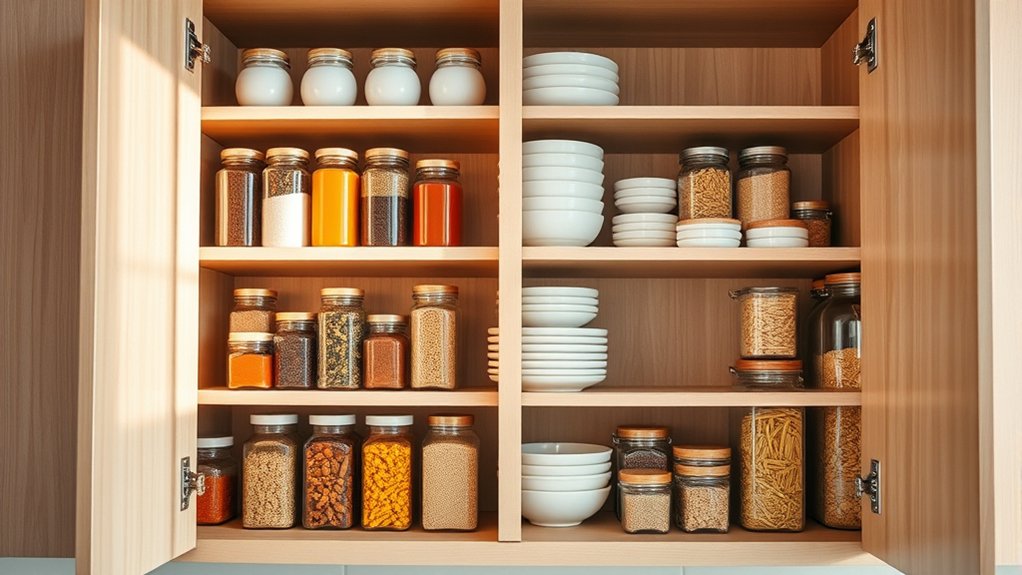
How to Organize Kitchen Cabinets
To organize your kitchen cabinets effectively, start by clearing out all items and sorting them by category and use.
Donate duplicates or unused tools to free up space and reduce clutter. This initial step sets the foundation for a well-organized kitchen.
Choose smart storage solutions like pull-out shelves, drawer dividers, and lazy susans to improve accessibility.
Arrange items by how often you use them, keeping daily essentials within easy reach for convenience.
Maximize vertical and hidden spaces with tiered organizers and door racks.
Maintain order by regularly decluttering and cleaning your cabinets.
Follow these steps to create a more efficient kitchen space.
Clear Out and Sort Your Kitchen Items by Category and Use
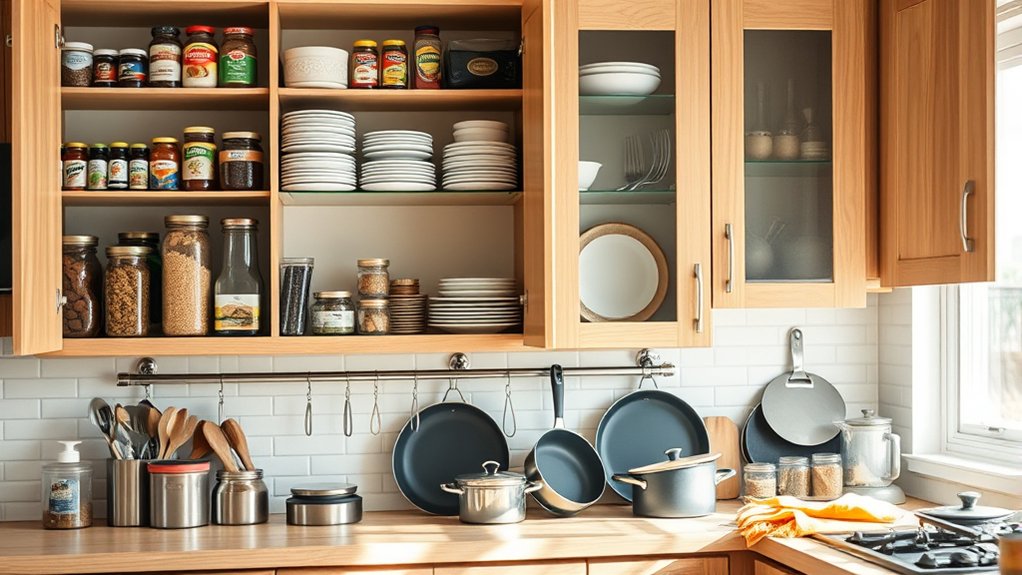
Start by removing everything from your kitchen cabinets and placing the items on a clean surface. This clears your space and allows you to see exactly what you have. Next, group similar utensils together, pots with pots, baking tools with baking tools.
Separate seasonal items, such as holiday-themed dishes or summer grilling tools, and store them away if you don’t use them often. As you sort, set aside any unused or duplicate items to donate; this reduces clutter and helps others.
Be methodical: categorize by use and frequency, so everyday essentials stay easily accessible. This clear sorting process lays the foundation for an organized kitchen cabinet that suits your cooking habits and maximizes space efficiently.
Choose the Best Storage Solutions for Your Kitchen Cabinets
Once you’ve sorted your kitchen items, selecting the right storage solutions becomes essential to maintain order and maximize space. Focus on tools that fit your cabinet layout and item types.
Contemplate adding pull out shelves for easy access and drawer dividers to separate utensils neatly. Lazy susans work great for corner cabinets, while stackable bins and shelf risers help you use vertical space efficiently.
Door racks expand storage without cluttering shelves. Don’t forget container labels to quickly identify contents and magnetic strips to hold knives or metal tools safely.
Key storage solutions to contemplate:
- Pull out shelves and drawer dividers for accessibility and organization
- Lazy susans and shelf risers to maximize cabinet space
- Stackable bins for grouping similar items
- Door racks, container labels, and magnetic strips for added convenience and order
Arrange Kitchen Items by Frequency and Function
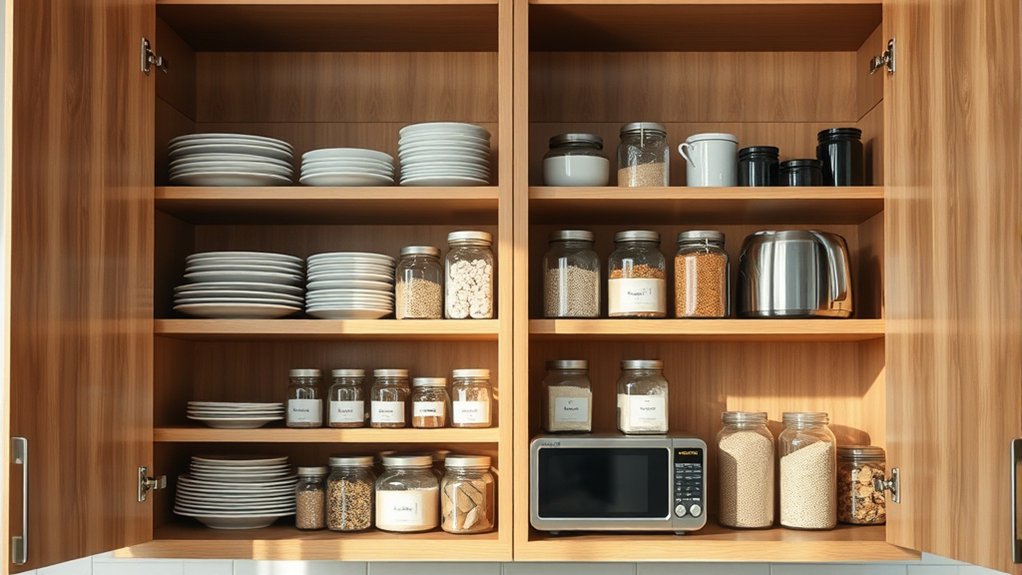
Organize your kitchen items by how often you use them and their purpose to create a functional space. Start by identifying items with high frequency usage. These belong in easily accessible cabinets or drawers.
Place daily-use dishes, utensils, and cookware within arm’s reach. Next, group items by function to streamline your workflow. Keep baking supplies together, separate from cooking essentials, and store cleaning materials in a designated area.
Functional grouping reduces the time spent searching and increases efficiency. Reserve less accessible spots for items you use rarely, like specialty appliances or seasonal cookware.
Make the Most of Vertical and Hidden Spaces in Kitchen Cabinets
Although kitchen cabinets often seem limited in space, you can maximize storage by utilizing vertical and hidden areas effectively. Start by installing vertical dividers to neatly store baking sheets and cutting boards upright. Use hidden shelves or under shelf baskets to create extra layers, making use of cabinet height.
Maximize cabinet space by using vertical dividers and hidden shelves to store items efficiently and neatly.
Pull out racks provide easy access to items stored at the back, while stackable bins help group smaller items without wasting space. Don’t overlook door storage options. Attach magnetic strips or small tiered organizers to keep spices and utensils handy.
Focus on these solutions to fully exploit your cabinet’s vertical and hidden spaces:
- Vertical dividers for upright storage
- Pull out racks for deep access
- Under shelf baskets to add layers
- Magnetic strips and tiered organizers on doors
Maintain Your Kitchen Cabinets for Lasting Organization
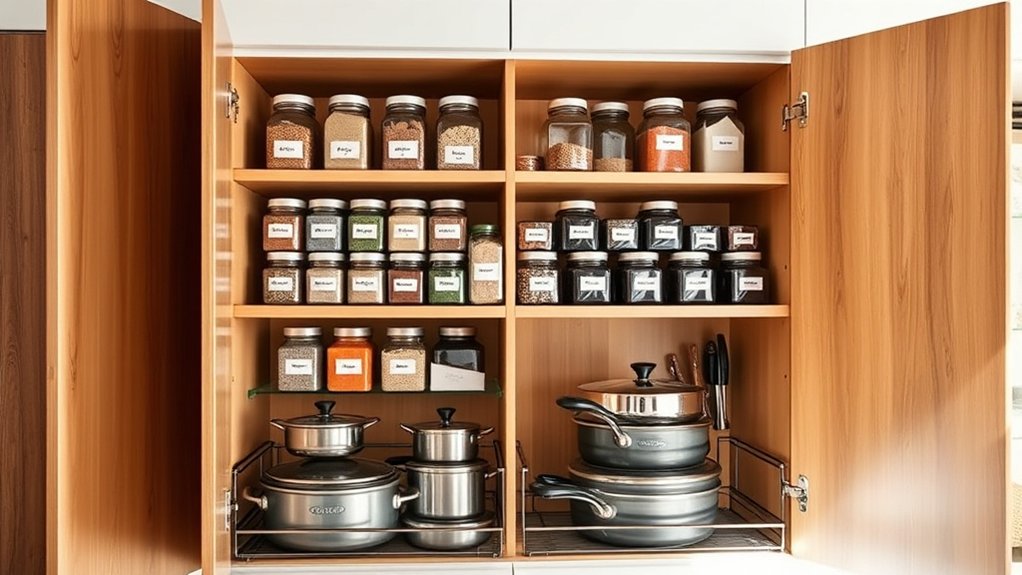
Maximizing vertical and hidden spaces gives you a strong foundation, but keeping your kitchen cabinets tidy requires ongoing care. To maintain lasting organization, start by regularly decluttering. Remove expired or unused items to free up space.
Use cleaning tips tailored to your cabinet materials. Wood cabinets benefit from gentle cleaners and soft cloths, while laminate surfaces can handle mild detergents. Wipe spills immediately to prevent stains and damage.
Check hinges and handles periodically to guarantee they function smoothly. Consider adding liners to protect shelves and make future cleaning easier. Finally, stick to a routine: a quick monthly wipe-down combined with an annual deep clean will keep your cabinets looking fresh and organized.
These simple steps help you preserve both the appearance and functionality of your kitchen cabinets over time.
Frequently Asked Questions
How Often Should I Replace My Kitchen Cabinet Hardware?
You should replace your kitchen cabinet hardware every 5 to 10 years or when it no longer matches your kitchen style or hardware finishes.
Regularly check for wear and update to keep your kitchen looking fresh and cohesive.
What Materials Are Best for Durable Kitchen Cabinets?
You’ll want hardwoods like maple, oak, or cherry for durable kitchen cabinets. Choose finish options like polyurethane or lacquer to protect the wood.
These materials resist wear and maintain your cabinets’ strength and appearance over time.
Can I Install Kitchen Cabinets Myself or Hire a Professional?
You can tackle DIY installation if you’re confident with tools and measurements; otherwise, hiring professional assistance guarantees precise alignment and secure mounting.
Weigh your skills and time before deciding to avoid costly mistakes or delays.
How Do I Prevent Mold Inside Kitchen Cabinets?
You prevent mold inside kitchen cabinets by ensuring proper moisture control. Use a dehumidifier, fix leaks promptly, and keep cabinets well-ventilated.
Regularly clean surfaces and store food in airtight containers for effective mold prevention.
What Are Eco-Friendly Options for Kitchen Cabinet Organization?
You can choose sustainable storage like bamboo or reclaimed wood organizers and biodegradable bins made from natural fibers. These eco-friendly options reduce plastic waste and help you keep your kitchen cabinets organized while protecting the environment.