How to Use Pyrex Safely in the Microwave Oven
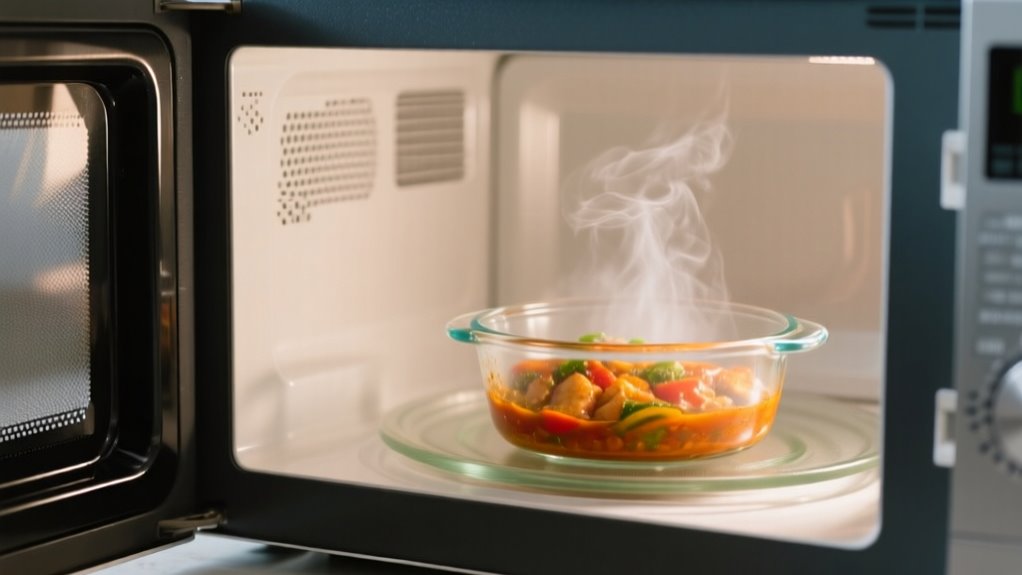
You can safely use Pyrex in the microwave by first checking it for cracks, chips, or scratches, as damaged glass can shatter.
Pyrex microwave safety is crucial to prevent accidents and preserve your cookware. Always let your Pyrex reach room temperature before heating and avoid sudden temperature changes like adding cold liquids to hot dishes.
Use low to medium heat settings and vent any covers to allow steam escape.
Handle hot Pyrex with oven mitts and never place it on cold surfaces after microwaving.
Keep these tips in mind to protect your Pyrex from damage and discover more best practices for microwave use.
Key Takeaways
- Inspect Pyrex for cracks, chips, or scratches before microwaving to avoid breakage risks.
- Allow Pyrex dishes to reach room temperature before placing them in the microwave.
- Use low to medium heat settings and avoid sudden temperature changes to prevent thermal shock.
- Unseal lids or covers and position dishes off-center to allow steam to escape safely.
- Handle hot Pyrex with oven mitts and avoid placing it on cold or wet surfaces immediately.
Understanding Pyrex Glass Composition

When you use Pyrex in the microwave, it helps to know what it’s made of. Pyrex containers are crafted from either borosilicate glass or tempered glass, both prized for durability and excellent heat resistance. Borosilicate glass stands out for its ability to endure thermal shock, meaning it handles rapid temperature changes without cracking—perfect for microwave use.
Tempered glass undergoes a special heating and cooling process that strengthens it, making it highly resistant to shattering. Pyrex’s unique composition allows it to safely withstand temperature ranges from -104°F to 428°F, ensuring versatile and safe cooking. Additionally, Pyrex glass doesn’t absorb stains or odors, so it maintains food integrity while you reheat or store meals confidently in your microwave.
Checking for Damage Before Microwave Use

Although Pyrex is designed to withstand heat, you should always check for cracks, chips, or scratches before microwaving. These visible cracks or chips can compromise the integrity of your Pyrex® glassware, increasing the risk of shattering. Even small scratches or hidden damage can cause hot spots or breakage during microwave use.
Also, verify no foreign materials or residues remain, as they may cause uneven heating.
| Damage Type | Effect on Integrity | Action Required |
|---|---|---|
| Visible cracks | Weakens glass | Do not use in microwave |
| Chips | Risk of shattering | Avoid microwave use |
| Scratches | Creates hot spots | Inspect carefully; replace |
Always inspect your Pyrex before microwaving to prevent accidents and verify safety.
Preparing Pyrex Dishes for Microwave Cooking

Before placing your Pyrex dishes in the microwave, make sure they’ve reached room temperature to avoid thermal shock that could cause them to shatter. Always inspect your Pyrex dishes for any damaged glassware like cracks or chips before use, as these compromise safety. When heating, use low to medium heat settings to promote even heating and reduce the risk of overheating.
If your dish has a cover, unseal it and place it off-center to allow steam escape, preventing pressure buildup. Avoid adding liquid to hot Pyrex dishes since this can weaken the glass and lead to breakage. Following these safety instructions will help you prepare your Pyrex dishes properly for microwave cooking while minimizing the risk of damage or injury.
Avoiding Thermal Shock and Temperature Changes
Since Pyrex glassware can handle temperature swings between -104°F and 428°F, you’ve got some flexibility in the microwave—but you still need to avoid sudden temperature changes. To use Pyrex safely, always let your glass dish reach room temperature before microwaving. Avoid sudden temperature changes like moving a dish straight from the freezer into the microwave; this risks thermal shock, which can cause cracks or shattering.
Also, never add cold liquid to hot Pyrex glass, as this compromises its strength. Preheating the microwave helps guarantee even temperature distribution, reducing the risk of thermal shock. By carefully managing temperature and handling, you’ll keep your Pyrex dish safe and intact during microwave use.
Handling Hot Pyrex Safely After Microwaving
When you take Pyrex out of the microwave, always use oven mitts or thick potholders because the glass can get extremely hot and cause burns. For handling hot Pyrex safely, avoid placing hot Pyrex directly on cold or wet surfaces to prevent thermal shock, which can cause breakage. Instead, place on dry cloths or wooden surfaces.
Before microwaving, inspect for damage and check for cracks to verify safety. After microwaving, allow the Pyrex to cool slightly before handling to avoid sudden temperature changes that compromise the glass. When cleaning, use hot soapy water carefully to prevent slips or dropping.
Regularly inspect your Pyrex for cracks or chips to prevent breakage and keep your kitchen safe.
Using Microwave-Safe Covers With Pyrex
Handling hot Pyrex safely is just one part of using it in the microwave. When you use microwave-safe covers, always verify they’re labeled for microwave use to avoid warping or melting. Avoid metal lids, as they can cause sparks and damage your microwave.
Before heating, unseal the cover and position it off-center to allow steam escape, preventing pressure buildup that could cause explosive spills or shattering. After microwaving, let your Pyrex come to room temperature before cleaning. Be sure to inspect covers regularly for damaged lids since compromised ones won’t provide a proper seal or protection during heating.
When cleaning, use non-abrasive cleansers to maintain the integrity of your microwave-safe covers and extend their lifespan.
Comparing Pyrex With Alternative Microwave Containers
Although Pyrex offers excellent durability and thermal resistance, you might find alternative microwave containers, like PaperPlus, more convenient for certain uses. Pyrex is microwave-safe but needs careful handling to avoid thermal shock and potential shattering.
In contrast, PaperPlus containers, made from food-grade materials, eliminate these risks and are disposable, easing cleanup. Plastic containers may warp or leach chemicals if not microwave-safe. Here’s a quick comparison:
| Feature | Pyrex |
|---|---|
| Material | Borosilicate glass |
| Thermal Shock Risk | High (handle with care) |
| Durability | Very durable, reusable |
| Convenience | Requires cleaning |
| Feature | PaperPlus / Plastic |
| Material | Food-grade paper/plastic |
| Thermal Shock Risk | Minimal |
| Durability | Disposable, less durable |
| Convenience | Easy disposal, no cleaning |
Following safety instructions guarantees safe use in the microwave during heating.
Frequently Asked Questions
Is It Safe to Put Pyrex in the Microwave?
Yes, you can safely put Pyrex in the microwave, but you need to be careful. Make certain your Pyrex dish isn’t cold from the fridge—it should be at room temperature to avoid cracking. Don’t heat it empty, and check for any chips or cracks before using it.
Also, if you’re using a lid, make sure it’s microwave-safe and loosely placed so steam can escape. Following these tips helps keep your Pyrex safe during microwaving.
How Do You Prevent Pyrex From Breaking in the Microwave?
To prevent Pyrex from breaking in the microwave, treat it like a delicate flower—handle with care. Don’t toss cold Pyrex straight into the microwave; let it warm up to room temperature first. Always vent the lid to avoid pressure build-up, and never heat an empty dish.
Check for cracks regularly because even small flaws can cause it to shatter. Following these steps keeps your Pyrex safe and sound every time.
Is There a Microwave Safe Symbol on Pyrex?
Yes, you’ll usually find a microwave-safe symbol on the bottom of Pyrex containers if they’re safe to use in the microwave. If you don’t see that symbol, it’s best not to microwave it, especially with older Pyrex dishes.
Always check for cracks or chips before use, since damaged glass can shatter. When in doubt, follow the manufacturer’s instructions to keep things safe.
Can Pyrex Go in the Microwave for 10 Minutes?
Think of your Pyrex as a trusted guardian—it can handle 10 minutes in the microwave, but only if you treat it right. Don’t pop it in cold; let it warm up first to avoid shocking it. Leave the lid slightly open to let steam escape, preventing pressure buildup.
Keep an eye on the time, and if your Pyrex is labeled microwave-safe, you’re golden. Treat it gently, and it’ll serve you well.
Conclusion
Now that you know how to use Pyrex safely in your microwave, you can avoid any kitchen disasters that feel like a volcanic eruption waiting to happen. Always check for cracks, avoid sudden temperature changes, and handle your hot dishes with care.
Using microwave-safe covers helps too. With these simple steps, your Pyrex will serve you well, making microwave cooking safer and easier than you ever thought possible. Remember, following these precautions ensures the safe use of Pyrex in the microwave oven and protects your kitchen from accidents.