10 Steps to Reheat Sliced Brisket Perfectly in the Oven
To reheat sliced brisket perfectly in the oven, start by preheating your oven to 325°F.
Let the brisket sit out until it reaches room temperature to ensure even heating.
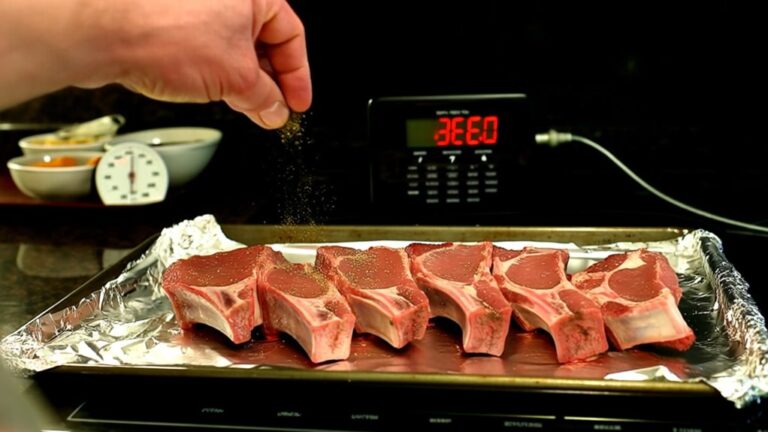
Choose a shallow baking dish and arrange the slices evenly without overlapping.
Add about 1/4 inch of beef broth or drippings to keep the meat moist.
Cover tightly with foil to lock in moisture during reheating.
Bake for 30–45 minutes until the internal temperature hits 150°F.
Let it rest briefly before serving.
Keep following for tips to guarantee juicy, tender results every time.
Key Takeaways
- Preheat oven to 325°F and let sliced brisket reach room temperature for even reheating.
- Arrange brisket slices in a shallow baking dish with 1/4 inch beef broth, layering thicker slices on the bottom.
- Cover the dish tightly with aluminum foil to trap steam and retain moisture during reheating.
- Reheat brisket for 30 to 45 minutes, checking for an internal temperature of 150°F to 155°F.
- Rest brisket 5 to 10 minutes covered loosely with foil to redistribute juices before serving.
Preheat Your Oven to the Right Temperature
To reheat sliced brisket perfectly, start by preheating your oven to 325°F. This temperature is ideal because it helps retain the brisket’s moisture without overcooking it. Make certain your oven reaches the full temperature before placing the brisket inside to guarantee even reheating.
Using a temperature that’s too high can dry out the meat, so sticking to 325°F minimizes that risk. When reheating, aim for the brisket’s internal temperature to reach 165°F, which ensures it’s heated thoroughly and safe to eat. After removing the brisket from the oven, let it rest for a few minutes so the juices can redistribute, keeping the meat tender and flavorful.
Gather Your Leftover Sliced Brisket
Once your oven is preheated to 325°F, gather your leftover sliced brisket, making certain it’s been stored properly in an airtight container or wrapped tightly in foil to lock in moisture. If you have any leftover juices or au jus, set those aside—they’ll help keep the meat flavorful and moist during reheating.
Next, grab a baking dish and pour about a 1/4 inch of beef broth or another flavorful liquid into the bottom. This liquid will prevent the brisket from drying out as it warms. Place the brisket slices in the dish, then cover it tightly with aluminum foil to trap steam.
Let the Brisket Come to Room Temperature
Before reheating, let your sliced brisket sit out for about 30 minutes to reach room temperature. This step helps the meat warm evenly and cuts down on oven time, so it stays juicy.
Make sure your slices are uniform to get the best results.
Importance of Room Temperature
Although it might be tempting to reheat sliced brisket straight from the fridge, letting it sit at room temperature for about 30 minutes makes a big difference. Allowing the brisket to reach room temperature promotes even heating and helps preserve the internal juices, preventing the meat from drying out. This step also reduces reheating time and helps you achieve the ideal internal temperature of 150°F to 155°F more efficiently.
When reheating brisket, starting at room temperature helps:
- Prevent overcooking by ensuring the meat heats evenly
- Allow better absorption of moisture added, like beef broth or au jus
- Maintain juiciness and enhance overall flavor by redistributing internal juices
Taking this simple step guarantees a tender, flavorful result every time.
Timing Before Reheating
While it might seem like an extra step, letting your sliced brisket sit at room temperature for about 30 minutes before reheating guarantees it heats evenly. This timing before reheating prevents the outside from cooking too fast while the inside stays cold, which can cause uneven heating. Allowing the brisket to warm up helps the juices redistribute throughout the meat, ensuring a moister final product.
If you reheat sliced brisket straight from the fridge, the reheating process can dry out the edges before the center is warm. Taking the time to bring the brisket to room temperature minimizes this risk and improves overall texture and flavor. So, be patient—this simple step makes a big difference in preventing drying out and achieving perfectly reheated brisket.
Choose the Perfect Baking Dish
When reheating sliced brisket, picking the right baking dish is key. You’ll want a shallow glass or ceramic dish that fits your brisket comfortably to guarantee even heat distribution.
Make sure it’s the right size and shape so the meat heats evenly without overcrowding or drying out.
Material Matters
Picking the right baking dish is key to reheating sliced brisket evenly and keeping it juicy. You want a dish that promotes even heat distribution and maximizes moisture retention. Glass or ceramic baking dishes are ideal since they hold heat well and help maintain the brisket’s tenderness.
High sides on the dish are important to contain added liquids like beef broth, which enhances juiciness without spills. When covering the dish, use aluminum foil tightly sealed to trap steam and prevent drying out. Consider these points:
- Choose a shallow, glass or ceramic baking dish for even heat distribution
- Add beef broth to boost moisture retention and keep brisket juicy
- Seal tightly with aluminum foil to trap steam and preserve flavor
This setup guarantees your sliced brisket reheats perfectly every time.
Size and Shape
The size and shape of your baking dish play an essential role in reheating sliced brisket evenly and preserving its moisture. Choose a baking dish shallow enough to allow for even heating, with a width that fits your brisket slices without overlapping. Rectangular or square dishes work best, offering ample surface area for proper heat distribution.
Opt for materials like glass or metal that retain heat well and maintain consistent temperatures. If you use a rack, make sure it fits snugly inside the dish, letting air flow beneath the brisket slices to avoid sogginess. Finally, pick a dish just large enough to hold the brisket slices with minimal extra space—this helps trap moisture, ensuring your brisket reheats perfectly juicy every time.
Arrange the Brisket Slices Evenly
Arranging your brisket slices evenly on a rack over a baking dish is key to achieving consistent reheating and retaining moisture. When you reheat brisket, placing the slices in a single layer without overlapping guarantees hot air circulates properly, preventing uneven temperature spots. This setup helps maintain moisture and keeps the meat tender.
To arrange your brisket slices perfectly:
- Position thicker slices at the bottom and thinner ones on top for uniform warming.
- Use a low, steady temperature around 325°F to gently reheat without drying out the brisket.
- Make certain the rack allows air to flow freely around each slice for even heating.
Following these steps will help you reheat your brisket evenly while preserving its flavor and juiciness.
Add Moisture With Beef Broth or Drippings
Once you’ve laid out your brisket slices evenly, it’s time to add moisture to keep them juicy during reheating. To do this, pour about 1/4 inch of beef broth or reserved drippings over the meat. This liquid not only helps generate steam but also enhances flavor by infusing the brisket with its original rich taste.
Adding moisture is crucial to prevent drying out and to retain juicy texture as the brisket warms. The drippings especially add a depth of flavor you won’t get from broth alone. Make certain you add just enough liquid to cover the bottom of the dish evenly.
This simple step guarantees your brisket stays tender and flavorful throughout reheating, setting the stage for perfectly moist slices.
Cover the Dish Tightly With Aluminum Foil
You’ll want to cover your dish tightly with aluminum foil to seal in moisture and keep the brisket from drying out. This helps create an even heat distribution, so your slices reheat gently and stay tender.
Make sure the foil is snug around the edges to trap steam effectively.
Seal to Retain Moisture
A tight seal with aluminum foil is key to keeping your sliced brisket moist during reheating. By covering the dish tightly, you trap the moisture inside, which helps keep the brisket juicy and flavorful. Aluminum foil creates a sealed environment that holds in steam, preventing dryness and uneven heating.
To reheat the brisket effectively, make certain the foil is snug around the edges of the dish.
- Trap the moisture to preserve juiciness and enhance flavor.
- Keep the brisket’s internal temperature consistent for even warming.
- Use aluminum foil to lock in any added liquids like broth or sauce.
This method guarantees your brisket reheats perfectly without losing its tender texture or rich taste.
Prevent Drying Out
Keeping your sliced brisket moist relies heavily on how well you cover it before reheating. To prevent drying out, wrap the dish tightly with aluminum foil. This creates a sealed environment that traps steam, boosting moisture retention and helping keep the meat juicy and tender.
A snug foil cover acts as a barrier, minimizing moisture loss during the reheating process. Besides preventing drying out, aluminum foil also promotes even heating of your reheated brisket, ensuring every slice warms uniformly without drying edges. For best results, make sure the foil is sealed tightly around the dish’s edges to lock in steam.
If you want, lightly spray the foil with nonstick cooking spray to keep the brisket from sticking, preserving its texture and juiciness perfectly.
Even Heat Distribution
When you cover the dish tightly with aluminum foil, it traps steam that keeps your sliced brisket moist while evenly distributing heat. This method guarantees your brisket reheats uniformly, preventing cold spots or overcooked edges. To reheat brisket effectively, always cover the dish tightly to optimize moisture retention and avoid drying out.
The foil seal holds in cooking juices, creating a gentle environment for the meat.
Key benefits of covering tightly with aluminum foil include:
- Evenly heat distribution, so every slice warms consistently
- Moisture retention, which keeps the brisket tender and juicy
- Prevention of drying out by sealing in steam and cooking juices
Using foil this way assures a perfectly reheated brisket that’s flavorful and moist every time.
Place the Dish in the Oven and Set a Timer
Although it’s tempting to rush, you should preheat your oven to 325°F to secure the sliced brisket heats evenly. Place the brisket in a shallow dish, add some beef broth to retain moisture, and cover it tightly with foil. This traps steam, keeping the brisket juicy.
Next, set a timer for 30 to 45 minutes, depending on slice thickness. The oven’s steady temperature guarantees gentle reheating without drying out the meat.
| Step | Action | Purpose |
|---|---|---|
| Place in Oven | Use shallow dish with broth | Maintain moisture |
| Cover | Seal with foil | Trap steam |
| Set Timer | 30-45 minutes at 325°F | Even reheating temperature |
Monitor the Internal Temperature of the Brisket
How do you know when your sliced brisket is perfectly reheated? The key is to closely monitor the internal temperature as it warms in the oven. Aim for a target range of 150°F to 155°F to maximize moisture retention and flavor without drying out the meat.
Use a meat thermometer to check the temperature, especially in the thickest parts of the brisket slices, ensuring even reheating throughout.
To reheat your brisket properly:
- Insert the thermometer in the thickest parts for accuracy
- Keep the oven temperature moderate to avoid overheating
- Heat for 45 minutes to 1 hour, adjusting based on slice thickness
Monitoring internal temperature guarantees your brisket stays juicy and tender every time you reheat it.
Rest the Brisket Before Serving
Since reheating can cause the brisket’s juices to move around, you’ll want to let it rest for 5 to 10 minutes before serving. Resting allows those juices to redistribute evenly throughout the meat, which enhances moisture and keeps the brisket tender. If you slice into it too soon, the juices will spill out, leaving the meat dry.
To keep your brisket warm without steaming it, loosely cover it with foil during this resting period. Matching the resting time to your reheating duration helps maximize flavor and juiciness. By giving the brisket this vital resting step, you guarantee each slice stays moist and tender, preserving the texture and taste you worked hard to achieve when reheating.
Don’t skip this—resting makes all the difference.
Frequently Asked Questions
How to Reheat Sliced Brisket Without Drying It Out?
To reheat sliced brisket without drying it out, you’ll want to keep it moist and gentle with the heat. Let the brisket come to room temperature first, then place it in a baking dish with some beef broth or au jus to add moisture.
Cover it tightly with foil to trap steam, and reheat slowly at a moderate temperature until it’s warmed through. This way, your brisket stays tender and juicy.
What Temperature to Reheat Sliced Brisket in the Oven?
Like a gentle whisper coaxing flavor back to life, you should reheat sliced brisket in the oven at 150°F to 155°F. This low temperature keeps moisture locked in, preventing dryness and preserving tenderness.
Don’t rush it; slow and steady wins the race here. By warming it gently, you’ll enjoy juicy, flavorful brisket that tastes just as good as when it was first cooked.
How to Reheat Sliced Beef Without Drying It Out?
To reheat sliced beef without drying it out, you’ll want to keep it moist and heat it gently. Place the slices in a baking dish with a little beef broth or sauce, then cover tightly with foil to trap steam. Reheat at a moderate temperature until warm throughout, avoiding high heat that toughens meat.
Let it rest briefly afterward to let juices redistribute, keeping your beef tender and juicy.
Do You Reheat Brisket Covered or Uncovered?
Definitely, you should reheat brisket covered. Covering your brisket with foil locks in luscious juices, preventing it from drying out and preserving its tender texture.
Leaving it uncovered lets moisture escape, making your meat tough and tasteless. To boost the brilliance, pour some beef broth over the slices before sealing them up.
This simple step guarantees your reheated brisket stays succulent, savory, and satisfying every single time you enjoy it.
Conclusion
Reheating sliced brisket might seem like a simple task, but rushing it can turn tender meat into a dry disappointment. By taking your time—letting it come to room temperature, covering it tightly, and heating it slowly—you transform leftovers from forgettable to fabulous.
It’s the delicate dance between patience and flavor that makes all the difference. So, don’t just reheat brisket; revive it, and enjoy every juicy, tender bite like it’s fresh off the smoker.
Following the 10 steps to reheat sliced brisket perfectly in the oven ensures your meat stays moist and flavorful. Proper reheating techniques bring out the best in your brisket slices, making each bite a delicious experience. Use these tips to get the most out of your brisket leftovers every time.