How to Cook Steak in Oven Without Cast Iron Pan
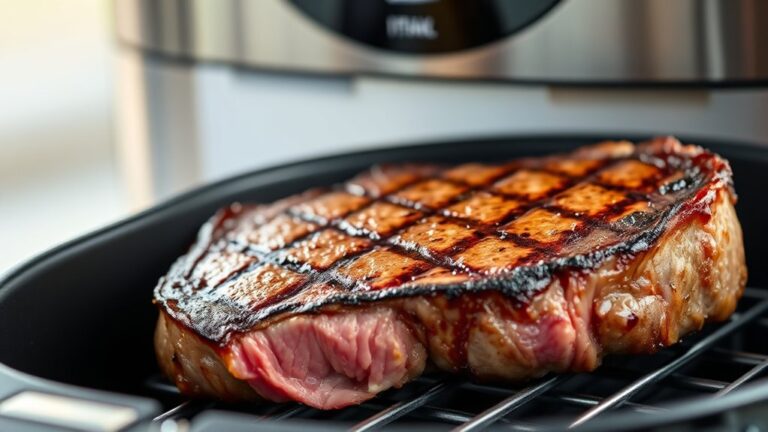
You can cook a great steak in your oven without a cast iron pan by choosing a thick, well-marbled cut like ribeye or sirloin.
Cooking steak in the oven without a cast iron pan is easy and yields delicious results. Let it come to room temperature, season generously with salt and pepper, then rub with oil.
Use an oven-safe stainless steel or roasting pan, preheat your oven to 450°F, and bake about 4–6 minutes per side.
Use a meat thermometer to get your preferred doneness, then rest before serving.
Learn how to get the best flavor and texture with simple tips.
Key Takeaways
- Use an oven-safe stainless steel or enameled pan, or a heavy-duty baking sheet with a wire rack for even heat distribution.
- Preheat the oven to 450°F (230°C) with the pan inside to ensure a hot cooking surface before placing the steak.
- Pat the steak dry, season with kosher salt and pepper, and lightly coat with oil to prevent sticking and enhance browning.
- Place the steak directly on the hot pan or wire rack and bake 4-6 minutes per side, checking internal temperature with a meat thermometer.
- Let the steak rest covered loosely with foil for 5-10 minutes after baking to redistribute juices before serving.
Choosing the Right Cut for Oven Cooking
When you’re cooking steak in the oven without a cast iron pan, choosing the right cut is essential to get the best results. For oven cooking, opt for a cut of beef like ribeye, sirloin, or filet mignon, as these cuts are tender and respond well to baking. Make certain to select a thick steak, at least 1 inch thick, to guarantee even cooking and to lock in flavor and juiciness.
USDA Choice or Prime grades are ideal because their marbling adds tenderness and taste. Also, letting your steak come to room temperature before placing it in the oven helps promote even cooking throughout. These choices set you up for a perfectly cooked steak even without a cast iron pan.
Preparing Your Steak for the Oven
Before you pop your steak in the oven, make sure it’s a quality cut like ribeye or sirloin and let it rest at room temperature for about 20-30 minutes. Pat it dry to get rid of any moisture, then season generously with kosher salt and freshly cracked black pepper to enhance the flavor.
These simple steps set the stage for an even cook and a delicious crust.
Selecting Quality Steak
Choosing the right cut is essential for a delicious oven-cooked steak. When selecting quality steak, opt for high-quality cuts of steak like ribeye, sirloin, or filet mignon. These offer better tenderness and flavor, making them ideal for oven cooking.
Before you cook, let your steak come to room temperature for 20 to 30 minutes to guarantee it cooks evenly. Pat it dry with paper towels to avoid steaming and help develop a nice crust. Don’t forget to season the steak generously with kosher salt and freshly cracked black pepper.
Coating the steak lightly with olive or avocado oil before cooking also helps lock in moisture and enhances the crust. These steps set you up for a perfectly cooked steak every time.
Seasoning Techniques
Although seasoning might seem straightforward, it plays an essential role in bringing out the steak’s full flavor when cooking in the oven. Start by patting your steak dry with paper towels to remove excess moisture, which helps achieve a better crust. Next, season generously with salt, preferably kosher salt, and freshly cracked black pepper to enhance the meat’s natural taste.
For added aroma and depth, rub in garlic and fresh herbs like rosemary or thyme. If you have time, marinate the steak with olive oil, balsamic vinegar, and herbs for at least 30 minutes. Once seasoned, allow your steak to rest at room temperature for about 20-30 minutes before cooking.
This step guarantees even cooking and helps the flavors penetrate the meat for a tender, flavorful result.
Bringing Steak Room Temperature
Once you’ve seasoned your steak, the next step is to bring it to room temperature. This vital step guarantees you cook steak evenly and achieve a better sear. Allow your steak to sit out for 20-30 minutes before cooking.
Bringing steak to room temperature reduces cooking time by promoting a uniform internal heat, especially for thicker cuts.
To prepare your steak properly, keep these tips in mind:
- Pat the steak dry with paper towels to remove moisture and prevent steaming.
- Season steak generously with salt and pepper after it reaches room temperature to enhance flavor absorption.
- Use this method for cuts 1 inch or thicker to avoid overcooking the exterior while reaching the desired doneness.
Following these steps sets you up for a perfectly cooked steak in the oven.
Essential Seasoning Tips for Flavorful Steak
To get the most flavor from your steak, you’ll want to start with kosher salt and freshly cracked black pepper, which help the seasoning penetrate the meat deeply. These basic seasoning tips create a flavorful crust and enhance the steak’s natural taste. Before cooking, consider adding fresh herbs like thyme or rosemary on top to infuse aromatic notes.
For extra richness, add a pat of unsalted butter during the last few minutes in the oven, letting it melt over the steak to add moisture and depth. Avoid over-seasoning—keep it simple to let the meat shine. Finally, remember to let your steak rest for at least 5 minutes after cooking; this redistributes juices and guarantees every bite is tender and flavorful.
Selecting Suitable Oven-Safe Cookware
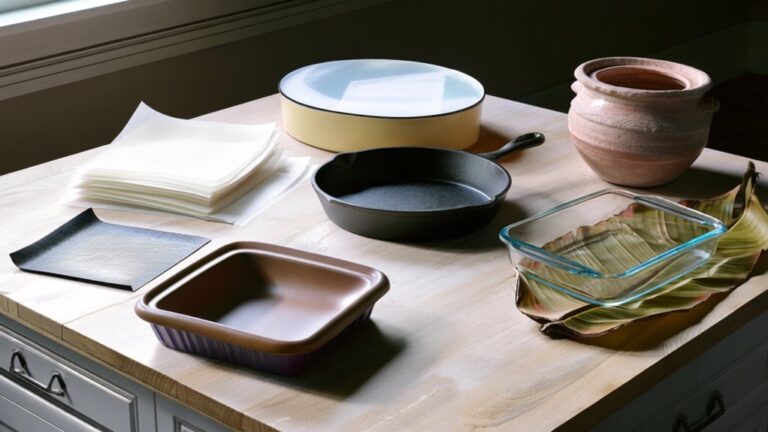
When choosing cookware for your steak, look beyond cast iron to options like stainless steel or enameled pans that handle high heat well. You’ll want something with good heat distribution to sear the steak evenly.
Heavy-duty baking sheets or roasting pans can also work if they’re oven-safe and sturdy enough.
Alternative Oven-Safe Pans
Several types of oven-safe pans can work well for cooking steak if you don’t have a cast iron skillet. You can easily switch to an oven-safe non-stick skillet or a stainless steel pan, both durable and capable of handling high temperatures.
Baking sheets are another versatile option, especially when paired with a wire rack to elevate the steak and promote even cooking.
Here are some alternatives to evaluate:
- Oven-safe non-stick skillet: easy cleanup and even heat
- Stainless steel pan: great for searing and oven use
- Baking sheets with wire racks: perfect for roasting steaks evenly
Just make sure any pan you use is rated for high heat to avoid warping or damage during cooking.
Material Heat Distribution
Although you might not have a cast iron pan on hand, selecting the right oven-safe cookware is essential for even heat distribution when cooking steak. Stainless steel pans are a top choice because they offer excellent heat conduction and durability, helping you achieve a proper sear without a cast iron surface. Aluminum pans heat quickly but can warp unless you choose heavy-duty options.
Ceramic cookware works for baking but lacks the searing ability of metal, so preheating is key. Whatever you pick, make sure your cookware is oven-safe and can handle temperatures around 400°F or higher. This way, your steak cooks evenly, locking in juices and flavor without hot spots or uneven cooking.
Preheating Your Oven for Perfect Results
To get the best results from your oven-cooked steak, you’ll want to preheat it to 400°F (200°C) and let it reach that temperature for at least 15-20 minutes. This guarantees an even cooking environment, helping your steak cook consistently and reach the desired level of doneness evenly throughout. Proper preheating also prevents steaming, which can affect texture and flavor.
Keep these tips in mind when you preheat the oven:
- Allow full preheating time to achieve a steady temperature for better heat distribution.
- Use an instant-read thermometer to check internal temperature, guaranteeing perfect doneness.
- Line your baking sheet with foil to retain heat and simplify cleanup.
For best results, consider the importance of resting the steak after cooking to allow juices to redistribute for enhanced flavor and tenderness.
Following these steps will set you up for a perfectly cooked steak every time.
Searing the Steak Without a Cast Iron Pan
One of the simplest ways to sear your steak without a cast iron pan is by using a stainless steel or non-stick skillet preheated over medium-high heat. Make sure the skillet is heavy-bottomed to distribute heat evenly and prevent warping.
Before placing your steak in the pan, add a thin layer of olive or vegetable oil to avoid sticking and help develop a golden-brown crust. Sear the steak for 1-2 minutes on each side, allowing the skillet’s high temperature to create that perfect crust.
After searing, you’ll transfer the steak to the oven for further cooking. Keep an eye on the internal temperature with a meat thermometer, removing the steak when it’s about 5°F below your desired doneness to account for carryover cooking.
Baking the Steak on a Sheet Pan or Roasting Tray
A hot oven and a preheated sheet pan are key to baking your steak perfectly. Start by preheating your oven to 450°F and placing your sheet pan or roasting tray inside to heat up. Before you bake the steak, rub it with olive oil and season generously with salt and pepper for a great crust.
Place the steak directly on the preheated sheet pan and bake for about 4-6 minutes per side.
To enjoy the best results:
- Use a preheated sheet pan to guarantee even cooking and a nice sear.
- Season generously to enhance flavor and crust.
- Add fresh herbs or a pat of butter during the last few minutes for extra richness.
This method ensures a juicy, flavorful steak every time.
Monitoring Internal Temperature for Desired Doneness
Getting the internal temperature right is essential for cooking steak to your preferred doneness. When you cook a steak in the oven, use an instant-read meat thermometer to monitor internal temperature accurately. Insert it into the thickest part of the steak, avoiding bone or fat, for the best reading.
Since carryover cooking raises the temperature by about 5°F, take the steak out when it’s 5°F below your desired doneness. For example, remove it at 120-125°F for rare or 140°F for medium. Keep checking the temperature during the last few minutes to prevent overcooking.
Resting Your Steak to Retain Juices
After cooking, you’ll want to let your steak rest for at least 5-10 minutes so the juices can redistribute and enhance flavor. Cover it loosely with foil to keep it warm without trapping moisture.
This simple step makes a big difference in tenderness and juiciness, especially with thicker cuts.
Importance of Resting
Though it’s tempting to dig in right away, letting your steak rest for 5 to 10 minutes is crucial to keep it juicy. During this resting time, the internal temperature of your steak can rise by about 5°F, helping you reach perfect doneness without overcooking. More importantly, resting allows the juices to redistribute throughout the meat, so they don’t spill out when you cut into it.
Skipping this step will leave you with a drier steak, as all those flavorful juices will run onto your plate.
To guarantee you achieve a juicy steak, remember these key points:
- Rest for 5 to 10 minutes after cooking
- Let internal temperature stabilize and rise slightly
- Avoid cutting too soon to retain juices and tenderness
Optimal Resting Techniques
Letting your steak rest is just the start—how you rest it makes a big difference in keeping it juicy and flavorful. After cooking, let your steak rest for 5 to 10 minutes to allow the juices to redistribute evenly throughout the meat. Cover it loosely with aluminum foil to maintain temperature without trapping steam, which can ruin the crust’s texture.
For thicker cuts over an inch, aim for about 10 minutes of resting, while thinner steaks need around 5 minutes. Keep in mind that during resting, the internal temperature can rise about 5°F, so plan your cooking time accordingly. Proper resting not only retains the juices but also makes slicing easier and prevents the meat from drying out.
Serving Suggestions and Side Pairings
When you’ve finished cooking your steak in the oven, pairing it with the right sides can truly elevate your meal. Creamy mashed potatoes offer a rich, comforting complement to the savory steak, while roasted asparagus tossed in olive oil and garlic adds a fresh, healthful balance.
To round out your plate, consider sides that enhance the flavors without overpowering them.
- Creamy mashed potatoes, for that smooth, buttery texture alongside your steak
- Roasted asparagus, bringing a crisp, garlicky brightness to the dish
- Sautéed mushrooms cooked in butter, adding an earthy depth and richness
These simple yet flavorful pairings make your oven-cooked steak a well-rounded and satisfying meal.
Cleaning and Maintaining Your Cookware After Use
After enjoying your perfectly cooked steak and thoughtfully paired sides, you’ll want to give some attention to your cookware. For proper cleaning, let your cookware cool slightly to prevent warping. Use warm, soapy water with a non-abrasive sponge to gently remove food residues.
If you encounter stubborn stains or burnt bits, soak the cookware for a few minutes before scrubbing. Avoid metal utensils and abrasive cleaners as they can damage non-stick coatings or finishes. After cleaning, make sure your cookware is completely dry before storing it.
This maintenance step prevents moisture buildup that could cause rust or deterioration. By following these simple cleaning and maintenance tips, your cookware will stay in great shape, ready for your next delicious steak meal.
Frequently Asked Questions
Can You Cook a Steak in the Oven Without a Cast Iron Skillet?
Yes, you can definitely cook a steak in the oven without a cast iron skillet. Just preheat your oven and use a baking sheet or any oven-safe dish instead. Sear the steak quickly on the stovetop in a regular pan to lock in flavor, then finish it in the oven until it reaches your desired doneness.
Don’t forget to let it rest afterwards to keep it juicy and tender.
How to Cook a Steak Without Cast Iron?
You can definitely cook a steak without cast iron by using a heavy stainless-steel skillet or an oven-safe baking dish. Preheat your oven to 400°F and heat your pan on the stovetop before searing the steak for 1-2 minutes per side.
Then, transfer it to the oven to finish cooking. Use a meat thermometer to check doneness and let the steak rest for a few minutes before serving to keep it juicy.
How to Cook Steak in the Oven Without a Pan?
Oh, who needs a pan when you can just toss your steak right on a rack? Preheat your oven to 400°F, rub your steak with oil, season it well, and place it on a wire rack over a baking sheet. This lets air circulate, cooking it evenly.
Use a meat thermometer to hit your preferred doneness, then let it rest for juicy perfection. No pan? No problem!
Can You Bake Steak in the Oven Without Searing?
Yes, you can bake steak in the oven without searing it first. Just preheat your oven to 400°F and place the seasoned steak on a baking sheet. Keep an eye on the internal temperature with a meat thermometer—130°F for medium-rare works well.
Cooking time depends on thickness, usually around 10-15 minutes for a 1-inch steak. Don’t forget to let it rest for a few minutes after baking to keep it juicy.
Conclusion
Cooking steak in the oven without a cast iron pan might seem like sailing without your favorite compass, but with the right steps, you’ll navigate perfectly.
By choosing the right cut, seasoning well, and monitoring temperature closely, you’ll create a juicy, flavorful steak every time.
Remember to let it rest, like a ship anchoring after a journey, so all those delicious juices settle.
Enjoy your meal and the simple joy of mastering this technique of how to cook steak in oven without cast iron pan!