Should I Paint My Kitchen Cabinets
You should paint your kitchen cabinets if they feel outdated, show wear like chips or fading, or just don’t match your style anymore.
Painting your kitchen cabinets offers a cost-effective way to refresh your space with modern or timeless colors while extending cabinet life.
Keep in mind, proper prep and quality paint are key for durability.
If you want to transform your kitchen thoughtfully and learn about styles, tools, and care, there’s plenty more to explore.
Is It Time to Paint Your Kitchen Cabinets?
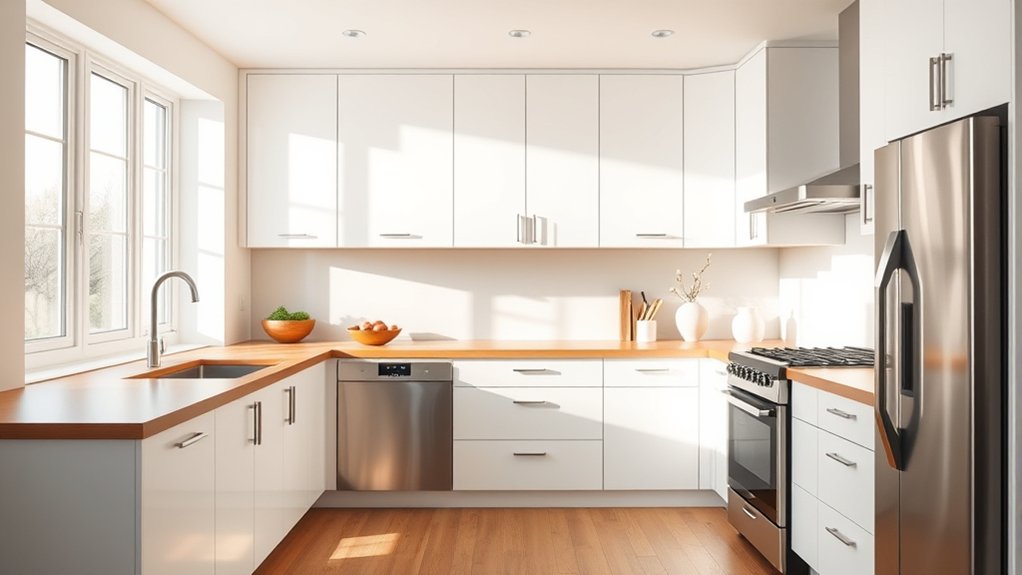
When should you consider painting your kitchen cabinets? You’ll want to evaluate this when your current cabinet styles feel outdated or clash with emerging kitchen trends. If your cabinets sport a dated finish or color that no longer complements your space’s overall aesthetic, it’s a clear sign.
Also, if the cabinet surfaces show wear, like chips, scratches, or fading, painting offers a transformative, cost-effective refresh. Keep in mind how kitchen trends have shifted toward lighter, matte finishes or bold, contrasting tones that can modernize your kitchen instantly.
If your cabinetry’s design is structurally sound but visually uninspiring, a fresh coat of paint can align your cabinets with contemporary styles without the expense of replacement. Painting becomes an elegant solution to update and personalize your kitchen’s heart.
The Pros and Cons of Painting Your Kitchen Cabinets
You’ll find that painting your kitchen cabinets can refresh your space with a modern, personalized touch while saving money compared to a full replacement. However, it’s important to weigh factors like the time investment, potential chipping, and prep work required for a lasting finish.
Understanding these benefits and drawbacks will help you make an informed decision that suits your style and lifestyle.
Benefits of Painted Cabinets
Although painting your kitchen cabinets requires careful preparation and time, the benefits often outweigh the effort, transforming your space with a fresh, customized look. You can harness color psychology to influence the kitchen’s mood. Soft blues evoke calm, while vibrant yellows boost energy, making your kitchen more than just functional.
Painted cabinets allow you to embrace modern aesthetics effortlessly, updating traditional wood finishes with sleek, matte, or glossy surfaces that reflect your personal style. You’ll also enjoy cost-effective versatility; instead of replacing cabinets, a coat of paint revitalizes them, extending their lifespan and increasing your home’s value.
Ultimately, painting your cabinets offers a tailored, stylish upgrade, blending practicality with design innovation to create a kitchen that feels uniquely yours.
Drawbacks to Consider
While painting kitchen cabinets can dramatically refresh your space, it also presents challenges that deserve careful consideration. You’ll face extensive surface preparation, like sanding and priming, which demands time and skill.
Plus, the cost implications can add up, from buying quality paint to potentially hiring professionals. Durability is another factor; painted surfaces may chip or fade, requiring touch-ups sooner than you expect.
| Drawback | Impact | Consideration |
|---|---|---|
| Surface Preparation | Time-consuming, labor-intensive | Requires sanding, priming |
| Cost Implications | Costs beyond paint materials | May need professional help |
| Durability | Paint can chip or fade | Touch-ups needed regularly |
| Drying Time | Lengthy curing process | Limits kitchen use temporarily |
Best Styles and Colors for Painted Kitchen Cabinets
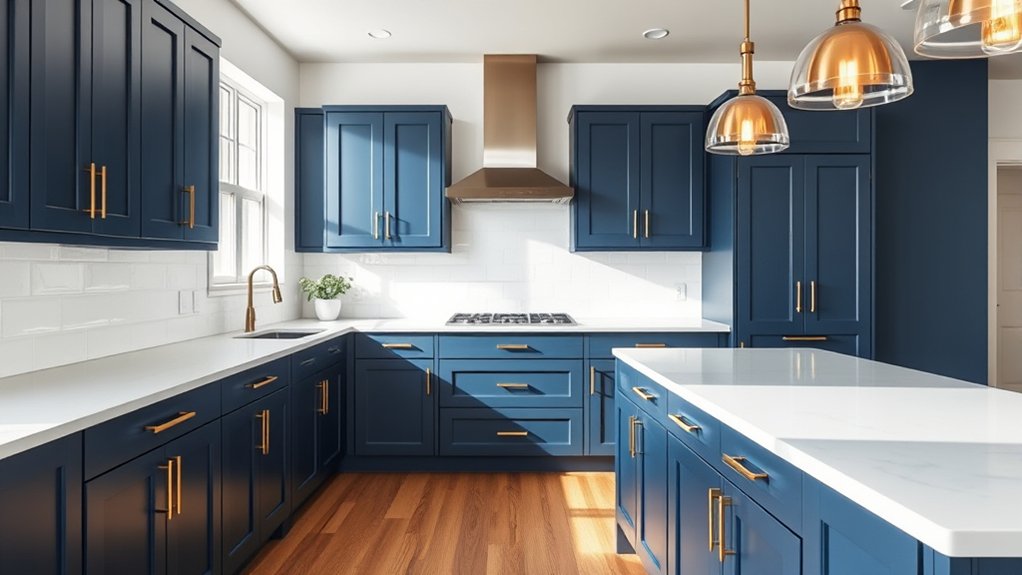
Where should you begin when choosing the best styles and colors for painted kitchen cabinets? Start by considering modern trends that emphasize clean lines and muted palettes, such as soft greys, navy blues, or even matte black.
These choices create a sleek, contemporary look that pairs well with minimalist hardware and open shelving. Alternatively, classic colors like crisp whites, creamy ivories, or warm taupes offer timeless appeal, ensuring your kitchen remains stylish for years.
You can also explore two-tone cabinetry, combining a neutral base with a bold accent color on the island or lower cabinets for visual interest. Ultimately, selecting colors and styles that harmonize with your kitchen’s lighting, countertops, and flooring will elevate the entire space with an expert, cohesive aesthetic.
How to Choose the Right Paint and Finish for Cabinets
How do you guarantee your painted kitchen cabinets not only look stunning but also stand up to daily wear and tear? Start by selecting the right paint types. Acrylic latex paints are popular for their durability and ease of cleaning, while oil-based paints offer a smoother finish but require longer drying times. Consider your kitchen’s use when choosing between them.
Next, focus on finish options. A semi-gloss or satin finish provides a balance of shine and resistance to moisture and stains, ideal for cabinets. Matte finishes, while trendy, may show marks more easily. Ultimately, your goal is a paint and finish combo that enhances beauty and guarantees longevity.
Tools and Materials Needed for Painting Cabinets
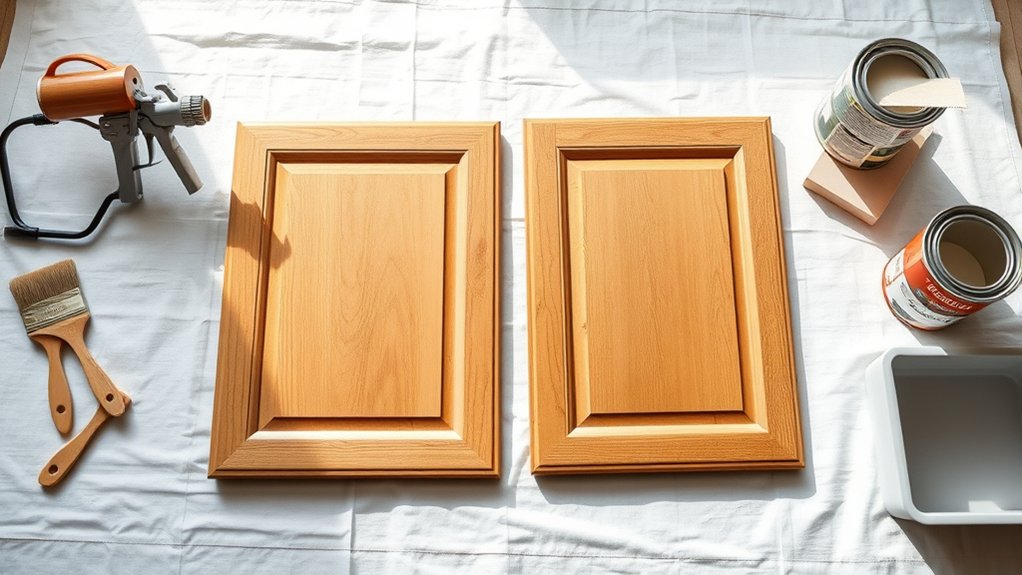
Choosing the right paint and finish sets the foundation, but equipping yourself with the proper tools and materials assures your kitchen cabinets will look flawless and hold up over time. Mastering brush types guarantees smooth, even coats. Use angled brushes for corners and synthetic brushes for water-based paints.
Employ sanding techniques like fine-grit sanding between coats to achieve a glassy, professional finish. Here’s a concise list to get you started:
| Tool/Material | Purpose |
|---|---|
| Sandpaper (120 & 220 grit) | Prepares surface, smooths finish |
| Angled & synthetic brushes | Precise application, smooth strokes |
| Primer & paint | Base layer and color finish |
| Painter’s tape & drop cloth | Protect adjacent surfaces |
With these essentials, you’ll tackle your cabinet painting with confidence and finesse.
How Much Time and Effort Does Painting Cabinets Take?
Wondering what kind of commitment painting your kitchen cabinets demands? The process is detail-oriented and requires patience. First, the preparation steps alone, including removing doors, cleaning surfaces, sanding, and priming, can take several hours to a full day, depending on your kitchen size.
After prepping, each coat of paint needs adequate drying times, usually 4 to 6 hours, before applying the next one. Expect to apply at least two coats for a smooth, durable finish, meaning multiple days are essential for ideal results.
Beyond time, the effort involves meticulous sanding between coats and careful handling to avoid drips or uneven textures. While it’s a labor-intensive project, the transformation you achieve makes the investment in time and effort worthwhile.
How to Maintain and Care for Painted Kitchen Cabinets
To keep your painted kitchen cabinets looking fresh, you’ll want to clean them gently with a soft cloth and a mild, non-abrasive cleaner. Avoid harsh scrubbing or chemicals that can wear down the paint’s finish over time.
Protect your cabinets by quickly wiping up spills and using handles or knobs to minimize direct contact with the painted surfaces.
Cleaning Tips and Tricks
Although painted kitchen cabinets can instantly elevate your space, maintaining their flawless finish requires deliberate care. Mastering effective cleaning methods and maintenance hacks guarantees your cabinets stay pristine longer. Here’s how to care for them:
- Use a soft microfiber cloth dampened with mild soap and water to gently wipe down surfaces, avoiding harsh chemicals that may dull the paint.
- Clean spills immediately to prevent stains or moisture damage.
- For stubborn spots, apply a mixture of baking soda and water, scrubbing gently to preserve the finish.
- Regularly dust cabinets with a dry cloth to prevent buildup, which can degrade the paint over time.
Preventing Paint Damage
Since painted kitchen cabinets add both character and value to your home, protecting their finish from damage is essential to preserving their beauty. Start by ensuring thorough surface preparation before painting; this foundation is key to long-lasting paint protection.
After painting, avoid harsh chemicals and abrasive scrubbing. Use gentle, non-abrasive cleaners and soft cloths instead. Immediately wipe spills to prevent stains and water damage.
Install protective bumpers inside doors and drawers to minimize chipping from daily use. Regularly inspect your cabinets for minor chips or scratches and touch them up promptly to prevent peeling.
Frequently Asked Questions
Can I Paint Kitchen Cabinets Myself or Should I Hire a Professional?
You can paint kitchen cabinets yourself, balancing DIY vs. Professional benefits, or hire an expert for flawless finishes.
DIY saves money but demands time and skill; professionals cost more but guarantee precision and durability.
How Do I Prepare Cabinets Before Painting to Ensure Paint Sticks?
You’ll start by thoroughly cleaning your cabinets to remove grease and dirt, then gently sand the surfaces to create a smooth, slightly rough texture. This guarantees the paint adheres beautifully and lasts longer, giving a flawless finish.
What Are Common Mistakes to Avoid When Painting Kitchen Cabinets?
Don’t rush color selection or ignore paint types; choosing trendy hues yet wrong finishes ruins elegance. You’ll avoid peeling, uneven coats, and regret by prepping thoroughly, using quality, durable paint, and testing colors in your kitchen’s light first.
Will Painting Cabinets Increase My Home’s Resale Value?
Yes, painting cabinets can boost resale value if you follow current resale trends and choose colors that appeal broadly. Neutral tones with subtle contrast enhance aesthetics and attract buyers, making your kitchen look modern and well-maintained.
How Long Does Painted Cabinetry Typically Last Before Needing Repainting?
Paint durability on your cabinets typically lasts 5-10 years, like a well-crafted shield. With proper cabinet maintenance, such as gentle cleaning and avoiding harsh chemicals, you’ll keep that fresh look longer. This helps preserve your kitchen’s aesthetic and value effortlessly.