How to Reface Kitchen Cabinets
To reface your kitchen cabinets, start by confirming their frames are structurally sound, as refacing won’t fix damage like warping or water issues.
Removing doors and hardware carefully is essential; label each piece for easy organization. Measure each cabinet opening precisely to ensure a perfect fit.
Choose appropriate materials such as veneer, laminate, or thermofoil, and select compatible hardware for a seamless look.
After installing the new cabinet fronts, apply a durable finish to enhance moisture resistance.
Maintain your refreshed cabinets by cleaning gently and checking hardware regularly.
Following this method, you’ll efficiently update your kitchen’s look with minimal expense and effort.
Is Refacing Right for Your Kitchen Cabinets?
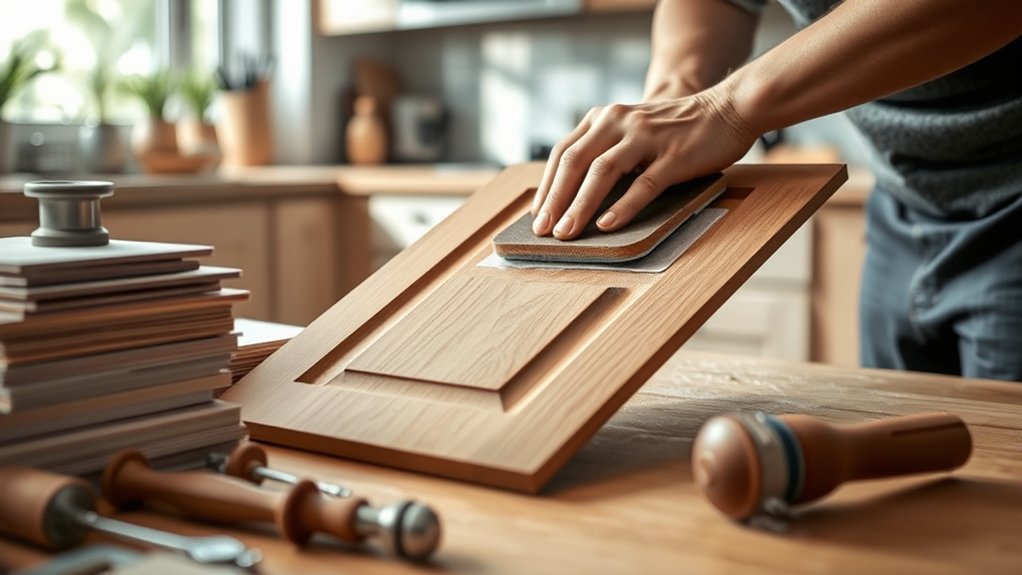
How do you determine if refacing is the best option for your kitchen cabinets? Start by evaluating the cabinet’s structural integrity. Refacing works best when the frames are solid and undamaged.
Conduct a cost comparison between refacing and full replacement; refacing typically costs 30-50% less, saving labor and material expenses. Evaluate your design options: refacing allows you to update door styles, finishes, and hardware without altering the cabinet layout.
It’s ideal if you want a fresh appearance quickly and economically. However, if cabinets have water damage, warping, or outdated configurations, replacement might be necessary.
Gather Tools and Materials for Cabinet Refacing
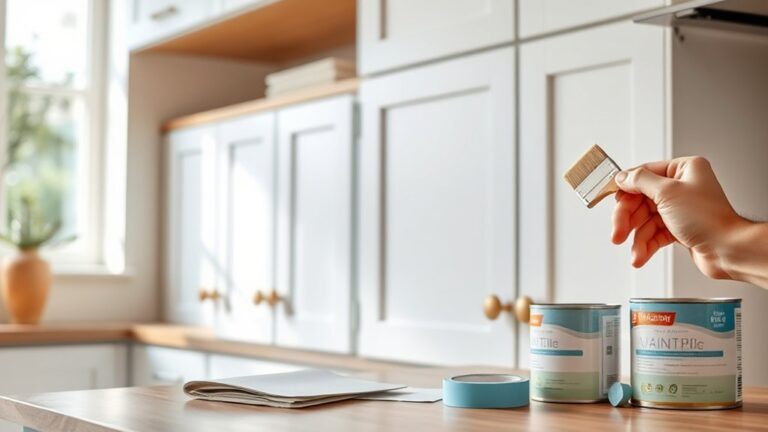
To complete a successful cabinet refacing project, you’ll need a specific set of tools and materials prepared in advance. Start with a tools checklist that includes a power drill, screwdriver set, orbital sander, tape measure, level, clamps, and safety gear like gloves and goggles.
Accurate measurement tools guarantee precise cuts and alignments. Material options vary depending on your desired finish and budget. Commonly, you’ll select veneer sheets, laminate, or thermofoil for door and drawer fronts, along with edge banding for a seamless appearance.
Adhesives and wood filler are essential for secure application and smooth surfaces. Having all these tools and materials ready minimizes interruptions and assures a streamlined workflow, guaranteeing your cabinet refacing project meets professional standards.
Prepare Kitchen Cabinets by Removing Doors and Hardware
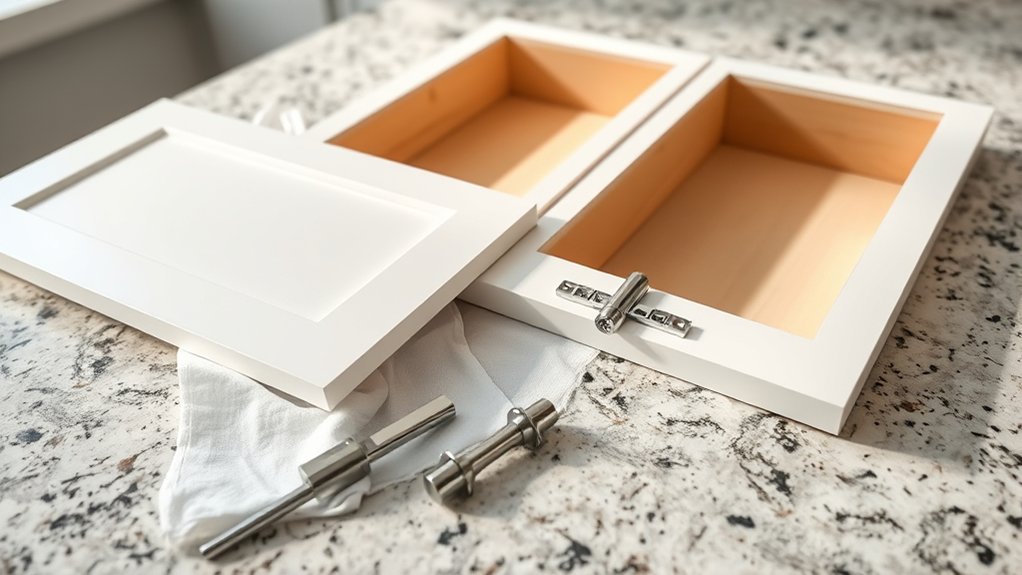
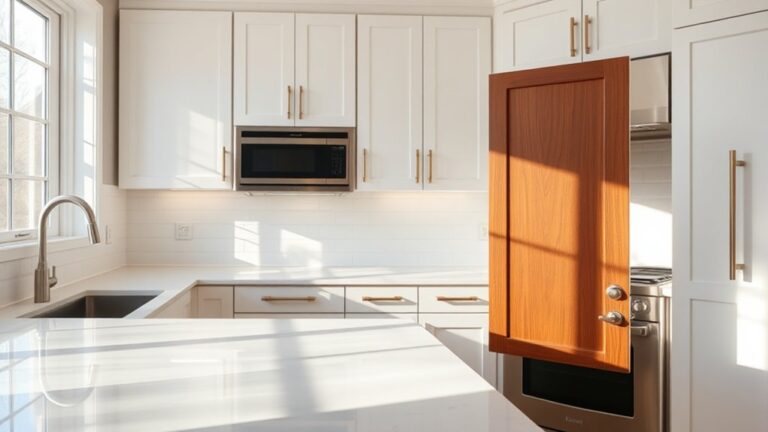
Start by carefully removing all cabinet doors and drawer fronts to provide clear access to the cabinet frames. This step guarantees you can work efficiently across various cabinet styles. Follow these steps:
- Use a screwdriver or drill to unscrew hinges and hardware, noting door materials to avoid damage.
- Label each door and its corresponding cabinet to maintain organization.
- Remove all drawer fronts by unscrewing mounting hardware, considering different attachment methods based on door materials.
- Store all hardware securely for potential reuse or replacement.
Measure, Select, and Install New Doors, Drawer Fronts, and Hardware
Measure each cabinet opening accurately to confirm your new doors and drawer fronts fit perfectly. Use a tape measure to record width and height, noting any irregularities.
Accurately measure each cabinet opening to ensure your new doors and drawer fronts fit flawlessly.
When selecting replacement components, evaluate design styles, such as shaker, flat-panel, or raised-panel, to match your kitchen’s aesthetic. Consider material options like solid wood, MDF, or thermofoil, balancing durability with budget and maintenance preferences. Prioritize consistency to maintain a cohesive look throughout.
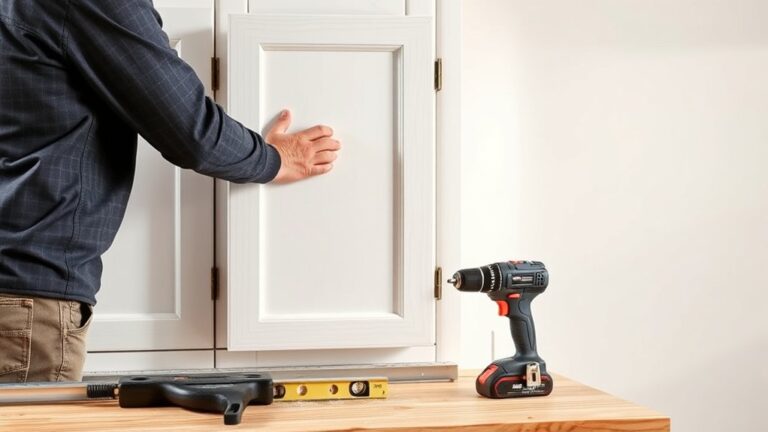
For hardware, choose handles and hinges compatible with your door type and verify mounting holes align or can be adjusted without damage. During installation, use a level and clamps to secure doors and drawer fronts precisely, confirming even gaps and smooth operation.
Proper measurement, selection, and installation guarantee professional, long-lasting results in your cabinet refacing project.
Finish and Maintain Your Refaced Kitchen Cabinets
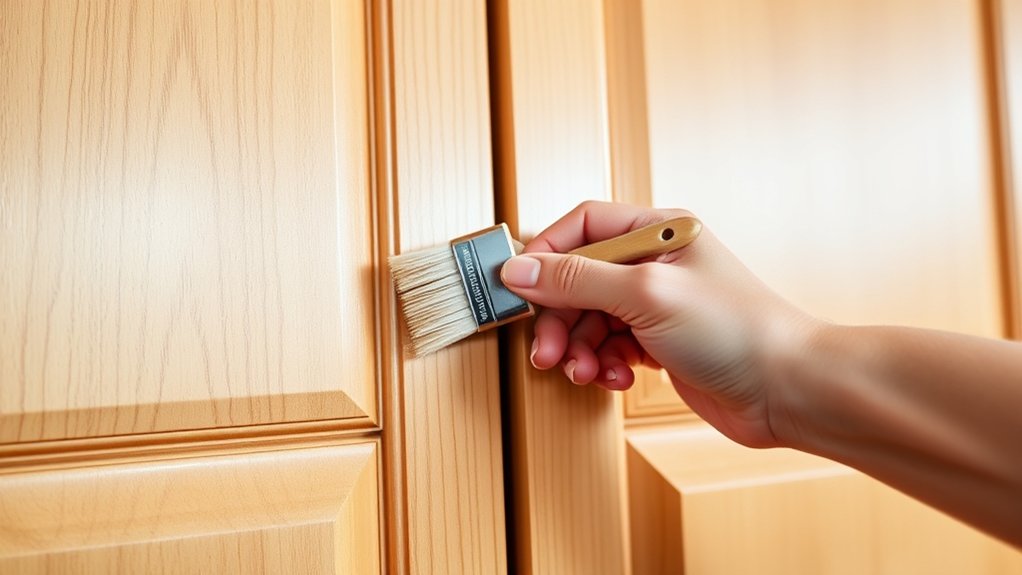
Once you’ve installed the new doors, drawer fronts, and hardware, applying the appropriate finish protects your cabinets and enhances their appearance. Choose a durable cabinet finish, such as polyurethane or lacquer, to provide a moisture-resistant barrier.
Follow these essential maintenance tips to guarantee longevity:
- Clean surfaces regularly with a mild detergent and soft cloth to prevent grime buildup.
- Avoid harsh chemicals that can degrade the cabinet finish.
- Address spills promptly to prevent staining or warping.
- Inspect hinges and hardware periodically, tightening screws to maintain structural integrity.
Frequently Asked Questions
How Long Does the Cabinet Refacing Process Typically Take?
The cabinet refacing process typically takes three to five days. You’ll follow cabinet preparation tips like cleaning and sanding, then apply refacing materials overview, such as veneers, laminates, or thermofoil, to guarantee a durable, professional finish efficiently.
Can I Reface Cabinets With Existing Water Damage?
You can reface cabinets with water damage, but first conduct a thorough cabinet assessment. Use repair strategies to fix damage, select moisture-resistant veneer options, and apply proper moisture control.
Choose refacing techniques suited for compromised surfaces.
What Types of Wood Veneers Are Best for Refacing?
Like a painter chooses colors, you’ll want oak, maple, or cherry wood veneer types for durability and beauty.
Prioritize high-quality veneer finishing to guarantee longevity, resistance to moisture, and a flawless, professional cabinet refacing result.
Is Professional Installation Recommended for Cabinet Refacing?
You can tackle DIY refacing tips if you’re skilled, but professional installation guarantees precise alignment, durable adhesion, and flawless finishes.
Professional vs. DIY, experts reduce errors, saving time and costly repairs in cabinet refacing projects.
How Much Does Cabinet Refacing Usually Cost?
Cabinet refacing usually costs between $4,000 and $9,000, depending on your budget considerations and material options.
Higher-end veneers or custom finishes increase expenses, while laminate or thermofoil offer budget-friendly alternatives without sacrificing durability.