How to Clean Laminate Kitchen Cabinets
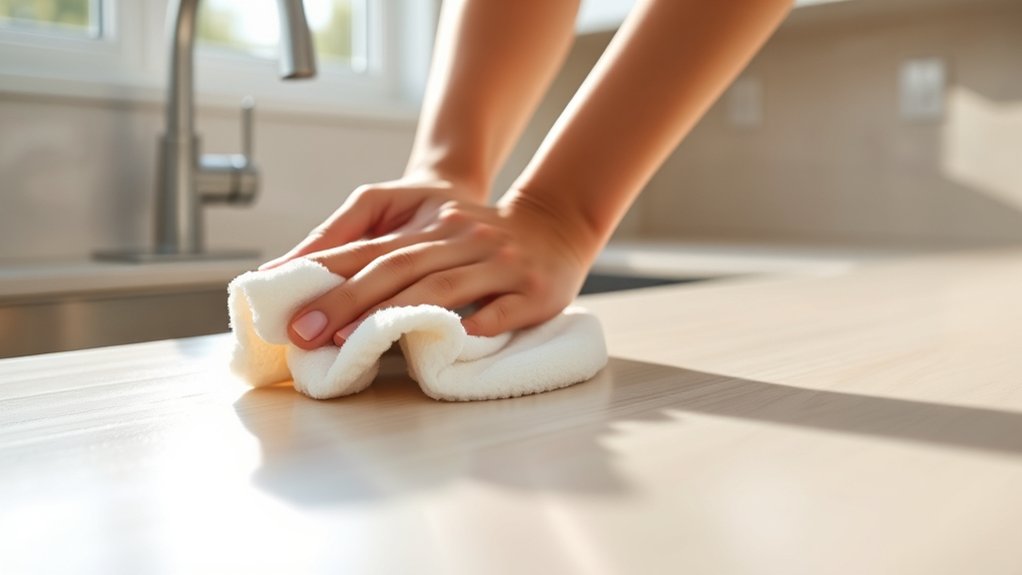
To clean laminate kitchen cabinets, start by using a soft microfiber cloth and a mild detergent mixed with warm water.
Apply the solution with a gentle sponge for grease or stains, and rinse with a damp cloth to remove residue. Dry thoroughly with a cloth to avoid streaks.
Spot clean spills daily and do a deeper clean weekly.
For sticky or discolored spots, try baking soda paste or rubbing alcohol cautiously.
Keep going to uncover more tips for maintaining your cabinets’ finish.
What You’ll Need to Clean Laminate Kitchen Cabinets
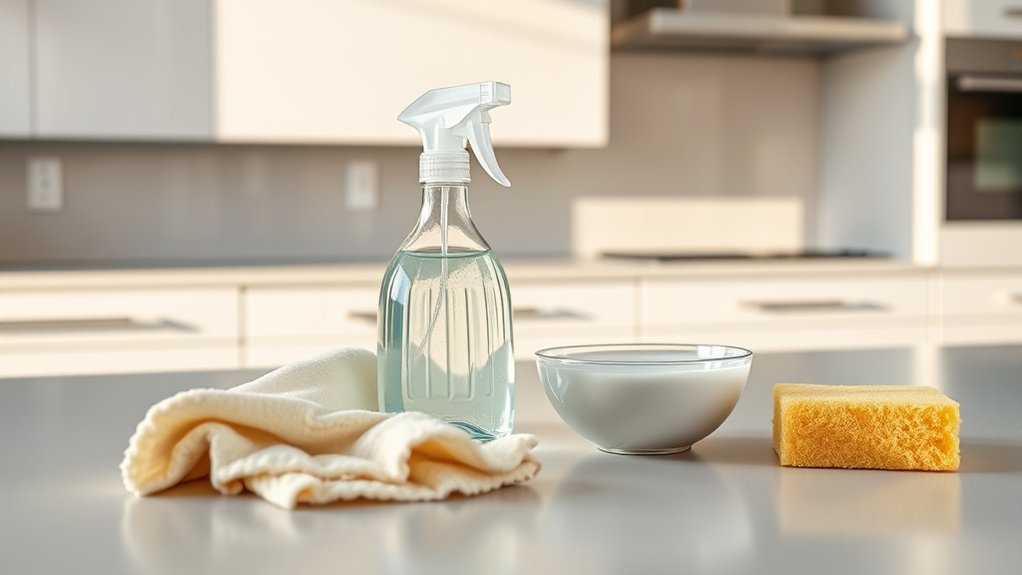
To effectively clean laminate kitchen cabinets, you’ll need a few essential supplies. Start with a soft microfiber cloth to avoid scratching the surface. Use a mild detergent mixed with warm water as your primary cleaning solution.
Avoid abrasive cleaners or scouring pads, which can damage the laminate finish. Have a spray bottle handy for easy application of your cleaning solution. For tougher spots, a gentle sponge works well without risking damage.
Incorporate maintenance tips like wiping spills immediately and dusting regularly to prevent buildup. Keep a dry cloth nearby to remove excess moisture after cleaning, as laminate is sensitive to water exposure.
How to Remove Grease and Stains From Laminate Cabinets
Tackle grease and stains on laminate cabinets by applying a mixture of warm water and mild dish soap directly to the affected areas. Use a soft cloth or sponge to gently scrub, focusing on greasy spots for effective grease removal without damaging the laminate surface.
For stubborn stains, create a paste with baking soda and water, apply it lightly, and let it sit for a few minutes before wiping clean. Avoid harsh chemicals that can degrade the laminate finish.
Regularly addressing spills and cooking residue not only enhances stain prevention but also prolongs your cabinets’ lifespan. After cleaning, rinse with a damp cloth to remove any soap residue.
Consistent attention to grease removal and stain prevention keeps your laminate cabinets looking fresh and well-maintained.
How to Wipe and Dry Cabinets Without Leaving Streaks
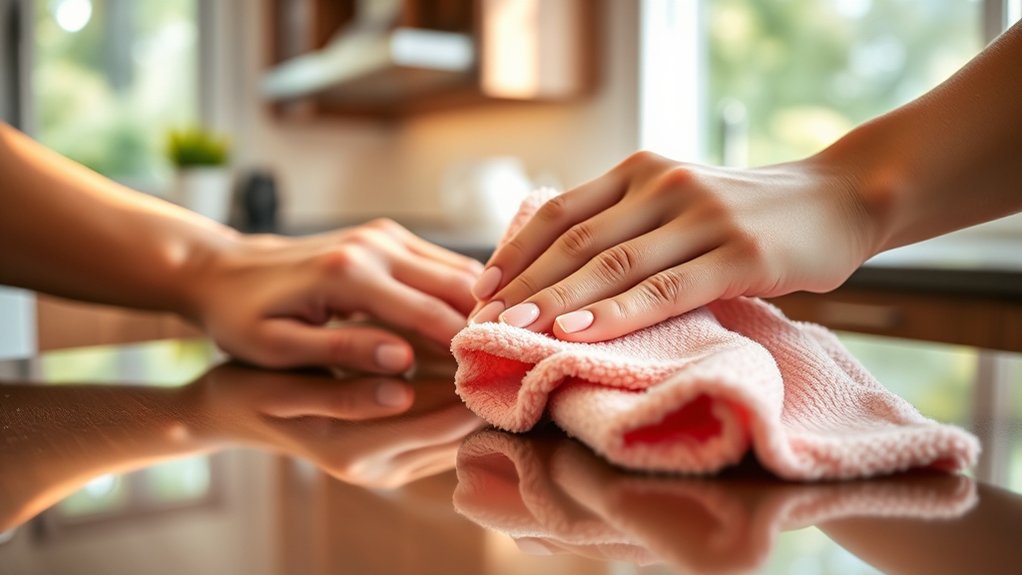
After removing grease and stains, focus on wiping and drying your laminate cabinets properly to avoid streaks. Use a microfiber cloth with streak-free solutions such as diluted vinegar or a gentle laminate cleaner. Wipe in consistent strokes, either horizontally or vertically, to guarantee complete coverage without missing spots. Avoid using abrasive pads or excessive water, which can damage the laminate surface.
For drying techniques, immediately follow wiping with a dry microfiber cloth to absorb moisture and prevent streaks. Pat the surface gently rather than rubbing aggressively, which can cause scratches or streaks. Confirm you dry every corner and edge thoroughly, as residual moisture often causes streaking. Following these steps guarantees a spotless, streak-free finish that preserves the laminate’s appearance and longevity.
How Often Should You Clean Laminate Kitchen Cabinets?
Regularly cleaning your laminate kitchen cabinets is essential to maintain their appearance and durability. Your cleaning frequency depends on how often you use your kitchen and the level of exposure to grease and spills.
For everyday care, wipe cabinets weekly with a soft cloth and mild cleaner. For deeper cleaning, aim for a monthly routine to remove buildup without damaging the surface. Follow these maintenance tips to keep your cabinets looking fresh:
| Cleaning Frequency | Recommended Action |
|---|---|
| Daily | Spot clean spills promptly |
| Weekly | Wipe with mild detergent |
| Monthly | Deep clean with gentle solution |
Adjust this schedule based on your kitchen’s usage to protect your laminate cabinets effectively.
Quick Fixes for Sticky or Discolored Laminate Cabinet Spots
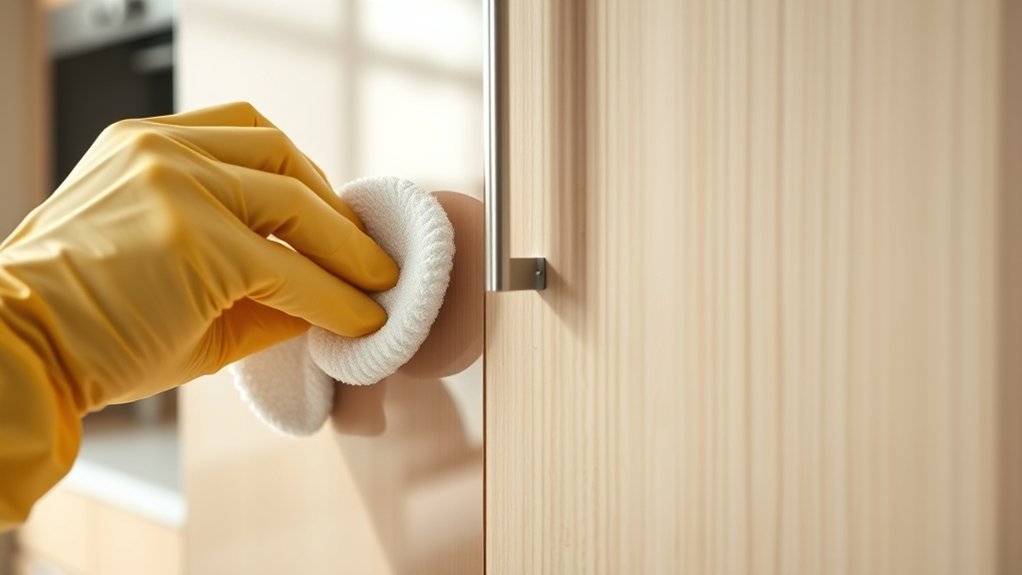
Three simple methods can quickly restore sticky or discolored spots on your laminate cabinets without causing damage. First, tackle sticky residue by applying a mixture of warm water and mild dish soap with a soft cloth. Gently rub the affected area, then rinse with a damp cloth and dry thoroughly.
Second, address discoloration causes like heat or sunlight exposure by using a baking soda paste (baking soda and water). Apply it to the spot, let it sit for a few minutes, then wipe clean.
Finally, for stubborn marks, try rubbing alcohol on a cotton ball, testing first in an inconspicuous area. These quick fixes effectively remove sticky buildup and minimize discoloration, restoring your cabinets’ appearance without harsh chemicals or abrasive scrubbing.
Frequently Asked Questions
Can I Use Vinegar to Clean Laminate Kitchen Cabinets?
Yes, you can use vinegar to clean laminate kitchen cabinets. Vinegar benefits include cutting grease and disinfecting surfaces.
Just dilute it with water to avoid damage, and use it as an effective, natural cleaning solution.
Are Laminate Cabinets Prone to Water Damage?
Laminate cabinets have good water resistance but aren’t completely waterproof. You should avoid excessive moisture to preserve laminate durability.
Wiping spills quickly helps prevent swelling or damage, ensuring your cabinets stay in great shape longer.
How Do I Prevent Laminate Cabinets From Fading?
You can prevent laminate cabinets from fading by applying UV protection films on nearby windows and using curtains.
Regular maintenance tips include wiping spills promptly and avoiding harsh chemicals to keep colors vibrant and lasting longer.
Can I Repaint or Refinish Laminate Kitchen Cabinets?
Yes, you can repaint or refinish laminate kitchen cabinets. Proper laminate refinishing involves cleaning, sanding, priming, then cabinet painting with suitable products. This process guarantees durable, smooth results that refresh your cabinets’ appearance effectively.
What Should I Avoid When Cleaning Laminate Cabinets?
Imagine streaks and scratches marring your cabinet’s shine. Don’t use harsh chemicals, abrasive sponges, excessive moisture, high heat, or strong solvents. They’ll damage the surface. Stick to gentle cleaners and soft cloths for lasting beauty.