How to Clean Kitchen Cabinets
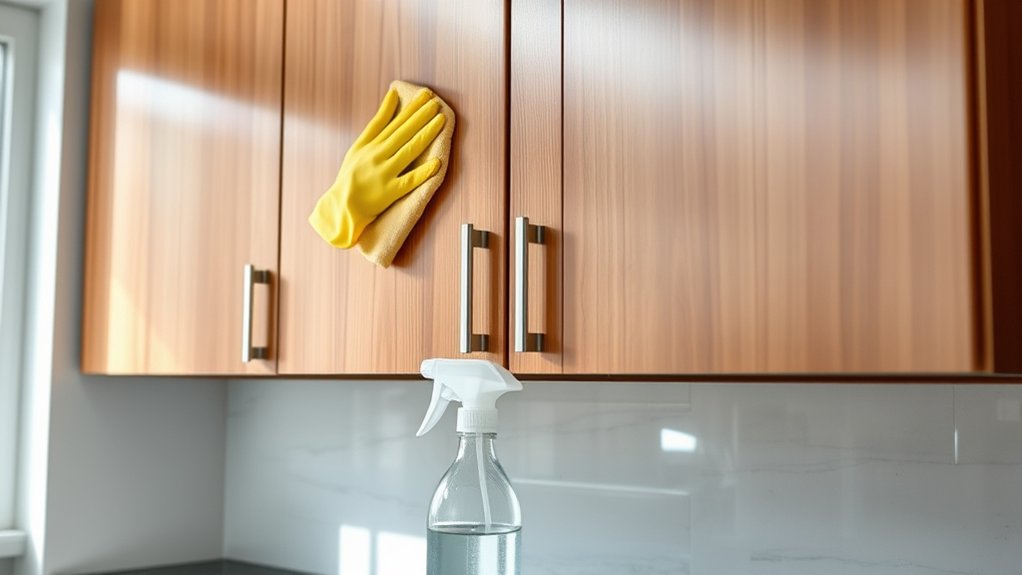
To clean your kitchen cabinets, start by emptying the shelves and wiping away dust with a microfiber cloth. This initial step helps prepare the surface for deeper cleaning.
Use mild dish soap mixed with warm water or a vinegar solution to gently tackle grease buildup.
For wood cabinets, opt for wood-specific cleaners and avoid harsh scrubbing to protect the finish. Laminate and painted surfaces respond well to gentle, non-abrasive treatments that prevent damage.
Scrub stubborn stains with a baking soda paste for effective removal.
Maintain your cabinets by wiping spills promptly to prevent buildup.
Explore more tips to keep them looking pristine and extend their lifespan.
Preparing Your Kitchen Cabinets for Cleaning
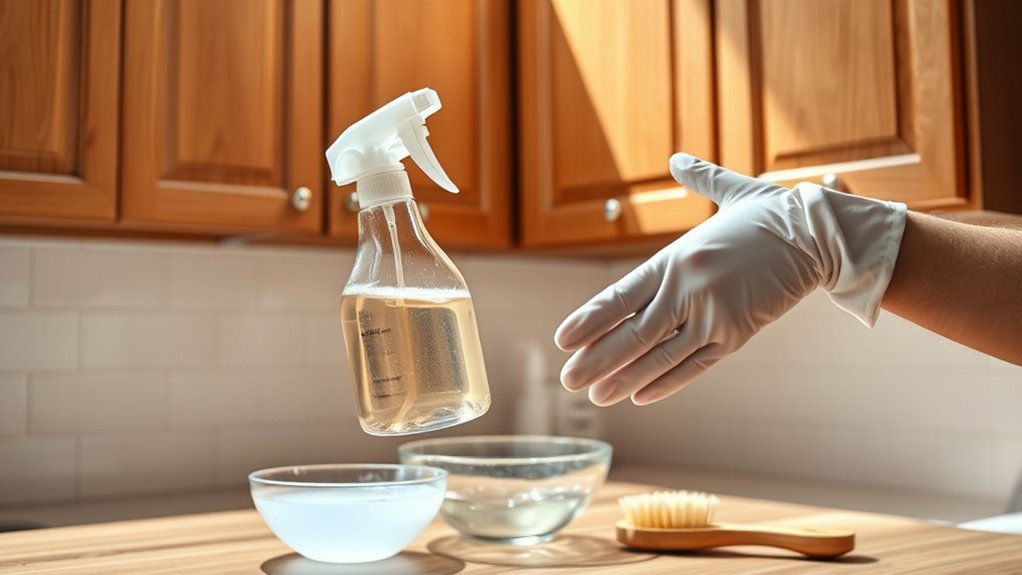
Before you begin cleaning your kitchen cabinets, start by removing everything from the shelves and drawers. This clears the way for thorough surface preparation and gives you a chance to assess your cabinet organization.
Take this opportunity to sort items, discard expired goods or relocate rarely used items, so you can maintain a more efficient system once cleaning is complete. Next, wipe down the empty cabinets with a dry microfiber cloth to remove dust and loose debris.
Inspect cabinet surfaces for grease or sticky spots that require targeted attention. Proper surface preparation guarantees cleaning products work effectively and prevents residue buildup.
Best Cleaning Supplies for Kitchen Cabinets
With your cabinets cleared and prepped, choosing the right cleaning supplies becomes your next step. You want essential tools that effectively remove grease and grime without damaging surfaces. Opt for eco-friendly options to protect your health and the environment while maintaining a spotless kitchen.
Clear your cabinets first, then choose eco-friendly cleaning tools that remove grease gently and keep your kitchen spotless.
Here are the must-have supplies for cleaning kitchen cabinets:
- Microfiber cloths: gentle, lint-free, and reusable for wiping surfaces
- Mild dish soap: cuts through grease without harsh chemicals
- White vinegar solution: a natural disinfectant and deodorizer
- Soft-bristled brush: for scrubbing corners and textured finishes
Avoid abrasive cleaners or scrubbers that can scratch or dull finishes. Using these targeted, eco-friendly supplies guarantees your cabinets stay clean and well cared for, prolonging their appearance and durability.
How to Clean Wood Kitchen Cabinets

When cleaning wood kitchen cabinets, pick a cleaner specifically designed for wood to avoid damage. Use gentle techniques like soft cloths and avoid soaking the surface to protect the finish. Taking these steps will keep your cabinets looking polished without stripping their natural beauty.
Choosing The Right Cleaner
Although wood cabinets add warmth and character to your kitchen, they require careful cleaning to maintain their finish and durability. Choosing the right cleaner is essential to avoid damage and preserve their beauty.
You’ll want a solution that effectively removes grease and grime without stripping the wood’s protective layer.
Consider these factors when selecting a cleaner:
- Opt for eco-friendly options that minimize harsh chemicals and protect indoor air quality.
- Avoid abrasive commercial cleaners that can scratch or dull the wood surface.
- Use pH-neutral formulas designed specifically for wood finishes.
- Test any cleaner on a hidden area to check for adverse reactions.
Gentle Cleaning Techniques
A gentle approach preserves the wood’s finish while effectively removing dirt and grease. Start by dampening soft cloths with a mild vinegar solution, mixing one part vinegar with three parts water. Avoid soaking the cloth; excess moisture can damage wood.
Wipe the cabinet surfaces gently, following the grain to prevent scratches. For stubborn spots, apply the vinegar solution directly to a cloth and rub lightly.
After cleaning, use a dry soft cloth to remove any moisture, preventing water damage or streaks. Avoid abrasive scrubbers or harsh chemicals, as they can strip the wood’s protective layer.
This method maintains your cabinets’ appearance while ensuring they’re clean without risking damage. Regular gentle cleaning keeps your wood cabinets looking fresh and well-cared-for over time.
Protecting Wood Finish
Maintaining your cabinets’ wood finish means more than just cleaning; it requires protecting the surface from wear and environmental damage. To guarantee effective wood care and finish protection, you need to adopt preventive measures that preserve the cabinet’s appearance and durability.
Use these tips to safeguard your wood kitchen cabinets:
- Apply a high-quality wood polish or wax periodically to maintain moisture balance.
- Avoid harsh chemicals or abrasive tools that can strip the finish.
- Wipe spills immediately to prevent stains and water damage.
- Control humidity levels in your kitchen to prevent wood warping or cracking.
Cleaning Laminate and Painted Kitchen Cabinets
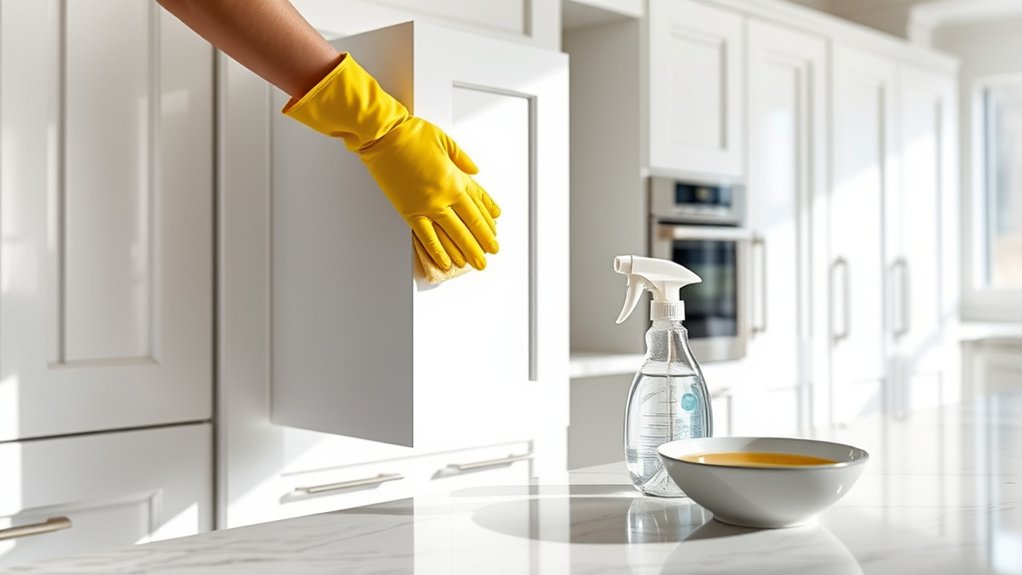
When cleaning laminate and painted kitchen cabinets, you’ll want to choose gentle solutions that won’t damage the finish. Focus on removing grease and grime effectively without using abrasive tools.
Taking care to prevent surface damage will keep your cabinets looking fresh and lasting longer.
Choosing Gentle Cleaning Solutions
Anyone tackling laminate or painted kitchen cabinets knows that harsh chemicals can cause damage. You want to choose gentle cleaning solutions that protect surfaces while effectively removing dirt. Opt for eco friendly alternatives and natural solutions to maintain your cabinets’ finish and reduce chemical exposure.
Consider these tips when selecting your cleaning products:
- Use mild dish soap diluted in warm water for everyday cleaning
- Try vinegar and water mixtures to safely break down dirt
- Avoid abrasive scrubbing pads that can scratch surfaces
- Steer clear of ammonia or bleach-based cleaners that degrade finishes
Removing Grease and Grime
Cut through stubborn grease and grime on laminate and painted kitchen cabinets by using targeted cleaning techniques. Start with a grease buster solution: mix warm water, a few drops of dish soap, and a splash of vinegar. This combo breaks down oily residues without harming surfaces.
Apply with a soft cloth, gently scrubbing to lift grime. For tougher buildup, use a grime fighter like a baking soda paste (baking soda and water). Apply it carefully, let it sit for 10 minutes, then wipe off with a damp cloth.
Avoid abrasive tools that could scratch. Always dry cabinets thoroughly to prevent moisture damage. Regularly removing grease and grime this way keeps your cabinets spotless and extends their life without risking surface damage.
Preventing Surface Damage
After removing grease and grime, focus on protecting your laminate and painted cabinets from damage during cleaning. Surface protection is essential to maintain their finish and longevity.
Use gentle techniques to avoid scratches, discoloration, or peeling paint. For effective damage prevention, follow these steps:
- Use a soft microfiber cloth or sponge to clean surfaces.
- Avoid abrasive cleaners or scrubbers that can wear down finishes.
- Test any cleaning solution on a small, hidden area first.
- Wipe in the direction of the grain or paint strokes to prevent streaks.
Removing Stubborn Grease and Stains From Kitchen Cabinets
Though kitchen cabinets often bear the brunt of grease and stains, you can effectively restore their appearance with the right approach. Start by mixing a grease cutting solution: combine warm water with a few drops of dish soap or a dedicated degreaser. Apply this with a soft cloth, scrubbing gently to break down oily residues without damaging the finish.
For tougher stains, create a paste using baking soda and water, applying it directly to the affected areas. Let it sit briefly, then wipe away with a damp cloth. Avoid abrasive tools that can scratch surfaces.
Always test your cleaning solution on a small, hidden spot first to confirm stain removal without discoloration. With consistent, targeted grease cutting, your kitchen cabinets will look refreshed and spotless.
Maintaining and Protecting Your Kitchen Cabinets
Once you’ve removed grease and stains, keeping your kitchen cabinets in top shape depends on regular maintenance and protection. To preserve their appearance and functionality, focus on proper cabinet organization to reduce wear and tear. Avoid overcrowding shelves and guarantee items are stored in a way that prevents damage.
Applying protective coatings, such as clear varnish or sealants, shields the wood from moisture and stains while making cleaning easier. Establish a cleaning routine using mild detergents and soft cloths to avoid surface damage.
- Declutter cabinets regularly to maintain organization
- Use liners to protect shelves from spills
- Apply protective coatings annually or as recommended
- Wipe spills immediately to prevent stains and warping
These steps will extend your cabinets’ lifespan and keep them looking fresh.
Frequently Asked Questions
How Often Should I Deep Clean My Kitchen Cabinets?
You should deep clean your kitchen cabinets every three to six months. Studies show 70% of kitchen germs hide in cabinets, so maintaining proper cleaning frequency guarantees cabinet maintenance.
This keeps surfaces hygienic and prolongs their lifespan effectively.
Can I Use Vinegar to Clean Kitchen Cabinets?
Yes, you can use vinegar to clean kitchen cabinets. Vinegar benefits include cutting grease and disinfecting surfaces.
Mix it with water for an effective, natural cleaning solution, but avoid using it on unsealed wood to prevent damage.
What Is the Best Way to Clean Inside Cabinet Shelves?
You should remove items, use mild cleaning supplies like a gentle detergent and warm water, then wipe shelves thoroughly. Dry completely before replacing items.
Regular shelf organization helps maintain cleanliness and prevents clutter buildup inside cabinet shelves.
How Do I Fix Scratches on Kitchen Cabinets?
When it comes to scratch repair, don’t let it rain on your parade. Use a wood filler or touch-up marker matching your cabinet finish.
Regular cabinet maintenance keeps scratches at bay and prolongs your kitchen’s charm.
Are There Eco-Friendly Cleaning Options for Kitchen Cabinets?
Yes, you can use natural cleaners like vinegar, baking soda, and lemon juice to clean cabinets effectively. These eco-friendly options, combined with sustainable materials like microfiber cloths, protect your kitchen and the environment without harsh chemicals.