How to Clean Grease off Kitchen Cabinets
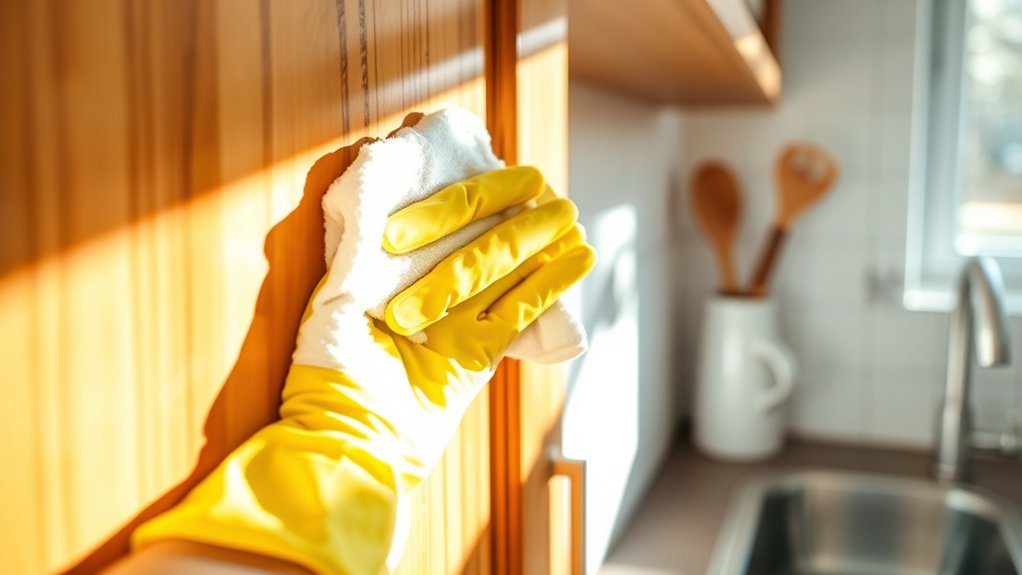
To clean grease off your kitchen cabinets, start by clearing items and dusting surfaces.
Identifying your cabinet material is important to pick the right cleaner.
Spray a mix of equal parts vinegar and water or use dish soap with warm water. Gently scrub with a soft cloth or sponge in circular motions.
Rinse and dry with a microfiber cloth, then leave doors open to air out.
For tougher grease and ongoing protection, there are simple, effective steps you can take next.
Why Does Grease Stick to Your Kitchen Cabinets?
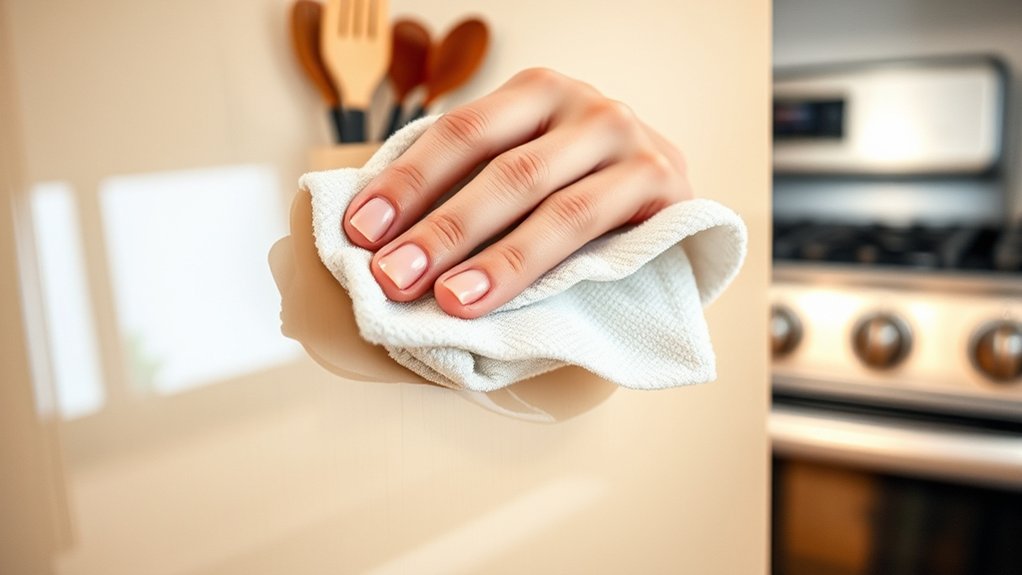
Because your kitchen is a hub of cooking activity, grease particles from oils and fats easily become airborne and settle on your cabinets. These grease sources include frying, sautéing, and even steam from boiling foods.
Once airborne, the grease clings to cabinet materials like wood, laminate, or painted surfaces due to their porous and textured nature. Your cabinets’ finishes can attract and trap oily residues, making the buildup sticky and difficult to remove.
Airborne grease sticks to porous cabinet surfaces, trapping oily residues and creating stubborn, sticky buildup.
Understanding why grease sticks helps you appreciate the importance of regular cleaning. Different cabinet materials respond differently to grease, so knowing the composition can guide your cleaning approach.
Grease’s oily composition resists water, so it won’t wash off with just a damp cloth. That’s why you need targeted cleaning methods to break down and remove the grease effectively.
How to Prepare Your Kitchen Cabinets for Cleaning
Before you plunge into scrubbing, take a few essential steps to prepare your kitchen cabinets for cleaning. Start by removing all items from the cabinets and countertops to give yourself clear access.
Next, identify the cabinet materials, such as wood, laminate, or metal, as this affects which cleaning supplies you’ll use to avoid damage. Dust or wipe down surfaces with a dry cloth to remove loose dirt and debris.
Protect surrounding areas by placing towels or drop cloths beneath the cabinets. Gather your cleaning supplies, including gloves, soft sponges, and non-abrasive cleaners suitable for your cabinet materials.
Finally, test your chosen cleaner on a small, hidden area to confirm it won’t discolor or harm the finish. Now, your cabinets are ready for an effective grease removal process.
Easy Homemade Solutions to Remove Grease
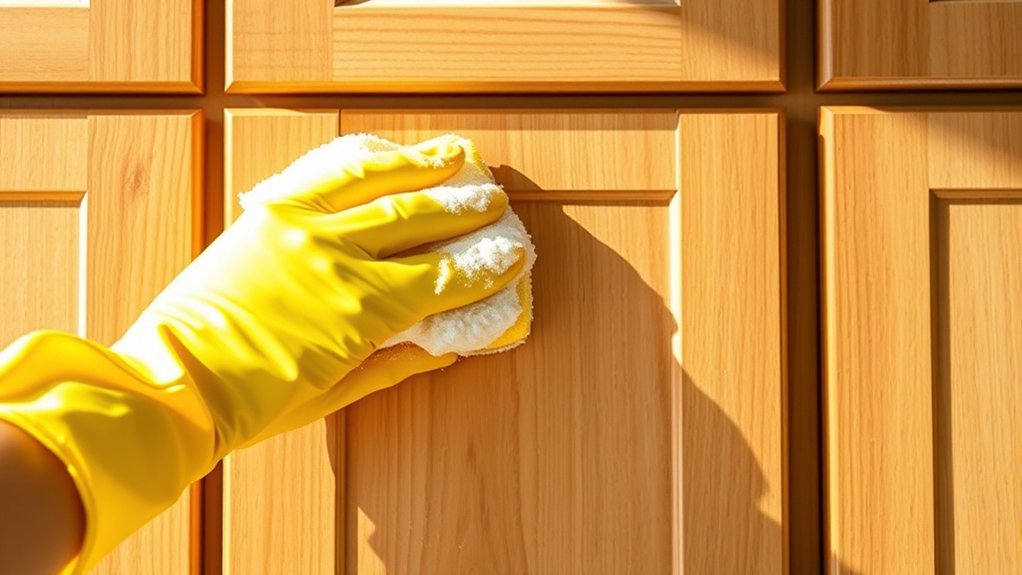
When grease builds up on your kitchen cabinets, simple homemade solutions can effectively cut through the grime without harsh chemicals. Start by mixing a vinegar solution. Combine equal parts white vinegar and water in a spray bottle. Spray it on greasy spots and let it sit for a few minutes to loosen the buildup.
For tougher grease, sprinkle baking soda directly on a damp cloth, then gently rub the surface. You can also create a paste using lemon juice and baking soda; apply it to greasy areas for natural degreasing power. Another option is to mix a few drops of dish soap with warm water, which breaks down grease effectively.
These easy solutions save money and use ingredients you likely have at home.
How to Scrub Grease Off Kitchen Cabinets Safely
Although grease can cling stubbornly to your kitchen cabinets, scrubbing it off safely requires the right technique and tools. To protect your cabinet finish and get rid of grease effectively, follow these steps:
- Choose gentle natural cleaners like diluted vinegar or a mild detergent to avoid damaging surfaces.
- Use soft cleaning tools such as microfiber cloths or non-abrasive sponges to prevent scratching.
- Apply cleaner with your cloth, scrub gently in circular motions, and wipe off residue with a damp cloth.
Avoid harsh chemicals and abrasive brushes that can strip paint or varnish. Always test your cleaner on a small, hidden area first. By combining these natural cleaners with proper cleaning tools, you’ll keep your cabinets grease-free and looking great without risking damage.
How to Tackle Tough, Built-Up Grease Stains
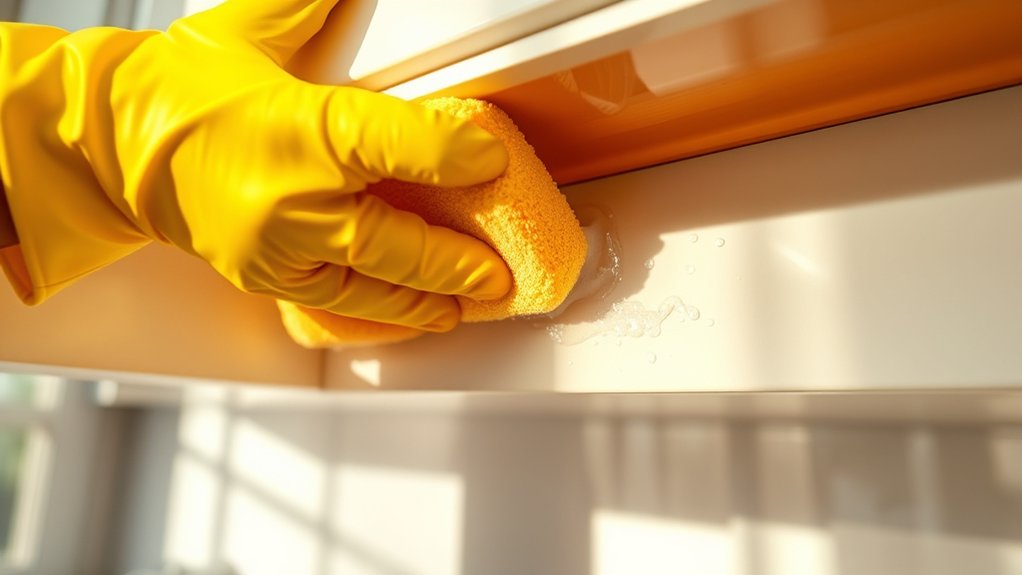
Since built-up grease stains can resist regular cleaning methods, you’ll need stronger techniques to break them down effectively. Start by mixing a solution of warm water, dish soap, and a few tablespoons of baking soda to create a gentle abrasive cleaner. Apply this with a soft sponge or microfiber cloth, focusing on stained areas.
For stubborn spots, use a nylon scrub brush from your cabinet cleaning tools to agitate the grease without damaging surfaces. Avoid harsh chemicals that might strip finishes. Another effective grease removal technique is wiping cabinets with a white vinegar and water solution, which cuts through grease naturally.
Always test your chosen method on a hidden spot first to verify it won’t harm the cabinet’s finish. Repeat as needed until the grease loosens and lifts away.
Drying and Protecting Kitchen Cabinets After Cleaning
After thoroughly cleaning your kitchen cabinets, you’ll want to dry them promptly to prevent moisture damage and warping. Proper drying is a key step in cabinet maintenance, ensuring longevity and preserving their finish. Follow these steps:
- Use a soft, dry microfiber cloth to absorb any leftover moisture from all surfaces, including corners and edges.
- Leave cabinet doors open for a few hours to allow air circulation, speeding up the drying process.
- Once dry, apply a suitable protective coating, such as a wood polish or sealant designed for kitchen cabinets, to shield against future grease buildup and wear.
Tips to Prevent Grease Buildup on Your Cabinets
One effective way to keep your kitchen cabinets looking fresh is to adopt simple habits that prevent grease buildup before it starts. Start with preventive cleaning. Wipe your cabinets regularly using a mild detergent to remove any light grease and dust. Avoid letting spills sit, as they attract more grease.
Improve your kitchen ventilation by using range hoods or exhaust fans whenever you cook, especially during frying or grilling. This reduces airborne grease particles that settle on surfaces. You can also place splatter screens over pans to minimize grease splashes.
Finally, keep cabinet surfaces dry by wiping them immediately after cleaning or cooking to prevent residue accumulation. Following these practical steps will help you maintain clean cabinets and reduce the need for intensive grease removal later.
Frequently Asked Questions
Can I Use Commercial Degreasers on Painted Cabinets?
You can use commercial degreasers on painted cabinets, but check your paint durability first. Choose gentle, non-abrasive products like citrus-based or ammonia-free degreasers to avoid damage.
Always test a small area before full application.
How Often Should I Deep Clean Kitchen Cabinets?
Like clockwork, you should deep clean kitchen cabinets every three months to keep your kitchen maintenance on point. This cleaning frequency prevents grease buildup and preserves your cabinets’ finish, ensuring a fresh, lasting kitchen environment.
Are Steam Cleaners Safe for Kitchen Cabinets?
Yes, steam cleaner effectiveness depends on your cabinet material. You shouldn’t use steam on laminate or veneer since it can cause damage.
For solid wood, test a small area first to confirm it’s safe and won’t warp or peel.
Can Grease Damage Cabinet Finishes Permanently?
Yes, grease can permanently damage finishes if left too long. For effective grease removal and cabinet maintenance, you should clean spills promptly using gentle cleansers to protect the surface and preserve your cabinets’ appearance over time.
What Should I Do if Grease Causes Odors?
If you notice odors, don’t panic. You can tackle them! Use vinegar solutions or baking soda as odor neutralizers, then add a few drops of essential oils to freshen up your cabinets and keep your kitchen smelling great.