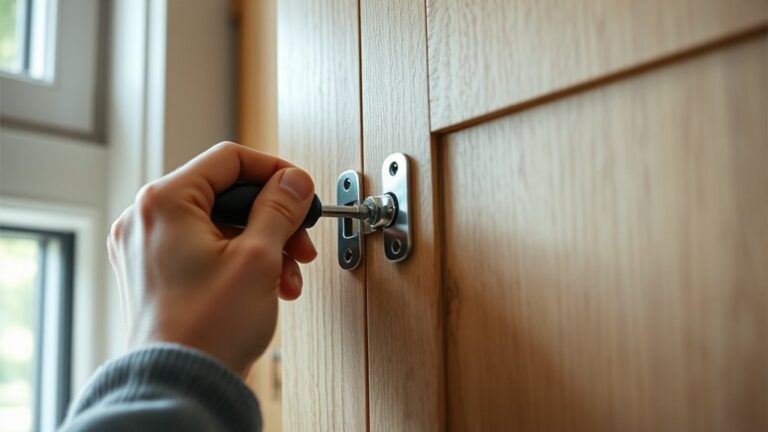
How to Choose Kitchen Cabinet Hardware
You’ll want to choose kitchen cabinet hardware that matches your style, whether modern sleekness or traditional charm, balancing color and texture for cohesion.
Kitchen cabinet hardware plays a crucial role in tying your kitchen’s look together and enhancing functionality.
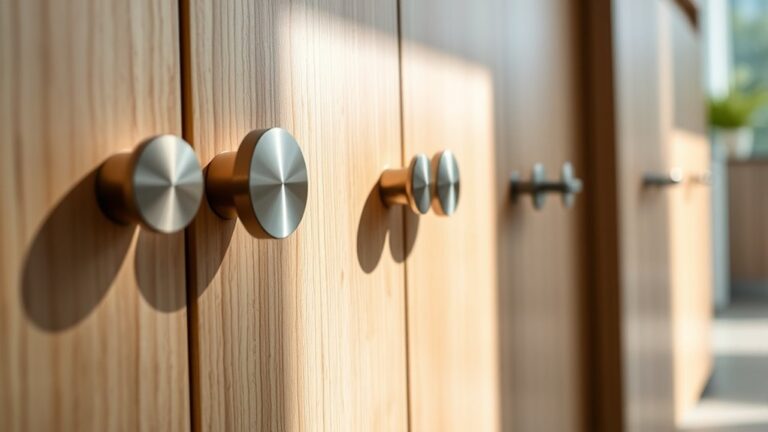
Focus on materials like brass for warmth or stainless steel for durability, picking finishes that resist wear, like matte black or brushed nickel.
Size and shape should fit your cabinet scale and enhance comfort.
Thoughtful placement guarantees easy use and a polished look.
Keep these in mind, and you’ll uncover ways to elevate your kitchen’s entire aesthetic.
Selecting the right hardware can transform your space and reflect your personal taste perfectly.
How to Match Kitchen Cabinet Hardware With Your Style
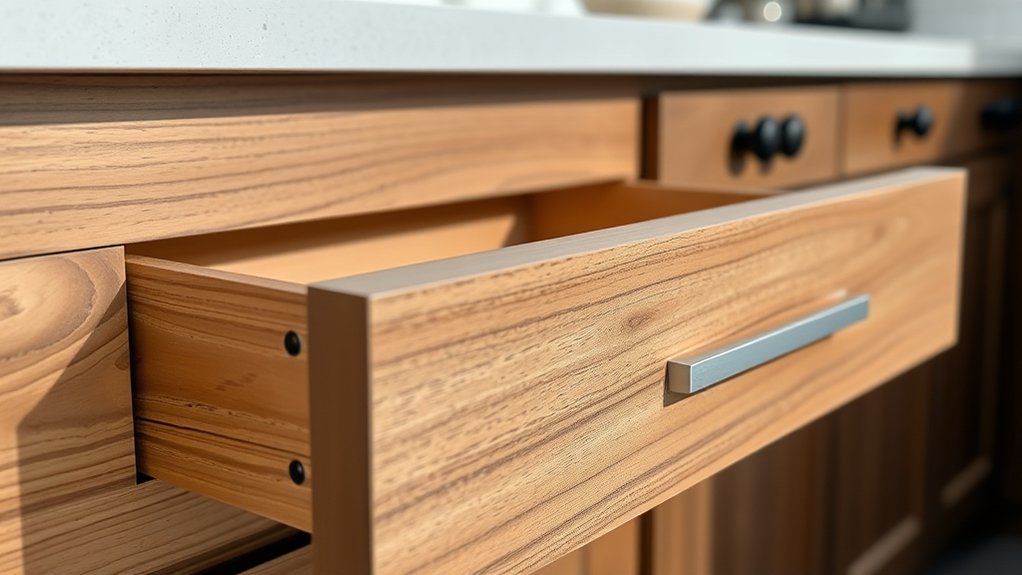
How do you guarantee your kitchen cabinet hardware complements your personal style while enhancing the overall aesthetic? Start by identifying whether modern styles or traditional themes resonate with your space. Modern styles favor sleek, minimalist choices, often with clean lines and subtle finishes.
Traditional themes, on the other hand, embrace vintage accents and ornate details. Focus on color coordination to ensure hardware hues harmonize with cabinet tones, creating cohesive visual flow. Texture pairing also plays an essential role. Matte metals can balance glossy surfaces, while brushed finishes add depth.
Stay informed about design trends, but prioritize functional aesthetics that blend beauty with usability. By carefully matching hardware to your style, you create a kitchen that feels both intentional and inviting.
How to Choose Materials for Kitchen Cabinet Hardware
Selecting the right material for your kitchen cabinet hardware is essential in marrying durability with style. Start by evaluating metal types like brass, stainless steel, or aluminum. Each offers unique strengths and aesthetics.
Brass delivers warmth and ages beautifully, while stainless steel resists corrosion and fits modern designs. Aluminum, lightweight yet strong, suits minimalist spaces.
If sustainability matters to you, seek hardware made from recycled metals or sustainably sourced materials, reducing environmental impact without compromising quality. Consider how these materials interact with your kitchen’s environment; moisture and heat can affect longevity.
How to Pick the Right Finish for Kitchen Cabinet Hardware

Why does the finish of your kitchen cabinet hardware matter as much as its style or material? Because finish types not only influence durability but also define your kitchen’s overall aesthetic. You want hardware finishes that complement your cabinets, countertops, and fixtures seamlessly.
Popular finish types include brushed nickel for a subtle sheen, matte black for modern contrast, and antique brass for warmth and character. Consider finish combinations carefully. Mixing finishes can add dynamic interest but requires balance to avoid visual clutter.
For example, pairing matte black handles with stainless steel appliances creates cohesion, while mixing polished chrome and bronze might clash. Ultimately, choose finishes that enhance your kitchen’s style and stand up to daily use, ensuring your hardware looks stunning and lasts long.
How to Choose the Right Size and Shape for Hardware
Choosing the right size and shape for your kitchen cabinet hardware can dramatically influence both the look and functionality of your space. Start by evaluating size considerations: larger cabinets call for proportionally bigger handles or knobs to maintain balance, while smaller cabinets benefit from more delicate hardware that doesn’t overpower the design.
For shape preferences, consider the overall style of your kitchen. Sleek, linear pulls complement modern aesthetics, while rounded or ornate shapes enhance traditional or farmhouse looks. Don’t forget ergonomics; the shape should feel comfortable in your hand and allow easy grip.
Where to Place Kitchen Cabinet Hardware for Best Use
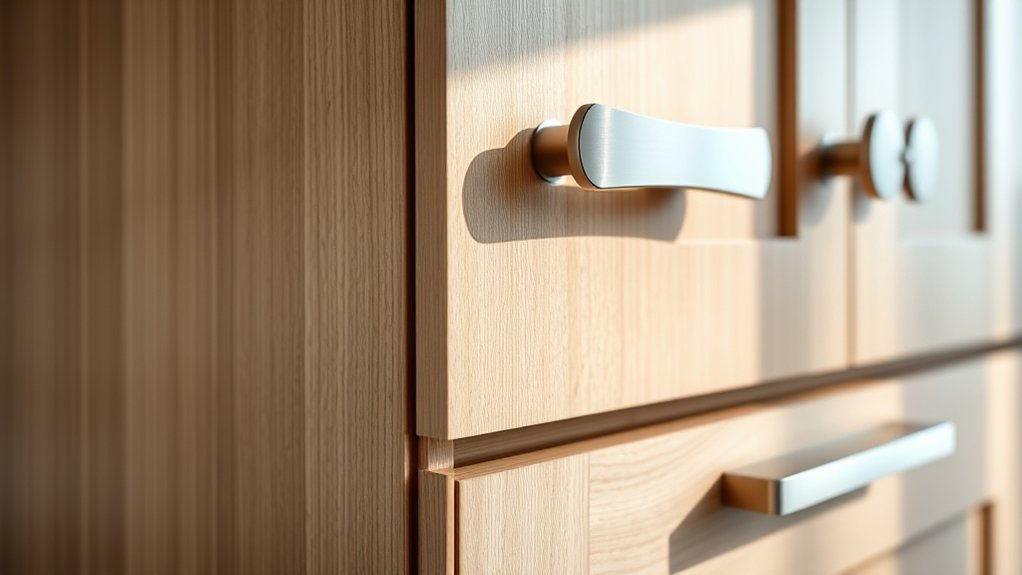
You’ll want to position your hardware where it feels natural to reach and opens smoothly without strain. Whether you choose knobs or pulls, their placement can enhance both function and style, complementing your cabinet design.
Prioritizing accessibility and ergonomics guarantees your kitchen stays both beautiful and effortless to use.
Optimal Handle Placement
Placing kitchen cabinet hardware precisely enhances both functionality and style in your space. To achieve ideal handle placement, focus on handle height and ergonomic reach. Position handles where your hand naturally falls, typically 28 to 34 inches from the floor on base cabinets, to reduce strain and improve comfort.
For wall cabinets, place handles near the bottom corners for easy access without stretching. Guarantee consistent placement across all cabinets to maintain visual harmony. Avoid placing handles too close to cabinet edges, which can cause awkward grips or damage over time.
Thoughtful placement not only elevates your kitchen’s aesthetic but also simplifies daily use, making your workspace more efficient and enjoyable. Remember, the right handle height enhances both your kitchen’s look and your comfort during routine tasks.
Knob vs. Pull Positioning
Understanding the ideal placement of knobs and pulls can considerably impact both the look and usability of your kitchen cabinets. When positioning knobs, focus on consistent knob heights, typically 2 to 3 inches from the cabinet door edge or drawer top, to maintain visual harmony.
Pulls, however, require attention to pull lengths and orientation. Longer pulls suit wider drawers and should align horizontally, while shorter pulls work best vertically on narrow doors. Position pulls about 2.5 to 3 inches from the drawer or door edge for best balance.
Mixing knob heights with varying pull lengths strategically enhances your kitchen’s design rhythm while ensuring functional ease. By thoughtfully placing your hardware, you create a cohesive, elegant aesthetic that complements your cabinetry’s style and scale.
Accessibility and Ergonomics
Although aesthetics play a crucial role, prioritizing accessibility and ergonomics guarantees your kitchen cabinet hardware enhances daily functionality. Focus on user-friendly designs that balance style with practical reachability aspects.
Place handles where your hand naturally falls, generally at mid-height on drawers and near the edge of cabinet doors, to optimize user comfort and minimize strain. Incorporate accessibility features like easy-grip pulls or knobs that accommodate various hand sizes and abilities.
Thoughtful ergonomic considerations guarantee smooth, intuitive operation, boosting overall design functionality. By aligning hardware placement with how you interact with cabinets, you create a kitchen that feels effortless to navigate. This approach not only elevates your space visually but also supports seamless, comfortable use every day.
How Hardware Impacts Durability and Maintenance
You’ll want to choose hardware made from materials that resist wear and maintain their finish over time, ensuring lasting durability. Consider how easily the hardware cleans. Smooth surfaces and simple shapes prevent grime buildup and simplify upkeep. Paying attention to these factors keeps your kitchen looking pristine with minimal effort.
Material Strength and Longevity
The choice of kitchen cabinet hardware directly influences not only the aesthetic appeal but also the durability and ease of maintenance of your cabinets. Selecting hardware crafted from high-quality materials guarantees longevity and resistance to wear.
Pay attention to manufacturers who emphasize rigorous durability testing, as this ensures that handles and knobs will withstand daily use without compromising function or finish. Material sourcing also plays an essential role; hardware made from solid brass, stainless steel, or zinc alloys often offers superior strength and corrosion resistance compared to cheaper metals or plastics.
Ease of Cleaning
Three key factors determine how easy your kitchen cabinet hardware is to clean: material, design, and finish. Choosing durable hardware materials like stainless steel or brass minimizes wear from frequent cleaning, maintaining beauty over time.
Smooth, simple designs with fewer grooves or intricate details reduce dirt buildup, so you won’t need to increase your cleaning frequency. Finishes also play an essential role; matte or brushed finishes can hide fingerprints and smudges better than glossy ones, cutting down on visible grime.
When selecting hardware, prioritize pieces that resist tarnishing and corrosion, ensuring durability through daily use and cleaning. By balancing these factors, you’ll enjoy hardware that not only elevates your kitchen’s aesthetic but also requires minimal upkeep, preserving its pristine look effortlessly.
How to Budget for Kitchen Cabinet Hardware
Budgeting for kitchen cabinet hardware demands a strategic approach that balances style, function, and cost. To stay within your budget, prioritize cost saving options without compromising on aesthetics or durability. Focus on budget friendly materials like brushed nickel, matte black finishes, or zinc alloy, which offer elegance and longevity at reasonable prices.
Balancing style, function, and cost ensures elegant, durable kitchen hardware within budget-friendly materials and finishes.
Consider these tips to manage your hardware budget effectively:
- Set a clear budget before shopping.
- Choose uniform hardware styles to buy in bulk discounts.
- Opt for budget friendly materials that mimic high-end looks.
- Factor in installation costs if hiring professionals.
- Compare prices across retailers and online stores.
How to Update Your Cabinets With New Hardware
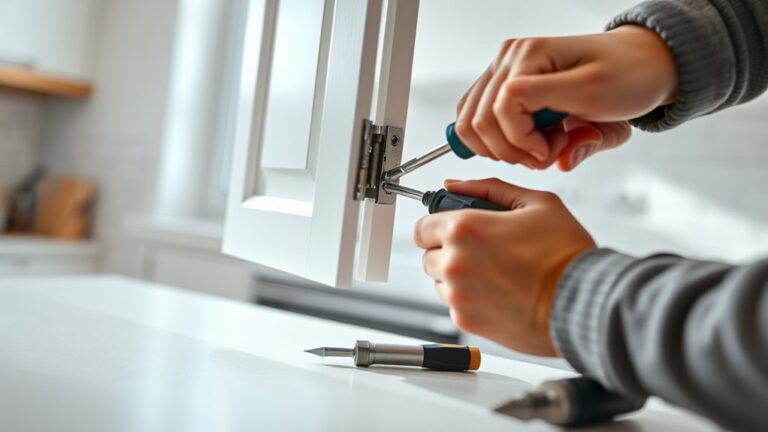
Once you’ve set a budget and selected the perfect hardware style, it’s time to breathe new life into your kitchen cabinets. Start by removing old knobs and pulls carefully to avoid damaging the cabinet surface.
Align your new hardware precisely, using a template to maintain consistency, a key to achieving a professional look. Embrace current cabinet trends by opting for finishes like matte black or brushed brass, which instantly modernize any space.
If you’re tackling a DIY installation, make sure to measure twice and drill once, ensuring holes line up perfectly. Updating your cabinets with new hardware is a cost-effective way to transform your kitchen’s aesthetic without a full remodel, blending functionality with style effortlessly.
Frequently Asked Questions
Can I Install Kitchen Cabinet Hardware Myself or Should I Hire a Professional?
You can definitely handle DIY installation if you’re precise and patient, but professional help guarantees perfect alignment and durability.
If you want flawless, aesthetic results without stress, hiring an expert is worth considering.
What Tools Do I Need for Installing Cabinet Hardware?
Installing cabinet hardware is like painting a masterpiece; you need precision. Grab measuring tools like a tape measure and ruler, plus a drill and screwdriver.
Follow installation tips carefully to guarantee perfect alignment and a polished, aesthetic finish.
How Do I Remove Old Cabinet Hardware Without Damaging the Cabinets?
You’ll start by gently unscrewing the hardware, using hardware removal tips like placing painter’s tape to protect the cabinet surface. Work slowly to avoid scratches, preserving the cabinet’s finish while removing old knobs or pulls carefully.
Are There Hardware Options Suitable for Children’s Safety?
Yes, you’ll find child proof options crafted from safety materials like soft silicone or rounded metals. These protect little hands while maintaining your kitchen’s style with sleek, durable, and aesthetically pleasing hardware choices.
How Often Should Kitchen Cabinet Hardware Be Replaced?
You should replace kitchen cabinet hardware every 5-10 years, considering fashion trends and durability factors.
If wear or style shifts occur sooner, update to maintain both aesthetic appeal and functional integrity seamlessly in your space.