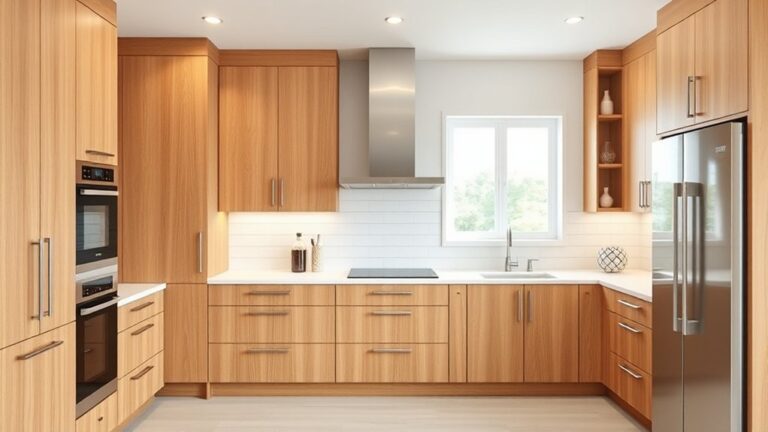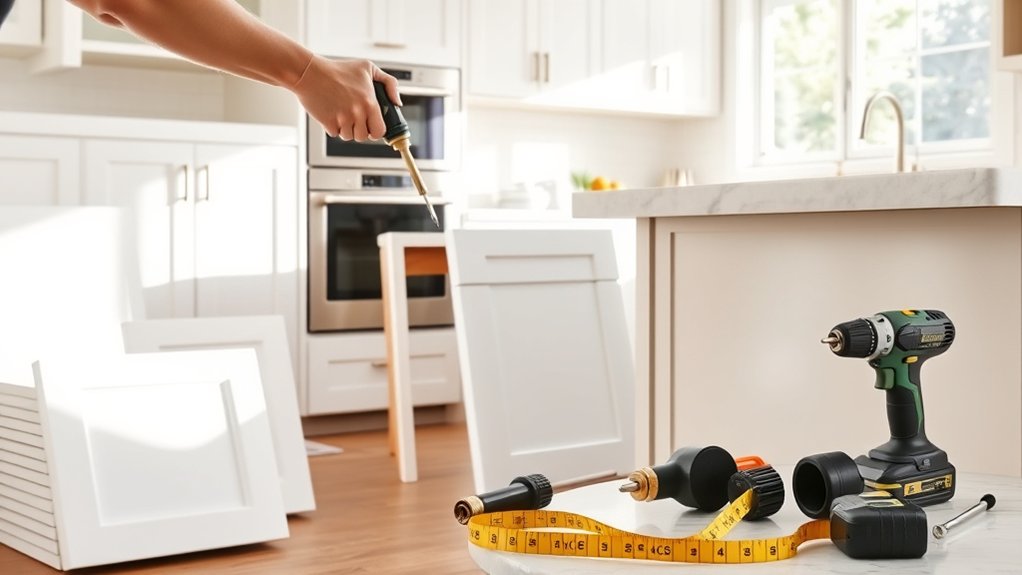
How to Change Kitchen Cabinets
To change your kitchen cabinets, start by deciding whether to repaint or replace based on your budget, style preferences, and the condition of your current cabinets. This initial decision will guide the entire process and help you plan effectively.
Next, measure your kitchen precisely and plan your layout for ideal storage and workflow. Accurate measurements ensure that new cabinets fit perfectly and enhance the kitchen’s functionality.
When removing old cabinets, do so safely by turning off the power and using the proper tools. This step prevents accidents and damage to your kitchen walls.
During installation, secure wall cabinets first, followed by base cabinets, making sure everything is properly aligned. Proper alignment is crucial for both aesthetics and usability.
If you choose to repaint your cabinets, start by cleaning and sanding the surfaces thoroughly.
Select durable finishes that will withstand kitchen use and maintain their appearance over time.
Finally, installing the right hardware and ensuring precise alignment will maintain both the functionality and style of your cabinets.
Follow these detailed steps to transform your kitchen seamlessly.
How to Decide: Repaint or Replace Kitchen Cabinets
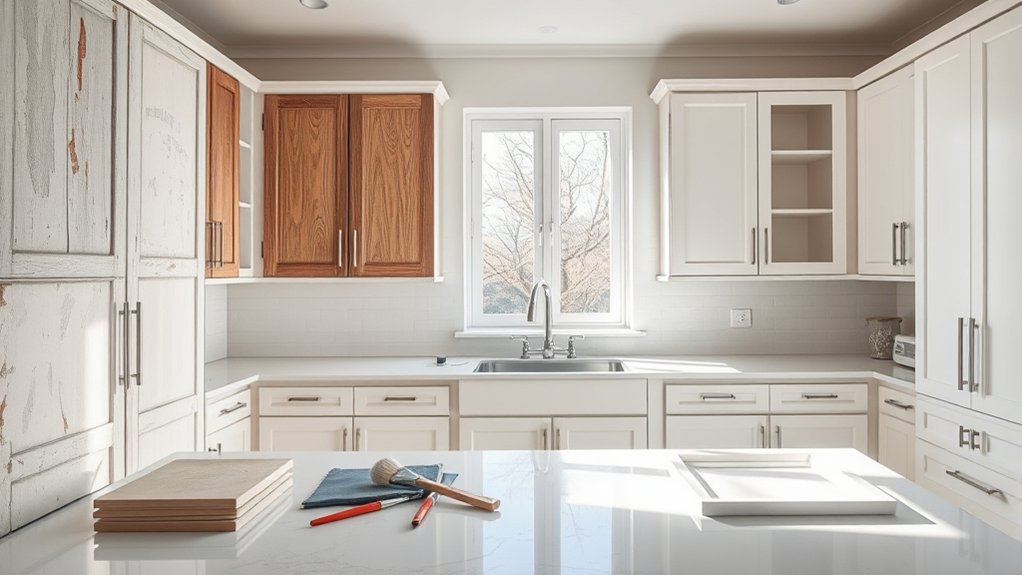
How do you determine whether to repaint or replace your kitchen cabinets? Start by evaluating cost considerations. Repainting is typically more budget-friendly, especially if your cabinets are structurally sound. However, replacing cabinets allows you to address outdated or damaged units, potentially increasing your kitchen’s value.
Next, assess your style preferences. If you want a fresh color or a subtle update, repainting offers flexibility without a full overhaul. But if your design goals are more ambitious, such as changing cabinet styles or layouts, replacement may be necessary.
Also, consider the condition of your cabinets. Peeling paint or warped wood often signals replacement. Balancing these factors—budget constraints and desired aesthetics—will guide you in making a well-informed decision that aligns with your renovation vision.
Measuring and Planning Your New Kitchen Cabinet Layout
Once you’ve decided whether to repaint or replace your kitchen cabinets, the next step is to measure and plan your new layout carefully. Start by taking precise measurements of your kitchen’s dimensions, including walls, windows, doors, and existing appliances.
Use this data to explore different cabinet styles that complement your space and personal taste. Focus on layout optimization to maximize storage and guarantee smooth workflow, paying attention to the kitchen work triangle.
Explore cabinet styles that fit your space and optimize layout for storage and efficient workflow.
Sketch your layout or use design software to visualize cabinet placements, considering both upper and lower units. Don’t forget to account for clearance space and lighting.
Thoughtful measuring and planning will help you select functional, stylish cabinets that enhance your kitchen’s efficiency and aesthetic appeal.
How to Remove Old Kitchen Cabinets Safely (For Replacement)
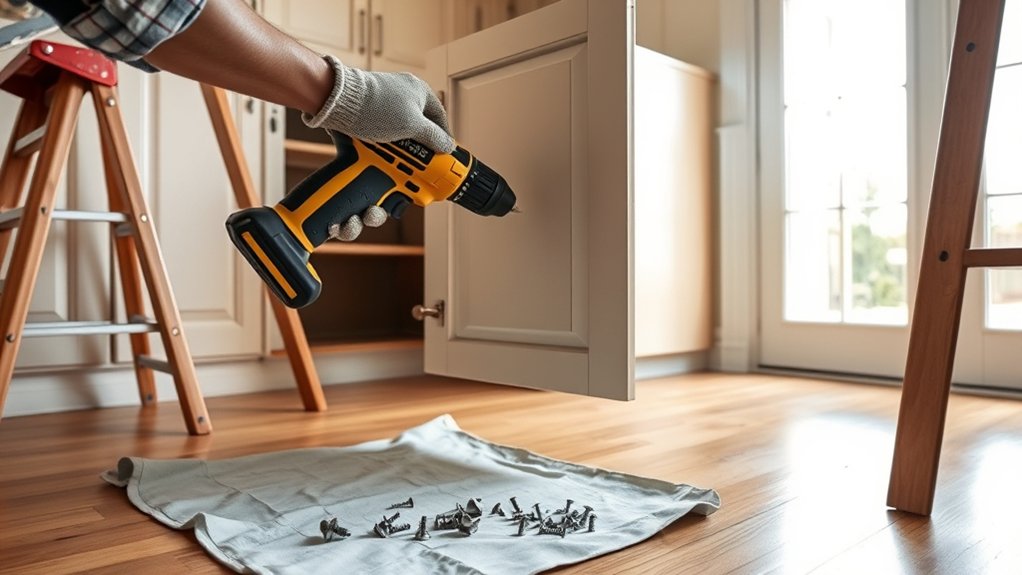
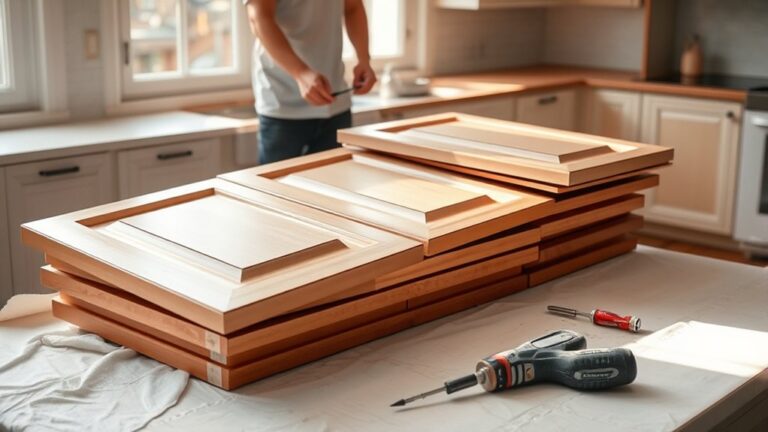
Begin by turning off the power to any outlets or appliances near your cabinets to guarantee safety during removal. Next, equip yourself with essential safety equipment, including gloves, safety goggles, and a dust mask. Use the right cabinet tools: a screwdriver, pry bar, and drill will make the process smoother.
Follow these steps to remove your old cabinets safely:
- Remove all cabinet doors and drawers to lighten the load and prevent damage.
- Unscrew the cabinet face frame from the wall studs carefully.
- Use a pry bar gently to detach cabinets from the wall without harming drywall.
- Enlist help to safely lower heavy cabinets to avoid injury or damage.
Install New Kitchen Cabinets Step-by-Step
Start by preparing your workspace to guarantee a smooth installation process. Clear the area and confirm proper lighting. Measure carefully to align cabinets precisely, considering the latest cabinet styles and design trends for a modern aesthetic.
Secure the wall cabinets first, using a level to maintain alignment. Follow with base cabinets, making sure they’re flush and stable. Use shims where necessary to correct uneven surfaces.
| Step | Key Action |
|---|---|
| 1. Preparation | Clear space, gather tools |
| 2. Measure & Mark | Align with walls and floors |
| 3. Install Wall Cabinets | Secure, level, and fasten |
| 4. Install Base Cabinets | Shim, level, and attach |
| 5. Final Adjustments | Check alignment, tight screws |
This method blends precision with aesthetics, confirming your kitchen reflects current design trends flawlessly.
Essential Tips for Painting and Refinishing Kitchen Cabinets
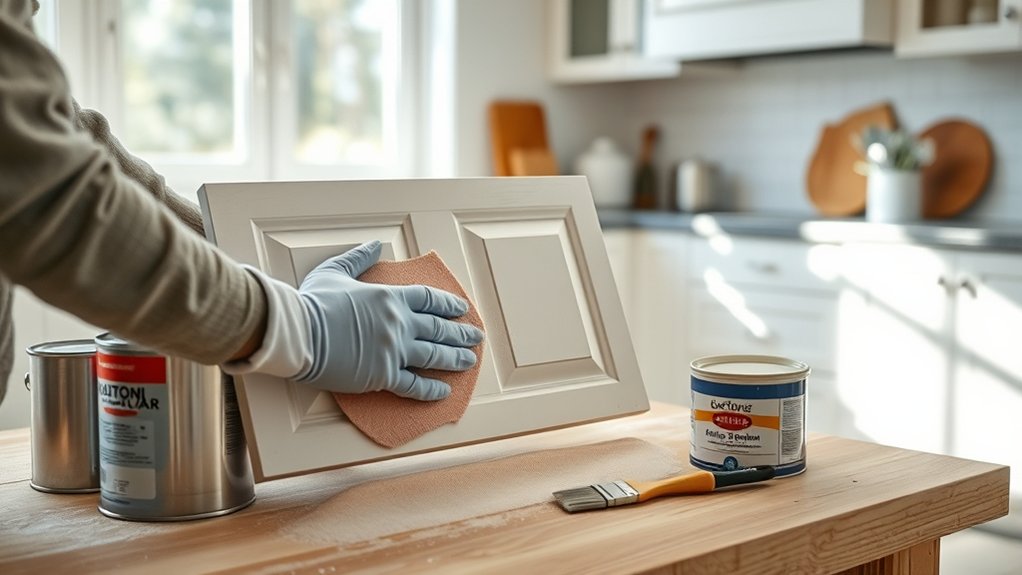
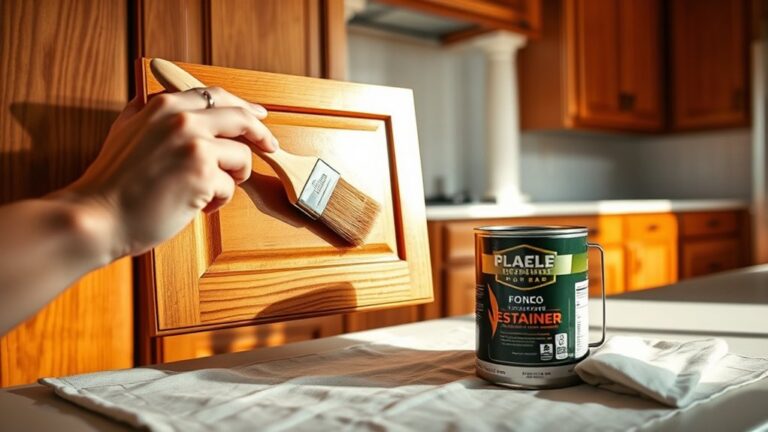
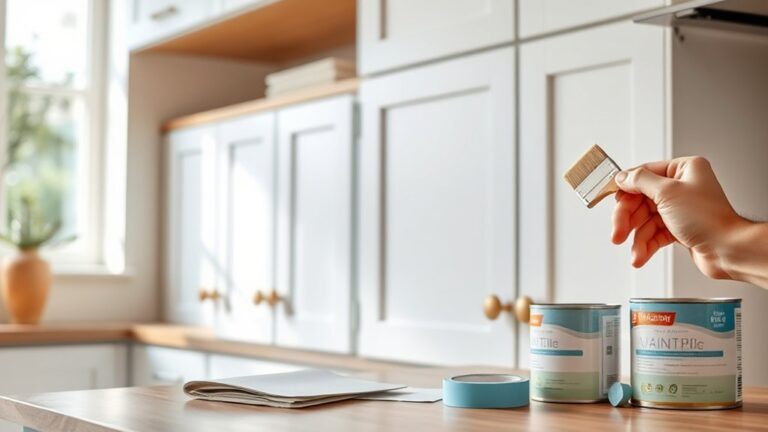
Before you start painting or refinishing your kitchen cabinets, make sure to thoroughly clean and sand the surfaces for ideal adhesion. Selecting the right type of paint and finish is essential to achieving a durable, smooth look that complements your kitchen’s style.
With proper preparation and materials, you’ll transform your cabinets into a stunning focal point.
Preparing Cabinet Surfaces
Preparing your cabinet surfaces thoroughly guarantees a smooth and durable finish when painting or refinishing kitchen cabinets. Start by removing all hardware and doors to access every corner.
Use effective cleaning products to eliminate grease, dust, and grime, ensuring the paint adheres properly. Next, apply precise sanding techniques. Begin with medium-grit sandpaper to remove old finishes, then fine-grit for a sleek surface.
Don’t forget to wipe away sanding dust with a tack cloth before priming. Follow these steps:
- Remove cabinet doors and hardware carefully.
- Clean all surfaces with degreasing cleaning products.
- Sand using progressive sanding techniques: medium to fine grit.
- Remove all dust thoroughly to prevent imperfections.
This preparation sets the foundation for a flawless, lasting cabinet transformation.
Choosing Paint And Finish
Selecting the right paint and finish plays an essential role in achieving a durable and visually appealing kitchen cabinet makeover. When choosing, consider current color trends that complement your kitchen’s style and lighting.
Opt for finish types that enhance durability and ease of cleaning, such as semi-gloss or satin. Matte finishes offer a modern look but may require more upkeep.
| Finish Type | Characteristics |
|---|---|
| Semi-Gloss | Durable, easy to clean |
| Satin | Soft sheen, hides imperfections |
| Matte | Trendy, less reflective |
| Glossy | High shine, highlights details |
| Eggshell | Low sheen, subtle elegance |
With this insight, you can confidently select a paint and finish that elevate your kitchen cabinets’ beauty and lifespan.
Common Mistakes to Avoid When Updating Kitchen Cabinets
When updating your kitchen cabinets, don’t skip accurate measurements or you risk costly errors. You’ll also want to thoroughly prepare surfaces to guarantee a smooth, lasting finish.
Finally, make sure your new hardware matches both the style and functionality of your cabinets to avoid awkward fits or mismatched aesthetics.
Skipping Proper Measurements
Although it might seem tedious, skipping proper measurements can lead to costly mistakes and delays in your kitchen cabinet update. Using precise measurement tools is essential to avoid common errors that compromise fit and function. Without accurate dimensions, you risk ordering cabinets that don’t align or fit your space.
Here’s what happens if you skip proper measurements:
- Wasted money on ill-fitting cabinets.
- Frustration from multiple adjustments and reorders.
- Delayed project timelines disrupting your routine.
- Compromised kitchen aesthetics and usability.
Take the time to measure carefully, double-check all dimensions, and use reliable measurement tools. This attention to detail guarantees your new cabinets enhance your kitchen’s beauty and functionality without unexpected setbacks.
Ignoring Surface Preparation
Accurate measurements set the foundation for a smooth cabinet installation, but overlooking surface preparation can quickly undo all that careful planning. If you ignore prepping surfaces, you risk surface damage and poor paint adhesion, leading to peeling or uneven finishes.
Properly sanding, cleaning, and repairing imperfections guarantees your cabinets look flawless and last longer.
| Preparation Step | Importance |
|---|---|
| Cleaning | Removes grease and dust for better adhesion |
| Sanding | Smooths surfaces, prevents peeling |
| Repairing Surface Damage | Fills dents and scratches for uniformity |
Skipping these steps compromises the durability and appearance of your cabinets. Take the time to prepare thoroughly. Your final result depends on it.
Overlooking Hardware Compatibility
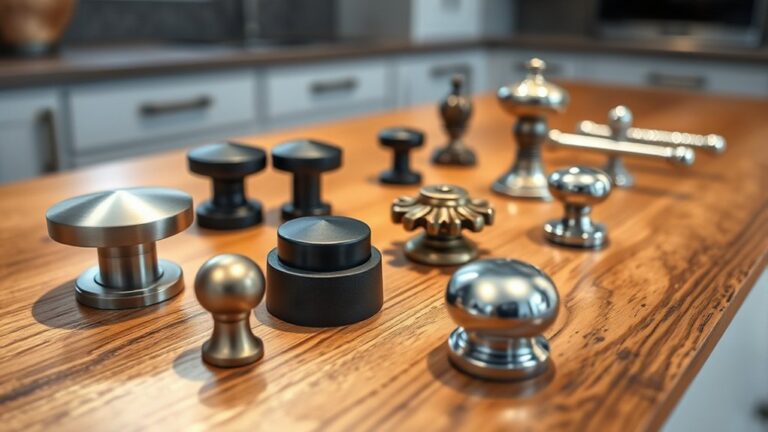
Because hardware plays a crucial role in both the function and style of your kitchen cabinets, overlooking compatibility can lead to frustrating installation challenges and mismatched aesthetics. When updating your cabinets, you must consider the variety of hardware types and potential compatibility issues that arise with new designs or sizes.
Here’s what you need to avoid:
- Installing knobs or pulls that don’t align with existing holes, forcing unnecessary drilling.
- Choosing hardware incompatible with cabinet door thickness, risking loose or unstable fixtures.
- Mixing styles that clash with your kitchen’s overall design, undermining visual harmony.
- Ignoring manufacturer specifications, which can cause functional problems and void warranties.
Frequently Asked Questions
What Are the Best Materials for Durable Kitchen Cabinets?
You’ll want cabinet materials like solid hardwood, plywood, or MDF with veneer for durability factors. These choices resist warping, moisture, and wear, ensuring your kitchen cabinets stay strong and look stunning for years to come.
How Can I Increase Storage Inside Existing Cabinets?
You can practically double your storage by installing pull out shelves, cabinet organizers, vertical dividers, under shelf baskets, lazy susan inserts, and door mounted racks.
These additions give your cabinets a sleek, organized, and highly functional makeover.
What Styles of Cabinet Hardware Are Trending Now?
You’ll find modern finishes, vintage designs, minimalist aesthetics, and bold colors trending now. Choosing hardware that blends functionality with these styles can elevate your kitchen’s look, giving it a fresh, professional, and aesthetically pleasing vibe.
How Do I Clean and Maintain Painted Cabinets?
You should use gentle cleaning techniques like a soft cloth with mild soap and water, avoiding harsh chemicals.
For maintenance tips, regularly wipe spills immediately and apply a protective wax to keep painted cabinets looking fresh and flawless.
Can I Install Cabinets Myself Without Professional Help?
Yes, you can install cabinets yourself by following DIY tips carefully. Make certain you have the right installation tools, like a level and drill, and take precise measurements to achieve a professional, aesthetic finish in your kitchen space.