How Deep Is a Base Kitchen Cabinet
A standard base kitchen cabinet is typically 24 inches deep, giving you a perfect balance of storage and countertop workspace. This depth is considered ideal for most kitchens, providing enough room for pots, pans, and other essentials without overwhelming the space.
You’ll find shallower options around 21 inches for tighter spaces and deeper ones near 27 inches if you need extra storage. This flexibility allows you to customize your kitchen layout to fit your specific needs.
This depth works well with countertops and appliances, ensuring smooth functionality and a clean look. Choosing the right depth also supports your kitchen’s workflow, but there’s more to contemplate when tailoring cabinets to your specific needs.
What Is the Standard Depth of a Base Kitchen Cabinet?
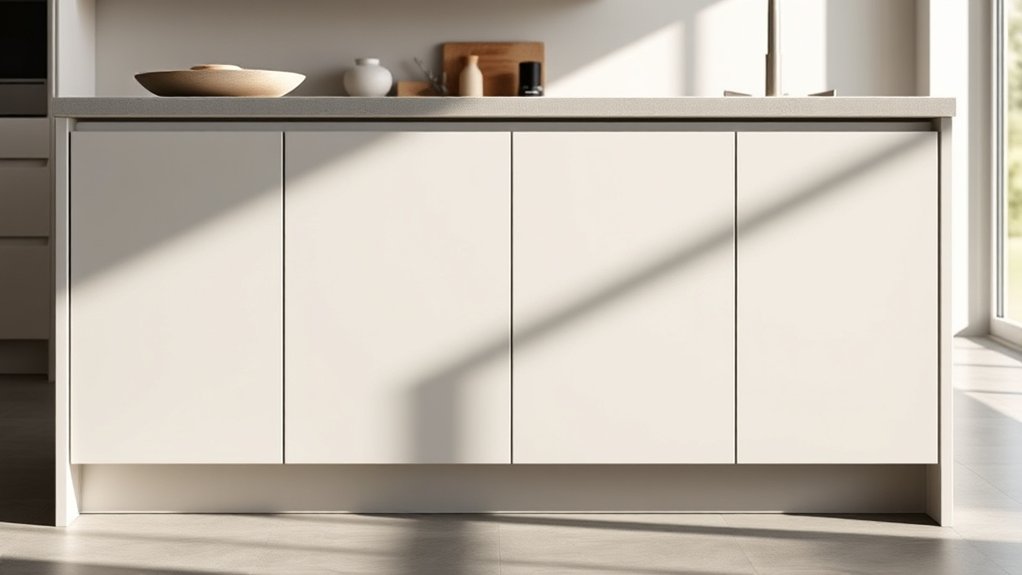
Most base kitchen cabinets measure 24 inches deep, a standard that balances storage capacity with countertop usability. This depth is part of the standard measurements that guarantee your kitchen feels spacious yet functional.
When you choose cabinets with this depth, you’re opting for design flexibility, allowing countertops to overhang slightly and providing ample room for drawers and shelves inside. This measurement keeps your workspace efficient, letting you reach items easily without crowding your kitchen.
Sticking to the 24-inch depth also simplifies planning, as appliances and fixtures often align with this size. By understanding and working within these standard measurements, you’ll find it easier to create a kitchen that’s both visually appealing and highly practical.
Common Size Variations in Base Kitchen Cabinets
You’ll find several common size variations in base kitchen cabinets beyond the standard 24-inch depth, each designed to suit different kitchen layouts and storage needs. For instance, some cabinets offer a 21-inch depth, ideal for smaller kitchens or narrow walkways, while deeper options around 27 inches provide extra storage.
Cabinet height typically stays consistent at 34.5 inches to align with countertops, but you might encounter slightly taller units for ergonomic or stylistic purposes. Drawer configurations also vary widely. Some cabinets feature multiple shallow drawers for utensils, while others include deep drawers perfect for pots and pans.
How Cabinet Depth Affects Countertops and Appliances

When choosing your base cabinet depth, consider how much your countertop will overhang for both style and safety. You’ll also want to guarantee appliances fit properly with enough clearance to operate smoothly.
Balancing these factors helps create a kitchen that’s both functional and visually pleasing.
Countertop Overhang Considerations
A countertop overhang of one to two inches can greatly impact both the look and function of your kitchen space. When planning this detail, consider how it relates to your cabinet depth and overall design. Here are three key points to guide you:
- Overhang Materials: Choose materials that can support the desired overhang without sagging, like quartz or granite, ensuring durability and stability.
- Aesthetic Balance: The overhang should complement cabinet depth to maintain visual harmony; too large or too small disrupts proportions and flow.
- Functional Space: Proper overhang provides comfortable edge space for tasks without interfering with cabinet doors or hardware, enhancing usability.
Appliance Fit And Clearance
Balancing countertop overhang with cabinet depth also influences how appliances fit within your kitchen layout. When cabinets are too shallow or too deep, appliance alignment suffers, causing awkward gaps or protrusions that disrupt flow and aesthetics.
You need to evaluate clearance requirements carefully, especially for built-in ovens, dishwashers, and refrigerators, to guarantee doors open fully without obstruction. Proper cabinet depth allows appliances to sit flush with countertops, creating a sleek, integrated look.
Additionally, adequate clearance prevents damage and facilitates maintenance. By choosing the right cabinet depth, you maintain functional workspace while achieving harmonious appliance alignment. This balance enhances both usability and visual appeal, making your kitchen not just beautiful but practical and comfortable to work in every day.
Measuring for Base Cabinet Depth in Your Kitchen
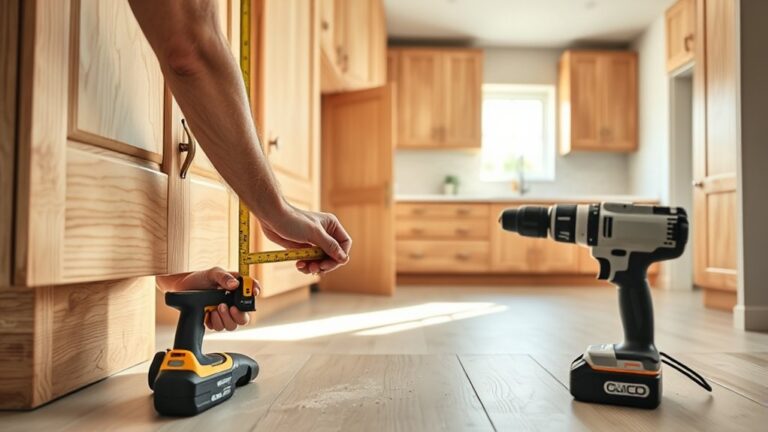
Although standard base cabinets often measure 24 inches deep, you’ll want to accurately measure your kitchen space to confirm the cabinets fit seamlessly and provide ideal storage. Proper measuring techniques guarantee your cabinets align perfectly with your layout and allow smooth movement around appliances and fixtures.
When measuring for base cabinet depth, consider these key steps:
- Measure the wall length where the cabinet will be placed, accounting for any obstacles or uneven surfaces.
- Note the depth of adjoining countertops or appliances to maintain consistent cabinet placement and avoid awkward gaps.
- Double-check clearances for doors and drawers to confirm they open fully without obstruction.
Choosing Base Cabinet Depth for Your Storage Needs
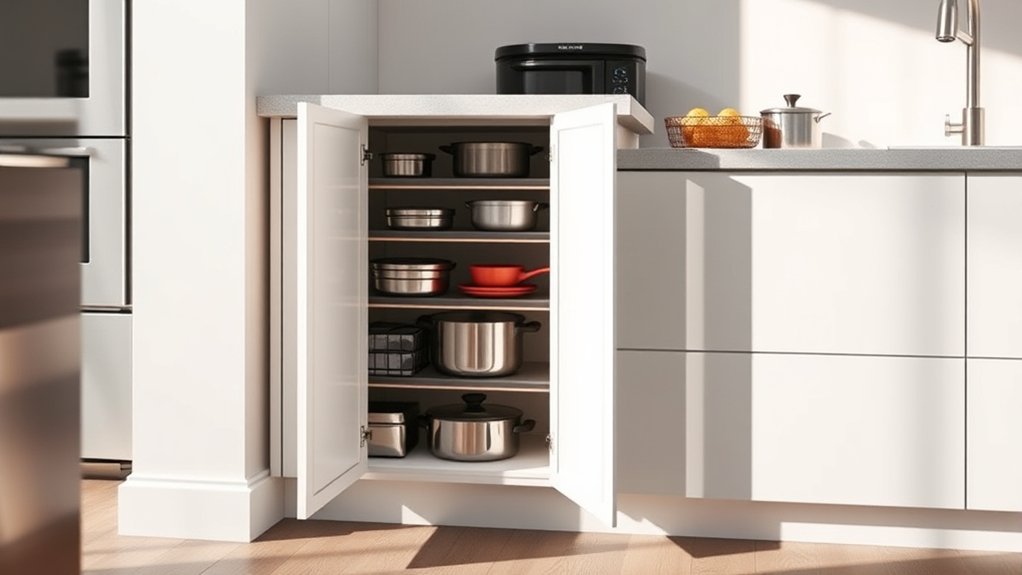
You’ll want to choose a base cabinet depth that fits your storage needs without crowding your kitchen. Standard depths typically range from 24 to 30 inches, balancing accessibility and capacity.
Consider how much space you need to maximize storage while keeping your workflow smooth.
Standard Cabinet Depths
Standard base kitchen cabinets typically measure 24 inches deep, providing a practical balance between storage capacity and workspace efficiency. When considering cabinet dimensions, this depth supports maximum kitchen functionality without overcrowding your space.
You should note these common standard depths:
- 24 inches: The most prevalent depth, ideal for most kitchens to maximize countertop workspace and accommodate standard appliances.
- 12-15 inches: Often used for shallow cabinets or kitchens with limited space, offering accessible storage for small items.
- 30 inches or more: Less common but available for specialized needs, providing extra storage without compromising flow.
Choosing the right standard depth guarantees your kitchen remains functional and visually balanced, aligning with your daily cooking and storage demands.
Maximizing Storage Space
Maximizing storage space hinges on selecting the right base cabinet depth tailored to your kitchen’s needs. If you opt for deeper cabinets, you gain more room for vertical storage, allowing you to neatly stack taller items without clutter.
Shallower cabinets, while space-saving, limit how much you can store but can be enhanced with pull out shelves to access items effortlessly. Consider how you use your kitchen: do you need space for large pots or prefer easy access to spices and utensils?
Benefits of Deeper Base Cabinets and When to Choose Them
Choosing deeper base cabinets can transform your kitchen’s storage capacity and functionality. They offer deeper storage and enhanced accessibility, making your daily tasks smoother.
You should consider them when:
- You need to store larger cookware or bulkier items without clutter.
- You want to reduce cabinet overcrowding by maximizing space efficiently.
- You prioritize easy access, as deeper cabinets often come with pull-out shelves or organizers.
Deeper base cabinets help keep your kitchen organized and visually balanced. They provide a seamless solution for storing everything from pots to pantry staples, minimizing the need for additional storage furniture.
When you choose them, you elevate both form and function, ensuring your kitchen feels spacious yet practical.
How Cabinet Depth Influences Kitchen Layout and Workflow
Three key ways cabinet depth shapes your kitchen layout and workflow are by affecting movement space, work zones, and storage accessibility. When you choose deeper cabinets, you must consider how much room remains for comfortable movement, ensuring your kitchen ergonomics support smooth circulation.
Shallow cabinets can create more open floor space, enhancing workflow efficiency by reducing obstacles. Cabinet depth also defines your work zones. Adequate depth allows for proper countertop space and appliance placement, streamlining meal prep and cleanup.
Finally, storage accessibility depends on cabinet depth; deeper cabinets hold more but may require more effort to reach items, while standard depths keep essentials within easy reach. Balancing these factors helps you design a kitchen that flows naturally and feels intuitively functional.
How to Customize Base Cabinet Depth to Fit Your Space
Customizing your base cabinet depth starts with measuring the available space and understanding your kitchen’s specific needs. This guarantees your custom cabinet designs fit perfectly and enhance functionality.
Accurate measurements and kitchen needs ensure your custom base cabinets fit seamlessly and function optimally.
To tailor your cabinets:
- Measure the wall depth and consider countertop overhang to determine maximum cabinet depth without crowding walkways.
- Choose adjustable shelving within the cabinets to maximize storage flexibility, adapting to varying item sizes.
- Decide if a shallower or deeper cabinet best suits your workflow, balancing storage capacity with ease of access.
Frequently Asked Questions
What Materials Are Commonly Used for Base Kitchen Cabinets?
Think of base kitchen cabinets like a sturdy ship built to weather storms. You’ll find wood types like oak, maple, and plywood, crafted with dovetail joints and plywood boxes, combining strength, beauty, and construction techniques for lasting function.
How Do Base Cabinet Depths Affect Cabinet Door Styles?
You’ll find that cabinet depth directly impacts door functionality and design aesthetics. Deeper cabinets need sturdier doors for support, while shallower ones allow sleeker styles, balancing practicality with a clean, elegant kitchen look.
Can Base Cabinet Depth Impact Kitchen Lighting Options?
Yes, your base cabinet depth directly influences lighting design and space perception. Deeper cabinets may require stronger or more strategically placed lights to avoid shadows. This enhances both function and the aesthetic openness of your kitchen space.
What Is the Average Cost Difference for Deeper Base Cabinets?
You might think deeper base cabinets cost double, but the cost comparison reveals only a 15-25% increase. Keep budget considerations in mind, balancing extra storage against slightly higher prices for functional, elegant kitchen design.
How Does Cabinet Depth Influence Cabinet Durability and Maintenance?
You’ll find cabinet depth influences stability factors, with deeper cabinets requiring stronger support. This affects maintenance routines, as you’ll need to inspect hinges and shelves more often to guarantee lasting durability and functional elegance.