How to Cook Ribs Without a Grill in 3 Easy Steps
To cook ribs without a grill, start by removing the membrane and seasoning them well. Adding mustard or liquid smoke can enhance the flavor and mimic that smoky taste. This simple preparation sets the stage for tender, flavorful ribs.
Next, wrap the ribs tightly in foil and bake them at 275°F for about 3 hours. This slow cooking method ensures the ribs become juicy and fall-off-the-bone tender. The foil traps moisture, making the ribs succulent without a grill.
Finally, brush your favorite BBQ sauce on the ribs and broil them briefly to caramelize the sauce. This step adds a delicious glaze and a hint of char.
With this easy three-step process, you can enjoy mouthwatering ribs anytime without needing a grill.
Key Takeaways
- Remove the membrane from the ribs and season generously with salt, pepper, and optional spice rubs for flavor.
- Wrap the ribs tightly in aluminum foil to retain moisture and cook at 275°F for 2½ to 3½ hours.
- Unwrap ribs, apply BBQ sauce, and broil for a few minutes to caramelize and create a sticky glaze.
- Use liquid smoke in seasoning or mustard for a smoky flavor without grilling.
- Let ribs rest after cooking to maintain juiciness before slicing and serving.
Preparing the Ribs for Oven Cooking

To prepare your ribs for oven cooking, start by removing the thin membrane on the back—you can slide a knife underneath and pull it off with pliers or paper towels for a firmer grip. Removing this membrane is key to ensuring your ribs turn out tender.
Once the membrane’s off, you’ll want to season the ribs generously on both sides with salt and pepper to bring out their natural flavors. If you like, add a BBQ spice rub for an extra kick. For better spice adherence and a subtle tang, spread a thin layer of mustard over the ribs before seasoning.
To boost smoky flavor without a grill, mix some liquid smoke into the mustard or directly into your seasoning blend. Finally, if the ribs are too large, cut them into manageable sections. This makes handling easier and helps them cook evenly in your oven, setting you up for delicious, tender results.
Baking Ribs to Tender Perfection

Though it takes some patience, baking ribs low and slow guarantees they turn out tender and flavorful. Start by removing the membrane from the back of the ribs and generously seasoning both sides with salt, pepper, and your favorite BBQ rub.
Then, wrap the ribs tightly in aluminum foil to lock in moisture.
Follow these steps for fall off the bone, tender ribs:
- Place the ribs in foil on a baking sheet and cook at 275°F for 2½ to 3½ hours. Keep an eye on the internal temperature; it should reach 190-205°F for perfect tenderness.
- After baking, unwrap the ribs and slather them with sauce.
- Broil the ribs for a few minutes to caramelize the sauce and add a sticky, flavorful finish.
Let the ribs rest before cutting to keep them juicy and delicious.
Finishing With Flavorful BBQ Sauce
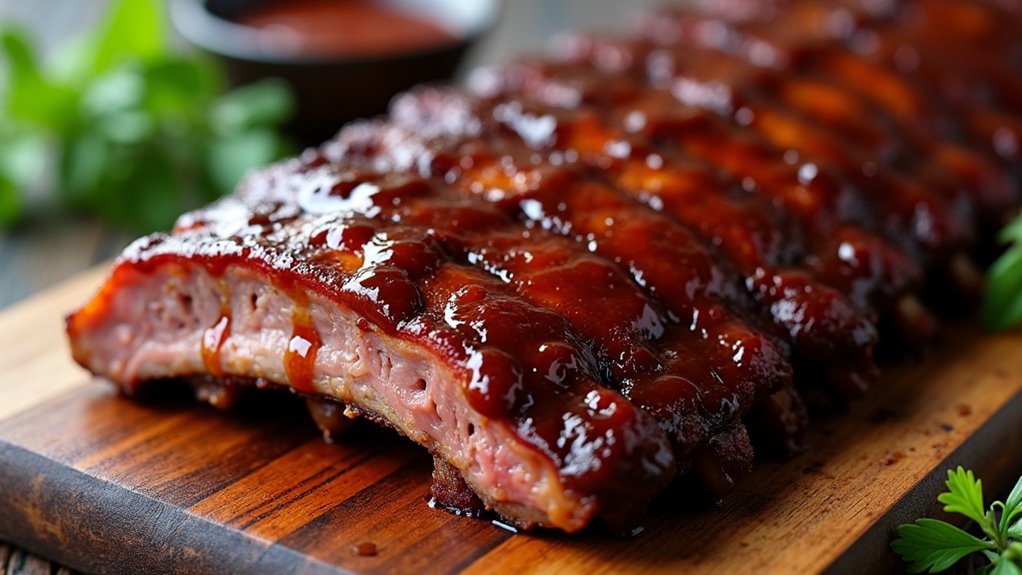
Once your ribs have baked to tender perfection, it’s time to add a burst of flavor with a delicious BBQ sauce. During the last 30 minutes of cook time, brush a homemade BBQ sauce—perhaps one with apple cider vinegar and a touch of liquid smoke—onto the ribs in the oven. This step helps the sauce caramelize, creating a sticky glaze that locks in moisture and flavor.
For extra depth, try a sweet and spicy BBQ sauce or experiment with different spice rubs to find your favorite combination. After baking, apply another layer of sauce and broil the ribs briefly until bubbly and slightly charred. These techniques make your ribs fall off the bone and deliver an easy and delicious finish.
Whether you use store-bought or homemade BBQ sauce, this final step turns simple ribs into a mouthwatering dish full of rich, layered flavors that rival any grilled recipe.
Best Types of Ribs to Cook Without a Grill
Cooking ribs without a grill is not only possible, it can be incredibly satisfying when you choose the right cuts. Some ribs naturally perform better in ovens, slow cookers, or pressure cookers because of their fat content, bone structure, and meat thickness. These factors help the ribs stay juicy, tender, and flavorful even without open flames. By understanding which ribs adapt best to indoor cooking methods, you can still achieve fall-off-the-bone results with rich flavor and satisfying texture using simple kitchen equipment.
Baby Back Ribs
Baby back ribs are one of the most popular choices for cooking without a grill, especially in the oven. They come from the upper part of the ribcage and are naturally tender with less connective tissue than other cuts. This makes them ideal for low-and-slow baking, where gentle heat slowly breaks down the meat fibers without drying them out.
When cooked indoors, baby back ribs respond well to foil wrapping, which locks in moisture and allows seasonings or sauces to penetrate deeply. Their leaner meat benefits from controlled heat, making ovens and slow cookers excellent options. Because they cook faster than larger rib cuts, they are also a great choice if you want flavorful ribs without spending an entire day in the kitchen.
Spare Ribs
Spare ribs are larger, meatier, and richer in fat, making them another excellent option for cooking without a grill. Their higher fat content helps keep the meat moist during long cooking times, which is perfect for oven roasting or slow cooking. This extra fat melts gradually, creating deep flavor and a tender bite when cooked properly.
Indoor cooking methods allow spare ribs to soften beautifully without the risk of flare-ups that often occur on a grill. They are especially well-suited for braising or slow roasting with a liquid base, which enhances both texture and taste. While they take longer to cook than baby back ribs, the payoff is a hearty, satisfying rib with bold flavor and a rich mouthfeel.
St. Louis–Style Ribs
St. Louis–style ribs are essentially trimmed spare ribs, offering a more uniform shape that cooks evenly without a grill. This consistency makes them easier to manage in ovens and roasting pans, where even heat distribution is key. Their balanced ratio of meat to fat allows them to stay juicy while still developing a tender texture.
These ribs work particularly well when baked low and slow, then finished uncovered to develop a caramelized surface. Because of their flat, rectangular shape, they absorb marinades and dry rubs evenly, making indoor seasoning more effective. If you want ribs that look neat, cook evenly, and deliver bold flavor, St. Louis–style ribs are a reliable indoor-friendly option.
Country-Style Ribs
Country-style ribs are not true ribs but thick, meaty cuts taken from the shoulder or loin area. Their high meat content makes them perfect for indoor cooking methods like slow cookers, Dutch ovens, or pressure cookers. Since they are less dependent on smoke flavor, they adapt well to oven-based recipes.
These ribs shine when cooked in sauces or broths that keep the meat moist and tender over time. Because they resemble pork chops in thickness, they are easier to portion and serve. Country-style ribs are ideal if you prefer a meatier bite and want ribs that cook well without needing constant attention or specialized equipment.
Common Mistakes to Avoid When Cooking Ribs Indoors
Cooking ribs indoors can deliver tender, flavorful results, but small missteps can quickly ruin the experience. Without the forgiving nature of a grill, ovens and slow cookers demand more attention to timing, moisture, and preparation. Many people unknowingly rush the process or overlook key steps that help ribs stay juicy and soft. By avoiding common indoor-cooking mistakes, you can turn tough, dry ribs into a satisfying meal that tastes carefully prepared rather than hurried or overlooked.
Cooking Ribs at Too High a Temperature
One of the biggest mistakes when cooking ribs indoors is using high heat to speed things up. Ribs contain connective tissue that needs time to break down slowly. High temperatures cause the meat to tighten quickly, resulting in tough, chewy ribs instead of tender ones. Indoor methods rely on patience more than intensity.
Low-and-slow cooking allows fat to render properly and moisture to remain trapped inside the meat. Whether using an oven or slow cooker, gentle heat ensures even cooking. Rushing the process may save time, but it often sacrifices texture and flavor, leaving you disappointed with the final result.
Skipping the Foil or Moisture Step
Another common mistake is cooking ribs uncovered for too long. Without a grill’s indirect heat and airflow, indoor ribs can dry out quickly. Foil wrapping or adding a liquid element helps create a moist environment that protects the meat during extended cooking times.
Skipping this step prevents steam from circulating, which slows down the tenderizing process. A small amount of broth, apple juice, or sauce can make a significant difference. Moisture not only prevents dryness but also enhances flavor absorption, helping seasonings penetrate deeper into the meat.
Not Allowing Enough Rest Time
Many people slice into ribs immediately after cooking, which is a mistake that affects texture and juiciness. Resting allows the juices to redistribute throughout the meat instead of spilling out onto the cutting board. Indoors, this step is especially important because ribs rely on retained moisture.
Allowing ribs to rest for even ten minutes improves tenderness and flavor balance. Skipping this step often results in drier meat and uneven texture. Rest time may seem unnecessary, but it plays a crucial role in delivering ribs that feel well-cooked rather than rushed.
Best Sauces and Sides for Ribs
Ribs are rich, savory, and satisfying on their own, but the right sauces and sides can elevate the entire meal. Whether you prefer bold, smoky flavors or lighter, refreshing pairings, thoughtful combinations help balance the heaviness of the meat. Sauces add moisture and depth, while sides provide contrast in texture and taste. When ribs are cooked indoors, these pairings become even more important, helping recreate that full, restaurant-style experience at home.
Classic and Flavorful Rib Sauces
Barbecue sauce is the most traditional choice for ribs, offering a balance of sweetness, tanginess, and spice. Thick sauces cling well to ribs and caramelize beautifully in the oven, creating a glossy finish. Variations like honey barbecue or spicy barbecue allow you to adjust the flavor to suit your preference without overpowering the meat.
For those who want something different, vinegar-based or mustard-style sauces provide a sharper contrast to rich ribs. These sauces cut through fat and add brightness, especially when ribs are slow-cooked indoors. A light glaze or finishing brush can enhance flavor without masking the natural taste of the pork.
Comforting and Hearty Side Dishes
Hearty sides pair naturally with ribs, creating a filling and balanced plate. Mashed potatoes, baked beans, or mac and cheese complement the savory depth of ribs while adding comforting textures. These sides work especially well with oven-baked ribs, as they share similar warmth and richness.
Cornbread is another popular option, offering a slightly sweet flavor that balances smoky or spicy sauces. Roasted vegetables also fit well, providing a subtle crunch and earthy taste. These sides help round out the meal, making ribs feel complete rather than overly heavy.
Fresh and Lighter Pairings
Lighter sides help offset the richness of ribs, especially when served with thick sauces. Coleslaw adds crunch and acidity, refreshing the palate between bites. A vinegar-based slaw works particularly well, keeping the meal from feeling too rich.
Salads with crisp greens, cucumbers, or tomatoes also pair nicely with ribs. Simple dressings enhance freshness without competing with bold flavors. Adding lighter sides creates balance, ensuring ribs remain the star while every bite feels enjoyable and satisfying.
Frequently Asked Questions
How to Cook Ribs if You Don’t Have a Grill?
If you don’t have a grill, you can still achieve great meat tenderness by baking ribs low and slow. Start by selecting your rib cuts, then apply rib marinades or dry rubs to boost flavor profiles. Use foil to lock in moisture and cook for 2½ to 3½ hours.
Finish with your favorite sauce recipes under the broiler. Try classic side dishes like coleslaw or potato salad for perfect serving suggestions.
Can You Make Ribs in the Oven?
Yes, you can make oven ribs that turn out tender and flavorful. Start with proper meat preparation by removing the membrane and applying your favorite rib seasoning or rib marinades for flavor infusions. Use cooking techniques like wrapping ribs in foil and baking at low temperatures, paying attention to baking times—usually 2 ½ to 3 ½ hours.
Finish with sauce options like BBQ sauce, then broil briefly. Serve with your favorite sides for a perfect meal.
How to Cook Ribs in the Oven Fast With Foil?
Set your oven temperature to 275°F for fast cooking. Remove the membrane, apply rib seasoning generously for flavor infusion, then wrap ribs tightly in foil.
Depending on rib types, bake for 2 ½ to 3 ½ hours to achieve meat tenderness. Unwrap, apply sauce, and broil briefly for caramelization.
Let ribs rest before serving to lock in juices. Serve with your favorite sides for a delicious meal without a grill.
How Can I Make Ribs on the Stove?
Think of making ribs on the stove as a dance: you start with ribs preparation techniques—seasoning or marinating with your favorite blends. Heat the pan, sear each side, locking in flavor.
Then, lower the heat for slow simmering, letting the sauce variations soak in. Choose your rib types wisely and cook 1.5 to 2 hours.
Pair with classic side dishes, and serve with a brush of BBQ sauce for a perfect finish.
Conclusion
Now that you know how to cook ribs without a grill, you can enjoy tender, flavorful ribs anytime in your oven.
Did you know Americans consume over 3 billion pounds of pork ribs annually? With this simple method, you’re joining a huge community of rib lovers who don’t need a grill to savor that smoky, fall-off-the-bone goodness.
So grab your ribs, follow these easy steps, and get ready to impress with delicious homemade BBQ ribs that rival any grilled version! Cooking ribs without a grill has never been easier or more satisfying.