How Long to Smoke Brisket on a Pellet Grill Step by Step
You’ll want to smoke your brisket low and slow on a pellet grill, usually about 1 to 1.5 hours per pound at 225°F. This method ensures the meat cooks evenly and absorbs that signature smoky flavor.
Start by trimming and seasoning it well.
Then, smoke the brisket until the internal temperature hits around 165°F. At this point, wrap it to retain moisture and tenderness. Increase the heat to boost the cooking process for the final phase.
Pull the brisket off the grill when it reaches 203°F. Let it rest for a while before slicing it against the grain to maximize tenderness.
Keep going for tips to perfect each step and get that tender, flavorful bite.
Key Takeaways
- Smoke the brisket at 200°F initially until it reaches an internal temperature of 165°F, usually several hours depending on size.
- Increase the pellet grill temperature to 225°F and continue cooking until the brisket hits 175°F.
- Wrap the brisket in butcher paper at 175°F to preserve bark and improve tenderness.
- Optionally raise the temperature to 250°F or 275°F during the final phase to speed up cooking.
- Remove brisket when internal temperature reaches about 203°F, then rest for at least two hours before slicing.
Choosing the Right Brisket for Smoking
When choosing the right brisket for smoking, you’ll want to pick a full packer brisket weighing between 12 and 18 pounds, as this size offers the perfect balance of meat and fat for flavor and tenderness. Look for good marbling throughout the meat, since the intramuscular fat enhances juiciness and enriches flavor during smoking. A thick fat cap is essential—it protects the brisket while cooking and slowly renders down, keeping the meat moist.
Opt for a USDA Choice grade brisket, which usually has superior marbling compared to Select grade, ensuring better tenderness and taste. Also, select a brisket with a uniform thickness to promote even cooking; uneven shapes or thin edges can dry out quickly or cook inconsistently. By focusing on these factors—full packer brisket size, marbling, thick fat cap, and USDA Choice grade—you’ll set yourself up for a flavorful, juicy, and tender smoked brisket every time.
Preparing and Trimming Your Brisket
Selecting the right brisket sets the stage, but how you prepare and trim it can make all the difference in the final result. Start trimming the brisket by removing excess fat, silverskin, and any loose flaps, aiming for a fat cap thickness of about a quarter-inch. Use a sharp knife to carefully trim away grayish meat around the edges to separate the muscles, enhancing both cooking and presentation.
Next, apply a binder like yellow mustard to help the seasoning stick evenly. Generously sprinkle your preferred rub—typically a blend of salt and pepper—over the entire surface without piling on too much. Once seasoned, let your brisket rest for at least 30 minutes to develop flavors; refrigerating it overnight can further intensify the taste.
This careful preparation guarantees your seasoned brisket cooks evenly and delivers that tender, flavorful bite you’re aiming for on your pellet grill.
Selecting the Best Wood Pellets for Flavor
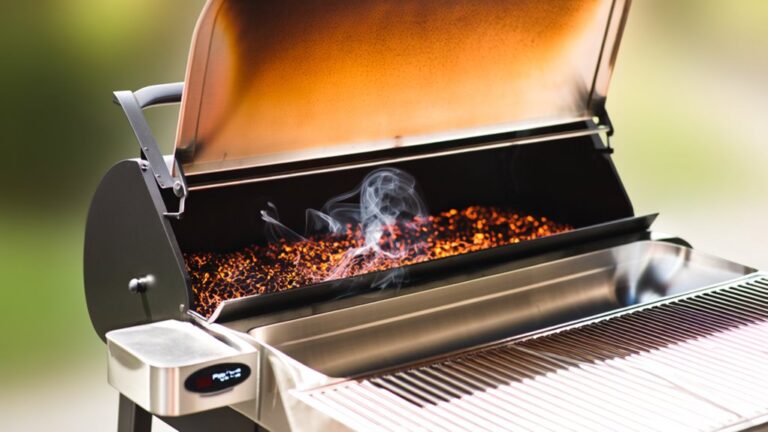
Although the type of wood pellets you choose might seem like a small detail, it plays a huge role in shaping the flavor of your smoked brisket. Hickory wood pellets deliver a bold, robust flavor that enhances the meat’s richness, making them a classic choice.
Choosing the right wood pellets significantly impacts your smoked brisket’s flavor, with hickory offering bold, rich notes.
If you prefer something more balanced, oak pellets offer a versatile smoke flavor that works well with brisket and other meats. For a milder, sweeter touch, pecan wood pellets provide a subtle nuttiness without overpowering the savory notes.
Fruitwood pellets like apple and cherry add a gentle sweetness and fruity aroma, boosting the complexity of your smoked brisket. Don’t hesitate to experiment by blending different wood pellets to create a unique smoke flavor that suits your taste.
Combining hickory with fruitwoods or even pecan can elevate your brisket’s natural richness, giving you a custom, memorable BBQ experience every time.
Setting Up Your Pellet Grill Temperature
To smoke brisket on your pellet grill, start by setting the temperature to 200°F for that low and slow cook. Once your brisket hits about 165°F internally, bump the heat up to 225°F to keep things moving.
If you’re short on time, you can raise the temperature to 250°F or 275°F to finish it off without sacrificing tenderness.
Ideal Temperature Range
When you set your pellet grill between 200°F and 225°F, you create the perfect environment for smoking brisket low and slow, which is key to achieving tender, flavorful meat. This temperature range allows for optimal smoking, ensuring the brisket cooks evenly without drying out.
Keep your pellet grill’s temperature consistent to avoid fluctuations that can affect your results. As you smoke a brisket, monitor its internal temperature closely, aiming for that ideal 203°F mark for perfect doneness. Once you wrap the brisket, you might increase the grill temperature slightly to help push it through the stall.
Maintaining a steady temperature and pellet supply throughout guarantees consistent results and a beautifully smoked brisket every time.
Temperature Adjustment Tips
Maintaining the ideal temperature range sets the stage, but knowing when and how to adjust your pellet grill’s heat can make all the difference in smoking brisket. Start by setting your pellet grill to 200°F to maximize smoke absorption during the initial smoking phase. Once your brisket’s internal temperature hits 165°F, increase the heat to 225°F and monitor closely as it cooks toward 175°F.
If you’re pressed for time, raise the temperature to 250°F or 275°F during the final phase to speed things up. Always keep an eye on the internal temperature, aiming for a final target of 203°F to guarantee peak tenderness. Adjust cooking time accordingly—typically 30-60 minutes per pound at 225°F.
These temperature adjustment tips help you master smoking brisket efficiently and deliciously.
Applying Rubs and Seasonings Properly
Although applying rubs and seasonings might seem straightforward, doing it properly can make a big difference in your brisket’s flavor and texture. Start by applying a binder like yellow mustard or Worcestershire sauce to help the rub stick better and enhance flavor absorption. Next, generously apply your rub, aiming for an even coating by shaking it from about 12 inches above the brisket.
A classic seasoning blend is a simple 50/50 mix of kosher salt and black pepper, though specialty rubs can add extra depth. If you’re using multiple rubs, apply finer seasonings first and avoid piling on too much so the meat stays visible. For the best results, season your brisket the night before and refrigerate it, allowing the flavors to meld deeply.
This careful prep guarantees your brisket will have a balanced, flavorful crust once smoked.
Smoking Brisket at Low Temperature (200°F)
If you want to achieve tender, flavorful brisket with a deep smoke profile, smoking it low and slow at 200°F is a perfect approach. For a 15-pound brisket, expect about 10-12 hours of smoking brisket at this low temperature. This slow cooking allows the collagen in the meat to break down gradually, enhancing tenderness and flavor.
Keep a close eye on the internal temperature, aiming for a final target of 203°F to guarantee the brisket is perfectly done. To maintain moisture during the long smoke, place a water pan in the smoker and plan to wrap brisket once it hits around 165°F, which helps prevent drying out. Using a pellet grill simplifies maintaining this consistent low temperature, making it ideal for overnight cooking.
This method gives you a hands-off experience while producing a moist, tender brisket with a rich smoke flavor.
Wrapping Techniques and When to Wrap
Once your brisket hits around 160-170°F and has developed a good bark, it’s time to wrap it to lock in moisture and push through the stall. You have two main options: wrapping brisket in foil or using butcher paper. Foil traps more moisture, speeding up cooking, but can soften the bark.
Butcher paper, on the other hand, preserves bark quality while still retaining moisture, offering ideal flavor. It’s essential not to wrap too early, as that can ruin the bark you’ve worked hard to build. When the internal temperature reaches this range, wrap your whole packer brisket tightly.
After wrapping, continue to smoke a brisket until the temperature of the meat hits about 203°F. Once done, you’ll want to rest the brisket for at least an hour to allow the juices to redistribute evenly. This final rest guarantees the meat remains juicy and tender when sliced.
Increasing Temperature for Final Cooking Phase
As your brisket passes 165°F, it’s time to raise the pellet grill temperature to 225°F to keep the cooking steady until the internal temp hits 175°F. This controlled temperature increase guarantees the meat remains moist while enhancing bark development. Once at 175°F, you can wrap in butcher paper to preserve that flavorful bark and boost tenderness during the final cooking phase.
Raise the grill to 225°F at 165°F, then wrap at 175°F to lock in moisture and flavor.
Here’s what to do next:
- Gradually increase the pellet grill temperature to 225°F after 165°F is reached.
- Wrap the brisket in butcher paper at 175°F to maintain bark and moisture.
- Optionally, raise the grill temperature to 250°F or 275°F for the final phase, aiming for a tender brisket with an internal temperature near 203°F.
Constant monitoring of the internal temperature is key, as cooking times vary by size. These temperature increases balance tenderness with a flavorful bark, delivering a perfectly smoked brisket every time.
Checking Internal Temperature for Doneness
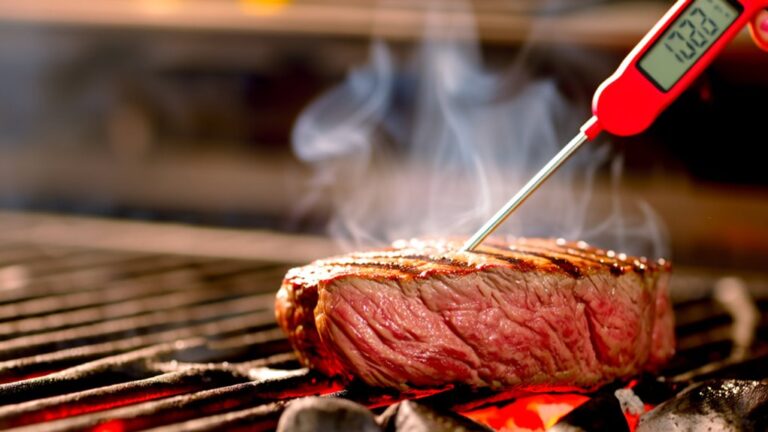
How do you know when your brisket is perfectly done? The key lies in checking internal temperature with an accurate thermometer. Use a Thermoworks Instant Read Thermometer and insert the probe into the thickest part of the brisket, avoiding bone or fat.
Your target internal temperature is 203°F for ideal tenderness. As you’re smoking the brisket, monitor the brisket closely since cooking time varies—usually 30 to 60 minutes per pound at 225°F. Be patient during the “stall” around 160°F when the temperature plateaus.
Check the temperature every 1.5 to 2 hours for the best results.
| Temperature Range | What Happens | Action Needed |
|---|---|---|
| Below 160°F | Brisket warming up | Keep smoking |
| Around 160°F | Stall (plateau) | Be patient, monitor |
| 160°F – 200°F | Cooking continues | Check regularly |
| 203°F | Target internal temp | Remove from grill promptly |
Resting and Slicing Your Smoked Brisket
Once your brisket comes off the pellet grill, you’ll want to let it rest for at least two hours to let the juices redistribute and enhance tenderness. Wrapping it and placing it in a cooler can keep it warm for even longer without drying out.
When it’s time to slice, cutting against the grain with thin, pencil-sized slices will give you the best texture and flavor.
Importance of Resting
While it might be tempting to slice your smoked brisket right off the grill, letting it rest for at least two hours is essential to locking in moisture and flavor. When you let the brisket rest, the juices redistribute throughout the meat, enhancing flavor and tenderness. Top BBQ joints often rest briskets wrapped in foil or in a cooler wrapped to maintain internal temperature for ideal results.
To properly rest your brisket:
- Keep it wrapped and place it in a cooler or warming device to hold heat.
- Rest for a minimum of two hours, up to eight if possible.
- Slice brisket just before serving, cutting against the grain for maximum tenderness.
This vital step guarantees every slice stays juicy and flavorful.
Proper Slicing Techniques
Even after letting your smoked brisket rest properly, slicing it the right way is essential to preserving its tenderness and flavor. After resting for at least 2 hours or up to 8 hours at 140°F, use a long, sharp knife to slice against the grain. Start with the flat portion, then rotate the brisket 90° to cut the point, guaranteeing each slice follows the grain’s direction.
This technique maximizes tenderness and enhances presentation with pencil-thin slices. Remember to slice only when you’re ready to serve to minimize moisture loss. For leftovers, vacuum seal your brisket to lock in flavor and moisture, then reheat gently.
Mastering these cutting techniques guarantees your smoked brisket stays juicy, tender, and delicious every time.
Frequently Asked Questions
How Long to Smoke Brisket at 225 on a Pellet Grill?
You’ll want to smoke brisket at 225°F for about 30 to 60 minutes per pound. So, if you’ve got a 10-pound brisket, expect around 6 to 9 hours; a 15-pound one might take 10 to 12 hours.
Keep a close eye on the internal temperature, aiming for 203°F to get that perfect tenderness. Remember to maintain steady heat and check on your brisket regularly to develop that beautiful bark.
What Is the 3/2-1 Brisket Rule?
The 3/2-1 brisket rule means you smoke your brisket unwrapped for 3 hours, then wrap it in foil or butcher paper and cook for 2 more hours, and finally let it rest for 1 hour before slicing.
This method helps create a nice bark while keeping the meat juicy and tender. Remember, it’s a guideline—you should still check the internal temperature and texture to get the best results.
How Long Will It Take to Smoke a 15LB Brisket at 225?
Smoking a 15 lb brisket at 225°F is like watching a slow, steady river carve a canyon—it takes patience and time. You’re looking at about 10 to 12 hours, roughly 30 to 40 minutes per pound. When the internal temp hits 203°F, your brisket’s ready to reveal its tender secrets.
Keep an eye on it around 160°F—you might need to wrap it to keep the moisture flowing. Don’t rush the rest afterward!
How Long to Smoke 4 Lb Brisket at 250 Degrees?
Smoking a 4 lb brisket at 250°F usually takes about 4 to 6 hours. You’ll want to keep an eye on the internal temperature, aiming for around 203°F for perfect tenderness. Don’t wrap it too early—wait until it hits about 160°F to develop that nice bark.
After smoking, let it rest for at least an hour so the juices redistribute. Using a meat thermometer will help you nail the timing perfectly.
Conclusion
So, you’ve mastered picking the perfect brisket, nailed the rub, and babysat your pellet grill like a pro—only to realize smoking brisket is part patience, part science, and all about resisting the urge to peek every five minutes.
Remember, the clock’s just a suggestion; your brisket decides when it’s done. So, trust your thermometer, embrace the wait, and prepare to slice into smoky perfection that’s worth every minute you spent obsessing.
When it comes to how long to smoke brisket on a pellet grill, patience and attention are key. Follow these steps carefully, and your brisket will come out tender, juicy, and full of that delicious smoky flavor you’re aiming for.