How Long to Grill Ribs in Foil for Tender Results
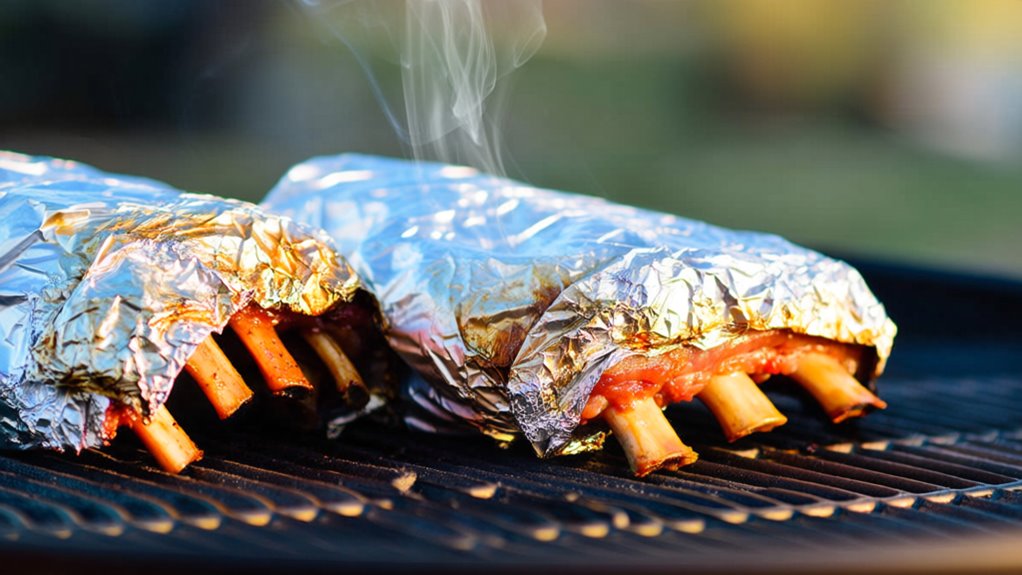
To get tender ribs, you’ll want to grill ribs in foil for about two hours at a steady low temperature between 225°F and 250°F. Grilling ribs wrapped in foil locks in moisture and helps break down collagen, making them juicy and tender. This method is key for achieving fall-off-the-bone results.
Wrap the ribs tightly in foil to trap steam and juice during cooking. Flip the foil packets halfway through grilling to ensure even heat distribution.
After this slow, gentle heat, your ribs will be deliciously tender and ready to enjoy.
If you want to take your ribs even further, consider finishing them unwrapped on the grill for a few minutes to develop a smoky crust. This adds extra flavor and texture that complements the tender meat inside.
Key Takeaways
- Grill ribs wrapped in heavy-duty foil for about 2 hours to lock in moisture and tenderize the meat effectively.
- Maintain grill temperature between 225°F and 250°F for low and slow cooking during the foil-wrapped phase.
- Flip the foil packets halfway through cooking to ensure even heat distribution and tenderness.
- After removing from foil, ribs should bend easily and meat should pull back from the bone for optimal tenderness.
- Let ribs rest wrapped in foil for 5 to 10 minutes after grilling to redistribute juices and enhance tenderness.
Understanding Different Types of Ribs
Although all ribs might seem similar at first glance, knowing the differences between baby back ribs, spareribs, St. Louis-style ribs, and country-style ribs can help you master cooking the ribs perfectly. Baby back ribs are smaller, usually 2 to 2½ pounds, and easier to cook evenly, making them a favorite for quick grilling sessions.
On the other hand, spareribs are larger and meatier but need more patience, requiring about 5-6 hours of low and slow cooking to become tender. St. Louis-style ribs are just trimmed spareribs, with a uniform shape that also benefits from the low and slow method.
Country-style ribs come from the shoulder, offering more meat but differing in cooking times compared to traditional ribs. Understanding these distinctions guarantees you pick the right ribs and adjust your cooking times and techniques accordingly for the best results every time you grill.
Preparing Ribs for Grilling
Before you fire up the grill, you’ll want to prepare your ribs properly to assure they cook evenly and absorb maximum flavor. Start by removing the silver skin from the back of the ribs using a butter knife and paper towel; this makes them more tender and helps the seasoning penetrate better. Trim any excess fat, then cut each rack into smaller sections for easier handling and even cooking on the grill.
Next, apply your seasoning generously, making sure every inch of the ribs is covered. After seasoning, wrap each rack tightly in heavy-duty foil to lock in moisture during grilling. Preheat your grill to 325°F, then place the foil-wrapped ribs directly on the grill grates.
Maintaining this temperature throughout the cooking process assures your ribs cook slowly and become tender without drying out. For added flavor, you can spread a thin layer of mustard mixed with liquid smoke under the seasoning before wrapping the ribs in foil. With proper preparation, you’re set for perfectly grilled, flavorful ribs every time.
Essential Dry Rub Ingredients for Flavor
When you’re seasoning ribs, getting the right balance of salt and spices is key to releasing great flavor. Using kosher salt, paprika, garlic, thyme, and just a touch of black pepper not only seasons the meat but also helps tenderize it.
This simple combination guarantees your ribs come out juicy and full of depth every time.
Key Dry Rub Components
A well-crafted dry rub is essential to bringing out the best flavors in your ribs. The right blend not only enhances taste but also aids in breaking down connective tissue, helping you achieve tender ribs at the ideal internal temperature.
Here’s a simple breakdown of important dry rub ingredients:
| Ingredient | Amount |
|---|---|
| Kosher Salt | 1 tablespoon |
| Paprika | 2 teaspoons |
| Granulated Garlic | 2 teaspoons |
| Dried Thyme | 2 teaspoons |
| Ground Black Pepper | ½ teaspoon |
Kosher salt is vital for seasoning and tenderizing, while paprika adds sweetness and color. Garlic and thyme deepen the flavor, and black pepper introduces subtle heat, balancing the rub perfectly for your foil-grilled ribs.
Balancing Spice and Salt
Though it might seem simple, balancing spice and salt in your dry rub is essential to revealing the full flavor of your ribs. Using about 1 tablespoon of kosher salt helps enhance the natural taste while keeping moisture locked in.
Pair that with 2 teaspoons each of paprika, garlic powder, and thyme, and you’ll build a flavorful, well-rounded rub. Paprika adds a mild sweetness and vibrant color, garlic powder deepens the savory notes, and thyme brings a subtle earthiness.
Here’s a quick guide to balancing those flavors:
- Salt: amplifies flavor and retains moisture
- Paprika: adds sweetness and color
- Garlic powder and thyme: provide savory depth and earthy balance
Getting this balance right makes your ribs taste incredible without overpowering their natural richness.
Enhancing Meat Tenderness
Balancing spice and salt in your dry rub does more than just flavor your ribs—it also helps tenderize the meat. Salt breaks down proteins, locking in moisture for juicy tenderness as you cook. Paprika adds sweetness and color, while granulated garlic’s enzymes further soften the meat.
Dried thyme rounds out the rub with its earthy aroma, complementing pork’s richness. Using a meat thermometer guarantees you cook ribs perfectly tender without overdoing it.
| Ingredient | Role in Tenderness | Flavor Contribution |
|---|---|---|
| Kosher Salt | Breaks down proteins | Enhances juiciness |
| Paprika | Adds subtle sweetness | Deepens color |
| Granulated Garlic | Enzymatic tenderizer | Boosts savory notes |
| Dried Thyme | Supports overall flavor | Earthy, aromatic taste |
Setting Up Your Grill for Foil-Wrapped Ribs
Before you place your foil-wrapped ribs on the grill, make certain it’s preheated to a steady 325°F for even cooking. Arrange the foil packets on the cooler side of the grill to avoid direct flames and keep the heat gentle.
This setup helps lock in moisture and guarantees your ribs come out tender and juicy.
Preparing Grill Temperature
To get the best results when grilling ribs in foil, you’ll want to set your grill to a steady 325°F. First, preheat your grill thoroughly to reach a consistent temperature before placing your foil-wrapped ribs. Achieving indirect heat is key—on a gas grill, turn all burners to low and leave one off; on charcoal, push coals to one side.
This gentle heat cooks ribs evenly without burning. Keep the temperature steady throughout cooking to guarantee tender meat.
Here are some tips to prepare your grill temperature:
- Use a water pan under the ribs to maintain humidity.
- Avoid opening the grill frequently to prevent temperature drops.
- Add soaked wood chips to your coals or smoker box for extra smoky flavor.
Arranging Foil Packets
Start by cutting your rack of ribs into smaller sections, usually halves or thirds, to make handling and cooking easier. Prepare large heavy-duty foil sheets and drizzle the ribs with olive oil before applying your dry rub. Wrap each section tightly in foil packets to lock in moisture and guarantee even cooking.
Preheat your grill to 325°F for a stable temperature throughout the cooking process. Arrange the foil packets on the grill with enough space between them to allow heat circulation, avoiding overcrowding for consistent results.
| Foil Packet Size | Rib Section | Placement Tips |
|---|---|---|
| Large | Half rack | Leave space between |
| Medium | Third rack | Avoid direct flames |
| Tight wrap | All sizes | Seal edges firmly |
This setup guarantees tender, flavorful ribs in foil with even cooking.
The 3-2-1 Method Explained
The 3-2-1 method breaks down rib grilling into three simple phases that make achieving tender, flavorful ribs easier than you might think. First, you cook the ribs unwrapped for 3 hours at a low temperature, developing a deep smoky flavor. Then, you wrap them in foil for 2 hours, which steams the ribs in their juices, ensuring tender meat.
The 3-2-1 method makes tender, flavorful ribs easy by combining smoking, steaming, and caramelizing in three simple steps.
Finally, you unwrap the ribs and grill them for 1 hour, often brushing on barbecue sauce to create a perfect caramelized finish.
Here’s the 3-2-1 method in summary:
- 3 hours unwrapped: Build smoky flavor and color.
- 2 hours in foil: Tenderize meat by steaming it.
- 1 hour unwrapped: Caramelize sauce and add char.
This cooking process is great for spareribs and baby back ribs, giving you ribs that fall off the bone or slice cleanly every time.
Maintaining Optimal Cooking Temperatures
Although it might be tempting to frequently check on your ribs, keeping your grill temperature steady between 225°F and 250°F is key to ensuring they cook evenly and stay juicy throughout the process. Cooking ribs over low heat wrapped in foil locks in moisture, helping you achieve those tender ribs everyone loves. Avoid opening the grill too often, as this causes temperature fluctuations that can extend cooking time and dry out your meat.
For best results, wrap your ribs in foil and cook them for about two hours, flipping the foil packet halfway through to promote even heat distribution. Aim for an internal rib temperature between 190°F and 203°F for perfect tenderness. By maintaining a consistent low heat and using foil, you’ll make sure your ribs come out succulent, tender, and full of flavor every time.
Signs Your Ribs Are Done
How do you know when your ribs are perfectly cooked? Recognizing the signs your ribs are done is key to achieving tender, flavorful results. First, check the internal temperature—the ribs are done when they reach between 190–203°F, ensuring they’re juicy and tender.
Beyond the thermometer, there are other clear signs of doneness to look for. The meat pulls back from the bone, revealing tender ribs ready to eat. When you pick up the ribs with tongs, they should bend easily and start to crack without breaking apart.
The ribs feel floppy and flexible, not stiff, indicating they’ve reached the ideal tenderness.
Adding Sauce and Final Grill Time
Once your ribs have rested, it’s time to brush on a generous layer of barbecue sauce. Then, return them to the grill for a few minutes to let the sauce warm and set.
For a crispy finish, you can place the ribs directly on the grill grate before serving.
Applying Sauce Properly
After grilling your foil-wrapped ribs for about an hour to an hour and fifteen minutes, you’ll want to let them rest briefly before carefully opening the packets to avoid steam burns.
Next, it’s time to apply sauce generously. This step adds flavor and helps achieve that sticky, caramelized finish.
Remember to check that the ribs’ internal temperature is at least 145°F, ideally between 190–203°F for peak tenderness.
Here’s how to apply sauce properly:
- Carefully brush your favorite barbecue sauce over the ribs inside the foil.
- Return the foil-wrapped ribs to the grill for 3–5 minutes to warm and slightly caramelize the sauce.
- For extra crispiness, consider finishing the ribs directly on the grill grate after unwrapping.
This method guarantees a perfect balance of flavor and juiciness.
Final Grill Time
With the sauce brushed on generously, it’s time to give your ribs a final touch on the grill. After you’ve cooked the ribs in foil for about 1 hour, carefully open the packets to avoid steam burns and discard excess fat. Brush the ribs with barbecue sauce, then return them to the grill for the final grill time to warm the sauce—about 3 to 5 minutes.
For a crispy finish, place the ribs directly on the grill grate over direct heat for 10 to 12 minutes until lightly charred and sizzling. This step enhances flavor and texture. Remember, always aim for an internal temperature between 190–203°F to guarantee your ribs on the grill are perfectly tender and juicy before serving.
Tips for Achieving Perfect Rib Tenderness
Three key steps can help you achieve perfectly tender ribs when grilling in foil. First, maintaining a consistent temperature of 225°F to 250°F allows the ribs to cook evenly while retaining moisture inside the foil. Second, wrapping the ribs in foil during part of the cook helps break down collagen, improving tenderness without drying out the meat.
Finally, monitoring the internal temperature is essential; aim for 190°F to 203°F for ideal juiciness and tenderness.
To get the best results:
- Flip the foil-wrapped ribs halfway through cooking to guarantee even heat distribution and tenderness throughout the rack.
- Use the 3-2-1 method (3 hours unwrapped, 2 hours wrapped, 1 hour unwrapped) for balanced tenderness and flavor.
- Let the ribs rest in the foil for 5 to 10 minutes after grilling to redistribute juices and enhance tenderness before serving.
Following these tips will make your ribs consistently tender and mouthwatering every time.
Serving Suggestions and Pairings
When serving your grilled ribs, you’ll want to include sides that both complement and balance their rich, smoky flavor. A classic choice is coleslaw; its crisp texture and tangy taste cut through the richness of the ribs perfectly. Baked beans are another excellent pairing, offering a hearty, slightly sweet contrast that enhances the barbecue experience.
Don’t forget to provide extra barbecue sauce on the side, so everyone can adjust the flavor to their liking. For a touch of sweetness, consider adding cornbread—it pairs beautifully with the smoky ribs and baked beans. If you want something lighter, a revitalizing salad can cleanse the palate and add a fresh contrast to the tender, juicy ribs.
These thoughtful pairings will elevate your meal, transforming your grilled ribs into a satisfying and well-rounded feast.
Frequently Asked Questions
How Long Do You Cook Ribs Wrapped in Foil on the Grill?
You’ll want to cook ribs wrapped in foil on the grill for about 60 to 75 minutes, flipping them halfway through to guarantee even cooking.
If you’re after extra tenderness, you could extend the time up to 2 hours depending on your grill’s heat and rib size. Just make certain the internal temperature hits between 190 and 203°F for juicy, tender results.
Don’t forget to let them rest in the foil for a few minutes before unwrapping!
Does Wrapping Ribs in Foil Make Them More Tender?
Yes, wrapping ribs in foil definitely makes them more tender. When you wrap them, it traps moisture and steam, which helps break down the connective tissues in the meat. This prevents the ribs from drying out and keeps them juicy.
Plus, if you add some liquid or sauce inside the foil, it infuses even more flavor. So, foiling is a great trick to get tender, flavorful ribs every time.
Do Ribs Cook Faster in Aluminum Foil?
Yes, ribs do cook faster in aluminum foil. When you wrap them, the foil traps moisture and heat, creating a steaming effect that breaks down tough tissues quicker. This means you can get tender ribs in about 60-75 minutes instead of the longer traditional grilling time.
Just make certain to keep an eye on the internal temperature, aiming for 190–203°F to guarantee they’re perfectly tender and juicy.
How Long to Cook Ribs on a Gas Grill at 350 Degrees?
You’ll want to cook ribs on a gas grill at 350°F for about 60 to 75 minutes, flipping halfway through.
Did you know ribs reach maximum tenderness around 190°F to 203°F internal temperature? That’s when they’re juicy and fall-off-the-bone perfect.
Keep the grill steady, wrap the ribs in foil, and don’t rush them.
After grilling, let them rest five minutes before saucing to lock in all those delicious juices.
Conclusion
Now that you know how to wrap, grill, and wait, your ribs will come out fall-off-the-bone tender, like a melody melting in your mouth. Think of those foil-wrapped bundles as little flavor treasure chests, patiently cooking your way to smoky perfection.
Just remember, good things take time—so let the grill work its magic, and soon you’ll be biting into juicy, tender ribs that make every meal feel like a celebration. Perfectly cooked ribs in foil are the key to achieving that tender, flavorful bite.
Mastering how long to grill ribs in foil ensures your BBQ is always a hit, delivering mouthwatering results every time.