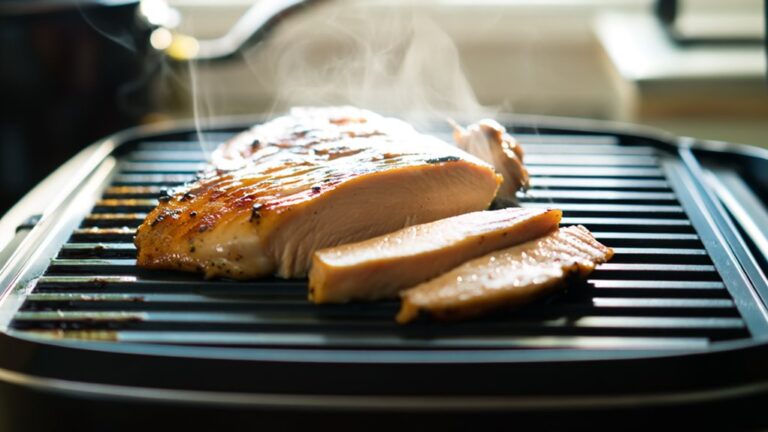
How Long to Grill Pork Loin on a Gas Grill With Step-By-Step Guide
You’ll want to grill your 2-5 pound pork loin on a gas grill using a two-zone setup—high heat on one side for searing and indirect heat on the other for cooking.
Mastering how long to grill pork loin on a gas grill ensures a juicy, flavorful meal every time. Start by searing the pork for about 5 minutes per side to lock in the juices.
Then, move it to indirect heat and cook for 20-30 minutes until the internal temperature hits 145°F. Use a meat thermometer to check for doneness accurately.
Let it rest for a few minutes to keep it juicy and tender.
This method guarantees a delicious, perfectly cooked pork loin. Keep following for a complete step-by-step guide to grilling pork loin perfectly.
Key Takeaways
- Preheat the gas grill to 300-350°F, setting up a two-zone cooking area with direct and indirect heat zones.
- Sear the pork loin over direct heat for about 5 minutes per side to develop a crust.
- Move the pork loin to indirect heat and grill for 20-30 minutes, maintaining 300-350°F until internal temperature reaches 145°F.
- Use an instant-read thermometer inserted into the thickest part to monitor doneness accurately.
- Let the pork loin rest for 15 minutes after grilling before slicing against the grain to retain juices and tenderness.
Understanding Pork Loin Vs Pork Tenderloin
When you’re choosing between pork loin and pork tenderloin, it’s important to know they’re quite different cuts. Pork loin is a larger cut from the pig’s back, weighing 2 to 5 pounds, and can be bone-in or boneless. Pork tenderloin, smaller and always boneless at about 1 pound, sits alongside the backbone.
These differences affect your cooking methods considerably. Pork loin benefits from two-zone grilling, which allows for slower cooking that enhances its tenderness and flavor profiles. In contrast, pork tenderloin cooks best quickly over high heat, preserving its juiciness and tender results.
Using pork loin in place of tenderloin isn’t ideal since their sizes and cooking requirements differ, impacting juiciness and flavor. Understanding these distinctions guarantees you choose the right cut for your recipe and grilling style, helping you achieve the best flavor profiles and tender results every time.
Essential Tools for Grilling Pork Loin
Grilling a pork loin properly requires more than just heat and time; having the right tools makes a significant difference in your results. First, an instant read thermometer is essential to check the internal temperature, ensuring your pork loin hits the safe 145°F mark. Before you start, use a grill brush to clean the grates—this prevents sticking and helps create those perfect grill marks.
When handling the pork loin on the grill, tongs are your best bet; they let you flip the meat without piercing it, keeping the juices locked in. A basting brush comes in handy if you want to add marinades or sauces during grilling, enhancing flavor and moisture throughout. Finally, once your pork loin is rested, a sturdy cutting board paired with a sharp knife allows you to slice the meat precisely, making for a neat and impressive presentation.
These tools are key to grilling success.
Preparing Your Pork Loin for the Grill
Before grilling, make sure to trim any silver skin or connective tissue from your pork loin to keep it tender. Next, pat it dry and apply a generous spice rub all over for flavor.
Letting the seasoned pork rest for about 30 minutes before cooking helps it cook more evenly.
Trimming and Cleaning
Since trimming away silver skin and excess fat can prevent toughness and promote even cooking, start by carefully removing these with a sharp knife. This step guarantees your pork loin cooks evenly and stays tender.
Next, lightly drizzle olive oil over the meat to lock in moisture and help any seasonings stick better.
Keep these tips in mind as you prep:
- Remove all silver skin for a tender result
- Trim excess fat but leave a thin layer for flavor
- Drizzle olive oil to enhance moisture
- If seasoning early, refrigerate and bring to room temperature before grilling
- Always clean grill grates thoroughly to prevent sticking and get a perfect sear
Following these steps will set you up for a deliciously grilled pork loin.
Applying Spice Rub
Start by drizzling olive oil over your pork loin to help the spice rub stick and lock in moisture. Make certain your pork is properly trimmed, removing any silver skin to enhance tenderness and flavor during grilling.
Generously season all sides with your spice rub, then pat it onto the meat instead of rubbing to keep the seasoning intact. This simple step maximizes flavor and guarantees an even coating.
| Step | Tip |
|---|---|
| Trimmed Pork | Remove silver skin |
| Olive Oil | Helps spice rub adhere |
| Spice Rub | Pat, don’t rub for best flavor |
Applying the seasoning this way preps your pork perfectly for the grill.
Pre-Grill Resting
While letting your pork loin rest at room temperature, you’ll confirm it cooks evenly on the grill. This vital pre-grill resting step helps the meat reach an ideal temperature, promoting even heat distribution. Before this, make certain you’ve trimmed any silver skin to avoid toughness.
Here’s a quick checklist to prepare your pork loin:
- Remove silver skin and connective tissue carefully
- Drizzle olive oil evenly to add moisture and help seasoning stick
- Apply your seasoning or spice rub generously, patting it onto the surface
- Let the pork loin sit at room temperature for about 30 minutes before grilling
- For deeper flavor, season up to 24 hours in advance and refrigerate until ready
These steps confirm your pork loin is perfectly prepped for a juicy and flavorful grill experience.
Setting Up Your Gas Grill for Two-Zone Cooking
To set up two-zone cooking on your gas grill, light the left burner(s) at medium or medium-high heat, leaving the right side unlit. This creates a hot zone for searing and a cooler zone for slow cooking.
Arranging your burners this way lets you control the cooking process perfectly for your pork loin.
Burner Configuration
Setting up your gas grill for two-zone cooking involves creating distinct heat areas by adjusting the burners. Proper burner configuration is key to achieving the right indirect heat for your pork loin. On a three-burner gas grill, light the left burner at medium-high, while on a four-burner, ignite the two left burners at medium to form your high heat zone.
Leave the right side unlit to provide indirect heat.
Remember to:
- Preheat the grill for about 5 minutes before cleaning and oiling the cooking grates
- Maintain a grill temperature between 300°F and 350°F for even cooking
- Use indirect heat to cook the pork loin thoroughly
- Monitor the internal temperature with a digital thermometer
- Aim for an internal temperature of 145°F after finishing over direct heat
This setup guarantees perfect grilling results every time.
Heat Zone Arrangement
Once you’ve arranged your burners correctly, you’ll create distinct heat zones that make two-zone cooking possible. On your gas grill, ignite the left burner at medium-high to establish direct heat, while leaving the right burner off for indirect cooking. For larger grills, adjust accordingly—use the left burner(s) for direct heat and keep the others off.
Preheat the grill for 10-15 minutes until it reaches 300-350°F. After preheating, clean and oil the cooking grates to prevent sticking and guarantee even cooking. Place the pork loin over the indirect heat zone, monitoring its internal temperature with a digital thermometer.
Aim for 145°F to achieve perfect doneness, letting the indirect cooking gently finish the process. This heat zone arrangement balances searing and slow cooking effectively.
How to Sear Pork Loin on a Gas Grill
Although it requires some preparation, searing pork loin on a gas grill is straightforward and rewarding. To get a perfect crust and lock in juices, you’ll start by heating your grill properly and seasoning the meat well.
Searing pork loin on a gas grill is simple with proper prep and seasoning for a juicy, flavorful crust.
Here’s how to sear pork loin on your gas grill:
- Preheat the gas grill on high for 10-15 minutes to guarantee the grates are hot enough for searing.
- Generously season the pork loin with your favorite rub or marinade for flavor and crust formation.
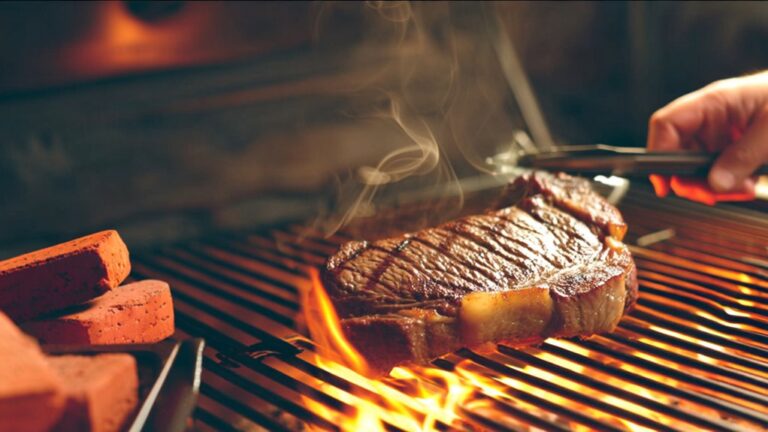
- Place the pork loin over direct heat and sear for about 5 minutes on each side until it’s golden brown.
- Use an instant-read thermometer to check the internal temperature, preventing overcooking.
- After searing, move the pork loin to indirect heat to finish cooking to 145°F, adjusting cooking time as needed.
This method guarantees a flavorful sear while setting you up for perfect doneness.
Indirect Grilling: Cooking Pork Loin to Perfection
When you grill pork loin indirectly, you cook it beside the heat source rather than right over it, which helps prevent burning and guarantees even cooking. Start by preheating the gas grill to 300-350°F, then place the pork loin in the indirect grilling zone. This method lets you grill pork tenderloin slowly and evenly, allowing the heat to circulate and cook from the residual warmth.
Check the internal temperature at around 30 minutes, aiming for 145°F to verify safety and tenderness. Once it hits the target temperature, sear the pork loin briefly over direct heat to develop a crispy exterior. After removing it from the grill, let the meat rest for 15 minutes; this step locks in juices and enhances flavor.
Indirect grilling is perfect for achieving juicy, perfectly cooked pork loin without the risk of burning or uneven cooking.
Using a Meat Thermometer for Accurate Cooking
To cook your pork loin perfectly, you’ll want to use a reliable meat thermometer, like a digital instant-read model for fast, accurate results.
Aim for an internal temperature of 145°F to guarantee it’s both safe and juicy.
Make certain to check the thermometer’s calibration before you start for the most precise reading.
Thermometer Types Overview
Since grilling pork loin to the perfect temperature is essential, using the right meat thermometer can make all the difference. A meat thermometer helps you monitor the internal temperature to reach the safe internal cooking temperature of 145°F. To get an accurate temperature reading, insert the thermometer into the thickest part of the meat, avoiding bones and fat.
Here are the main types you’ll encounter:
- Digital instant-read thermometers provide quick, precise readings.
- Probe thermometers stay in the pork loin during cooking for continuous monitoring.
- Some digital models have backlit displays and alerts for convenience.
Always calibrate your thermometer against boiling or ice water. Using the right thermometer guarantees perfectly cooked, juicy pork every time.
Proper Temperature Targets
Grilling pork loin to the perfect temperature hinges on hitting 145°F internally, which keeps it safe and juicy. To accurately check the temperature, use an instantly-read meat thermometer inserted into the thickest part of the grilled pork tenderloin, avoiding bones. Start cooking over high or medium-high heat, and around the 30-minute mark, check the temperature to monitor progress.
If your pork loin hits 130°F, move it to direct heat for searing until it reaches the target internal temperature of 145°F. Once done, it’s essential to rest for 15 minutes; this allows juices to redistribute, ensuring a flavorful and tender result. Relying on precise temperature targets and your thermometer takes the guesswork out of grilling.
Resting Your Pork Loin After Grilling
Although you’ve just finished cooking your pork loin, letting it rest for about 15 minutes is essential to keep it juicy and flavorful. Resting allows the internal temperature to rise slightly, reaching the perfect 145°F, ensuring safety and tenderness. During this time, the juices redistribute throughout the meat, preventing them from spilling out when you slice it.
Rest your pork loin 15 minutes to reach safe temperature and keep it juicy and flavorful.
To keep your tenderloin warm without steaming it, cover it loosely with aluminum foil. Once rested, slice against the grain to enhance tenderness and maximize flavor. Here’s what to remember during resting:
- Resting prevents juices from escaping, keeping the pork loin moist
- Internal temperature continues to rise slightly after grilling
- Cover loosely with foil to retain warmth without sogginess
- Slice against the grain for a tender bite
- Proper resting enhances both flavor and texture
Following these steps makes your grilled pork loin deliciously juicy and easy to enjoy.
Serving Suggestions for Grilled Pork Loin
Once your pork loin has rested and is perfectly juicy, it’s time to think about how you’ll serve it. Slicing the grilled pork loin into ¼-inch pieces not only enhances tenderness but also makes serving easier, especially for family-style meals.
For classic serving suggestions, pair your pork with creamy mashed potatoes and roasted vegetables to create a comforting, well-rounded plate. Adding fresh salads or grilled corn on the cob brings a revitalizing contrast that balances the richness of the meat.
Don’t forget to offer BBQ sauce, chimichurri, or tangy apple sauce on the side to complement the savory flavors of the grilled pork loin. If you have leftover grilled pork, get creative by incorporating it into sandwiches, salads, or stir-fries to enjoy delicious meals for days without waste.
These simple pairings will elevate your dining experience and showcase the versatility of grilled pork loin.
Tips for Achieving Juicy and Flavorful Results
If you want juicy and flavorful pork loin, start by seasoning it generously and letting it rest at room temperature for about 30 minutes before grilling. Use a dry rub to enhance the pork tenderloin’s flavor, then set up your gas grill for two-zone grilling—one side on medium-high for searing and the other on low for indirect heat.
- Sear the pork loin for 5 minutes per side over direct heat to develop a tasty crust.
- Move it to the indirect heat zone to cook evenly without burning.
- Monitor the internal temperature carefully, aiming for 145°F to keep the meat juicy.
- Remove from the grill once it hits the right temperature to avoid overcooking.
- Let the pork rest for 15 minutes so the juices redistribute, ensuring tenderness.
Following these tips will help you grill a moist, flavorful pork loin every time.
Frequently Asked Questions
How Long to Grill a Pork Loin on a Gas Grill?
You’ll want to grill a pork loin for about 1 to 1.5 hours on a gas grill, depending on its size. Start by searing it 5 minutes per side over direct heat, then move it to indirect heat to finish cooking. Keep the grill temperature around 300-350°F and check the internal temperature regularly.
When it hits 145°F, it’s done. Don’t forget to let it rest for 15 minutes before slicing!
What Is the 7 6 5 Method for Grilling Pork Tenderloin?
You might think the 7-6-5 method sounds complicated, but it’s actually simple and effective. You start by searing your pork tenderloin on high heat for 7 minutes to lock in flavor.
Then, lower the heat and cook for another 6 minutes to finish it gently. Finally, rest the meat for 5 minutes before slicing, which helps keep it juicy and tender.
This method guarantees a perfect crust and juicy inside every time.
How Long Does It Take to Cook a Pork Tenderloin on the Grill at 350 Degrees?
At 350 degrees, you’ll want to grill your pork tenderloin for about 20 to 25 minutes. Start by searing it over direct heat for a few minutes, then move it to indirect heat to finish cooking. Keep an eye on the internal temperature, aiming for 145°F.
Don’t forget to let it rest for 10 minutes afterward to keep it juicy before slicing. Using a thermometer helps a lot!
How Long Does It Take to Cook 2 Lb of Pork Loin?
Grilling a 2-pound pork loin generally takes about an hour to an hour and a half. You’ll want to start by searing it for around 5 minutes on each side over direct heat, then shift to indirect heat to cook through. Keep your grill between 300°F and 350°F, and check the internal temperature after an hour.
When it hits 145°F, let it rest for 15 minutes before slicing for juicy, tender results.
Conclusion
Grilling pork loin on your gas grill is like conducting a flavorful symphony—each step plays an essential note. With the right tools, careful prep, and a watchful eye on your thermometer, you’ll achieve a juicy masterpiece that melts in your mouth.
Remember to let it rest, allowing the flavors to settle like a gentle sunset. Follow these steps, and you’ll turn simple pork loin into a delicious culinary encore your guests will applaud every time.
By mastering how long to grill pork loin on a gas grill, you ensure perfectly cooked meat that’s tender and flavorful. This step-by-step guide helps you deliver a memorable meal every time. Get ready to impress with your grilling skills and savor the delicious results.