How Long to Grill Boneless Skinless Chicken Breasts Step by Step
To grill boneless skinless chicken breasts perfectly, start by pounding them to an even ½-inch thickness. This helps them cook evenly and stay juicy.
Marinate the chicken for at least 30 minutes to add flavor and tenderness.
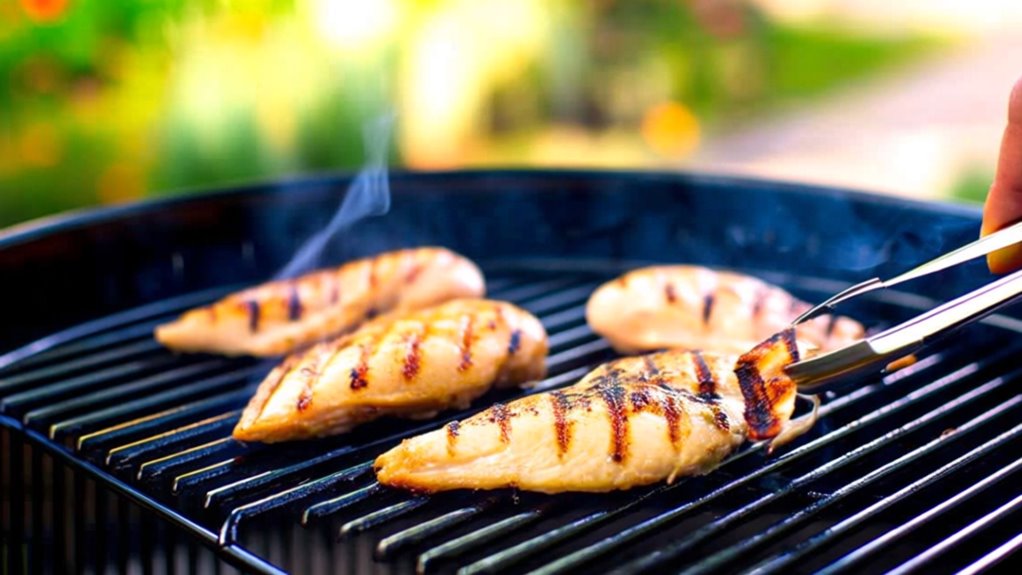
Preheat your grill to 375-450°F and oil the grates to prevent sticking. Place the chicken on the grill and cook each side for about 5 minutes, flipping once.
Grill until the internal temperature reaches 165°F to ensure it is fully cooked.
Once done, let the chicken rest for 5 minutes before serving. This step locks in the juices and keeps the chicken moist.
Keep reading for tips on marinades, perfect sides, and grilling techniques.
Key Takeaways
- Preheat grill to 375°F–450°F and clean grates, then lightly oil to prevent chicken from sticking.
- Pound chicken breasts to 1/2 inch thickness and marinate at least 30 minutes for even cooking and flavor.
- Grill chicken smooth-side down for 5 minutes, then flip and cook another 4-5 minutes until 165°F internal temperature.
- Use an instant-read thermometer to ensure chicken reaches 165°F for safety; rest for 5 minutes before serving.
- Let chicken rest covered loosely with foil for 5-10 minutes to retain juices and enhance tenderness.
Choosing the Right Chicken Breasts
When you’re choosing chicken breasts for grilling, look for firm pieces with a consistent color and no dark spots. Selecting boneless chicken breasts that are uniform in thickness is key to achieving even cooking. Ideally, aim for pieces about 1/2 inch thick to prevent some parts from drying out while others stay undercooked.
Fresh chicken should also have a mild, clean smell—avoid any that smells sour or off. The firmness and consistent color indicate freshness and quality, so steer clear of breasts that feel mushy or have discolorations. If you find larger chicken breasts, they might need pounding to even out their thickness, ensuring they cook evenly on the grill.
Whenever possible, opt for organic or free-range chicken breasts, as these often offer better flavor and leaner meat compared to conventionally raised options. Choosing the right chicken upfront makes all the difference in your grilling success.
Preparing the Chicken for Grilling
Although grilling chicken breasts might seem straightforward, proper preparation is vital to achieve juicy, flavorful results. Start by pounding your boneless skinless chicken breasts to an even thickness of about 1/2 inch. This guarantees they cook uniformly on the grill, preventing undercooked or dry spots.
Next, marinate the chicken to enhance both flavor and tenderness. Use a resealable plastic bag to submerge the breasts fully in your marinade, which should include an acid, oil, and seasonings. For best results, refrigerate the chicken while it marinates—several hours or overnight allows the flavors to penetrate deeply.
Before placing the chicken on the grill, make certain to pat it dry with paper towels. This step is essential to achieve a nicely browned exterior and avoid steaming, which can leave your chicken rubbery instead of perfectly grilled. By following these steps, you’ll set yourself up for delicious, evenly cooked chicken every time.
Essential Marinade Ingredients
A great marinade starts with a balance of key ingredients that tenderize and flavor your chicken breasts. Acidic components like lemon juice or vinegar play an essential role because they tenderize the meat while enhancing its natural taste. Olive oil is another important ingredient—it keeps the chicken moist and prevents it from drying out on the grill.
To achieve a flavorful chicken, add herbs and spices such as oregano, thyme, and garlic; these elevate the aroma and depth of taste. Don’t forget salt—it’s significant for seasoning and helps the chicken retain moisture. For best results, plan to marinate for at least 30 minutes, giving these ingredients time to penetrate and transform the chicken.
This careful balance guarantees your boneless skinless chicken breasts remain juicy, tender, and packed with flavor once grilled.
Marinating Time and Techniques
Marinating chicken breasts properly can make all the difference in flavor and tenderness. When marinating boneless skinless chicken, aim for a marinating time of at least 30 minutes, but ideally 4 hours or overnight to let the flavors really soak in and tenderize the meat. Use a zip-top bag to keep the chicken fully submerged in the marinade for even flavor distribution.
Including acidic ingredients like lemon juice is key—they not only add bright flavor but also help tenderize the meat effectively. Be sure to add between 1/4 to 1/2 teaspoon of salt to enhance taste without going overboard. Avoid marinating for more than 1.5 days, since too much time can break down the chicken’s texture, making it mushy.
Preheating and Preparing the Grill
Before you start grilling, make sure to clean your grill grates thoroughly to avoid any leftover residue. Preheat your grill to a steady temperature between 375 and 450°F for the best results.
Don’t forget to oil the grates lightly so your chicken won’t stick while cooking evenly.
Grill Cleaning Techniques
Although it might seem like an extra step, cleaning and preheating your grill is crucial for perfect chicken breasts. A clean, preheated grill guarantees even cooking and those appealing grill marks you want.
Here’s how to prepare it right:
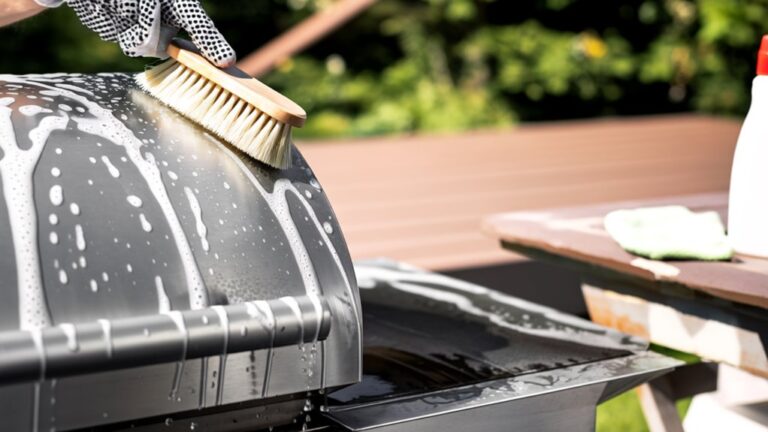
- Scrub the grates with a grill brush to remove leftover debris.
- Light a chimney full of charcoal until covered with gray ash.
- Arrange coals on one side for better heat control.
- Preheat the grill for 10-15 minutes to reach the ideal temperature.
- Lightly oil the grates with a paper towel dipped in vegetable oil to prevent sticking.
Following these steps sets you up for grilling chicken breasts that cook evenly and slide off the grill easily.
Ideal Grill Temperature
Getting your grill to the ideal temperature is key to cooking chicken breasts perfectly. To achieve this, preheat the grill for medium-high heat, aiming for a temperature between 375 to 450°F. Start by cleaning the grill grates thoroughly to remove any leftover debris.
Then light a chimney full of charcoal until covered with gray ash. Arrange the coals on one side of the grill for direct heat cooking. Once your grill is clean and hot, allow it to preheat for 10 to 15 minutes so it reaches the ideal grill temperature.
This careful preparation guarantees your boneless skinless chicken breasts cook evenly and develop a nice sear without sticking or drying out.
Oiling Grill Grates
Two simple steps can make a big difference when it comes to preparing your grill grates for chicken breasts: cleaning and oiling. Start by thoroughly cleaning your grill grates with a grill brush to remove any food residue. Then, preheat the grill to the ideal temperature, usually between 375 to 450°F.
Next, use a paper towel soaked in oil to lightly coat the grates—this helps prevent sticking and guarantees perfect grill marks when grilling chicken. Remember these tips:
- Clean grill grates before cooking
- Preheat grill for 10-15 minutes
- Use oil-soaked paper towel for coating
- For gas grills, heat all burners on high
- For charcoal, wait until coals ash over before grilling
Oiling your grill grates is key to a smooth grilling experience and juicy chicken breasts.
Optimal Grill Temperature Settings
When you grill chicken breasts, maintaining a temperature between 375°F and 450°F is key to cooking them evenly without drying them out. This range is considered the ideal grill temperature for boneless skinless chicken breasts, allowing you to achieve a perfect sear while keeping the inside juicy. Before you start, preheat your grill for 10 to 15 minutes to verify it reaches this temperature and prevents sticking.
Aim for a total cooking time of about 9 to 10 minutes, flipping the chicken halfway through for even grill marks and doneness. To confirm safety and perfect texture, use a meat thermometer to check that the internal temperature hits at least 165°F. Avoid going above 500°F, as higher heat can quickly overcook and dry out the chicken breasts.
Sticking to these settings will help you master grilling boneless skinless chicken breasts every time.
Step-by-Step Grilling Process
To grill chicken breasts perfectly, you’ll want to start by preparing them evenly, pounding them to a consistent thickness for uniform cooking. Make sure your grill is preheated to the right temperature, typically between 375°F and 450°F, to get those nice sear marks without drying out the meat.
Keep an instant-read thermometer handy so you can monitor the internal temperature and know exactly when the chicken reaches 165°F for safe eating.
Preparing Chicken Evenly
Although grilling chicken breasts might seem straightforward, preparing them evenly is key to juicy, well-cooked meat. To get perfect results, follow these steps:
- Pound boneless skinless chicken breasts to about 1/2 inch thickness for uniform cooking.
- Marinate the chicken for at least 30 minutes to lock in moisture and flavor.
- Preheat the grill to medium-high heat and lightly oil the grates to prevent sticking.
- Grill the chicken breasts smooth-side down for 5 minutes, then flip and cook another 5 minutes until 165°F internal temperature.
- Let the grilled chicken rest for 5 minutes before slicing to allow juices to redistribute.
Optimal Grill Temperature
Getting your chicken breasts prepped evenly sets the stage, but nailing the right grill temperature makes all the difference in cooking them perfectly. The ideal grill temperature for grilled chicken breasts is between 375°F and 450°F, which is medium-high heat. This range guarantees even cooking and gives you a nice sear without burning the outside.
Before placing the chicken on the grill, make sure to clean and oil the grates to prevent sticking. Cook your chicken for about 5 minutes per side over direct heat, flipping only once for the best browning. While you won’t check the internal temperature just yet, this temperature range helps the chicken cook evenly, so it reaches the safe internal temperature later without drying out.
Monitoring Internal Temperature
While grilling chicken breasts, keeping a close eye on their internal temperature is essential for both safety and taste. To achieve the best grilled chicken, follow these tips:
- Use an instant-read thermometer to check the internal temperature in the thickest part of the breast.
- Aim for 165°F (74°C) to guarantee the chicken is fully cooked and safe to eat.
- If the temperature hits 150°F (65°C), remove the chicken early; carryover heat will finish cooking.
- Grill chicken over medium-high heat (425-450°F) for about 9-10 minutes total.
- Always rest the chicken for at least 5 minutes after grilling to let juices redistribute and maintain moisture.
Monitoring internal temperature carefully assures juicy, flavorful results every time you grill chicken.
Checking for Doneness and Temperature
To guarantee your chicken breasts are perfectly cooked, you’ll want to rely on a thermometer rather than guesswork. Checking for doneness with an instant-read thermometer is the most accurate way to measure the internal temperature. Insert the thermometer into the thickest part of the chicken breast; once it hits 165°F (74°C), your chicken is safe to eat.
If it reaches 160°F (71°C), you can take it off the grill since it will continue cooking while you allow the chicken to rest. Avoid cutting into the chicken too early, as this can release juices and dry it out. However, if you do check visually, the juices should run clear, and there should be no pink remaining.
Using these methods will guarantee your boneless skinless chicken breasts are juicy, tender, and fully cooked every time.
Resting the Chicken After Grilling
Although it’s tempting to cut into your chicken right off the grill, letting it rest for 5 to 10 minutes is key to locking in its juices and flavor. Resting allows the moisture to redistribute throughout the meat, preventing dry, tough chicken. During this time, the internal temperature can rise slightly, helping the chicken reach the safe 165°F (74°C).
Here’s what you should do when resting your grilled chicken breasts:
- Cover loosely with aluminum foil to keep warm without causing moisture loss
- Avoid cutting immediately to prevent juices from spilling out
- Let the internal temperature stabilize for even cooking
- Use this time to prepare sides or sauces
- Remember, patience here means a juicier, more tender result
Serving Suggestions and Pairings
Once your chicken breasts are grilled to perfection, it’s time to contemplate what to serve alongside them. You can pair them with creamy mashed potatoes, fresh salads, or even grilled veggies to balance the meal.
Don’t forget to take into account sauces, toppings, and the right beverages to elevate the flavors even more.
Perfect Side Dishes
When you’re grilling chicken breasts, choosing the right side dishes can elevate your meal and keep it balanced. Pair your grilled chicken with these perfect side dishes to satisfy every craving:
- Creamy garlic mashed potatoes that complement the lean protein.
- A fresh grilled chicken salad with mixed greens, cherry tomatoes, and light vinaigrette for a revitalizing touch.
- Fettuccine Alfredo topped with grilled chicken for a rich, hearty option.
- Roasted vegetables like asparagus or bell peppers that add color and nutrients.
- A light quinoa or couscous salad tossed with herbs, veggies, and citrus dressing for extra flavor and texture.
These sides enhance your grilled chicken without overpowering it, making your meal both delicious and nutritious.
Beverage Pairing Ideas
If you want to elevate your grilled chicken experience, choosing the right beverage can make all the difference. For crisp, invigorating beverage pairing ideas, try a chilled glass of Sauvignon Blanc—its citrusy notes perfectly complement grilled chicken breast, especially if you’ve used a lemon-based marinade.
If you prefer something heartier, a light red wine like Pinot Noir offers fruity flavors that enhance the smoky grill taste without overwhelming it. Beer lovers can opt for light pilsners or wheat beers to keep the meal balanced and light.
Non-alcoholic options like homemade lemonade or iced tea with mint provide a revitalizing contrast, while sparkling water with a splash of lime cleanses the palate between bites. These pairings make your grilled chicken truly shine.
Sauce and Toppings
Pairing the right sauce or topping with your grilled chicken can bring out new layers of flavor that complement your chosen beverage. The right sauce or toppings can transform a simple grilled chicken breast into a memorable meal. Here are some tasty ideas to try:
- Drizzle chimichurri sauce for a fresh, herbaceous boost.
- Add mango-habanero barbecue sauce for a sweet and spicy kick.
- Top with fresh mozzarella, bruschetta, and basil for an Italian flair.
- Serve alongside garlic mashed potatoes to complement savory flavors.
- Enhance salads by adding sliced grilled chicken for extra protein.
These sauce and topping options let you customize your grilled chicken to suit different palates and occasions, making your meal both delicious and versatile.
Frequently Asked Questions
How Long Does It Take to Cook Boneless Skinless Chicken Breasts on the Grill?
It usually takes you about 9 to 10 minutes to grill boneless skinless chicken breasts. You’ll want to cook them over medium-high heat, flipping once after around 5 minutes. Make sure the internal temperature hits 165°F to keep it safe.
To get even cooking, pound the breasts to uniform thickness before grilling. Don’t flip too often, and consider marinating beforehand for juicier, tastier results.
Is It Better to Grill Chicken at 350 or 400 on a Gas Grill?
You’ll find grilling chicken at 400°F is generally better because it gives you a nice balance between searing the outside and cooking the inside through evenly. While 350°F can help keep the chicken moist, it takes longer and might not create that perfect crust you want.
Just keep an eye on it to avoid charring, and always check that internal temperature hits 165°F for safe, juicy results.
How to Grill Boneless Skinless Chicken Breast Without Drying It Out?
Grilling boneless skinless chicken breasts without drying them out is like walking a tightrope—you need balance. You’ll want to pound the breasts to an even thickness, marinate them to lock in moisture, and grill over medium-high heat, flipping once.
Keep an eye on the temperature and pull them off at 165°F. Finally, let the chicken rest for a few minutes so all those juices stay inside, keeping it juicy and flavorful.
Do You Close the Grill When Grilling Chicken Breasts?
Yes, you should close the grill lid when grilling chicken breasts. Keeping the lid closed helps maintain consistent heat, which cooks the chicken evenly and more quickly. It also traps smoke, adding extra flavor.
Just be sure to monitor the chicken closely since cooking times can vary. Using a meat thermometer can help you guarantee the chicken reaches the safe temperature of 165°F without drying out.
Conclusion
Now that you know how to grill boneless skinless chicken breasts perfectly, imagine hosting a summer BBQ where your guests rave about your juicy, flavorful chicken.
By choosing the right breasts, marinating well, and grilling with care, you’ll turn a simple meal into a memorable experience.
Remember, patience and attention to detail make all the difference—your next grilled chicken could be the highlight of any gathering!
Mastering how long to grill boneless skinless chicken breasts ensures they stay tender and delicious every time.
Use these grilling tips to enhance flavor and achieve the perfect cook on your chicken breasts.
With practice, grilling boneless skinless chicken breasts will become second nature, making your BBQs a true hit.