How Long to Grill a T Bone Steak Step by Step
Grilling a T-bone steak to perfection involves a few key steps to ensure it’s juicy and flavorful.
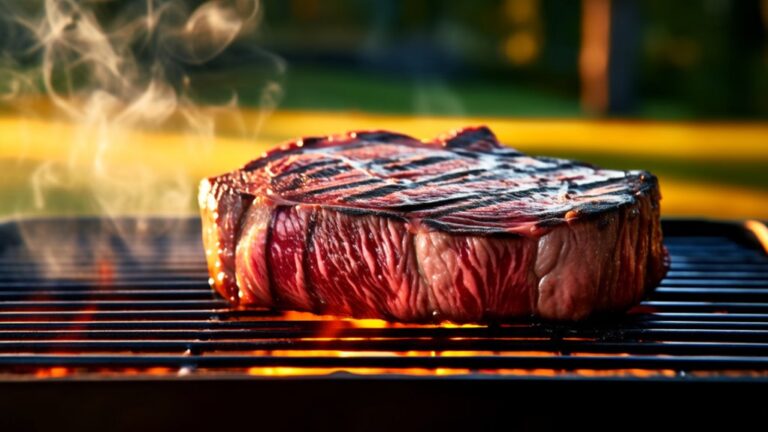
Begin by searing your T-bone steak on high heat for about 2–3 minutes per side to lock in the juices. This initial sear creates a delicious crust.
Next, move the steak to indirect heat and cook it for another 6–10 minutes, depending on its thickness and your preferred level of doneness. Use a meat thermometer to check for your desired temperature.
Finally, don’t forget to let the steak rest after grilling. Resting allows the juices to redistribute, keeping your T-bone tender and moist.
Follow this method, and you’ll master every step for a mouthwatering steak every time.
Key Takeaways
- Preheat grill to high (around 600°F) and clean grates for optimal searing conditions.
- Sear the T-bone steak 2-3 minutes per side over direct heat for a perfect crust.
- Move steak to indirect heat and cook until internal temperature reaches 120°F for medium-rare.
- Use an instant-read thermometer to monitor doneness and avoid overcooking.
- Rest steak for 10 minutes before slicing to allow juices to redistribute evenly.
Anatomy and Selection of the Perfect T-Bone Steak
A T-bone steak offers two distinct cuts in one: the larger strip loin above the bone and the smaller tenderloin beside the spinal cord. When selecting your T-bone steak, you want to verify the tenderloin section is at least half an inch wide. This guarantees a good balance of tenderness and flavor between the two cuts.
The bone, part of the vertebrae, helps lock in moisture and enriches the steak’s taste as it grills. Thickness matters too—aim for at least one and a half inches to get an even cook. Don’t forget to check for marbling, those white fat streaks throughout the meat.
Marbling is key because it melts during cooking, boosting both tenderness and flavor. By choosing a well-marbled T-bone steak with a generous tenderloin portion, you’re setting yourself up for a juicy, flavorful meal that showcases the best of both cuts.
Preparing Your T-Bone Steak for Grilling
Now that you’ve chosen the perfect T-bone steak with the right thickness and marbling, getting it ready for grilling is your next step. First, make sure your steak is completely thawed by leaving it in the refrigerator for 24 hours. About 30 to 40 minutes before grilling, take the steak out to bring it to room temperature—this helps it cook evenly.
Next, rub the steak with a halved garlic clove for a subtle flavor boost. Then, generously season both sides with kosher salt and freshly ground black pepper or your favorite steak seasoning. This will enhance the steak’s natural taste and create a delicious crust when grilling.
Preparing your steak this way sets the stage for a perfectly cooked T-bone, ensuring every bite is flavorful and juicy. Remember, these preparation steps are essential before moving on to setting up your grill for ideal cooking.
Setting Up Your Grill for Optimal Cooking
Before you start grilling your T-bone steak, make certain your grill is properly set up for peak cooking. Begin by preheating your grill to a high temperature, around 600°F, to achieve that perfect sear. If you’re using a charcoal grill, set up a two-zone fire by piling hot coals on one side for direct heat and leaving the other side empty for indirect cooking.
This setup lets you manage the heat effectively. Don’t forget to clean and oil your grill grates beforehand to prevent sticking and guarantee even cooking. Also, check the grill vents; positioning them correctly allows for proper airflow, helping you maintain a steady temperature throughout grilling.
Allow your grill to heat up for at least 15-20 minutes before placing the steak on it. This preparation assures ideal heat and temperature control, setting you up for a deliciously grilled T-bone steak.
Understanding T-Bone Steak Thickness and Doneness
Thickness plays an essential role in grilling your T-bone steak to perfection, especially since these cuts usually range from 1 to 2 inches thick. For the best results, aim for a minimum thickness of 1.5 inches.
Keep in mind that the strip loin cooks faster than the tenderloin, so monitoring the internal temperature is vital for even steak doneness. Using an instant-read thermometer helps you avoid overcooking, especially with carryover heat after removing the steak from the grill.
Here’s a quick guide to internal temperatures for T-bone steaks:
| Doneness Level | Internal Temperature (°F) |
|---|---|
| Rare | 120 – 129 |
| Medium-Rare | 130 – 134 |
| Medium | 135 – 144 |
| Well Done | 145+ |
Step-by-Step Guide to the Sear and Roast Method
To master the sear and roast method, start by seasoning your T-bone steak well in advance. You’ll sear it quickly over high direct heat to lock in juices, then move it to indirect heat to finish cooking evenly.
Following these steps guarantees a perfectly cooked steak with a flavorful crust and tender center. Be sure to monitor the internal temperature closely to account for temperature carryover and achieve your desired doneness precisely.
Preparing the Steak
Grilling the perfect T-bone steak starts with careful preparation that sets the foundation for flavor and texture. Begin by thawing your steak in the refrigerator for 24 hours, then remove it 30 to 40 minutes before cooking to bring it to room temperature. This step guarantees even cooking throughout.
Next, generously season both sides with kosher salt at least 40 minutes prior to grilling. The kosher salt enhances flavor and helps retain moisture during cooking. While preparing the steak, preheat your grill to high heat, getting the coals glowing red hot.
These steps in preparing the steak are essential for achieving that ideal crust and juicy interior using the sear and roast method. Proper preparation makes all the difference before you hit the grill.
Searing on Direct Heat
Start by heating your grill to a blazing 650°F (343°C) so you can get that perfect sear on your T-bone steak. Position the steak directly over the heat and sear each side for 2-3 minutes, flipping every 30 seconds. This searing on direct heat creates a delicious crust essential for perfect doneness.
Watch the internal temperature closely to guarantee ideal cooking times before moving on to indirect heat.
| Step | Time per Side | Flip Frequency |
|---|---|---|
| Initial Sear | 2-3 minutes | Every 30 seconds |
| Crust Formation | Until deep brown | Continuous flipping |
| Temperature Check | Strip: 115°F | Tenderloin: 110°F |
| Final Sear Prep | Ready for next step | – |
| Resting | 10 minutes | After cooking |
Roasting on Indirect Heat
Once you’ve achieved a perfect sear on your T-bone steak, you’ll move it to the cooler side of the grill to roast over indirect heat. This indirect heat to finish the cooking allows the steak to cook evenly without burning the crust. Cover the grill and let it roast for about 15 minutes, keeping an eye on the internal temperature.
Aim for the desired final temperature—115°F for the strip side and 110°F for the tenderloin—before removing it from the heat. After roasting, give your steak a juices time of about 10 minutes to rest; this step is essential as it lets the juices redistribute, ensuring a flavorful, tender bite. This method perfectly balances crust and doneness.
Mastering the Reverse Sear Technique
Although it takes a bit more time, mastering the reverse sear technique lets you achieve a perfectly cooked T-bone steak with a juicy center and a crispy crust. Start by preheating your oven to 275°F and place the steak on a wire rack over a baking sheet. Cook it until the internal temperature hits about 120°F, roughly 10°F below perfect medium-rare.
Then, quickly sear the steak in a hot cast iron skillet or grill for 1-2 minutes per side to form that delicious crust. Rest the steak for 10 minutes after searing to lock in juices.
| Step | Action | Notes |
|---|---|---|
| 1 | Preheat oven to 275°F | Use wire rack for even heat |
| 2 | Cook steak to 120°F internal | Indirect heat cooking |
| 3 | Sear steak 1-2 mins per side | Use cast iron skillet or grill |
| 4 | Rest steak for 10 minutes | Retains juices |
| 5 | Slice and serve | Enjoy perfect medium-rare |
Monitoring Internal Temperature for Perfect Results
You’ll want to use an instant-read thermometer to check your T-bone’s internal temperature accurately, aiming for 130–134°F for medium-rare or 135–144°F for medium.
Remember to pull the steak off the grill about 10°F below your target since it will continue to cook from carryover heat. Also, keep an eye on both the tenderloin and strip loin sections, as they cook at different rates.
Ideal Temperature Ranges
Grilling the perfect T-bone steak means paying close attention to its internal temperature. The ideal temperature ranges for a medium-rare T-bone steak fall between 130°F and 134°F. If you prefer medium doneness, aim for 135°F to 144°F.
To get it just right, remove your steak from the grill when it’s about 10°F below your target temperature, since carryover cooking will raise it further. Using an instant-read thermometer, like the Thermapen ONE, helps you monitor these temperatures accurately. Thicker cuts especially need frequent temperature checks to guarantee even cooking.
Thermometer Usage Tips
When monitoring your T-bone steak’s internal temperature, using an instant-read thermometer like the Thermapen ONE makes all the difference in achieving perfect doneness. Here are some essential thermometer usage tips to get it right every time:
- Insert the thermometer into the thickest part of the steak, avoiding the bone for an accurate internal temperature reading.
- Check the temperature regularly every few flips to prevent overcooking, especially with thick cuts.
- For medium-rare, pull the steak at about 120°F (49°C), knowing carryover cooking will raise it to 130–134°F (55–57°C) while resting.
- Always factor in carryover cooking, as it can increase the steak’s temperature by up to 10°F (6°C) after you take it off the grill.
Following these tips guarantees you nail the perfect doneness every time.
Temperature Carryover Effects
Although your T-bone steak is off the grill, its internal temperature will keep rising due to carryover cooking—usually by about 5°F (3°C) for cuts this size. To nail the desired doneness, monitor the internal temperature closely and pull the steak early. The tenderloin cooks faster, so check both sides.
| Stage | Internal Temp (°F) | Internal Temp (°C) |
|---|---|---|
| Pull from grill | 120–125 | 49–52 |
| Carryover rise | +5 | +3 |
| Final temp aim | 130–134 | 55–57 |
| Medium-rare tip | Check tenderloin | Check strip loin |
| Resting period | 5–10 minutes | Allows temp to settle |
Understanding temperature carryover effects helps you achieve perfect results every time.
Tips for Flipping and Managing Heat During Grilling
Since even cooking and a perfect crust depend on managing heat and flipping correctly, you’ll want to flip your T-bone steak every 30 to 40 seconds. This frequent flipping guarantees the steak cooks evenly while developing a rich crust without burning.
Start by searing over high heat, around 650°F, to lock in flavors, then move it to indirect heat to finish cooking gently. Use a two-zone fire setup—one side for direct high heat searing, the other for indirect heat to avoid flare-ups and char.
To master flipping and heat control:
- Flip the steak quickly to retain juices and avoid drying out
- Keep grill vents half-closed to maintain steady airflow and temperature
- Shift steak between direct and indirect heat zones as it cooks
- Monitor internal temperature closely to pull steak 10°F below desired doneness
Remember that allowing the steak to rest after grilling is essential to redistribute juices and enhance tenderness, just like letting an oven-grilled steak rest for several minutes before slicing as recommended in the resting and serving tips.
Resting and Butter Basting for Enhanced Flavor
To bring out the full flavor of your grilled T-bone, you’ll want to let it rest for about 10 minutes after cooking, allowing the juices to redistribute evenly. This resting period is vital for ensuring each bite is juicy and tender.
While your steak rests, try butter basting by melting butter infused with thyme, garlic, and lemon zest. Apply this aromatic butter over the meat to boost its richness and seal in moisture that might have escaped during grilling. Butter basting not only adds a deep, savory flavor but also enhances the overall eating experience.
Serving Suggestions and Final Touches
When you’re ready to serve your T-bone steak, pairing it with sides like grilled vegetables or mashed potatoes will perfectly complement its rich flavor. To elevate your meal, consider these serving suggestions:
- Slice the steak against the grain for maximum tenderness.
- Garnish with fresh herbs such as rosemary or thyme to add aroma and visual appeal.
- Drizzle herb-infused butter or sauce over the steak for extra richness.
- Serve alongside hearty sides like grilled vegetables, creamy mashed potatoes, or a crisp salad.
Don’t forget to pair your steak with a robust red wine like Cabernet Sauvignon or Malbec to enhance the flavors even further. These final touches will not only boost the taste but also create a beautiful presentation that impresses at any dining table.
Pair your steak with a bold Cabernet Sauvignon or Malbec to elevate flavor and impress your guests.
With these simple steps, your perfectly grilled T-bone steak will be a memorable centerpiece for any meal.
Frequently Asked Questions
How Long Do You Grill a T-Bone Steak?
You’ll want to grill a T-bone steak for about 10-12 minutes if it’s 1 inch thick, flipping every 40 seconds. For thicker steaks around 1½ inches, grill it for 14-17 minutes, flipping regularly.
Keep an eye on the internal temperature—pull it at 120°F for medium-rare since it’ll keep cooking off the grill. Don’t forget to let it rest for 10 minutes to lock in juices and flavor before serving.
What Is the 3 3 2 2 Rule for Steak?
The 3 3 2 2 rule means you grill your steak for 3 minutes on one side, then flip it and cook for 3 more minutes. After that, you move it to indirect heat for 2 minutes per side to finish cooking gently.
This method helps you get a great sear while cooking the steak evenly inside. Just remember to check the internal temperature to hit your preferred doneness perfectly.
Do You Grill Steaks on a Gas Grill With the Lid Open or Closed?
Grilling steaks on a gas grill is like painting a masterpiece—you’ve got to control your canvas. You’ll want to keep the lid closed most of the time to trap heat and cook the steak evenly, especially thicker cuts like a T-bone.
However, you can open the lid briefly for that initial sear to lock in juices. Just remember to monitor the internal temperature closely to get your steak just right.
How Many Minutes per Side for a T-Bone Steak?
You’ll want to grill your T-bone steak about 4 to 5 minutes per side for medium-rare if it’s 1 to 1.5 inches thick. If you prefer medium, aim for 5 to 6 minutes per side.
Remember to flip the steak every 30 to 40 seconds to get an even sear and avoid overcooking. Check the internal temperature to be sure—it’s the best way to nail your preferred doneness.
Conclusion
By now, you’ve mastered grilling your T-bone steak just right—coincidence? Maybe. But it’s no accident that your perfectly seared, juicy steak tastes incredible.
With the right prep, heat, and timing, you’ve turned a simple cut into a flavor-packed masterpiece. So, next time you fire up the grill, remember: patience and attention make all the difference.
Enjoy every bite—you’ve earned it, and your taste buds will thank you! When it comes to how long to grill a T-bone steak, following these step-by-step tips ensures the best results every time.