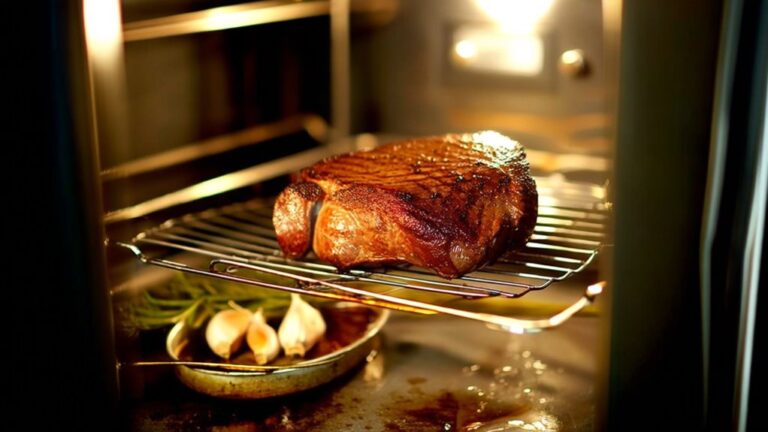
How Long Should You Grill Rib Eye Steak Step by Step
To grill ribeye steak perfectly, start by letting the steak reach room temperature and seasoning it well with salt and pepper. Proper seasoning is key to enhancing the natural flavors of the ribeye.
Preheat your grill to a high temperature, ideally between 450-500°F.
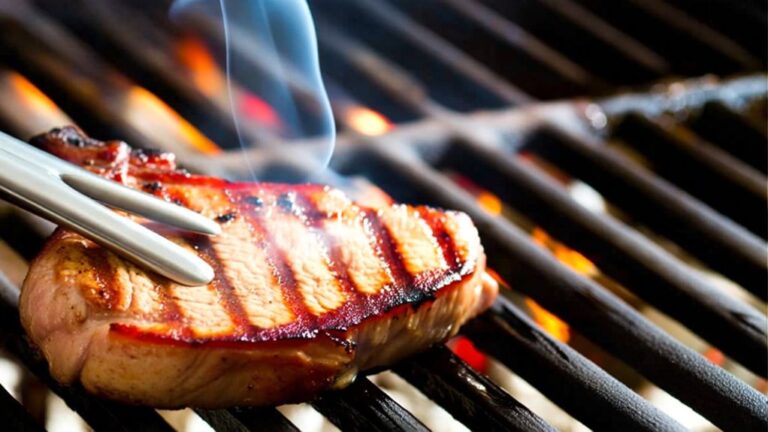
Once the grill is hot, sear the steak for 3-5 minutes per side depending on thickness—about 3 minutes for a 1-inch cut and up to 5 minutes for thicker cuts.
Using a meat thermometer, check for an internal temperature of 135°F for medium-rare doneness.
After grilling, let the steak rest for a few minutes before serving; this helps retain its juices.
Keep going for tips on prepping, seasoning, and perfect searing techniques to master grilling ribeye steak.
Key Takeaways
- Preheat your grill to 450-500°F and clean grates before cooking the ribeye steak.
- Let the ribeye reach room temperature and season generously with salt and pepper.
- Grill a 1-inch thick ribeye for 2-4 minutes per side for medium-rare doneness.
- Use a meat thermometer to ensure internal temperature reaches 135°F for medium-rare.
- Rest the steak for 5-10 minutes after grilling to redistribute juices before serving.
Choosing the Perfect Ribeye Steak
When choosing the perfect ribeye steak, you’ll want to pick one that’s at least an inch thick with a bright cherry red color and excellent marbling. This marbling and rich fat distribution are essential for flavor and tenderness, ensuring your grilled steak is juicy and delicious. Decide between bone-in or boneless ribeye steaks; bone-in often delivers a richer taste thanks to the fat and marrow near the bone.
Check the fat color—white fat signals freshness and quality, while yellow fat might mean the meat is older. Always buy from trusted suppliers who maintain high standards, as quality sourcing greatly impacts texture and taste. Also, consider the USDA grading—Prime or Choice grades offer superior quality compared to Select.
Picking the right ribeye steak sets you up for success, making it easier to achieve that perfect sear and a mouthwatering, tender result every time you grill.
Preparing Your Ribeye for the Grill
Before you start grilling, let your ribeye sit out for 20-30 minutes to reach room temperature, which helps it cook evenly. Pat it dry and season generously with salt and pepper or your favorite spices to build a flavorful crust.
If you have time, marinating with olive oil, garlic, and herbs can add an extra layer of taste.
Bringing Steak Room Temperature
Allowing your ribeye steak to sit out for 20 to 30 minutes helps it reach room temperature, which is key to achieving a proper sear and reducing grilling time. When your steak is closer to room temperature, the internal temperature starts off warmer, allowing for more even cooking. This prevents the outside from overcooking while the center warms up, resulting in a steak that’s tender and juicy throughout.
For best results, make certain your ribeye is at least 1 inch thick before bringing it to room temperature. Pat the steak dry with paper towels beforehand; this step assures seasoning sticks well and the surface crisps up nicely. Taking this simple step sets the foundation for a perfectly grilled ribeye every time.
Seasoning and Marinating Tips
Since seasoning is essential to bringing out the full flavor of your ribeye, you’ll want to apply a generous coating of coarse salt and freshly ground black pepper just after the steak has reached room temperature. First, pat your ribeye dry with paper towels to help the seasoning and marinade stick better and to promote a perfect sear.
If you choose to marinate, create a simple mix using olive oil, garlic, rosemary, and thyme, then refrigerate the steak for at least 12 hours to infuse flavor. Avoid store-bought marinades high in salt, as they can draw out moisture and reduce juiciness.
After seasoning or marinating, let your ribeye temper at room temperature for 30-60 minutes before grilling to guarantee even cooking and maximum flavor.
Seasoning Techniques for Ribeye Steak
You’ll want to start with a simple seasoning of coarse salt and freshly ground black pepper to bring out the ribeye’s natural flavor. Dry rubs can add extra depth, but be careful with salt levels if the rub is pre-made.
For a fresh twist, try coating your steak in olive oil and fresh herbs like rosemary and thyme before grilling.
Salt and Pepper Basics
Seasoning your ribeye steak with a generous coating of Himalayan or kosher salt and freshly ground black pepper brings out its natural flavor without overpowering it. When seasoning ribeye steak, use just salt and pepper right before grilling, after letting the steak come to room temperature. This timing helps the meat absorb the seasoning better and cooks more evenly.
Since ribeye boasts a rich flavor on its own, simple salt and pepper are often all you need to enhance its taste. Avoid piling on too many spices; the quality of your steak should shine through. By focusing on these salt and pepper basics, you guarantee your ribeye stays juicy and flavorful, creating a perfect foundation before you move on to other seasoning methods.
Using Dry Rubs
While simple salt and pepper often do the trick, dry rubs offer a way to add more depth to your ribeye’s flavor without masking its natural richness. To create the perfect ribeye, try a dry rub blending garlic, paprika, and freshly ground pepper. Lightly oil the steak first to help the rub stick evenly.
You can season it generously with a Montreal seasoning or a coarse salt and pepper mix. For best results, let the steak sit at room temperature for about 20 minutes, allowing the flavors to penetrate. If you have time, apply the dry rub and refrigerate overnight to intensify the taste.
Oil and Herbs
Although dry rubs add great flavor, brushing your ribeye with a light oil like grapeseed before grilling helps the seasoning stick and prevents the steak from sticking to the grill. Start by applying the oil evenly on both sides, then season generously with Himalayan or kosher salt and freshly ground black pepper to enhance the beef’s natural taste.
For deeper flavor, try marinating your steak in olive oil mixed with garlic, rosemary, and thyme for a few hours or overnight—these herbs infuse the meat with aromatic notes. Just before serving, you can add a pat of compound herb butter or blue cheese butter to melt over the hot steak, creating a rich, savory finish.
Preheating and Setting Up Your Grill
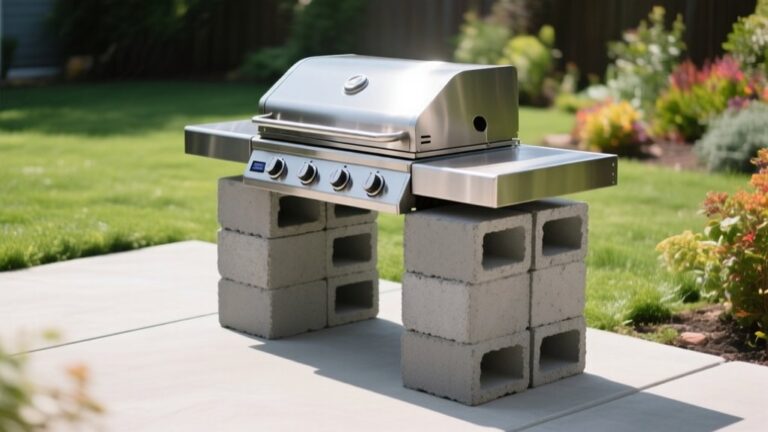
To get the best sear on your ribeye steak, preheat your grill to 450-500°F before cooking. This high heat guarantees a perfect crust while locking in the juices. Before firing up, clean the grates thoroughly using a grill brush or a ball of aluminum foil to remove any leftover residue.
This helps prevent your steak from sticking and promotes even cooking. If you’re using a charcoal grill, arrange the coals on one side to create hot and cooler zones, giving you better control over the cooking process. Meanwhile, allow the ribeye steak to reach room temperature for about 20-30 minutes before grilling.
This step promotes even cooking and a faster sear. Instead of oiling the grates, brush a light-flavored oil directly on the steak to help seasonings stick and to avoid flare-ups. With these preparations, you’re all set for grilling perfection.
Grilling Times for Different Thicknesses
Once your grill is properly heated and your ribeye is prepped, the next step is to focus on grilling times based on the thickness of your steak. To grill a ribeye steak perfectly, understand that thinner cuts around 1 inch thick need about 2-4 minutes per side for medium-rare.
For steaks between 1.25 to 1.5 inches thick, aim for 3-5 minutes per side. If your ribeye is thicker, around 2 inches, add an extra 1-2 minutes per side to your cooking time. Using a meat thermometer to check the internal temperature is the most reliable way to verify doneness—135°F signals medium-rare.
Achieving Desired Doneness Levels
Grilling ribeye steak to your preferred doneness is all about timing and temperature. To get that perfect, tender steak, you’ll need to monitor the internal temperature closely and adjust your grilling time accordingly. Here’s a quick guide to help you achieve the ideal doneness level:
- Rare: Grill for 3-4 minutes per side until the internal temperature hits 125°F. Expect a bright red center and a tender steak.
- Medium-Rare to Medium: For medium-rare, cook 4-5 minutes per side (135°F, very pink center). For medium, grill 5-6 minutes each side (145°F, light pink center).
- Medium-Well to Well-Done: Grill 6-7 minutes per side for medium-well (155°F, slightly pink center) and 7-8 minutes per side for well-done (165°F, fully brown throughout).
Tips for Searing Your Ribeye Perfectly
Getting the right doneness is just part of the equation; nailing the sear on your ribeye is what really locks in flavor and creates that irresistible crust. Start by preheating your grill to a high temperature, around 450-500°F. This intense heat is essential for forming that perfect sear.
Instead of oiling the grill grates, lightly oil your ribeye to help the seasoning stick and prevent sticking. Sear the steak for 3-4 minutes per side for a medium-rare finish, adjusting time if you prefer it more or less done. While searing, use a meat thermometer to check the internal temperature, aiming for 135°F at the center.
Once grilled, don’t skip the vital step to let rest your ribeye for 5-10 minutes. This allows the juices to redistribute throughout the steak, ensuring every bite is tender, juicy, and bursting with flavor.
Using a Meat Thermometer for Accuracy
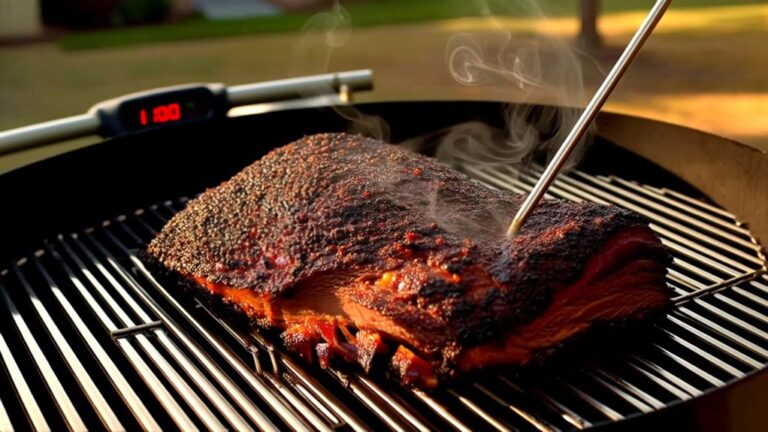
To get your ribeye cooked just right, you’ll want to choose a reliable meat thermometer that gives quick, accurate readings. Insert it into the thickest part of the steak to check the internal temperature and avoid any bone or fat.
This helps you guarantee precise doneness every time, whether you’re aiming for rare or medium-rare.
Choosing the Right Thermometer
Although you might rely on timing or visual cues, using a meat thermometer is the best way to assure your ribeye steak is cooked just right. Choosing the right thermometer guarantees you accurately measure the internal temperature, especially when aiming for that perfect medium-rare at 135°F. Digital instant-read thermometers are popular because they give quick, precise readings, helping you avoid overcooking.
When picking your thermometer, consider these points:
- Fast and accurate readings for timely grilling adjustments
- Easy-to-read display for clear temperature checks
- Probe design that reaches the thickest part of the steak without touching bone or fat
A reliable thermometer takes the guesswork out of grilling, so you can confidently serve a perfectly cooked ribeye every time.
Checking Internal Temperature
How do you know when your ribeye steak has reached the perfect doneness? The key is checking internal temperature with a reliable meat thermometer. Insert the thermometer into the thickest part of the steak, steering clear of bone or fat to get an accurate internal temperature reading.
For medium-rare, aim for 135°F; for medium, shoot for 145°F. Once you hit your target, remove the steak from the grill and let the steak rest for 5-10 minutes. This resting period allows the juices to redistribute, and the internal temperature may rise a few degrees due to residual heat.
Don’t forget to clean your thermometer after each use to maintain accuracy and hygiene. This precise checking internal temperature step guarantees your ribeye cooks just right every time.
Ensuring Precise Doneness
Getting your ribeye steak to the perfect doneness relies heavily on using a meat thermometer with precision. This tool takes the guesswork out of grilling by accurately measuring your steak’s internal temperature. To nail the doneness you want, insert the meat thermometer into the thickest part of the steak—steer clear of bone or fat for a true reading.
Here’s what to aim for:
- Rare: 125°F
- Medium-rare: 135°F
- Medium: 145°F
Once the steak hits your target internal temperature, take it off the grill and let it rest for 5-10 minutes. This step redistributes the juices, ensuring your ribeye stays juicy and tender. Using a meat thermometer guarantees your steak is cooked just right every time.
Resting Your Steak After Grilling
Once your ribeye steak is off the grill, you’ll want to let it rest for 5 to 10 minutes so the juices can redistribute evenly throughout the meat. Resting prevents those flavorful juices from rushing out when you cut the steak, keeping it tender and juicy.
To keep your steak warm without steaming it, tent the steak loosely with aluminum foil. This step is especially essential for thicker cuts, ensuring even cooking and an ideal texture. Cutting too soon can cause moisture loss, which diminishes your steak’s quality.
| Step | Purpose | Tips |
|---|---|---|
| Remove steak | End grilling | Use tongs to avoid piercing |
| Rest steak | Redistribute juices | Rest 5-10 minutes |
| Tent steak | Maintain warmth without steaming | Use loose foil tent |
| Avoid cutting | Prevent moisture loss | Wait full resting time |
| Serve | Enjoy ideal tenderness | Slice against the grain |
Serving Suggestions and Pairings
Although the ribeye steak shines on its own, pairing it with the right sides can elevate your meal to a new level. When you grill the best steak, complementing its smoky flavor with well-chosen sides makes the experience unforgettable.
Here are some top serving suggestions to take into account:
- Fluffy baked potato topped with butter, a classic and satisfying side that balances the steak’s richness.
- Creamy 3 cheese smoked mac and cheese, which is perfect for crowds and enhances the smoky flavor of the ribeye.
- Fresh cucumber or broccoli salad, offering a revitalizing contrast to the juicy, hearty steak.
Adding herb butter or blue cheese butter on top of your ribeye also adds an extra layer of taste that many love. Choose your sides thoughtfully, and you’ll enjoy a perfectly balanced meal every time.
Frequently Asked Questions
How Long Does It Take to Cook a Rib Eye on the Grill?
It usually takes about 8 to 10 minutes to cook a ribeye steak on the grill if it’s around 1.25 to 1.5 inches thick. You’ll want to grill it for 3 to 5 minutes per side for medium-rare.
If you prefer it more cooked, just add a couple more minutes per side. Don’t forget to let it rest for a bit after grilling to keep it juicy and flavorful.
What Is the 3 3 3 Rule for Grilling Steak?
Think of the 3 3 3 rule like a perfectly timed dance for your steak. You grill your steak for 3 minutes on one side, flip it for another 3 minutes, then let it rest for 3 minutes before slicing. This method helps your ribeye reach a delicious medium-rare, locking in juices and flavor.
It’s simple, effective, and guarantees every bite hits the right note without overcooking.
Do You Need to Flip Ribeye on the Grill?
Yes, you do need to flip ribeye on the grill, but only once. Flipping it just once helps you get that perfect sear and even cooking on both sides. If you flip it too often, you risk losing the crust and juices.
Use tongs to gently turn your steak without piercing it, and after grilling, let it rest for a few minutes to keep it juicy and flavorful.
How Do You Grill Ribeye on a Gas Grill?
Grilling ribeye on a gas grill is like conducting a symphony—you control the heat to create perfect harmony. First, preheat your grill to 450-500°F. Season your steak well, then place it on the grill, cooking 4-5 minutes per side for medium-rare.
Use a meat thermometer to check for 135°F. Once done, let it rest for 5-10 minutes so the juices settle before you slice and enjoy.
Conclusion
So, you’ve mastered choosing, seasoning, and grilling your ribeye to perfection—who knew it could be this complicated? But hey, if you’ve got the time to obsess over thickness, temperatures, and resting, you probably deserve a steak that’s anything but ordinary.
Just remember, if you mess up, there’s always takeout. Either way, your grill skills are now legendary in your own mind. Enjoy that perfectly imperfect ribeye—you earned it!
When it comes to how long should you grill rib eye steak, patience and attention to detail make all the difference. Following the right steps ensures a juicy, flavorful result every time. So fire up the grill and savor your expertly cooked ribeye steak!