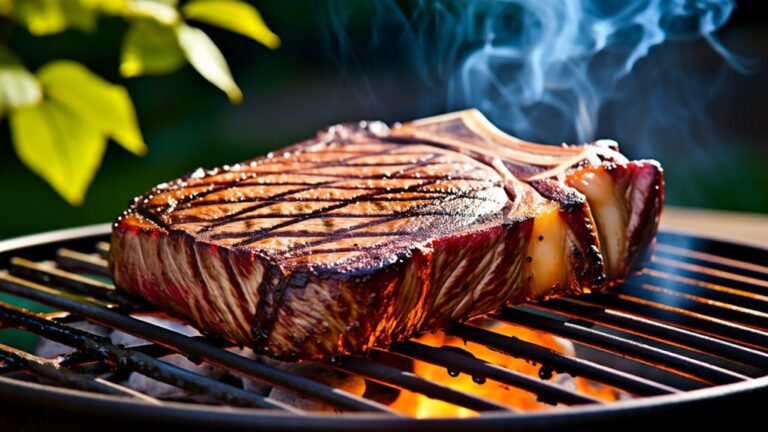
How You Can Grill in the Rain Safely: Step-by-Step Guide
To grill safely in the rain, start by checking weather conditions and choosing a gas or covered charcoal grill for better control. Grilling in wet weather requires proper preparation to ensure safety and delicious results. Setting up your grill in a sheltered spot is key.
Set up your grill in a well-ventilated, sheltered spot with a sturdy canopy or umbrella to stay dry. Gather all supplies and use a reliable meat thermometer to monitor temperatures.
Expect longer cook times due to humidity, and follow fire safety precautions.
Keep these steps in mind, and you’ll be ready to master grilling despite wet weather with ease. With the right approach, grilling in the rain can be both safe and enjoyable. Stay prepared and enjoy your outdoor cooking regardless of the weather.
Key Takeaways
- Check weather forecasts and monitor wind and rain conditions before grilling to ensure safety and feasibility.
- Set up the grill on a stable, dry surface in a well-ventilated, sheltered area away from walls or roofs.
- Use a grill cover, canopy, or umbrella to protect the grill and cook from rain while ensuring proper airflow.
- Pre-cook food indoors and gather all essential tools and fuel beforehand to minimize outdoor exposure.
- Use a reliable meat thermometer and adjust cooking times to account for humidity and temperature fluctuations.
Assess Weather Conditions Before Grilling

Before you fire up the grill, check local weather forecasts and real-time updates to see if rain or strong winds might disrupt your plans. You need to assess weather conditions carefully before grilling in inclement weather. Pay attention to rain predictions and temperature changes, as these factors influence whether grilling is feasible.
Keep an eye on wind speeds since strong gusts can make cooking unsafe and challenging, especially if rain is present. Also, consider humidity levels because higher moisture can affect cooking times and how your food retains juiciness. Since weather can change quickly, have a contingency plan ready.
Make sure you know where to move your grill or take shelter if conditions worsen unexpectedly. By staying informed and prepared, you’ll manage grilling in inclement weather more safely and effectively, ensuring your cooking session goes smoothly despite the elements.
Gather Essential Grilling Supplies and Accessories
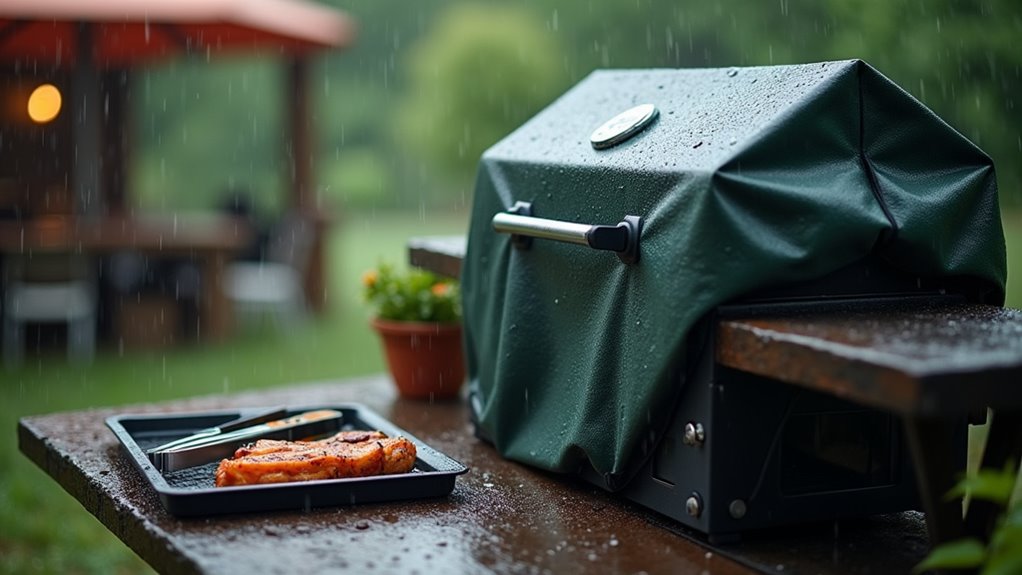
Three key supplies you’ll need for grilling in the rain include a reliable grill, effective shelter, and the right tools. First, pick a charcoal or gas grill since electric ones pose safety risks when wet.
Next, set up a sturdy shelter—like an umbrella, grill canopy, or tarp—to keep both you and your grill dry while you cook. Don’t forget to prep your food ahead by chopping and marinating indoors, so you minimize time outside during rain.
Equip yourself with essential tools such as tongs, brushes, forks, and knives to handle food efficiently despite the weather. Also, make sure you have enough charcoal, wood chips, or propane on hand to maintain consistent heat throughout your grilling session.
These supplies and accessories will keep your grilling in the rain safe, smooth, and enjoyable, letting you focus on delicious results regardless of the weather.
Choose the Right Grill for Rainy Weather
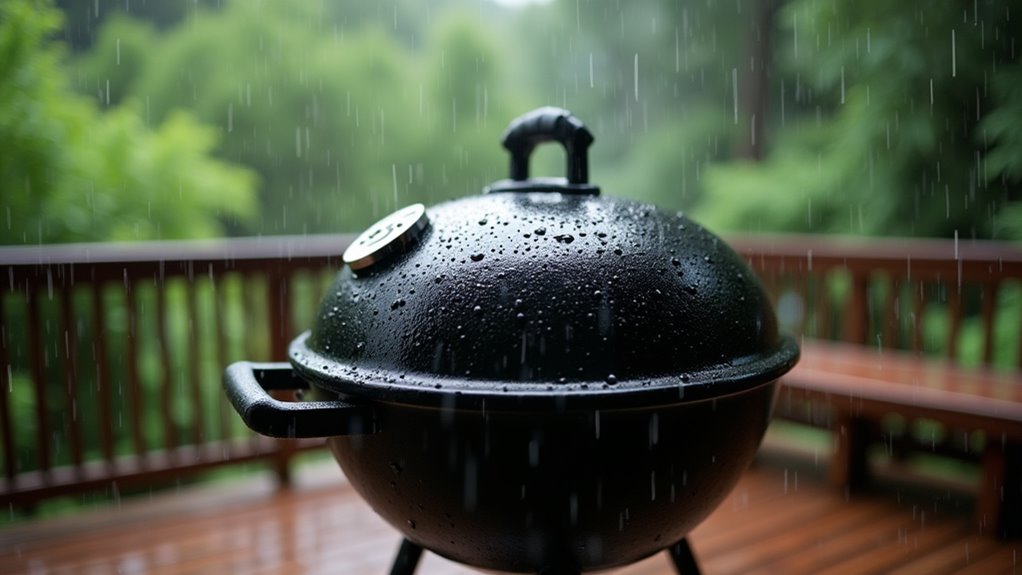
Once you’ve gathered your grilling supplies and set up shelter, focus on selecting the right grill to handle rainy weather. Gas grills are an excellent choice because they heat up quickly and offer precise temperature control, making them more reliable when moisture and wind threaten your cooking.
If you prefer charcoal grills, opt for one with a sturdy cover and adjustable vents to help manage heat and keep moisture out. Infrared grills are also worth considering since they reach high temperatures rapidly, handling damp conditions effectively. Whichever grill you choose, place it in a naturally sheltered spot to reduce rain exposure and wind interference, which helps maintain steady cooking temperatures.
Don’t forget to check your fuel levels regularly—humidity can mean you’ll need extra charcoal or pellets to keep the fire going strong. Picking the right grill guarantees your rainy-day barbecue stays safe and delicious.
Set Up a Safe and Dry Grilling Area
Setting up a safe and dry grilling area starts with choosing a well-sheltered spot like a covered porch, pop-up tent, or canopy to protect both you and your grill from rain and wind. Select a sheltered location that offers enough ventilation to prevent smoke buildup—avoid placing your grill too close to enclosed structures. To protect your grill further, consider using a windscreen or tarp to block direct rain and gusts, but make sure any coverings are securely fastened to avoid accidents.
Clear the ground around your grill of slippery surfaces and guarantee your grill is stable to reduce the risk of falls or spills in wet conditions. Finally, gather all necessary supplies and set up your grilling area before the rain starts, so you can focus on cooking safely without rushing or exposure. This preparation helps you maintain control and enjoy grilling even when the weather turns damp.
Protect Your Grill With Covers and Canopies
Although grilling in the rain can be challenging, protecting your equipment with covers and canopies makes it much easier to cook safely and comfortably. Grill covers shield your grill from rust and damage when not in use, extending its lifespan and maintaining performance.
A grill canopy shelters both the grill and cooking area, letting you grill without compromising food quality. For light rain, grill umbrellas offer a budget-friendly option, though they’re less stable in strong winds. Always secure your covers and canopies well to prevent them from being blown away, ensuring continuous protection.
| Accessory | Benefit |
|---|---|
| Grill Covers | Protect from rust and damage |
| Grill Canopy | Shelter grill and cooking area |
| Grill Umbrella | Budget-friendly drizzle shield |
Preheat Your Grill Properly in Wet Conditions
Because rain and humidity cause heat loss, you’ll need to allow extra time when preheating your grill in wet conditions. Keep the grill lid closed as much as possible during preheating to maintain heat and reduce exposure to rain.
If you’re using a charcoal grill, rely on a chimney starter to ignite the charcoal efficiently, as wet charcoal can make ignition difficult and slow. For gas grills, protect the burners from moisture to guarantee they light properly and provide consistent heat.
Monitor the grill’s internal temperature closely with a probe thermometer since increased humidity can affect cooking times and temperature stability. By adjusting your preheating routine with these steps, you’ll reach the desired temperature reliably despite the damp weather.
This approach guarantees your grilling experience stays safe and effective, even when the skies are less than perfect.
Use Windshields to Shield the Grill From Rain
You’ll want to choose a fire-resistant windshield that fits your grill and blocks rain effectively. Position it carefully to protect your cooking area without restricting airflow.
Make sure it’s secure so wind won’t knock it over or disrupt your grilling.
Types of Windshields
Several types of windshields can protect your grill from rain and wind while cooking outdoors. You can choose from metal, wood, or heat-resistant fabric windshields, each designed to block the elements effectively. Portable windshields are lightweight and easy to set up around your outdoor grill, offering quick protection when the weather shifts.
If you prefer a DIY approach, a homemade windshield made from cardboard or plywood can work well, as long as it’s securely anchored to resist strong winds. Besides keeping rain off, windshields help maintain consistent grill temperatures for better cooking. Just make sure your windshield sits at a safe distance from the heat source to avoid fire hazards while still shielding your grill efficiently.
Placement Strategies
Windshields offer great protection from rain and wind, but their effectiveness depends on where you place them. When setting up your grill, use placement strategies that position windshields to block the direction of wind blowing toward your cooking area. Placing your grill near natural shelters like buildings or trees adds extra protection from rain and wind.
Position your grill under a canopy or covered porch to stay dry while ensuring proper ventilation. Secure windshields or tarps with weights or ties to prevent them from being blown away by strong wind. Regularly check for water exposure and adjust windshields as needed to keep your grill and food dry.
These placement strategies help maintain heat and cooking efficiency even in rainy conditions.
Safety Considerations
Although shielding your grill from rain is essential for efficient cooking, you must prioritize safety when using windshields. A well-placed windshield acts like a grill umbrella, keeping rain off while preserving heat. However, improper use can cause dangerous situations like carbon monoxide buildup.
To stay safe:
- Use non-flammable materials for the windshield to prevent fire hazards.
- Securely position the windshield to avoid it being blown away, which could expose the grill to rain.
- Maintain proper distance between the grill and windshield for ventilation, preventing smoke and carbon monoxide buildup.
Regularly check your setup during cooking to guarantee airflow isn’t blocked. By following these steps, you can grill safely and efficiently, even in wet weather.
Pre-Cook Food Indoors to Minimize Outdoor Time
Pre-cooking your food indoors at a low temperature helps you cut down the time spent grilling in the rain. By finishing marinated meats or veggies quickly on the grill, you reduce your exposure to wet weather.
Keep everything warm inside until you’re ready to give your meal that final outdoor touch.
Indoor Pre-Cooking Benefits
When you start cooking food indoors at a low temperature around 120°F, you can finish it quickly on the grill, cutting down your time outside in the rain. Indoor pre-cooking helps you avoid extended exposure to cold and temperature drops, making rainy grilling safer and more comfortable.
Here’s why indoor pre-cooking benefits you:
- Speeds up grilling: Partially cook meats and veggies indoors, reducing outdoor time.
- Enhances flavor: Slow indoor cooking locks in moisture and taste before searing on the grill.
- Keeps food safe: Keep pre-cooked items warm in the oven or covered pans until grilling.
Minimizing Rain Exposure
Since rain can make grilling uncomfortable and unsafe, you can cut down your time outdoors by preparing food indoors first. Start by pre-cooking items like marinated meats and vegetables in the oven at a low temperature—around 120°F—to reduce grilling time. This method is excellent for minimizing rain exposure because it lets you finish cooking quickly on the grill, adding flavor without prolonged outdoor exposure.
Keep pre-cooked food warm in a covered dish until you’re ready to transfer it outside. Using foil or grilling baskets makes handling easier and protects food from rain during the move. Plan your cooking times carefully so you can smoothly switch from indoor pre-cooking to outdoor grilling, ensuring safety and efficiency even when the weather isn’t perfect.
Final Outdoor Grilling
Although grilling in the rain can be challenging, finishing your food outdoors quickly keeps you safe and comfortable. To minimize time spent grilling in wet conditions, start by pre-cooking your food indoors at a low temperature, around 120°F.
This way, you reduce outdoor exposure while maintaining flavor.
Here’s how to master final outdoor grilling:
- Pre-cook meats and side dishes indoors to partially cook and tenderize them.
- Keep pre-cooked items warm in an insulated container or covered pan until ready to grill.
- Plan grilling times to seamlessly shift from indoor cooking to finishing outdoors.
Monitor Meat Temperature With a Reliable Thermometer
A reliable meat thermometer lets you confirm your food reaches the safe cooking temperature without guesswork. Using a digital thermometer helps you monitor the internal temperature quickly, reducing the need to open the grill lid often—especially important when grilling in the rain.
Insert the thermometer into the thickest part of the meat, avoiding bones, for an accurate reading. Keep your thermometer clean and calibrated to maintain precision. Remember, overcooking is easier in humid conditions, so regular checks keep your meat juicy and tender.
| Meat Type | Safe Temperature (°F) | Safe Temperature (°C) |
|---|---|---|
| Beef (whole cut) | 145 | 63 |
| Pork | 145 | 63 |
| Lamb | 145 | 63 |
| Veal | 145 | 63 |
| Poultry | 165 | 74 |
Use this guide to grill safely and confidently, rain or shine.
Adjust Cooking Times and Techniques for Rain
When you grill in the rain, expect your cooking times to lengthen because the increased humidity and cooler grill surface slow heat retention. To adapt, you’ll need to adjust both cooking times and techniques to guarantee your food cooks evenly and safely.
Here’s how to manage it:
- Preheat your grill longer than usual to compensate for the cooling effect of rain.
- Use a thermometer to monitor internal temperatures closely, since humidity can delay doneness and affect moisture levels.
- Consider indirect grilling methods to maintain consistent heat, especially for larger cuts that take longer to cook.
Keep in mind, foods that need browning or crisping will also take extra time. By adjusting your cooking times and techniques thoughtfully, you’ll keep meals delicious even in wet weather.
Practice Safety Precautions During Rainy Grilling
When grilling in the rain, make sure you set up your grill in a well-ventilated area and on a stable surface to prevent accidents. Keep flammable materials away and have a fire extinguisher close by for emergencies.
Staying cautious with these safety measures helps you enjoy your meal without risks.
Ventilation and Stability
Although rain can make grilling more challenging, you can keep safety a priority by guaranteeing proper ventilation and stability. First, place your grill in an open area away from walls or roofs to maintain good ventilation and prevent smoke buildup.
Second, set the grill on a flat, dry surface to guarantee stability and avoid tipping or sliding on wet ground. Third, clear any puddles or debris nearby to prevent slipping accidents while you cook.
Avoid grilling under awnings not designed for cooking, as they restrict ventilation and pose risks. By focusing on these key points, you’ll create a safer grilling environment even in rainy conditions, keeping both ventilation and stability in check for a successful cookout.
Fire Safety Measures
Since grilling in the rain increases certain risks, you should prioritize fire safety measures to protect yourself and others. Always place your grill on a stable, non-slip surface away from flammable materials. Avoid grilling under awnings or structures not designed for outdoor cooking, as they can catch fire in wet conditions.
Check your equipment thoroughly before lighting the grill—look for gas leaks, damaged hoses, or any malfunctions. Verify your grilling area is well-ventilated to prevent smoke buildup, which can be more dangerous when rain traps fumes. Clear any slippery spots around your grill to avoid falls.
Embrace the Experience and Enjoy Your Meal
Embracing the experience of grilling in the rain transforms a tricky situation into a fun, memorable adventure that deepens your appreciation for the process. It’s a good idea to embrace the experience fully, turning potential challenges into highlights of your outdoor cooking.
Here’s how you can make the most of it:
- Invite friends or family to join you, creating a lively and social atmosphere despite the weather.
- Tune into the unique ambiance—the rhythmic sound of raindrops adds a calming backdrop to grilling.
- Capture the moment with photos or stories to remember your creative and resilient grilling session.
Enjoying your meal after all this effort feels even more rewarding. By celebrating grilling year-round, rain or shine, you expand your culinary skills and create lasting memories.
Frequently Asked Questions
How to Grill When It’s Raining?
When rainy grilling, you should set up your grill under a canopy for protection while ensuring good ventilation. Use a chimney starter to keep charcoal dry and ignite easily. Monitor your food’s temperature with a probe thermometer since rain can slow cooking.
Always follow safety tips: keep a fire extinguisher nearby and avoid grilling in unsafe spots. Pre-cook indoors to reduce time outside. These steps help you grill safely and enjoyably, rain or shine.
Do I Need to Cover My Grill When It Rains?
Absolutely, you should cover your grill when it rains. Imagine raindrops tapping rhythmically on a shield, keeping your grill dry and safe. This grill protection prevents water from seeping into components, reducing rust and malfunction risks.
Covering guarantees rain safety by creating a barrier against moisture, letting you grill confidently even in wet weather. Just remember to remove the cover afterward to let your grill breathe and stay in top shape.
Is a Grill Ruined if It Gets Wet?
No, your grill isn’t ruined if it gets wet, but proper grill maintenance is key to preserving its weather resistance. After rain, you should dry it thoroughly to prevent rust and corrosion.
Pay special attention to internal parts like burners and fuel lines on gas grills, and let charcoal dry properly. Using a waterproof cover when you’re not grilling also helps maintain your grill’s durability in wet conditions.
Why Won’t My Grill Start in the Rain?
About 60% of grill failures during rain happen because moisture disrupts the ignition system. If your grill won’t start in the rain, it’s likely due to wet burners or damp charcoal.
You should follow grill maintenance tips like drying burners and checking connections before grilling. Also, rain safety precautions like sheltering your grill can prevent moisture buildup and keep your ignition system working smoothly, so you won’t be stuck without a fire.
Conclusion
Grilling in the rain is like steering a river during a gentle storm—you adjust your course, respect the elements, and keep your hands steady. By preparing well and staying safe, you turn challenges into flavor-filled victories.
So, don’t let the rain stop you; embrace the dance of fire and water. In doing so, you’ll not only enjoy a great meal but also savor the thrill of mastering nature’s unpredictable rhythm.
By following this step-by-step guide on how you can grill in the rain safely, you ensure every cookout is a success. Stay dry, stay safe, and keep the fire going strong no matter the weather.