How to Put My Gas Grill on Cinder Blocks Safely
To safely put your gas grill on cinder blocks, start by choosing solid, high-density blocks and placing them on a level, stable surface to prevent tipping.
Properly positioning your gas grill on cinder blocks ensures stability and safety during use. Arrange the blocks in a secure, rectangular shape, and consider filling hollow centers to add weight.
Secure your grill firmly and maintain proper ventilation around it by leaving clearances and incorporating vents if possible. This setup helps prevent accidents and allows for safe gas flow.
Regularly check stability and gas connections to guarantee safety.
Keep following for tips on setup, maintenance, and safety precautions to ensure your gas grill remains secure and functional.
Proper care extends the life of your grill and enhances your grilling experience.
Key Takeaways
- Place cinder blocks on a level, stable surface and check alignment with a spirit level to prevent shifting or tipping.
- Use high-density, solid cinder blocks at least 8 inches tall, stacking at least two blocks deep for a sturdy base.
- Fill hollow blocks with concrete or gravel to add weight and enhance stability under the grill.
- Secure the grill with eye bolts or anchors to the cinder blocks and regularly inspect gas connections for leaks.
- Maintain proper ventilation with 3 feet clearance around the grill and keep the area free of flammable materials.
Assessing the Stability of Your Surface

Before you place your gas grill on cinder blocks, make sure your surface is level and stable to prevent any shifting or tipping. Start by inspecting the ground for erosion or uneven spots that could compromise the stability of your cinder block construction. Uneven soil can cause your grill to wobble or even fall, so use a spirit level to check the alignment once the blocks are set.
For extra stability, consider pouring a footing—a concrete slab beneath the blocks—to anchor them firmly and reduce movement from wind or weight changes. This footing acts as a solid base, ensuring your grill stays secure. After setting up, regularly inspect the area for signs of settling or instability, especially following heavy rains or freeze/thaw cycles.
Selecting the Right Cinder Blocks for Support
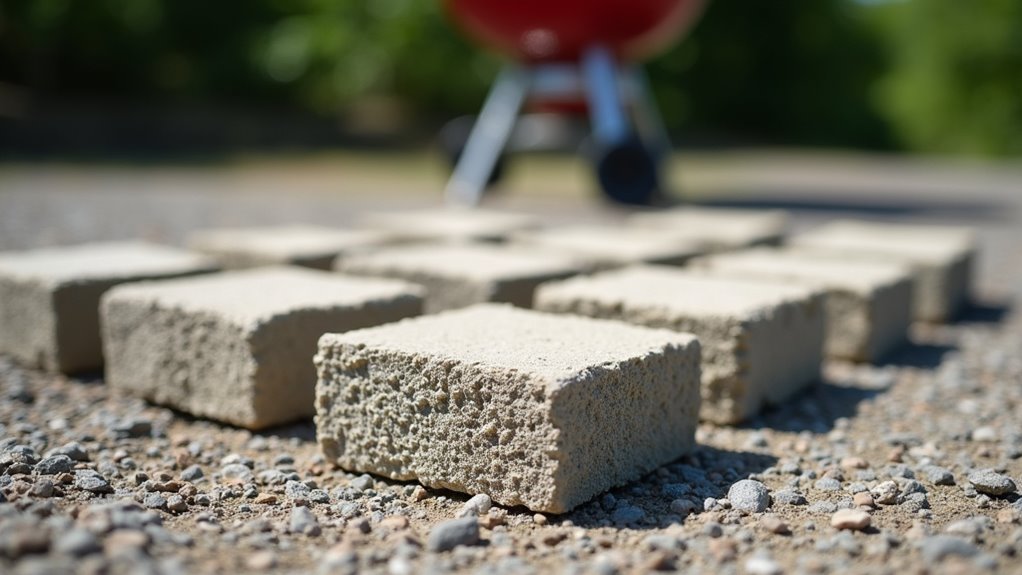
When choosing cinder blocks to support your gas grill, you’ll want to pick ones made from high-density concrete that can handle heavy weight without cracking. Opt for solid cinder blocks instead of hollow ones to guarantee maximum stability and maintain the structural integrity needed to safely hold your grill. Make certain each block is at least 8 inches high to provide proper elevation, which also allows airflow beneath the gas grill for added safety.
Before using the blocks, inspect them carefully—avoid any with cracks or chips, since defects can weaken their load-bearing capacity. To further secure the setup, consider applying concrete adhesive or mortar between the blocks to prevent shifting over time. By selecting the right cinder blocks with these factors in mind, you’ll create a stable, durable foundation that supports your gas grill safely and effectively.
Arranging Cinder Blocks for Optimal Grill Stability

Now that you’ve selected sturdy, solid cinder blocks, focus on arranging them to create a stable base for your gas grill. Begin by placing the cinder blocks on a level, firm surface to avoid any wobbling. Stack them in a rectangular or square shape, at least two blocks deep, to guarantee your cinder block BBQ has a solid foundation.
Filling the hollow centers with concrete or gravel will add weight and prevent shifting during use. Position the blocks to allow proper airflow around your grill, which helps reduce heat buildup and keeps your outdoor kitchen project safe. Whether you’re building a simple stand or a full grill island, this arrangement provides the stability needed for safe grilling.
Taking these steps will set the groundwork for a secure setup, keeping your gas grill steady while you cook outdoors.
Securing the Grill to the Cinder Blocks
To keep your gas grill steady on cinder blocks, you’ll need reliable anchoring techniques like eye bolts, Tapcon screws, or sleeve anchors. Securing the grill properly not only boosts stability but also enhances safety during windy or stormy conditions.
Let’s explore the best ways to fasten your grill and prevent any unwanted movement.
Anchoring Techniques
Although securing your gas grill to cinder blocks might seem straightforward, using proper anchoring techniques is crucial to prevent shifting or tipping in windy conditions. Start by installing eye bolts or anchors directly into the cinder block structure to create solid attachment points for tying down your grill. You can use Tapcon screws, known for their strong hold in uncracked concrete, to firmly connect the grill frame to the blocks.
Sleeve anchors combined with D rings and chains offer a flexible yet secure way to stabilize your gas grill. Drilling with climbing anchors provides an even stronger fixture if you expect severe weather. These anchoring techniques guarantee your grill stays put, giving you peace of mind while cooking outdoors.
Stability and Safety
Securing your gas grill to the cinder blocks is essential for maintaining stability and safety, especially during strong winds or storms. To secure the grill, anchor it using eye bolts or Tapcon screws, which offer strong pullout strength.
You can also tie it down with chains or wire ropes attached to screw eyes or D rings for extra stability. Consider mounting the grill on a weighted platform to prevent tipping. Always inspect and tighten all anchors regularly to guarantee ongoing safety.
| Method | Benefit |
|---|---|
| Eye bolts | Secure attachment to blocks |
| Tapcon screws | High pullout strength |
| Chains & D rings | Flexible tie-down solution |
| Weighted platform | Adds extra stability & height |
Ensuring Proper Ventilation and Heat Safety
You’ll want to keep your gas grill at least 24 inches away from flammable materials, including the cinder blocks, to prevent fire risks. Make sure there’s at least 3 feet of clearance around the grill for proper airflow and heat dissipation.
Using heat-resistant materials and adding ventilation gaps in the cinder block structure will help keep things safe and cool.
Adequate Airflow Design
When setting up your gas grill on cinder blocks, you need to guarantee proper airflow beneath and around it to prevent heat buildup and fire risks. Elevate the gas grill above the cinder blocks to assure adequate airflow underneath, which helps disperse heat effectively. Keep at least 24 inches of clearance between the grill and any combustible surfaces to promote safe ventilation.
Incorporate vents or openings in the cinder blocks to enhance air circulation, maintaining ideal cooking temperatures. Regularly inspect the area for debris or blockages that might obstruct airflow and cause overheating. By designing your setup with these airflow considerations, you’ll reduce fire hazards and keep your gas grill running safely and efficiently on cinder blocks.
Heat-Resistant Materials
Heat-resistant materials play an essential role in safely supporting your gas grill on cinder blocks. You want to make sure the cinder blocks are made from materials that can handle the grill’s heat without cracking or warping. Proper ventilation is key, so keep enough space between the gas grill and the blocks to avoid heat buildup.
To protect both the cinder blocks and surrounding surfaces, consider adding a heat shield made from non-combustible materials. Remember to regularly inspect the blocks and heat-resistant materials for any signs of damage caused by heat exposure. Here’s what to focus on:
- Use heat-resistant materials for cinder blocks
- Maintain ventilation space around the gas grill
- Install a non-combustible heat shield for extra protection
Safe Distance Clearance
Although placing your gas grill on cinder blocks provides a sturdy base, you must maintain safe distance clearance to confirm proper ventilation and prevent fire hazards. Keep at least 10-12 inches between your gas grill and any combustible materials, including the cinder blocks themselves.
Also, position the grill at least 24 inches away from walls, fences, or other structures to guarantee adequate airflow and heat dissipation. Check regularly that ventilation holes on the grill aren’t blocked, allowing proper air circulation for safe operation.
Make sure the cinder block base doesn’t obstruct the gas line or regulator, ensuring safe fuel delivery. Finally, verify the cinder block structure is level and stable to prevent tipping and maintain a secure cooking setup.
Inspecting Weight Capacity and Load Distribution
To safely support your gas grill on cinder blocks, you need to carefully inspect the weight capacity and how the load will be distributed. Start by checking your grill’s weight; lighter models might need extra stabilization to prevent wobbling. Remember, cinder blocks have a strong compressive strength—typically between 3,000 to 5,000 psi—but you must consider the total load, including any accessories.
Focus on these key points:
- Place cinder blocks on a level, stable surface to guarantee even load distribution and prevent tipping.
- Use multiple cinder blocks to spread the grill’s weight across a wider area, reducing strain on any one block.
- Regularly check for cracks or damage in the cinder blocks to maintain structural integrity.
Routine Maintenance and Safety Checks
Since safety is a top priority when using a gas grill on cinder blocks, you should regularly inspect the entire setup for stability and potential hazards. Start by checking the cinder block structure for cracks, settling, or signs of wear to guarantee it remains secure.
Next, perform routine maintenance on your gas connections and hoses by applying a soap and water solution; bubbles mean a leak that needs immediate fixing. Make sure your grill sits level on the cinder blocks to avoid uneven cooking and tipping risks—adjust blocks if necessary.
Clean the grill grates and burners often to prevent grease buildup, which can cause fires and reduce performance. Finally, verify that the area around your gas grill is free of flammable materials and well-ventilated.
Frequently Asked Questions
How Much Weight Can You Hang on a Cinder Block Wall?
You can hang up to around 1,000 pounds per square foot on a properly constructed cinder block wall, thanks to its solid weight capacity and block strength. To maintain structural integrity, you need to use the right anchors like sleeve anchors or Tapcon screws and distribute the load evenly across multiple blocks.
Always check local building codes to verify you’re not exceeding safe limits, keeping your wall secure and your items safely supported.
Can Cinder Blocks Withstand Heat?
When flames lick the air, you’ll want materials that stand strong, and cinder blocks do just that. Thanks to their heat resistance properties, they handle the grill’s fire like a seasoned warrior. Their durability means they won’t crumble under heat stress, making them a reliable choice.
Just keep fire safety considerations in mind—ensure good ventilation and watch for cracks. With care, cinder blocks can safely embrace your cooking fire’s dance.
How to Attach Things to Cinder Blocks?
You attach things to cinder blocks by using cinder block anchors designed for secure wall mounting. Start by drilling holes with a masonry bit, then insert sleeve anchors or Tapcon screws to guarantee strong load distribution. Avoid over-tightening to prevent cracking.
For heavy items, distribute weight evenly across multiple anchors. This method keeps your attachments stable and safe, whether you’re mounting shelves, grills, or other fixtures on cinder block surfaces.
Can You Put a Gas Grill on a Covered Porch?
Yes, you can put your gas grill on a covered porch, but you need to prioritize porch safety and proper gas grill placement. Imagine sizzling your favorite meal outdoors without worrying about gas buildup—ensure your porch has good ventilation and keep the grill at least 10 feet from combustible materials.
This setup supports safe outdoor cooking while preventing fire hazards. Always check local codes and maintain your grill regularly to enjoy worry-free grilling sessions.
Conclusion
Just like a strong foundation holds up a towering castle, placing your gas grill on cinder blocks requires careful planning and attention. By choosing the right blocks, arranging them securely, and ensuring proper ventilation, you create a sturdy base that can handle the heat.
Keep inspecting and maintaining your setup regularly, so your grill stays safe and steady—ready for every cookout. This approach ensures your gas grill on cinder blocks remains stable and secure. With proper care, your grilling area will be both functional and safe for all your outdoor cooking needs.