Are You Supposed to Put Foil on the Grill?
You can put foil on the grill, but you need to be careful. Foil helps keep food moist and makes cleanup easier, but it can block airflow, cause uneven heating, and increase flare-ups.
It’s best to avoid wrapping acidic or salty foods to prevent metal leaching.
Using foil incorrectly can damage your grill or affect safety. If you want to grill smarter and safer, there’s more you’ll want to know about when and how to use foil properly.
Understanding the right way to use foil on the grill can enhance your cooking experience and protect your equipment.
Key Takeaways
- Aluminum foil can simplify cleanup and prevent sticking but should not cover the entire grill grate to avoid airflow restriction.
- Avoid using foil with acidic or salty foods to prevent aluminum leaching and altered taste.
- Using foil improperly can cause uneven heat, grease buildup, and increase flare-up risks.
- Heavy-duty foil is recommended for wrapping delicate foods, ensuring moisture retention without blocking ventilation.
- Consider safe alternatives like stainless steel griddles or silicone mats to protect grill performance and health.
Pros and Cons of Using Aluminum Foil on the Grill
Although aluminum foil can make grilling cleanup easier by catching drippings and preventing food from sticking to the grates, you should be aware of its drawbacks, like restricting airflow and risking damage to your grill’s internal parts. Using aluminum foil might seem convenient, but it can block proper ventilation, causing uneven heat distribution and potentially harming components inside your grill.
Additionally, lining the bottom tray with foil disrupts grease flow, leading to buildup that increases flare-up risks. On the plus side, foil helps retain moisture and simplifies cleanup by containing food residue. However, keep in mind that high grilling temperatures may cause aluminum particles to leach into your food, especially with acidic or salty dishes.
This can also alter taste due to chemical reactions, which some people find unpleasant. While using aluminum foil offers convenience, it’s important to weigh these pros and cons to protect your grill and guarantee a better cooking experience.
Health Risks Associated With Aluminum Foil and Grilling
When you grill with aluminum foil at high heat, tiny aluminum particles can transfer into your food, especially if you’re cooking acidic or salty dishes. This chemical leaching raises concerns about long-term health effects from aluminum exposure.
It’s important to contemplate how often you use foil on the grill to keep potential risks in check.
Aluminum Particle Migration
If you grill with aluminum foil at temperatures above 150 degrees Celsius, you might not realize that tiny aluminum particles can migrate into your food. This aluminum particle migration happens more readily when the foil develops small cracks or flakes during cooking. Foods that are acidic or salty increase this migration risk, causing more aluminum to leach into your meal.
Over time, regularly consuming aluminum beyond the recommended limit of 1 mg per kg of body weight weekly could contribute to health concerns, including possible links to Alzheimer’s and reproductive toxicity. While the evidence isn’t conclusive, it’s wise to be cautious. To minimize aluminum particle migration, consider alternatives to foil or avoid using it with high-heat, acidic, or salty foods on the grill.
Chemical Leaching Concerns
Since grilling often involves high heat and flavorful, acidic marinades or salty seasonings, using aluminum foil can increase the chances of chemicals leaching into your food. You should be aware of these chemical leaching concerns when wrapping food in foil on the grill:
- High heat can cause tiny cracks and flakes in the foil, releasing aluminum particles.
- Acidic or salty foods greatly raise the risk of aluminum leaching.
- Prolonged aluminum exposure has been linked to health issues like Alzheimer’s and reproductive toxicity.
- The safe aluminum intake limit is about 1 mg per kg of body weight weekly.
- Considering alternative grilling methods can help reduce aluminum exposure.
Being mindful of these factors helps you enjoy grilled meals without unnecessary health risks.
Impact of Aluminum Foil on Grill Performance and Safety
When you use aluminum foil on your grill, it can block airflow and cause damage to your grill’s components. Lining the bottom tray with foil might disrupt grease drainage, increasing flare-up risks.
Plus, uneven heat distribution from foil can affect how evenly your food cooks.
Airflow Restriction Hazards
Although aluminum foil might seem like a handy tool for grilling, using it on your grill grates can seriously restrict airflow, harming your grill’s internal parts and creating unsafe cooking conditions. These airflow restriction hazards can lead to several problems you should be aware of:
- Overheating that risks fires or damages equipment
- Uneven heat distribution causing inconsistent cooking
- Increased chance of food safety issues due to poor heat flow
- Disruption of grease flow from foil-lined trays, promoting buildup
- Potential violation of manufacturer guidelines, compromising safety
To keep your grill working safely and efficiently, it’s best to avoid covering grates with foil and follow your grill’s instructions carefully. This helps maintain proper airflow and reduces the risk of dangerous grilling hazards.
Grease Management Issues
If you line your grill’s slide-out bottom tray with aluminum foil, you’ll likely disrupt the intended grease flow, causing buildup in places that can lead to dangerous flare-ups and grease fires. This is a common grease management issue that compromises your grill’s safety. The tray is designed to channel grease smoothly to a catch pan, but foil creates ridges and creases that trap grease.
This buildup not only raises fire risks but also affects grill performance. Avoid using foil here to maintain proper grease flow and safe grilling conditions.
| Issue | Impact |
|---|---|
| Foil on bottom tray | Blocks grease flow, causing buildup |
| Grease buildup | Increases flare-up and fire risk |
| Tray design disruption | Compromises grease catch efficiency |
| Foil on grates | Restricts airflow, risking damage |
Heat Distribution Effects
Since aluminum foil reflects heat away from food, using it on your grill can cause uneven cooking and disrupt proper heat distribution. These heat distribution effects can impact both your food’s quality and your grill’s performance. When you use foil, keep in mind:
- Foil reflects heat unevenly, leading to hotspots and cold spots.
- Covering grates with foil restricts airflow, risking overheating.
- High heat can trigger chemical changes, affecting flavor and safety.
- The foil’s shiny side reflects more heat, altering cooking temperatures.
- Dedicated heat deflectors handle heat better, avoiding foil’s risks.
Understanding these heat distribution effects helps you make safer, tastier grilling choices and protects your equipment from damage.
Common Mistakes When Using Foil on Grill Grates
When you use aluminum foil directly on grill grates, you might unintentionally restrict airflow, which can damage your grill and create safety risks. Using foil incorrectly is a common mistake that can affect both grill performance and food safety. High heat can cause aluminum particles to leach into your food, especially above 150°C.
Also, many grill manufacturers advise against placing foil on grates to maintain proper ventilation and avoid damage. Avoid using foil as a cleaning tool; this outdated practice compromises safety.
| Mistake | Consequence | Tip |
|---|---|---|
| Covering entire grate | Blocks airflow, damages grill | Use foil only in limited areas |
| Using foil for cleaning | Unsafe, ineffective | Use a grill brush instead |
| Cooking at high heat | Aluminum leaches into food | Keep temps below 150°C |
| Lining grease trays | Grease buildup, fire hazard | Avoid foil in grease trays |
Being mindful of these mistakes helps you grill safely and effectively.
Effects of Foil on Grease Flow and Fire Hazards
Although lining the slide-out bottom tray of your grill with aluminum foil might seem like a good idea, it can actually disrupt grease flow by creating ridges and creases. This interference leads to grease buildup, which poses serious fire hazards. The bottom tray is designed to guide drippings safely to the catch pan, so obstructing this flow can cause:
- Excess grease pooling in unintended areas
- Increased risk of grease fires and dangerous flare-ups
- Restricted airflow that may harm grill components
- Reduced grill efficiency and safety
- Potential damage to your grill’s grease management system
When grease buildup occurs, it’s not just about mess; it’s a safety concern. Foil can block proper drainage, turning harmless drippings into a fire risk. So, while foil might seem convenient, it’s best to avoid using it in ways that interfere with grease flow and increase fire hazards.
Your grill’s design relies on smooth grease management to keep grilling safe and effective.
Alternatives to Aluminum Foil for Grilling
Foil might seem like a convenient grilling aid, but its drawbacks can outweigh the benefits, especially when it disrupts grease flow and safety. If you’re looking to avoid health risks tied to aluminum exposure, there are several alternatives to aluminum foil for grilling that work just as well.
Stainless steel griddles and SKOTTI stainless steel boxes offer durable, chemical-free options that prevent harmful leaching. Cast iron pans and grilling baskets allow for indirect cooking and easy handling of delicate foods without foil’s downsides.
Reusable silicone mats provide a non-stick grilling surface that’s easy to clean and eco-friendly. You can also use vegetable grilling trays or racks to preserve the flavor and texture of your food without worrying about aluminum-related health risks. These alternatives not only protect your health but also offer sustainable, practical solutions to elevate your grilling experience safely.
How Foil Can Enhance Certain Grilling Techniques
If you want to add moisture and flavor to your grilled dishes, using aluminum foil can be a game-changer. Foil helps you control heat and retain juiciness, making your grilling more versatile and efficient.
Adding aluminum foil to your grill keeps moisture in and flavors locked for delicious, juicy results.
Here’s how foil can enhance your grilling techniques:
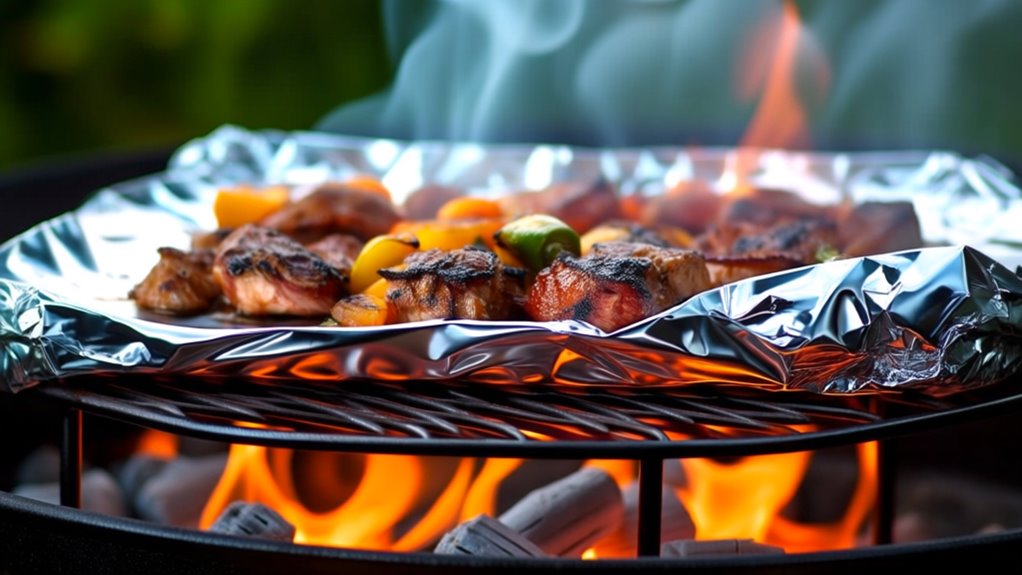
- Using foil packets as a makeshift smoker traps flavors and moisture, giving your food a tender, smoky finish.
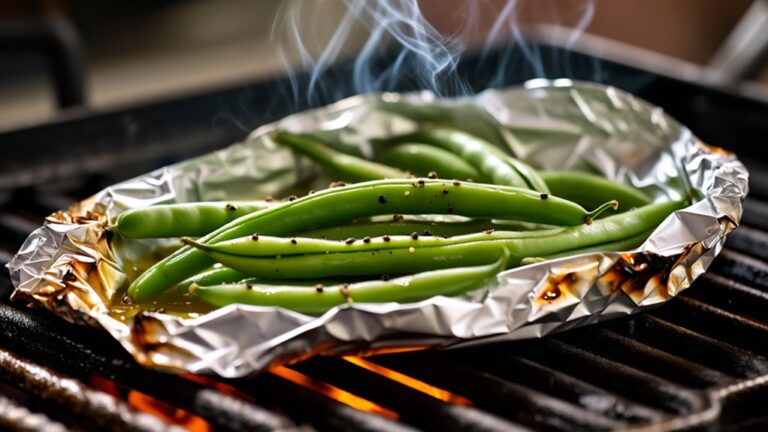
- Wrapping delicate veggies in foil prevents them from falling through grill grates while ensuring even cooking without burning.
- Cooking ribs or fish wrapped in foil locks in moisture, resulting in tender, flavorful meals.
- The glossy side of foil reflects heat, ideal for indirect grilling where temperature control matters.
- Foil can catch drippings, simplifying cleanup and keeping your grill components clean.
Using foil thoughtfully lets you experiment with different methods and improves both flavor and ease during grilling.
Environmental Considerations of Using Aluminum Foil
While aluminum foil can make grilling easier, its environmental impact is something you should consider. The production process emits greenhouse gases and uses significant energy, contributing to climate change. Recycling foil uses far less energy but is often hindered by food contamination, making disposal tricky.
These environmental considerations encourage many to seek sustainable alternatives like stainless steel. Being aware of these factors helps you make eco-friendlier grilling choices.
| Aspect | Impact | Notes |
|---|---|---|
| Production | High energy use, emissions | Mining and refining cause pollution |
| Recycling | Uses 5% energy of production | Food residue often prevents recycling |
| Disposal | Difficult to recycle if dirty | Leads to environmental pollution |
| Alternatives | Stainless steel is more sustainable | Durable and reusable option |
Safe Practices for Using Foil With Different Foods
When using foil for grilling, it’s important to follow guidelines that keep both your food and grill safe. You’ll want to avoid wrapping acidic or salty foods directly in foil to prevent unwanted chemical reactions.
Also, securely wrapping delicate items like fish or veggies helps retain moisture and keeps them from falling through the grates.
Foil Use Guidelines
You should always be careful about how you use foil on the grill to keep your food safe and tasty. Following proper foil use guidelines helps you avoid health risks and guarantees your meals come out perfectly cooked. Keep these tips in mind:
- Don’t wrap acidic or salty foods in foil to prevent chemical reactions and aluminum leaching.
- Use heavy-duty foil to avoid tearing and maintain food safety during grilling.
- For delicate items like fish and veggies, wrap them to keep moisture but allow air circulation.
- Monitor grill temperature carefully; avoid exceeding 150°C to reduce aluminum migration into food.
- Consider alternatives like stainless steel griddles or SKOTTI boxes to bypass foil-related risks entirely.
Food-Specific Foil Tips
Because different foods react uniquely to foil and heat, it’s important to adjust your grilling techniques accordingly. For acidic foods like tomatoes or citrus, avoid aluminum foil since acids can cause harmful leaching. When grilling delicate fish, wrap it in foil to retain moisture and protect it from food from direct heat, preventing it from falling apart.
Vegetables do well in foil packets, which keep them moist and flavorful while making cleanup easier. For meats, foil traps juices and flavor, but use lower temperatures to minimize aluminum transfer. Also, make certain your foil doesn’t block airflow around the food, as this can cause uneven cooking or even fire risks.
Tailoring your foil use guarantees safer, tastier grilling every time.
User Experiences and Expert Opinions on Foil Usage
How safe is it to use aluminum foil on your grill? Many grill enthusiasts and experts weigh in with mixed opinions. While foil can make cleanup easier, it may also restrict airflow, harming your grill’s internal parts and posing safety risks.
Using foil on the slide-out bottom tray might block grease flow, increasing flare-ups. Health concerns about aluminum leaching into food at high heat also come up, especially with direct heat exposure.
Here’s what to contemplate:
- Foil can block essential airflow, affecting grill performance.
- Grease buildup risks rise if foil disrupts grease drainage.
- Some users find foil convenient for catching drippings.
- Experts recommend alternatives like stainless steel griddles or smoker packets.
- Grilling communities remain divided on foil’s health and environmental impact.
You’ll want to weigh these points carefully before deciding if foil fits your grilling style.
Frequently Asked Questions
Should I Use Aluminum Foil on a Grill?
You can use aluminum foil on a grill, but you should be cautious. It may make cleanup easier and help keep food moist, but it can block airflow, increase flare-up risks, and even cause aluminum to leach into your food at high heat.
Instead, consider safer alternatives like stainless steel grilling boxes. If you do use foil, avoid covering vents or the grill’s bottom to prevent damage and hazards.
Why Do People Put Foil on Grill Grates?
Imagine your grill as a messy artist’s canvas—people put foil on grill grates to catch drips and make cleanup a breeze, like covering the floor before painting. You’ll also use foil to shield delicate foods from flames, keeping them juicy and flavorful.
Plus, it can help cook food evenly by reflecting heat. Just remember, too much foil blocks airflow, so use it wisely to avoid grill damage or safety issues.
Is It Better to Cover Your Grill or Leave It Uncovered?
It really depends on what you’re cooking. You’ll want to cover your grill to trap heat and cook food more evenly, especially for thicker cuts or slower cooking.
But if you’re after that smoky flavor or want to sear meat with direct heat, leaving it uncovered works better.
Can I Grill Without Aluminum Foil?
Yes, you can definitely grill without aluminum foil. Instead, try cooking directly on the grates or use a stainless steel griddle to keep food from falling through. This helps improve airflow and cooking efficiency.
You can also use a drip pan to catch grease safely. Avoiding foil not only reduces health risks but also supports eco-friendly grilling. So, don’t worry—grilling without foil works great and can even enhance your cooking.
Conclusion
So, should you put foil on the grill? It’s a bit of a double-edged sword—foil can boost your cooking game but also bring some risks. Think of it like a trusty sidekick: helpful when used right, but tricky if misused.
By knowing when and how to use foil safely, you’ll keep your grill sizzling without the hazards. Ready to foil your doubts and fire up delicious meals? Using foil on the grill, when done properly, can enhance your grilling experience and protect your food. Just remember the right techniques to make the most of foil on the grill.