What Is a Faucet
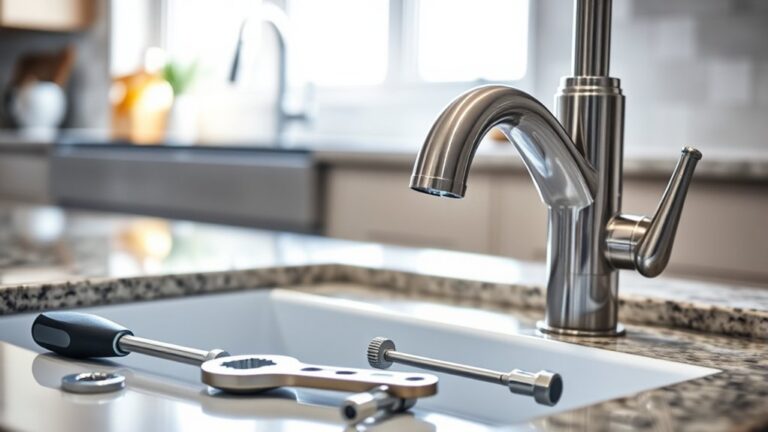
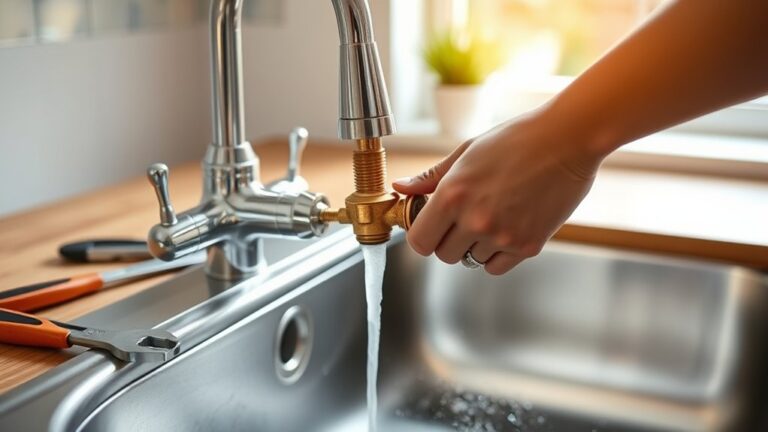
A faucet is a valve you use to control water flow from your plumbing system, opening or closing to release pressurized water when you turn the handle.
Faucets are essential fixtures in kitchens, bathrooms, and other areas where water is needed. Inside, they contain mechanisms like cartridges or ceramic discs to maintain consistent pressure and prevent leaks.
You’ll find various types—single-handle, touchless, or wall-mounted—designed for different spaces.
Proper material choice guarantees durability, and knowing basic maintenance helps keep it working smoothly.
Explore further to understand how to pick and care for the right faucet.
What Is a Faucet and How Does It Work?
A faucet is a valve that controls the release of water from a plumbing system. Understanding faucet history reveals how this essential device evolved from simple spouts to advanced faucet technology.
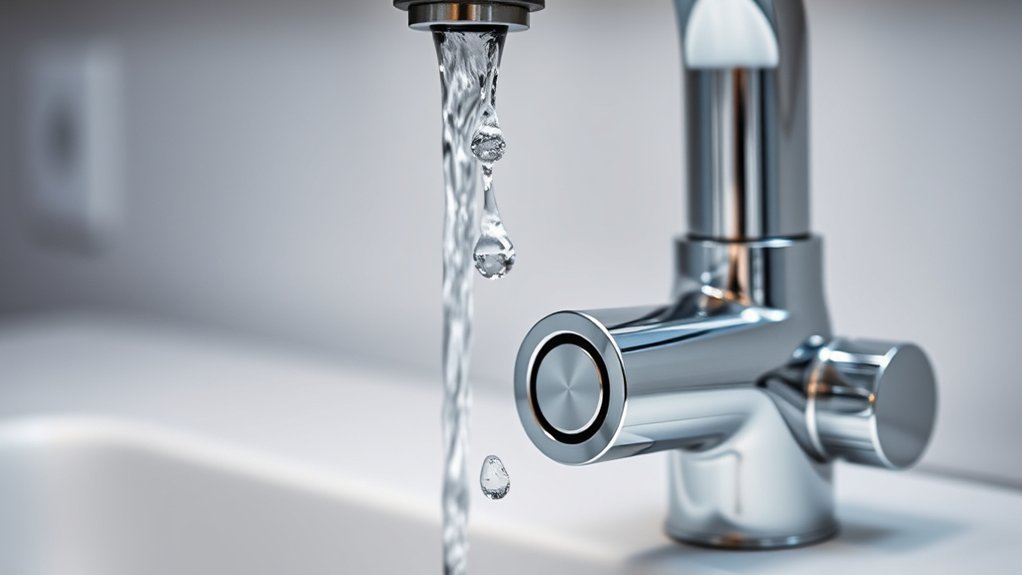
When you turn a faucet handle, you open a valve that allows pressurized water to flow through its spout. Inside, mechanisms such as compression, cartridge, or ceramic disc valves regulate flow and temperature.
Modern faucet technology uses durable materials and precise engineering to guarantee leak-free operation and easy adjustments. You’ll find that the internal components work together to maintain consistent water pressure and temperature, delivering water efficiently.
Common Types of Faucets You’ll Find at Home
You’ll encounter different faucet types in your home, each designed for specific needs. Kitchen faucets often include pull-down or touchless models, while bathroom faucets come in single-handle, double-handle, or wall-mounted styles.
Outdoor faucets focus on durability and ease of use, typically featuring frost-resistant or hose bib designs.
Kitchen Faucet Varieties
Five common types of kitchen faucets dominate home installations, each designed to meet specific needs and preferences. Pull down faucets are popular for their retractable spray heads, offering flexibility and ease when rinsing dishes or cleaning the sink.
Touchless technology faucets use sensors to activate water flow, promoting hygiene and convenience, especially when your hands are full or dirty. Single-handle faucets provide simple temperature and flow control with one lever, making adjustments quick and intuitive.
Two-handle faucets separate hot and cold controls, granting precise temperature settings but requiring more effort. Wall-mounted faucets free up counter space and simplify cleaning but need specific plumbing setups.
Choosing the right kitchen faucet depends on your workflow, space, and desired features for efficient daily use.
Bathroom Faucet Styles
Bathroom faucets come in several distinct styles, each tailored to different functionality and design preferences. You’ll find modern designs with sleek lines, vintage styles featuring classic curves, and various faucet finishes that impact both aesthetics and durability.
When choosing, consider eco friendly options that enhance water efficiency and fit your budget. Installation tips vary by style, so check compatibility with your sink. Popular brands often balance quality, style, and cost effectively.
| Style | Key Features |
|---|---|
| Single-handle | Easy control, space-saving |
| Double-handle | Precise temperature control |
| Wall-mounted | Saves countertop space |
| Vessel faucet | Elevated for vessel sinks |
| Touchless | Hygienic, water-efficient |
Outdoor Faucet Options
An outdoor faucet serves as the primary water source for gardening, cleaning, and other exterior tasks around your home. Common options include frost-free faucets, which prevent freezing during winter, and standard wall-mounted faucets suitable for most outdoor installation needs.
When selecting a faucet, consider compatibility with your garden hose to guarantee efficient water flow. To promote water conservation, choose models with built-in vacuum breakers or flow restrictors that reduce wastage.
Seasonal maintenance is essential. Drain and shut off outdoor faucets before winter to avoid damage. Additionally, inspect for leaks regularly to maintain system integrity.
Proper selection and upkeep of outdoor faucets not only extend their lifespan but also optimize water usage for your exterior chores.
Essential Parts Inside Every Faucet
Although faucets come in various styles, they all share a set of essential internal components that control water flow and temperature. Understanding faucet anatomy will help you troubleshoot or maintain your fixture effectively.
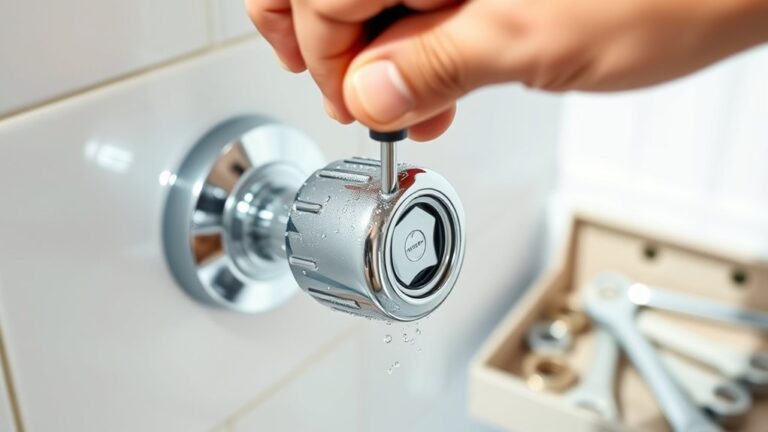
At the core are valve mechanisms, typically compression, cartridge, ball, or ceramic disc valves, that regulate water passage. These valves open or close when you turn the handle or lever, allowing precise control over flow and mixing hot and cold water.
Other key parts include the spout, which directs water, and the aerator, which mixes air to reduce splashing. Seals and washers prevent leaks by maintaining tight connections.
Knowing these components guarantees you can identify issues, choose compatible replacements, and maintain your faucet’s performance over time.
How to Choose the Right Faucet for Your Space
Understanding the internal components of a faucet helps you make informed decisions when selecting one for your space. Focus on faucet materials that resist corrosion and match your décor, like brass or stainless steel.
Consider installation tips: measure your sink’s hole configuration and water line placement to guarantee compatibility. Choose a design that fits your space’s function and style.
| Feature | Consideration | Recommendation |
|---|---|---|
| Faucet Materials | Durability & Finish | Brass, Stainless Steel |
| Installation Tips | Hole Configuration | Single, Double, or Triple |
| Design | Space & Usage | Pull-out, Single-handle |
| Flow Rate | Water Efficiency | 1.5-2.2 GPM |
| Maintenance | Ease of Cleaning | Smooth surfaces |
This practical approach guarantees you pick the right faucet efficiently.
Maintenance Tips for Faucets
Because regular maintenance prevents costly repairs and extends your faucet’s lifespan, you should establish a routine for cleaning and inspection. Start by wiping down the faucet with a mild detergent to remove mineral buildup and grime that can impair function.
Check for signs of wear, such as loose handles or dripping spouts, which often indicate leaky faucets. Addressing leaks early reduces water waste and prevents damage. Replace worn washers or O-rings promptly to avoid extensive faucet repair.
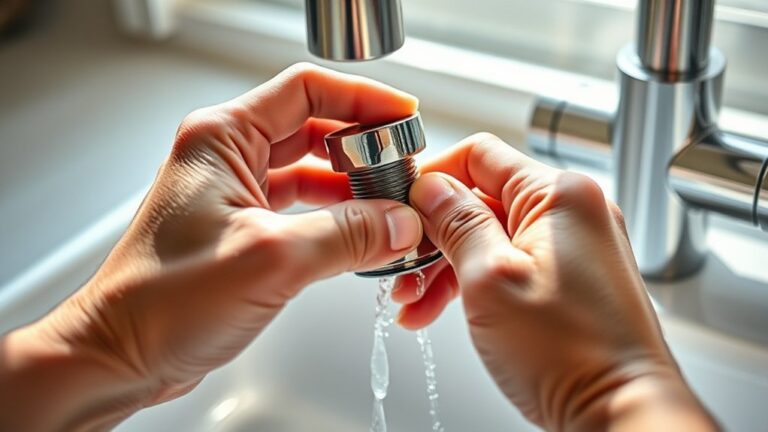
Periodically inspect the aerator for clogs; removing and soaking it in vinegar restores proper water flow. Finally, verify all connections are tight but avoid overtightening.
Troubleshooting Common Faucet Problems
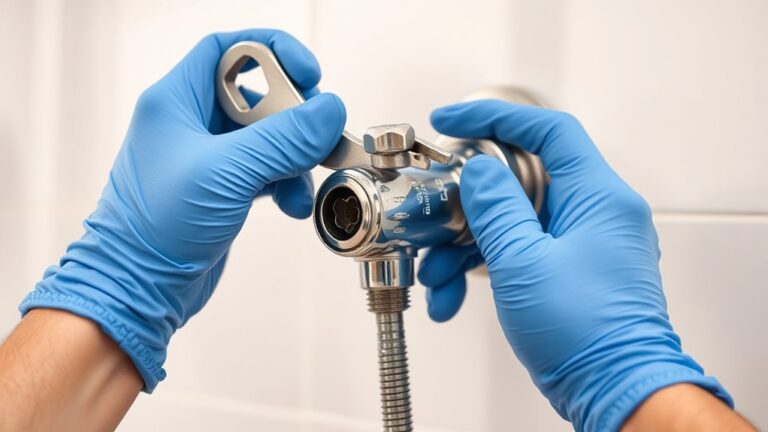
When your faucet starts acting up, diagnosing the issue quickly can save you time and money. Dripping issues often stem from worn-out washers, O-rings, or cartridge problems. Start by shutting off the water supply, then disassemble the faucet to inspect and replace faulty parts.
Low pressure usually results from clogged aerators or supply line blockages. Remove the aerator and clean out debris or mineral buildup. If pressure remains low, check for kinks or obstructions in the water supply lines.
For persistent problems, consider replacing internal components or consulting a professional. Regularly inspecting these parts prevents minor faults from escalating. By addressing dripping issues and low pressure promptly, you maintain faucet functionality and avoid costly repairs.
Frequently Asked Questions
Who Invented the First Faucet and When?
You should know that Al Moayyed invented the first faucet design in the early 19th century, marking a key plumbing innovation that improved water control and distribution. This invention set the foundation for modern plumbing systems you use today.
Are Faucets Recyclable or Environmentally Friendly?
You can recycle many faucet materials like brass and stainless steel, reducing ecological impact. However, plastic components may not be recyclable.
Choosing faucets with sustainable materials helps minimize environmental harm and supports eco-friendly water management practices.
How Do Smart Faucets Connect to Home Systems?
Smart faucets connect to your home automation system via Wi-Fi or Bluetooth, integrating with smart technology platforms. You can control water flow, temperature, and usage remotely through apps or voice assistants, enhancing convenience and efficiency.
What Are the Historical Styles of Faucets Worldwide?
When it comes to historical styles, you’ll find ancient designs like Roman bronze faucets and Victorian brass, blending form with function.
Today, modern innovations marry these classics with tech, ensuring efficiency without reinventing the wheel.
Can Faucets Affect Water Pressure in a Home?
Yes, faucets can affect water pressure by controlling water flow through pressure regulation mechanisms. If your faucet restricts flow or has clogged aerators, it reduces pressure, impacting overall water delivery in your home’s plumbing system.