Is Drinking Water From the Faucet Safe
You can usually trust your tap water when local authorities regularly test and confirm it meets safety standards. Drinking water from the faucet is generally safe under these conditions.
However, aging pipes or pollution can introduce contaminants like lead, chemicals, or microbes that pose health risks.
You can use home testing kits to detect common pollutants and unusual tastes to flag issues.
If you want to guarantee your water’s safety, using proper filters and monitoring quality is key. Exploring these steps helps you protect your health effectively.
How Do You Know If Tap Water Is Safe?
How can you determine if the tap water in your area is safe to drink? Start by reviewing your local water quality report, which details contaminant levels and compliance with safety standards.
You can also test your water at home using certified kits to measure parameters like pH, chlorine, and microbial presence. Pay attention to any unusual taste preferences; while taste alone isn’t a definitive safety indicator, significant changes might signal contamination.
Understanding health impacts is essential: contaminants can cause ailments ranging from mild gastrointestinal issues to severe chronic conditions. Regular monitoring and staying informed about your water source helps you assess safety objectively.
Recognizing health risks from contaminants emphasizes the need for ongoing water monitoring and informed safety assessments.
If you notice any adverse health symptoms or taste abnormalities, consider professional testing and consult health guidelines to guarantee your tap water remains safe for consumption.
Common Tap Water Contaminants You Should Watch For
Although tap water undergoes treatment, it can still contain various contaminants that pose health risks if consumed in significant amounts. You should be aware of lead contamination, often resulting from aging pipes, which can cause serious neurological damage.
Chemical pollutants, such as pesticides and industrial solvents, may infiltrate water sources, increasing long-term health risks like cancer. Microbial risks include bacteria, viruses, and protozoa that can cause gastrointestinal illnesses; these may survive if disinfection is inadequate.
Heavy metals like arsenic and mercury, naturally occurring or from industrial runoff, can accumulate in your body, leading to chronic conditions. Understanding these contaminants helps you recognize potential hazards in tap water, emphasizing the importance of monitoring water quality to guarantee safety.
How to Test Your Tap Water Quality at Home
When you want to guarantee the safety of your tap water, conducting tests at home provides a practical first step. You can use water testing home kits, which detect contaminants like lead, chlorine, nitrates, and bacteria. These kits typically include test strips or vials with reagents that change color based on chemical reactions, allowing you to compare results against a color chart for quantification.
Additionally, performing simple taste tests helps identify unusual flavors that may indicate contamination or high mineral content. While home kits offer immediate insights, they don’t replace thorough laboratory analysis.
If your tests reveal concerns, consider evaluating your filtration systems for effectiveness or consulting professionals. Regular testing guarantees your tap water remains within safe parameters, safeguarding your health with objective, reliable data.
Easy Ways to Make Your Tap Water Safer
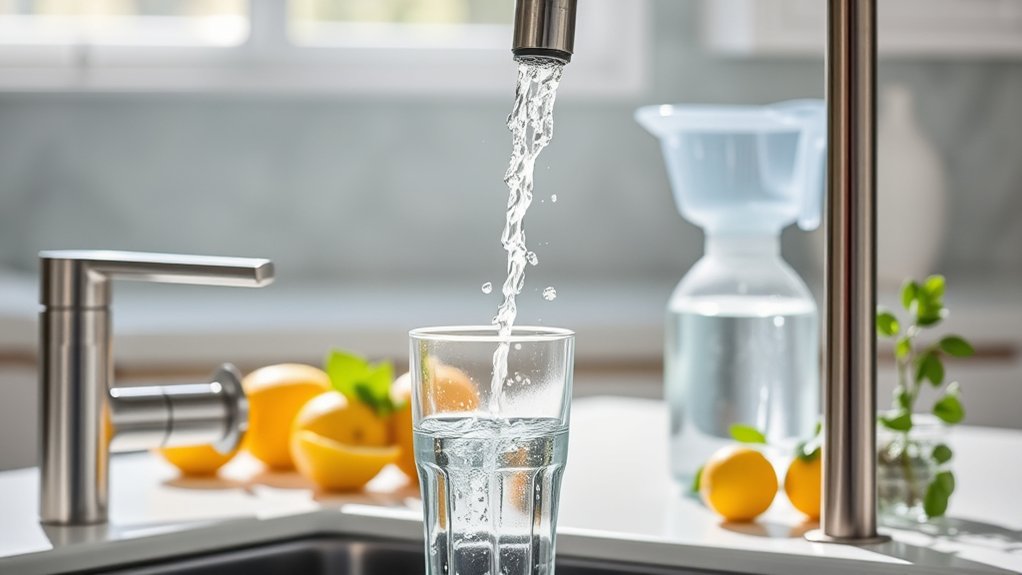
Because tap water quality can vary widely depending on location and infrastructure, taking proactive steps to improve its safety is essential. You can enhance water safety by selecting appropriate filter options tailored to your water’s specific contaminants, such as activated carbon filters for chlorine and organic compounds or reverse osmosis systems for heavy metals and dissolved solids.
Additionally, purification methods like ultraviolet (UV) treatment effectively neutralize microorganisms without altering water chemistry. Boiling water remains a reliable method to eliminate pathogens, especially in emergency situations.
When choosing purification methods, consider factors like contaminant type, maintenance requirements, and cost. Regularly replacing filters and monitoring system performance guarantees continued effectiveness. By combining suitable filter options with proven purification methods, you can greatly reduce health risks associated with tap water consumption.
Frequently Asked Questions
Does Boiling Tap Water Remove All Contaminants?
You might think boiling methods remove all contaminant types, but they mainly kill pathogens. Boiling won’t eliminate chemical pollutants or heavy metals, so relying solely on boiling won’t guarantee your tap water is completely contaminant-free.
Can Tap Water Cause Long-Term Health Effects?
Yes, poor water quality can cause long-term health impacts, including chronic diseases from contaminants like lead or pesticides.
You should monitor local water reports and use filtration if your supply shows harmful pollutant levels consistently.
Is Bottled Water Safer Than Tap Water?
You might think bottled water is a crystal-clear oasis, but bottle safety varies. While it often boasts high water quality, tap water undergoes strict testing, so neither guarantees absolute purity. Always check local quality reports before choosing.
How Does Tap Water Safety Vary by Location?
You’ll find tap water safety varies due to regional differences in water quality, contamination sources, and local regulations. Understanding these factors helps you assess risks and guarantees you rely on scientifically backed water safety standards in your area.
Are There Regulations Ensuring Tap Water Safety?
Imagine clear water flowing from your tap. Regulatory agencies enforce strict testing standards to monitor contamination sources, ensuring water quality.
These regulations protect public health by regularly evaluating and managing risks, so you can confidently drink tap water.