How Do You Remove a Tub Faucet
To remove a tub faucet, first turn off your water supply and open the faucet to drain any remaining water. This step helps prevent spills and water damage during the removal process.
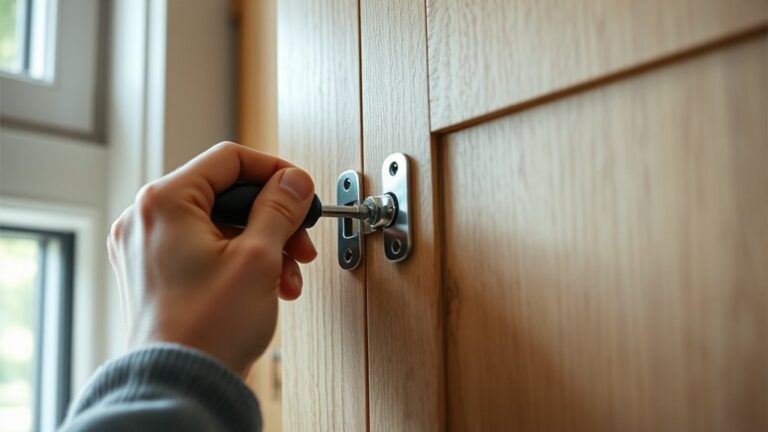
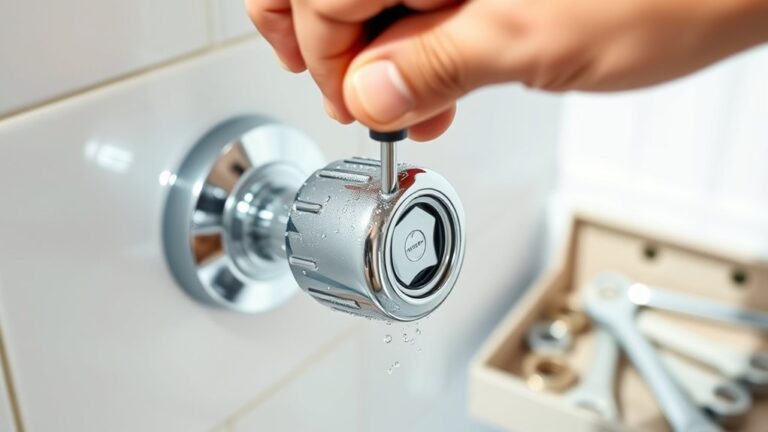
Next, use the correct screwdriver or Allen wrench to remove any decorative caps and handles. Be careful to avoid damaging the finish.
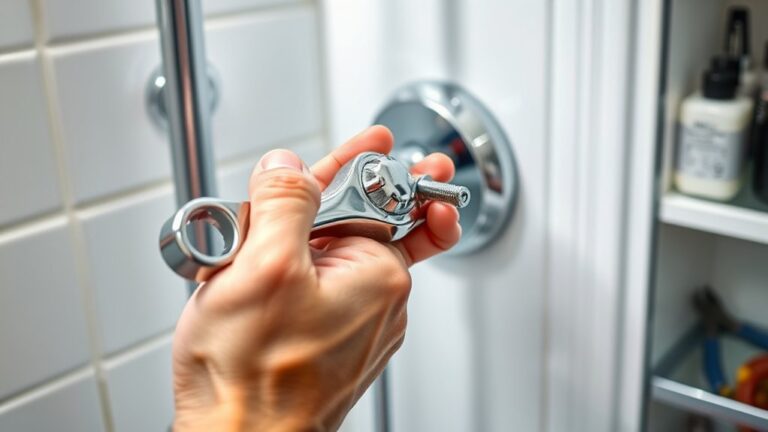
Loosen the mounting screws holding the faucet in place. Then, gently twist or pull the faucet off the wall. If the faucet is stuck, apply a penetrating lubricant to loosen it.
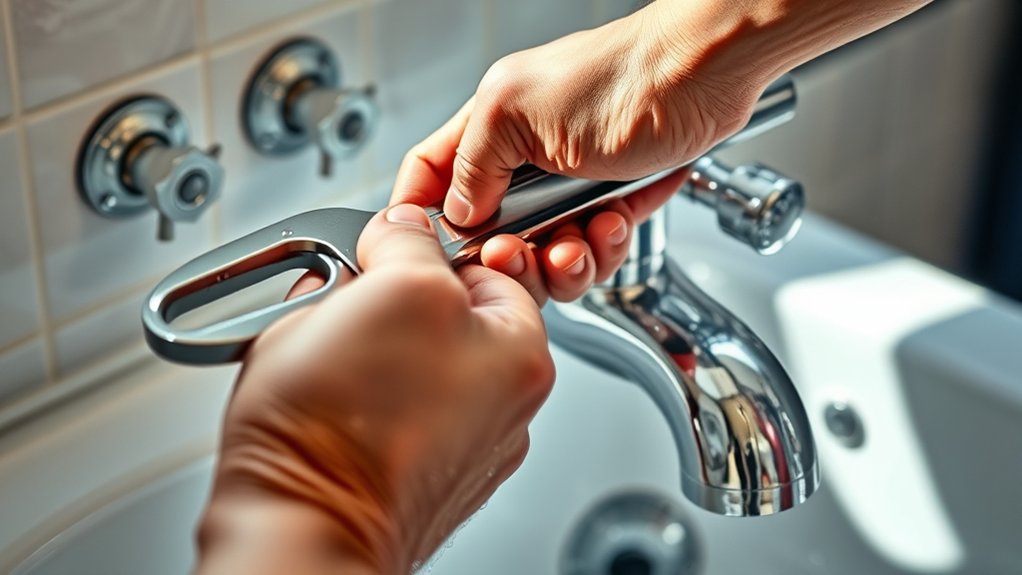
You can also try using a strap wrench or carefully heating the base to help free the faucet. Always protect surrounding finishes while working.
After removal, inspect the pipes for any damage or corrosion.
Keep going to uncover detailed steps and troubleshooting tips.
Essential Tools for Removing a Tub Faucet
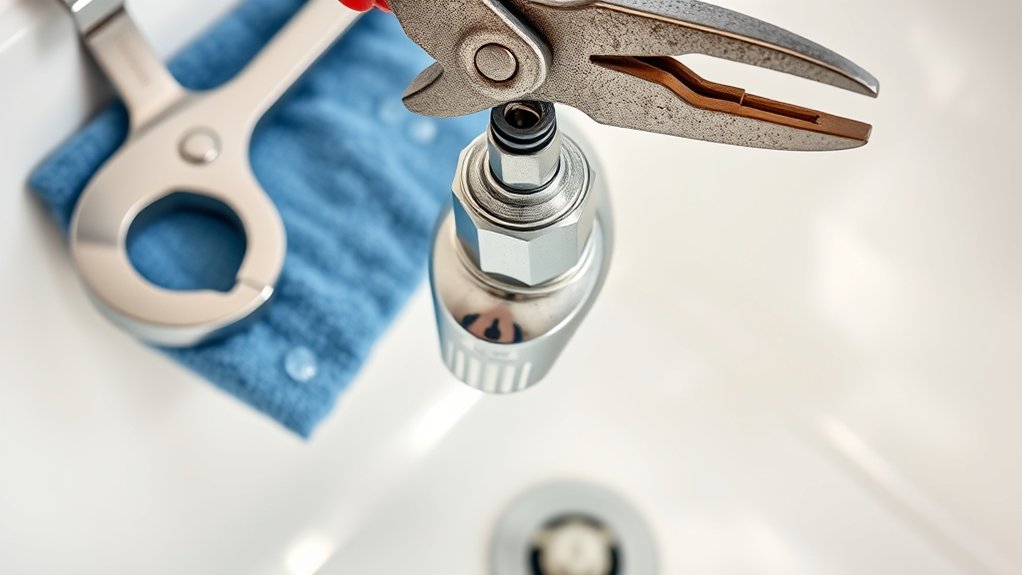
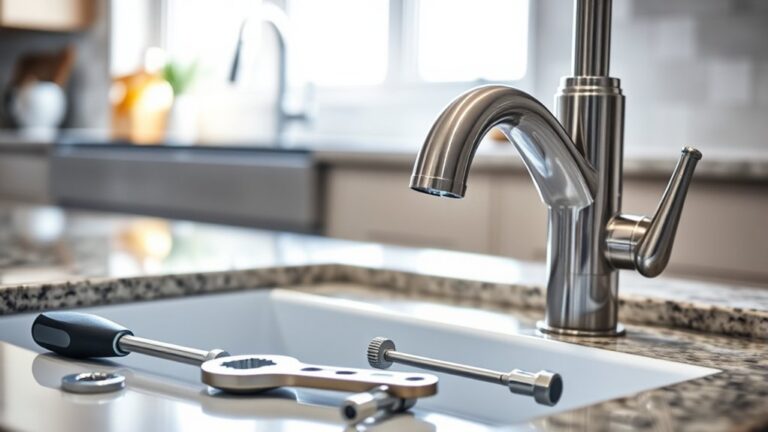
Before you start removing your tub faucet, gather the essential tools to guarantee a smooth process. You’ll need a screwdriver set, adjustable wrench, and an Allen wrench, as faucet types often vary and require different tools.
A utility knife helps you remove any caulk or sealant around the faucet. Having a putty knife or scraper is useful for loosening stubborn fixtures without damaging the tub surface. Installation tips recommend using a cloth or tape to protect finishes during removal.
Additionally, a flashlight can improve visibility in tight spaces. Preparing these tools beforehand guarantees you won’t interrupt your work to find specialized equipment. Being organized prevents damage and accelerates the faucet removal, making the entire process more efficient and precise.
Turning Off Water and Preparing Your Tub Faucet
Start by shutting off the main water supply to your bathroom to prevent leaks during the faucet removal. Locate the nearest shutoff valve, usually found under the sink or near the water heater, and turn it clockwise until fully closed.
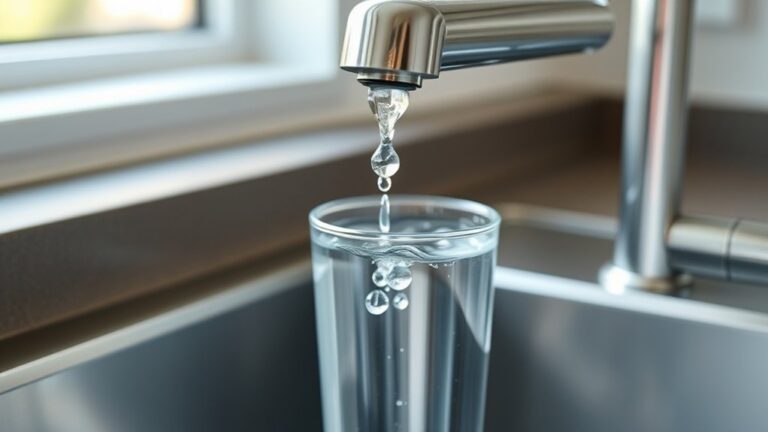
Next, open the tub faucet to drain any remaining water in the pipes, reducing pressure and minimizing spills. For proper faucet preparation, cover the drain with a rag or stopper to catch any small parts that may fall.
Open the faucet to drain water and cover the drain to catch falling parts.
Also, remove any decorative caps or handles using a screwdriver or Allen wrench, depending on your faucet model. Verify the water supply is fully off by checking that no water flows when the faucet handle is turned.
These steps guarantee a safe, clean working environment before proceeding with the actual removal.
Step-by-Step Guide to Removing Your Tub Faucet
Removing your tub faucet involves a series of precise steps to confirm no damage occurs to the plumbing or surrounding fixtures. First, identify your faucet type, whether it’s a slip-on, threaded, or set-screw model, as removal techniques vary.
Start by loosening any visible screws with the correct screwdriver or Allen wrench. If your faucet includes a decorative escutcheon, carefully pry it off to expose mounting hardware.
Next, gently twist or pull the faucet body to detach it from the pipe, taking care not to strain the plumbing. Clean the exposed pipe threads and inspect them for damage.
Follow installation tips by keeping parts organized for reassembly or replacement. This methodical approach confirms you remove your tub faucet efficiently while preserving components for future use.
How to Remove Stubborn Tub Faucets and Fix Common Problems
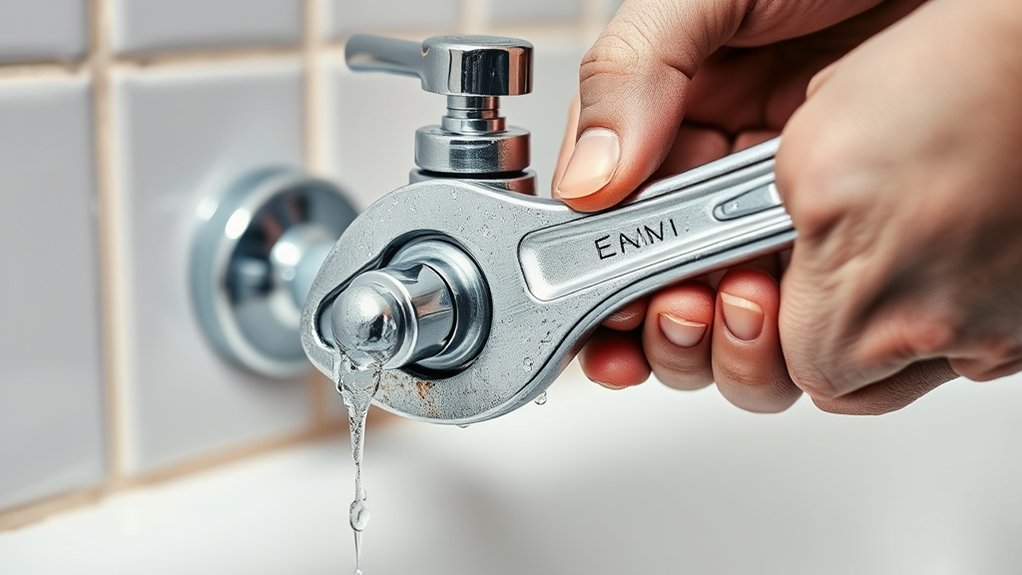
Once you’ve followed the basic steps to remove your tub faucet, you might encounter faucets that resist detachment due to corrosion, mineral buildup, or worn threads. Start by applying a penetrating lubricant around the faucet base and let it sit for 15-20 minutes to loosen rust.
Use a strap wrench to avoid damaging the fixture while increasing leverage. If mineral deposits persist, gently tap around the faucet with a rubber mallet to break the seal. For stubborn threads, carefully heat the faucet with a heat gun to expand the metal, then try removal again.
These plumbing tips help prevent damage during faucet replacement. Always wear gloves and eye protection, and avoid using excessive force that might damage the plumbing behind the wall.
Next Steps After Removing Your Tub Faucet
Inspect the exposed plumbing carefully to identify any damage or corrosion before proceeding. Check the pipe threads and connections for wear or buildup that could affect your faucet installation.
If you spot any issues, clean or replace the affected parts to guarantee a secure fit and prevent leaks. Next, flush the pipes briefly to clear debris, which helps maintain water flow and protects your new faucet.
When ready, apply plumber’s tape to threaded areas to create a tight seal during faucet installation. Finally, review your plumbing maintenance routine to include regular inspections, preventing future problems and extending the life of your fixtures.
Following these steps guarantees a smooth shift from removal to installation and promotes long-term plumbing system reliability.
Frequently Asked Questions
Can I Remove a Tub Faucet Without Shutting off the Main Water Supply?
You can’t safely perform faucet removal techniques without shutting off the main water supply. Ignoring plumbing safety tips risks water damage and injury, so always cut the water first before removing a tub faucet.
How Do I Identify the Type of Tub Faucet I Have?
You identify your tub faucet by examining faucet types, such as single-handle, double-handle, or wall-mounted, and noting installation styles like deck-mounted or wall-mounted.
Check for visible screws, spouts, and handle mechanisms to categorize it accurately.
What Are the Signs My Tub Faucet Needs Replacement Instead of Removal?
If your faucet leaks like Niagara Falls or corrosion ruins its finish, it’s time for replacement. You can explore replacement options offering improved durability and efficiency, ensuring a precise, long-lasting fix over mere removal.
Are There Eco-Friendly Alternatives to Traditional Tub Faucets?
You can choose eco-friendly tub faucets with water saving features like low-flow aerators and thermostatic controls.
Look for models made from sustainable materials such as recycled brass or stainless steel to reduce environmental impact effectively.
How Long Does It Typically Take to Remove a Tub Faucet?
Removing a tub faucet usually takes 30 to 60 minutes, depending on your skill and tools. With proper faucet removal tools and installation tips, you’ll breeze through the job without breaking a sweat or causing damage.