How to Fix a Garden Faucet
To fix your garden faucet, first shut off the water supply and drain any remaining water by opening the faucet. This initial step is crucial to prevent water from spilling during the repair process.
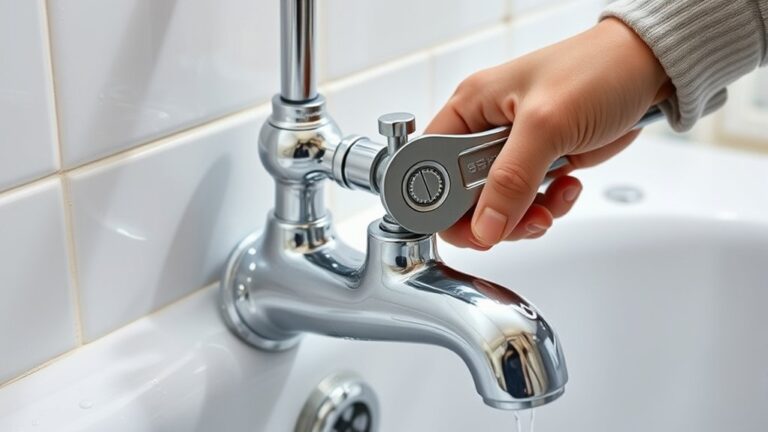
Use a screwdriver and wrench to remove the handle and inspect for worn washers or damaged O-rings causing drips.
Also, check for rust and debris that might be causing a stuck handle.
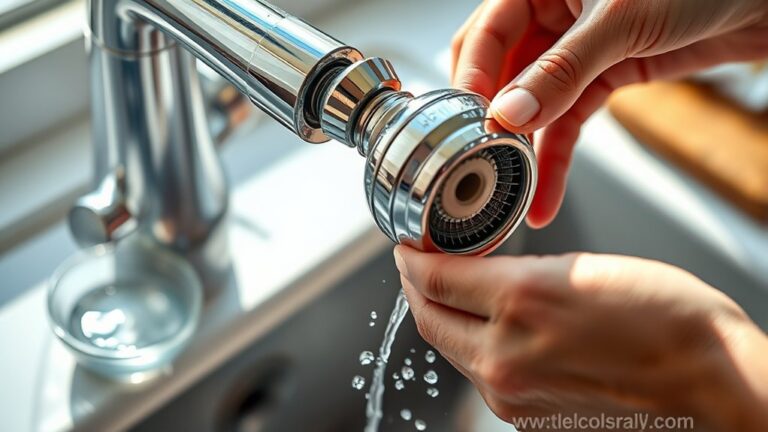
Clean clogged aerators to improve water pressure.
Replace faulty parts with matching replacements and reassemble carefully to avoid leaks.
Following these steps will help you address common issues effectively and guarantee your faucet functions properly.
Identify Common Garden Faucet Problems: Drips, Stuck Handles & Low Pressure
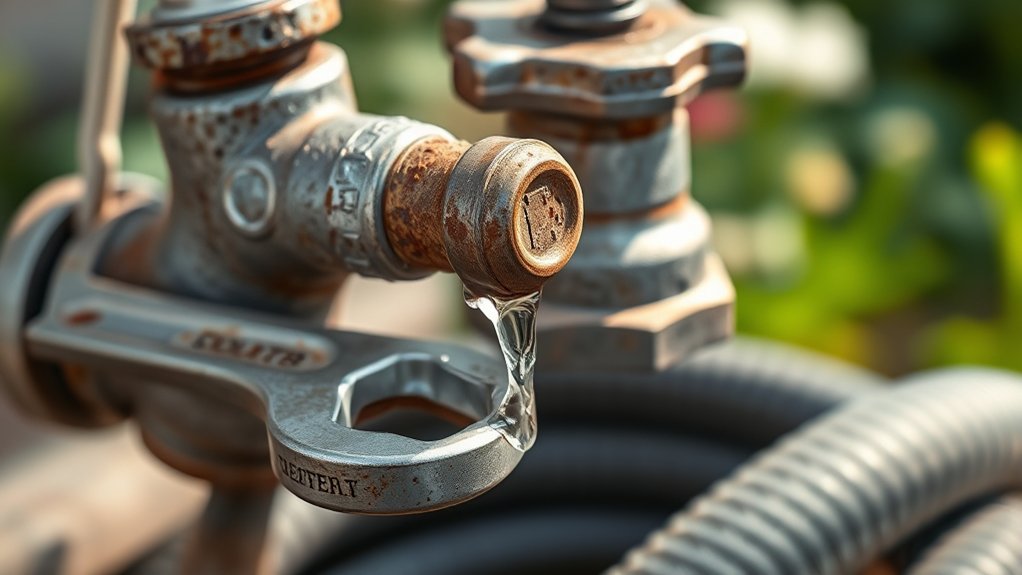
Before you begin repairing your garden faucet, you need to pinpoint the exact issue causing its malfunction. Common problems include drips, stuck handles, and low water pressure.
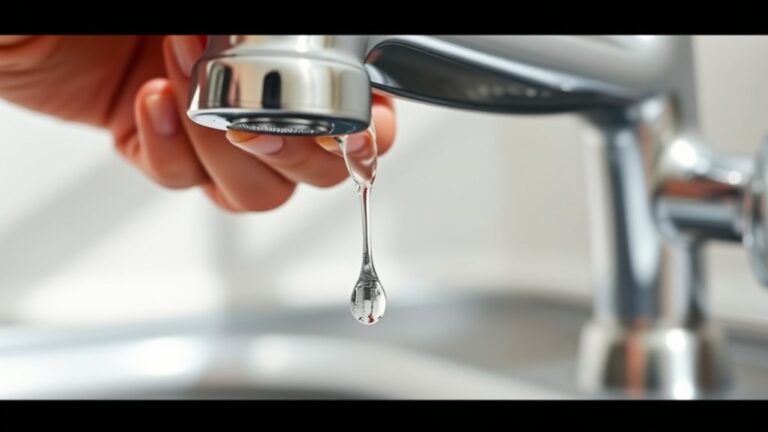
Drips often result from worn washers or damaged O-rings, causing water waste. Stuck handles usually indicate corrosion or mineral buildup, restricting valve movement. Low pressure might stem from clogged aerators or supply line blockages.
Drips, stuck handles, and low pressure often signal worn parts, corrosion, or blockages needing prompt attention.
Implementing regular faucet maintenance tips, such as cleaning and lubricating moving parts, helps prevent these issues. Conduct seasonal inspections, especially before winter and after freezing temperatures, to detect early signs of wear or damage.
Identifying the precise problem guarantees you apply the correct repair method, saving time and effort while maintaining your garden faucet’s functionality and longevity.
Tools You’ll Need for Garden Faucet Repairs
Gathering the right tools is essential for efficiently fixing your garden faucet and avoiding unnecessary delays. Different faucet types may require specific tools, so having a versatile kit is key. Follow these maintenance tips to guarantee you’re prepared for repairs:
| Tool | Purpose | Recommended Type |
|---|---|---|
| Adjustable Wrench | Loosening/tightening nuts | Smooth jaws to prevent damage |
| Screwdrivers | Removing screws from handles | Phillips and flathead set |
| Pliers | Gripping and turning small parts | Needle-nose or slip-joint |
| Replacement Washers | Sealing leaks | Match faucet valve size |
With these tools on hand, you’ll address common issues effectively across various faucet types. Proper preparation streamlines the repair process, saving time and preventing further damage.
Fix a Dripping Garden Faucet
Start by shutting off the water supply to your garden faucet to prevent further leakage while you work. Next, open the faucet to drain any remaining water.
Remove the handle by unscrewing the retaining screw and then detach the packing nut with a wrench. Carefully extract the valve stem to access the washer, the most common cause of faucet leaks.
Inspect the washer for wear or damage; if it’s worn, replace it with an identical size. Reassemble the valve stem, packing nut, and handle securely.
Finally, turn the water supply back on and test the faucet for leaks. This washer replacement should stop dripping and restore proper function. If leaks persist, further inspection of the valve seat or seals may be necessary.
Fix a Stuck Garden Faucet Handle
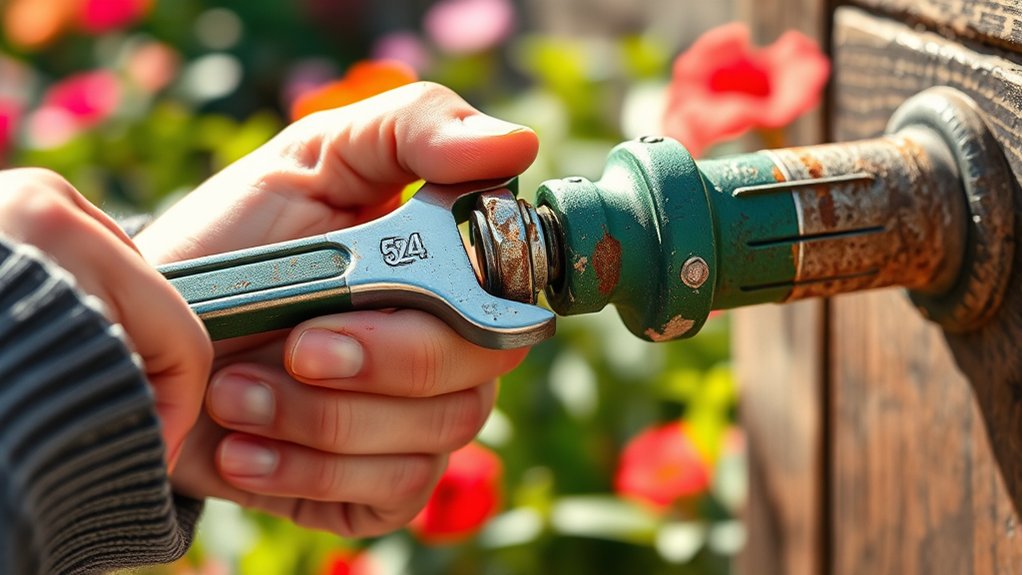
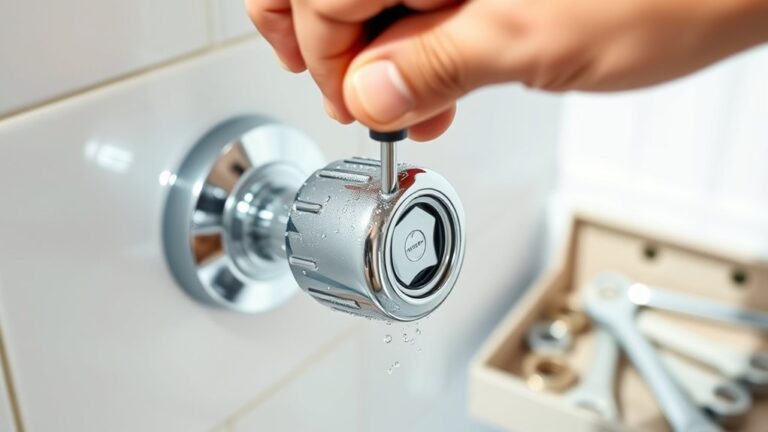
If your garden faucet handle won’t turn, it’s often due to mineral buildup or corrosion inside the valve assembly. First, remove the handle by unscrewing the central screw, then inspect for rust or debris. Apply handle lubrication techniques such as a silicone-based grease to the stem and moving parts to restore smooth operation.
Common handle materials like brass, plastic, or aluminum require appropriate lubricants to avoid damage.
| Handle Material | Recommended Lubrication |
|---|---|
| Brass | Silicone-based grease |
| Plastic | PTFE (Teflon) grease |
| Aluminum | Light machine oil |
| Steel | Lithium-based grease |
| Composite | Silicone spray lubricant |
Reassemble the handle carefully, ensuring all components move freely before tightening screws.
Restore Garden Faucet Water Pressure
When your garden faucet delivers weak water flow, it usually signals a blockage or pressure issue within the supply line or valve components. First, inspect the faucet screen for debris buildup; remove and clean it thoroughly to restore proper water flow.
Next, check the supply line for kinks or damage that might restrict pressure. If the problem persists, test the water pressure at the source valve; low pressure here indicates broader plumbing issues.
You can also remove the faucet cartridge or valve stem to examine for mineral deposits or corrosion, cleaning or replacing parts as necessary. Finally, verify all connections are tight but not over-tightened, as leaks can reduce pressure.
Addressing these factors will effectively resolve most garden faucet pressure issues.
Frequently Asked Questions
How Do I Winterize My Garden Faucet to Prevent Freezing?
You should drain the pipe completely, then install faucet insulation to prevent freezing. Shut off the water supply, open the faucet to drain remaining water, and wrap the insulation tightly for maximum protection during winter.
Can I Replace a Garden Faucet Myself or Should I Hire a Plumber?
Like a surgeon with steady hands, you can tackle DIY faucet installation if you have the right plumbing tools needed: wrenches, pipe tape, and sealant. Otherwise, hire a plumber to avoid costly mistakes and leaks.
What Type of Garden Faucet Is Best for Outdoor Use?
You’ll want a brass or stainless steel garden faucet for durability and corrosion resistance. Focus on solid faucet materials and guarantee proper installation tips, like using plumber’s tape and secure fittings, to prevent leaks and extend lifespan.
How Often Should Garden Faucets Be Maintained or Replaced?
Like a sturdy oak, your garden faucet’s lifespan typically spans 10-15 years. You should perform maintenance tips, like checking for leaks and winterizing, at least twice annually to guarantee functionality and avoid premature replacement.
Are There Eco-Friendly Garden Faucets That Conserve Water?
Yes, you can find eco-friendly garden faucets that incorporate water saving features like flow restrictors and automatic shutoff valves.
Opt for models made from sustainable materials such as recycled brass or biodegradable plastics to reduce environmental impact effectively.