How to Disconnect Kitchen Faucet
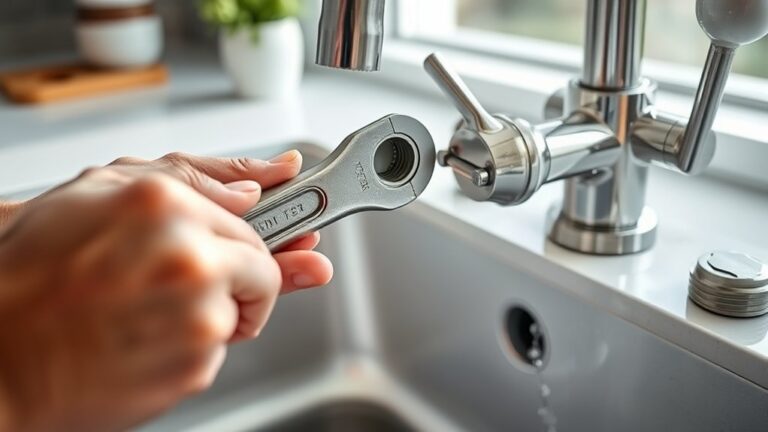
To disconnect your kitchen faucet, first gather tools like an adjustable wrench, basin wrench, and plumber’s tape.
Clear the sink area to give yourself enough workspace.
Turn off the water supply valves located under the sink. Open the faucet to drain any remaining water, then verify that the valves are fully closed.
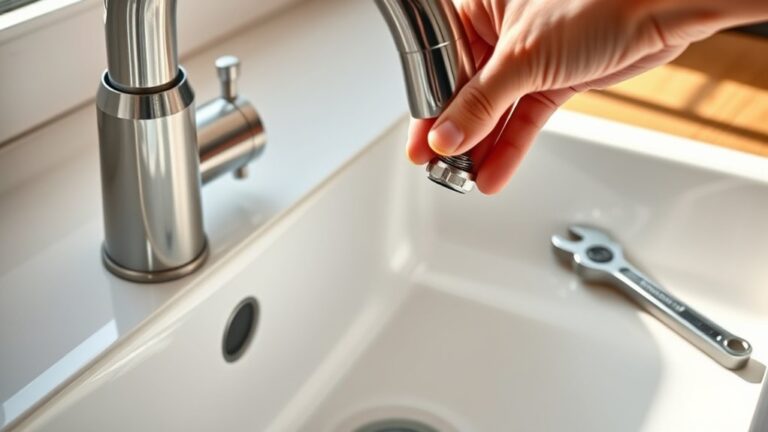
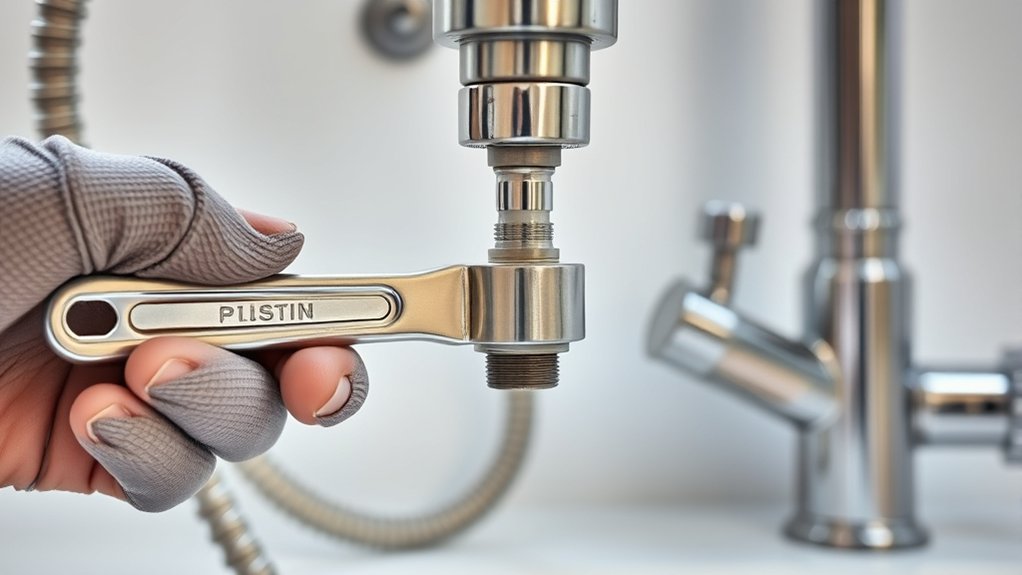
Next, loosen and remove the water line fittings using a wrench.
Use a basin wrench to detach the mounting hardware beneath the sink.
If you want to address common issues and maintenance tips, keep going for detailed steps.
Gather Tools and Clear Your Kitchen Sink Area
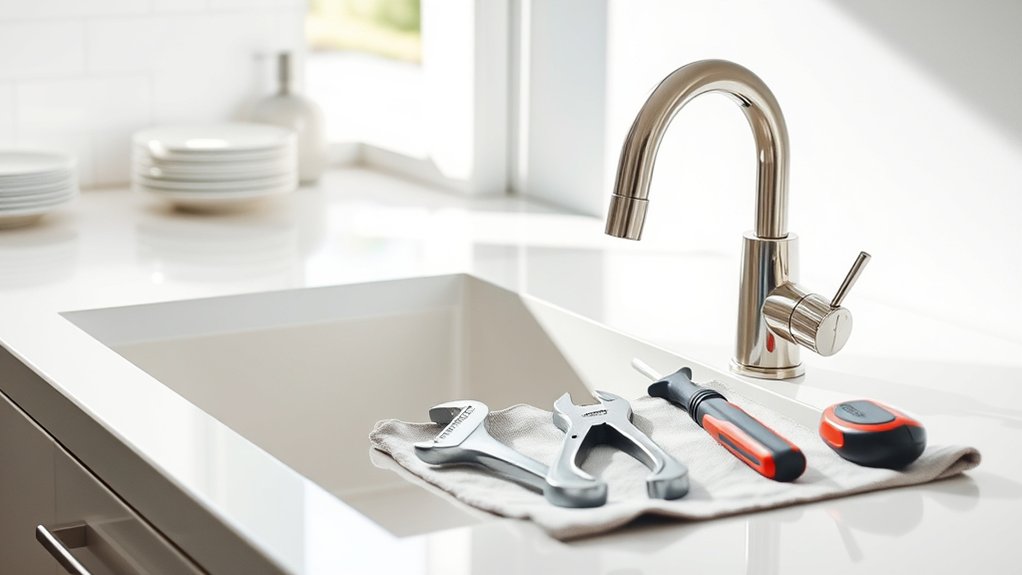
Before you begin disconnecting your kitchen faucet, gather all necessary tools to guarantee a smooth process. Start by clearing the kitchen sink area to improve kitchen organization and provide unobstructed access to plumbing essentials. Remove any dishes, cleaning supplies, or personal items around the sink.
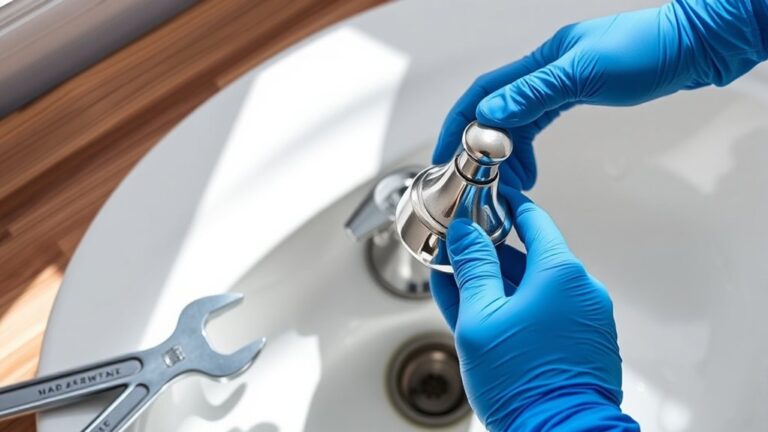
Collect tools such as an adjustable wrench, basin wrench, screwdriver, bucket, and plumber’s tape. Having these plumbing essentials ready will save you time and prevent interruptions. Ascertain you have adequate lighting and a towel nearby to catch drips.
Keeping your workspace organized reduces the risk of losing small parts like nuts or washers. By preparing your tools and clearing the sink area, you set a solid foundation for an efficient and safe faucet disconnection procedure.
Turn Off Water Supply and Drain the Faucet
Start by locating the shut-off valves under your sink. There are typically two, one for hot water and one for cold. Turn both valves clockwise to shut off the water supply completely.
This step is essential to prevent water pressure from causing leaks or damage during faucet maintenance. After closing the valves, open the faucet handles to release any remaining water and relieve pressure in the lines.
Let the water drain completely to avoid spills when disconnecting. If water continues to flow, double-check the valves to verify they’re fully closed. Draining the faucet protects your workspace and guarantees a smooth disconnection process.
Ensure the faucet drains fully to prevent spills and confirm valves are securely closed for a smooth disconnection.
Properly managing water pressure at this stage sets the foundation for efficient and safe faucet maintenance.
Disconnect Faucet Water Lines and Remove Mounting Hardware
With the water supply shut off and the faucet drained, you can now disconnect the water lines attached to the faucet. Locate the compression nuts or quick-connect fittings at the base of the faucet water lines. Use an adjustable wrench or pliers to loosen and disconnect these fittings carefully, avoiding damage to the supply lines.
Next, identify the mounting style securing the faucet. Common types include deck-mounted with mounting nuts or flange-mounted with clips. Access the mounting hardware from beneath the sink.
Use a basin wrench or appropriate tool to loosen and remove the mounting nuts or clips holding the faucet in place. Different faucet types may require specific tools, so make sure you have the correct equipment before proceeding. Once all hardware is removed, you can lift the faucet away from the sink.
Troubleshoot Common Problems When Disconnecting Your Kitchen Faucet
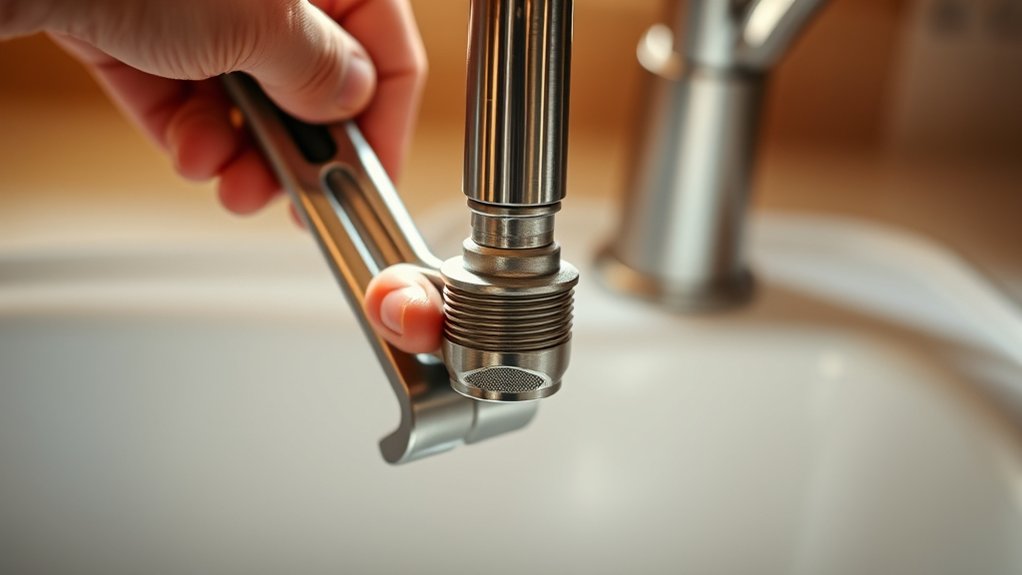
Although disconnecting a kitchen faucet is straightforward, you may encounter common issues such as stuck nuts, corroded fittings, or water leaks. To resolve these, apply penetrating oil on stuck nuts and use a wrench with steady pressure.
Inspect fittings for corrosion and replace damaged parts promptly to prevent faucet leaks. Follow installation tips carefully when reassembling or replacing components to guarantee a proper seal.
Regular maintenance advice includes checking connections and cleaning aerators to avoid future problems.
| Problem | Solution |
|---|---|
| Stuck Nuts | Apply penetrating oil, use wrench |
| Corroded Fittings | Replace affected parts |
| Water Leaks | Tighten connections, use plumber’s tape |
Use replacement options wisely to maintain faucet integrity.
Frequently Asked Questions
Can I Disconnect a Kitchen Faucet Without Turning off the Water Supply?
You can’t disconnect a kitchen faucet without turning off the water supply due to water supply concerns.
For faucet maintenance tips, always shut off valves first to prevent leaks or flooding during disconnection and repairs.
How Do I Choose a Replacement Kitchen Faucet?
Choosing a replacement kitchen faucet is like picking a perfect pair of shoes. You want style and comfort.
Consider faucet styles, mount type, and follow installation tips to guarantee compatibility and ease during setup for a flawless upgrade.
What Materials Are Best for Kitchen Faucet Water Lines?
You should choose flexible hoses for easy installation and durability, or copper tubing for corrosion resistance and longevity. Both materials guarantee reliable water flow, but flexible hoses offer more maneuverability in tight spaces.
How Often Should Kitchen Faucets Be Replaced?
Think of your faucet lifespan as a ticking clock, usually 15-20 years. You should replace it when you see replacement signs like leaks, corrosion, or reduced water flow.
Replacing your faucet on time helps maintain efficient, safe kitchen performance.
Can I Disconnect a Kitchen Faucet by Myself or Need a Plumber?
You can disconnect a kitchen faucet yourself with basic DIY plumbing skills. Make certain you turn off the water supply, use proper tools, and follow faucet maintenance steps carefully to avoid leaks or damage. Call a plumber if unsure.