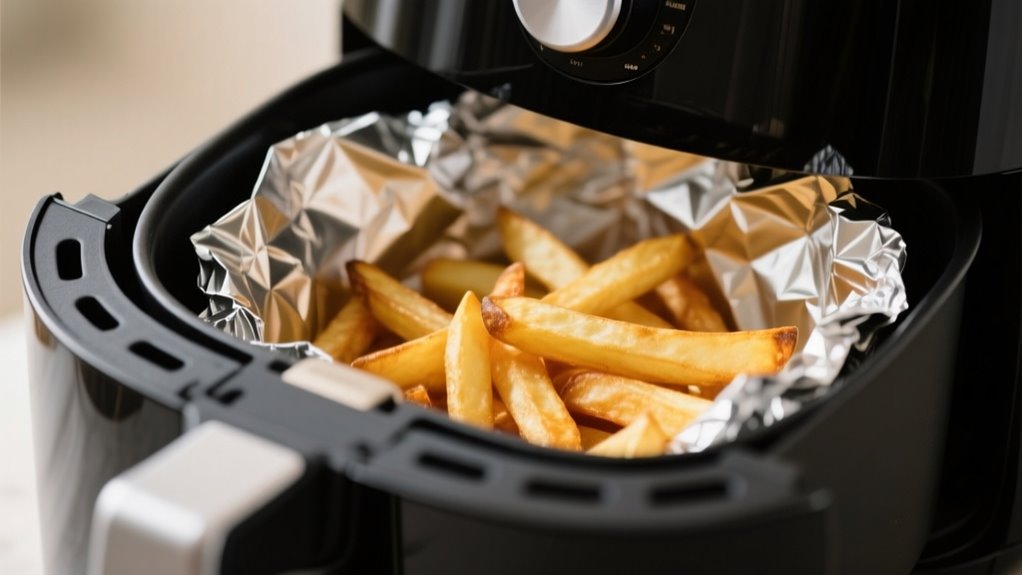
Can You Put Aluminum Foil in an Air Fryer?
Yes, you can put aluminum foil in your air fryer, but it requires caution.
Using aluminum foil in an air fryer can help with easy cleanup and prevent food from sticking. However, it’s important to handle it properly to ensure safety and effective cooking.
Make sure the foil doesn’t touch the heating element and doesn’t cover the whole basket, so air can circulate properly for even cooking. Secure the foil under your food to keep it from flying around.
Avoid wrapping acidic foods in foil to prevent unwanted reactions.
To get the best results and safety tips, there are helpful guidelines you might want to explore. Following these tips will help you enjoy the benefits of aluminum foil in your air fryer without any issues.
Always prioritize safety and proper use for the best cooking experience.
Key Takeaways
- Aluminum foil can be used in an air fryer if it is securely placed and does not touch the heating element.
- Always leave space around the foil and poke holes to maintain proper hot air circulation for even cooking.
- Avoid wrapping acidic foods or lightweight items in foil to prevent leaching and airflow disruption.
- Check your air fryer manual for specific guidelines on foil use to ensure safety and optimal performance.
- Foil helps catch drips, prevent sticking, and simplify cleanup when used correctly in an air fryer.
Is It Safe To Use Aluminum Foil in an Air Fryer?
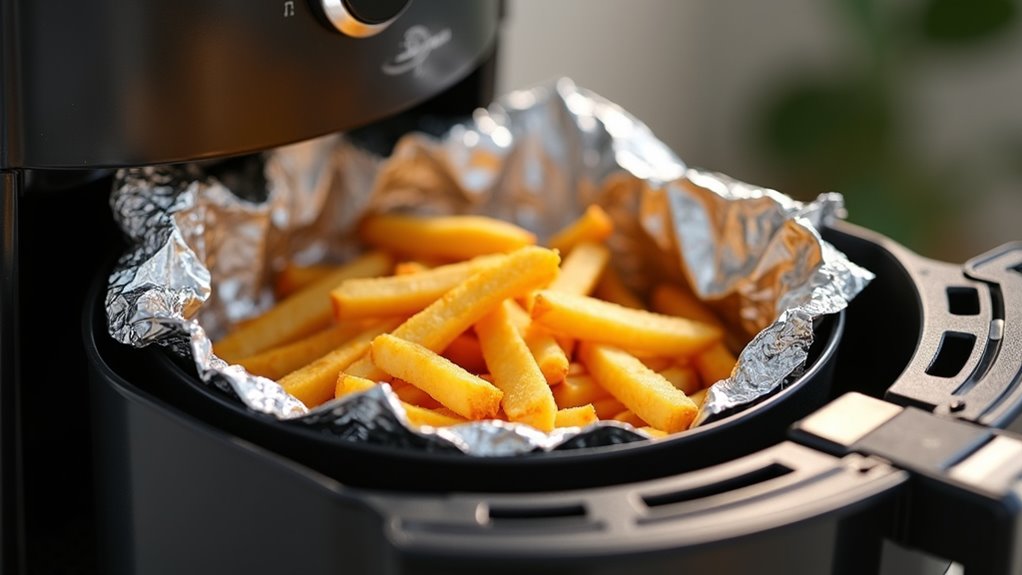
Wondering if you can safely use aluminum foil in your air fryer? The good news is that aluminum foil is generally safe to use in an air fryer, as long as you take some precautions. Make sure the foil doesn’t touch the heating element, and secure it properly so it won’t blow around during cooking.
Blocking the airflow is a common mistake—leave enough space around the foil so hot air can circulate freely, ensuring your food cooks evenly. Avoid wrapping acidic foods like tomatoes or citrus in foil, as this can cause chemical reactions. Using a little cooking oil can help prevent food from sticking to the foil, making cleanup easier.
Always double-check your air fryer’s manual for specific recommendations about aluminum foil use. By following these tips, you can enjoy the convenience of aluminum foil without compromising safety or cooking performance.
When and How To Put Aluminum Foil in an Air Fryer
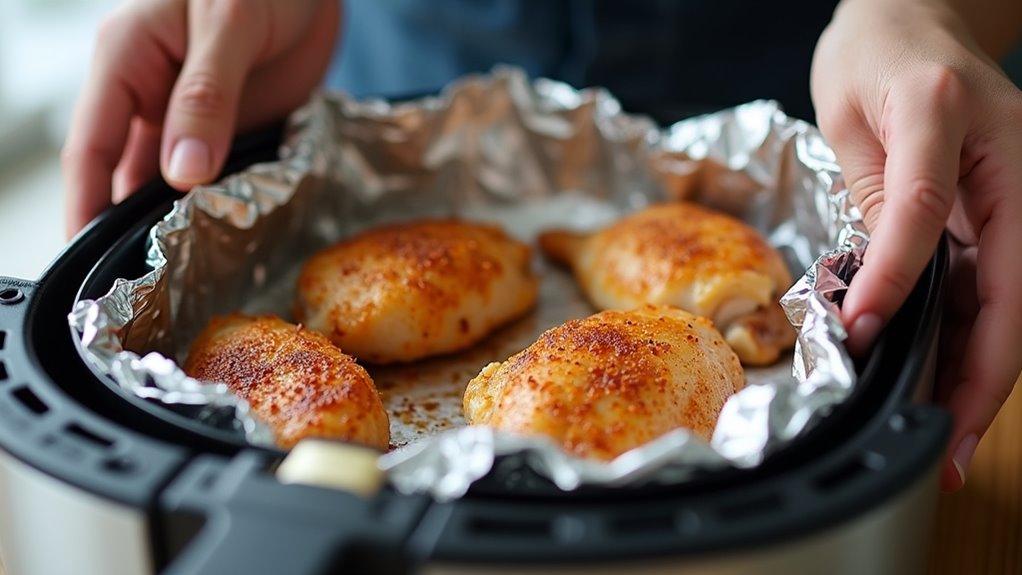
When you use aluminum foil in your air fryer, make sure it’s placed properly and never touches the heating element to avoid hazards. Secure the foil by weighing it down with food, so it doesn’t fly around and block airflow.
Poke holes in the foil to keep air circulating for even cooking.
Proper Foil Placement
Proper foil placement in your air fryer is essential for safe and efficient cooking. To use foil correctly, you need to focus on maintaining airflow and ensuring it’s safe to use aluminum without causing hazards.
Here’s how to get proper air circulation and foil placement right:
- Place foil only under the food, never covering the entire basket, to maintain airflow.
- Make sure the foil doesn’t touch the heating element to avoid fire risks.
- Poke small holes in the foil if you want to catch drips while still allowing air to circulate freely.
Following these tips helps you use foil safely and keeps your food cooking evenly. Always check your air fryer’s manual for specific guidelines on foil use.
Securing Foil in Basket
Although aluminum foil can be a helpful tool in your air fryer, you need to fasten it correctly to keep it from flying around and disrupting the cooking process. Always weigh down the foil with food to prevent it from blowing loose inside the air fry basket.
If you’re cooking saucy or marinated dishes, shape the foil into a makeshift bowl that holds the food while allowing airflow around it. Never cover the entire basket with aluminum foil, as blocking airflow leads to uneven cooking results. Poke holes in the foil to maintain proper air circulation, especially when catching drips.
When cooking multiple batches, lining the basket with foil is fine, but guarantee there’s enough space for air to circulate freely. Properly securing foil guarantees efficient airflow and better cooking results.
Situations When You Should Avoid Using Aluminum Foil
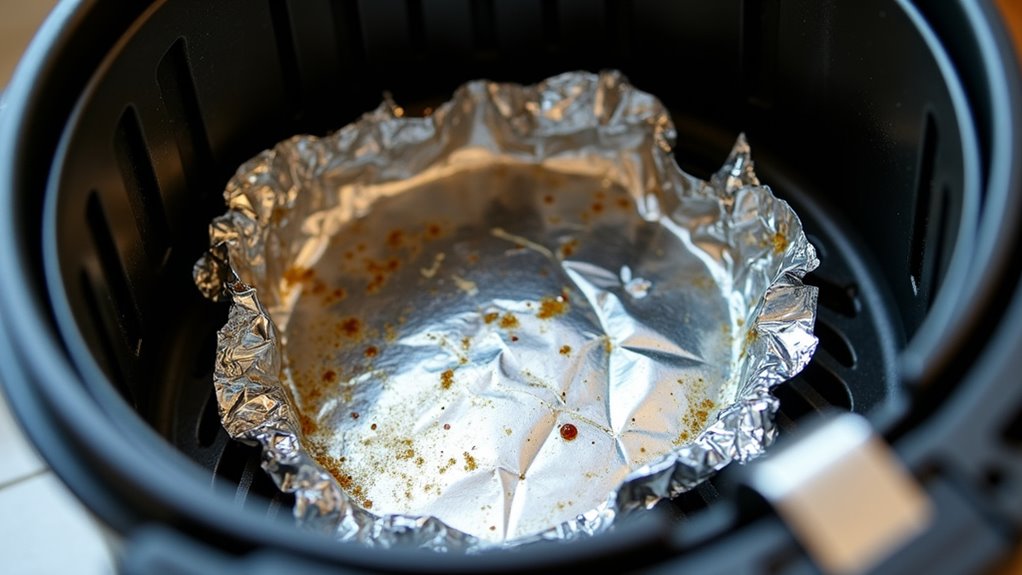
Since aluminum foil can block airflow in your air fryer, you should avoid using it with delicate foods that need even cooking. The foil disrupts air flow, leading to uneven heat distribution and longer cooking time.
Here are three situations when you should skip the aluminum foil:
- Cooking delicate foods: Items like fish or thin vegetables need proper air circulation to cook evenly. Foil can cause sogginess or uneven texture.
- Handling lightweight foods: Foods such as tortilla chips or leafy greens can shift or fly around if covered with foil, further disrupting air flow.
- Using acidic ingredients: Cooking tomatoes, citrus, or other acidic foods in contact with foil can cause leaching, altering taste and safety.
Tips for Proper Placement of Foil in the Air Fryer Basket
When you use aluminum foil in your air fryer basket, make sure it’s securely weighed down by the food to prevent it from shifting or blocking airflow. Proper placement is key to maintaining even airflow, which directly impacts your cooking results. Avoid covering the entire basket with foil; instead, line just the bottom or create slings for delicate items.
Leave enough space around the foil to allow hot air to circulate freely, ensuring consistent cooking. Poke small holes in the aluminum foil to further promote airflow, helping heat reach all sides of your food. Also, keep the foil from touching the heating element to prevent fire hazards.
Comparing Aluminum Foil and Parchment Paper for Air Frying
When you use aluminum foil in your air fryer, it can block airflow and cause uneven cooking, while parchment paper lets air circulate better if placed correctly. Both materials make cleanup easier, but parchment paper is safer, especially with delicate or acidic foods.
Make sure to weigh down either one so they don’t fly around during cooking.
Airflow Impact Differences
Although aluminum foil can be convenient, it often obstructs airflow in an air fryer, causing uneven cooking and soggy spots by blocking hot air circulation. When comparing aluminum foil and parchment paper, keep these airflow impact differences in mind:
- Aluminum foil can easily block hot air if it covers too much surface, disrupting airflow and extending cooking times.
- Parchment paper, when weighed down with food, allows better airflow since it’s less rigid and less likely to block air passages.
- Neither should cover the entire basket; leaving space guarantees hot air circulates around your food, promoting even cooking.
Cleanup and Safety
Since aluminum foil can catch drips and prevent food from sticking, it helps cut down on cleanup in your air fryer—but you must leave gaps for air to flow properly. Both aluminum foil and parchment paper can simplify cleanup, but you should weigh down parchment paper with food to keep it from flying around during air frying.
For safety, avoid letting aluminum foil touch the heating element to prevent fire hazards, while parchment paper poses less risk but isn’t suitable for cooking with liquids. Improper use of either material can block airflow, causing uneven cooking and potential safety issues.
To maintain your air fryer’s performance and guarantee safety, clean it immediately after use, whether you use aluminum foil or parchment paper, preventing food residue buildup that complicates cleanup.
Air Frying Best Practices to Enhance Cooking Results
To get the best results from your air fryer, you’ll want to use aluminum foil carefully and strategically. Aluminum can help with cleanup or cooking saucy foods, but it’s essential not to block airflow, as your air fry capabilities depend on hot air circulating evenly for crispy, delicious results.
Here’s how to use foil without compromising cooking results:
- Only line the basket with foil when necessary and avoid covering the entire surface to maintain airflow.
- Poke holes in the foil to let hot air pass through, preventing soggy textures and promoting even cooking.
- Place food directly on the foil to weigh it down, stopping it from flying around and disrupting heat distribution.
Safety Precautions When Using Foil in Air Fryers
When using aluminum foil in your air fryer, you need to take specific safety precautions to prevent hazards and guarantee your food cooks properly. First, never let the foil touch the heating element, as this could cause sparks or even a fire. Make sure heavy foods weigh down the foil so it doesn’t shift and block the essential airflow needed for even cooking.
Avoid covering the entire basket with foil because doing so can block air circulation and result in unevenly cooked food. To maintain proper airflow, poke holes in the foil, especially when cooking items that drip or need ventilation. Also, steer clear of using foil with acidic foods to prevent leaching, which can affect both the taste and safety of your meal.
Alternatives to Aluminum Foil for Easy Cleanup
While aluminum foil can be handy in your air fryer, it’s not the only option for keeping things tidy. If you want easy cleanup without compromising frying results, consider these alternatives:
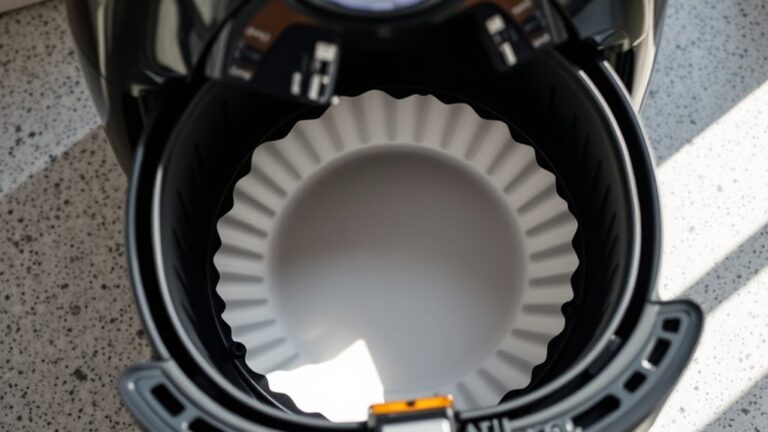
- Parchment Paper: Specially designed parchment paper liners for air fryers offer a non-stick surface and won’t block airflow, making cleanup simple and effective.
- Silicone Mats: Perforated silicone mats catch drips and crumbs while being dishwasher safe, so you can reuse them effortlessly after each cooking session.
- Non-Stick Bake Pans: Placing these pans inside your air fryer can trap messes and make cleaning faster, especially when frying foods that tend to splatter.
You can also use cooking spray on your basket or food to reduce sticking. Remember, cleaning your air fryer immediately after use helps maintain its performance, no matter which method you choose for easy cleanup.
Expert Recommendations on Using Foil in Various Air Fryer Models
How can you safely use aluminum foil in your air fryer? Experts agree that using foil in an air fryer is fine as long as it’s properly secured and doesn’t touch the heating element. Different air fryer models may have specific guidelines, so always check your manual first.
When placing foil in the air fryer basket, make certain to leave enough space for proper air circulation. This is vital because unrestricted airflow guarantees even cooking. To boost airflow, poke small holes in the foil, allowing hot air to circulate freely around your food.
Avoid using foil with lightweight or fluffy items, as they can shift and block air, causing uneven cooking. By following these expert recommendations for your specific air fryer model, you can safely use aluminum foil to catch drips or prevent sticking while maintaining peak cooking performance.
Frequently Asked Questions
Is It Safe to Use Aluminum Foil in an Air Fryer?
Yes, it’s safe to use aluminum foil in an air fryer if you follow air fryer tips carefully. Avoid safety concerns by not letting foil touch the heating element and ensuring it doesn’t block airflow. Poke holes for even cooking methods and avoid acidic foods for food safety.
If you’re worried, consider aluminum foil alternatives like parchment paper. Always check your air fryer manual to keep cooking safe and effective.
Is It Better to Put Aluminum Foil or Parchment Paper in the Air Fryer?
When it comes to air frying, don’t put all your eggs in one basket—parchment paper benefits usually outweigh aluminum foil drawbacks. Parchment lets hot air circulate better, improving food texture and reducing sticking.
While aluminum foil can handle higher cooking temperature considerations and messy foods, it risks blocking airflow and complicates cleanup comparison since it’s harder to manage.
Can I Wrap Chicken in Foil in an Air Fryer?
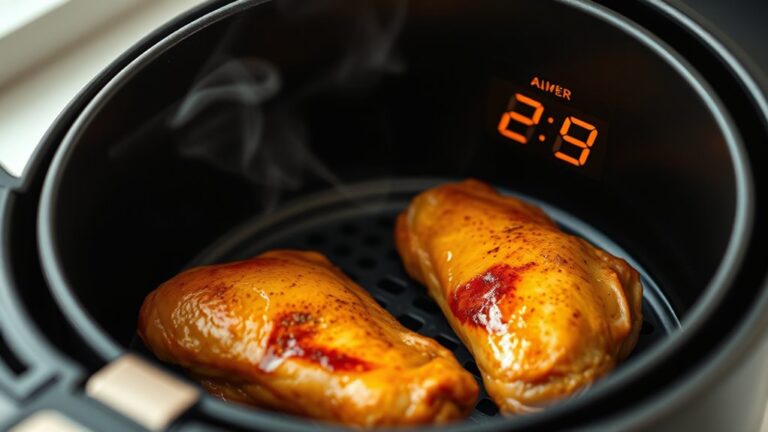
Yes, you can wrap chicken in foil while cooking in an air fryer. Wrapping techniques help lock in moisture and enhance flavor, making your chicken juicier.
Just remember air fryer tips: use heavy-duty foil, avoid covering the entire basket to maintain airflow, and poke holes in the foil for even cooking.
Foil benefits include easier cleanup and preventing drips, but don’t wrap heavily sauced chicken to keep it crispy.
What Cannot Be Cooked in an Air Fryer?
You shouldn’t cook wet batters in your air fryer because they’ll drip and make a mess. Leafy greens often get blown around, so they won’t cook evenly. Cheese dishes with soft cheese can melt too much and cause a mess.
Whole roasts don’t cook well since they need even heat throughout, and frozen foods may require preheating or special settings to cook properly. Stick to foods that crisp up nicely!
Conclusion
Using aluminum foil in your air fryer can be a handy kitchen companion when done thoughtfully. Just remember to tuck it in like a cozy blanket—secure and away from the fan’s breeze—to keep your food cooking evenly and safely.
If you prefer a gentler touch, parchment paper offers a soft alternative. With these simple tips, you’ll glide through cleanup and enjoy delicious results without any unexpected hiccups.
Happy air frying! Remember, using aluminum foil in an air fryer properly can enhance your cooking experience while keeping your appliance safe and efficient.