Can I Put Tinfoil in the Air Fryer
You can put tinfoil in your air fryer as long as you use it carefully.
Make sure the foil doesn’t block air vents or touch the heating elements, or it could cause sparks or uneven cooking.
It’s best to loosely cover just the food to keep air flowing freely.
Choose heavier-duty foil and secure it well to avoid issues.
If you want to know which foods benefit most and how to avoid common problems, there’s more helpful info ahead.
Key Takeaways
- Tinfoil can be used in air fryers if it does not block airflow or touch heating elements, ensuring safe and even cooking.
- Securely weigh down or tuck foil under food to prevent it from moving and causing sparks or fire hazards.
- Avoid covering the entire basket with foil to maintain proper hot air circulation and prevent uneven cooking.
- Tinfoil is ideal for delicate foods, marinades, and stuffing to retain moisture and prevent drips or spills.
- Check your air fryer’s manual, as some brands discourage tinfoil use due to potential damage to coatings or electrical parts.
Is It Safe to Use Tinfoil in an Air Fryer?
Wondering if it’s safe to use tinfoil in your air fryer? The short answer is yes, but with caution.
You can use tinfoil safely as long as it doesn’t block airflow or come into contact with heating elements.
Air fryers rely on hot air circulation to cook food evenly, so covering too much of the basket with foil can disrupt this process.
Also, avoid using foil if your air fryer has a non-stick coating that might be damaged.
Make sure the foil is securely placed and doesn’t flap around, which could cause sparks.
If you follow these guidelines, tinfoil can be a helpful tool for easier cleanup or to prevent food from sticking, without compromising safety or cooking quality.
How to Place Tinfoil Correctly in Your Air Fryer
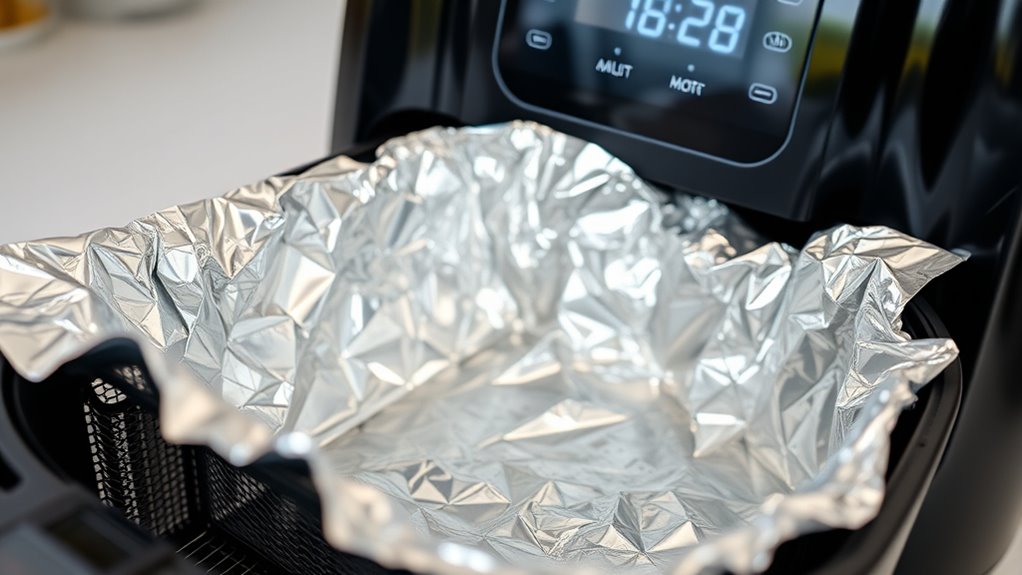
Although tinfoil can be useful in your air fryer, placing it correctly is key to ensuring even cooking and safety.
First, make sure the foil doesn’t block the air vents or cover the entire basket bottom, as proper airflow is essential for crisp results.
Instead, shape the foil to cover just the area beneath the food, leaving gaps around the edges.
Avoid wrapping food tightly in foil; loosely tent it to allow hot air circulation.
Secure the foil by folding the edges around the basket or placing a weighty item on top so it doesn’t fly up and touch the heating element.
Finally, check your air fryer’s manual, as some models have specific recommendations or restrictions about using foil.
Following these tips helps you cook safely and efficiently with tinfoil.
Which Foods Work Best With Tinfoil in the Air Fryer
You’ll find tinfoil especially useful when cooking delicate foods that might fall apart without support.
It’s great for catching cheese drips and preventing messes, too.
Plus, wrapping foods with marinades in foil helps keep the flavors locked in while air frying.
Wrapping Delicate Foods
When handling delicate foods in your air fryer, wrapping them in tinfoil can help prevent them from breaking apart or sticking to the basket. This technique keeps your food intact and guarantees an even cook without losing pieces through the holes in the basket.
Here are some delicate foods that benefit from being wrapped in tinfoil:
- Fish fillets: Keeps them moist and prevents flaking.
- Stuffed vegetables: Holds fillings in place and avoids spills.
- Soft baked goods: Protects from direct heat and prevents burning.
Just be sure to leave enough space for air circulation when wrapping, so your food crisps up nicely instead of steaming. Wrapping delicate foods this way can make your air fryer meals cleaner and more enjoyable.
Preventing Cheese Drips
If you want to keep your air fryer basket clean and avoid melted cheese messes, using tinfoil is a smart choice. Tinfoil acts as a barrier that catches drips from gooey, cheesy foods, saving you from tedious cleanup.
It works wonderfully with dishes like stuffed peppers, cheesy nachos, and jalapeño poppers.
Here’s a quick guide on which cheesy foods pair best with tinfoil in your air fryer:
| Food Item | Cheese Type | Why Tinfoil Helps |
|---|---|---|
| Stuffed Peppers | Mozzarella | Prevents melted cheese drip |
| Nachos | Cheddar | Keeps basket mess-free |
| Jalapeño Poppers | Cream Cheese | Holds in gooey filling |
| Cheese-Stuffed Meatballs | Parmesan | Avoids cheese overflow |
Using tinfoil lets you enjoy cheesy delights without the hassle!
Containing Marinades Effectively
Although marinades add incredible flavor, they can make a mess in your air fryer basket if not contained properly.
Using tinfoil is a smart way to keep those tasty juices from dripping all over while still allowing the hot air to circulate.
You’ll want to focus on foods that hold their shape well and won’t leak too much liquid beyond the foil wrap.
Here are some foods that work best with tinfoil in the air fryer to contain marinades effectively:
- Chicken thighs or drumsticks, which stay juicy and flavorful without losing too much marinade.
- Firm fish fillets like salmon, wrapped securely to keep the marinade close.
- Vegetables like bell peppers or zucchini, which soak up marinades without becoming soggy.
This approach keeps your air fryer clean and your food delicious.
What Can Go Wrong If You Use Tinfoil the Wrong Way?
If you use tinfoil incorrectly, you could risk a fire hazard or block the air fryer’s airflow.
Both issues can cause uneven cooking or damage to your appliance.
It’s important to understand how to place foil safely to avoid these problems.
Fire Hazard Risks
When you use tinfoil incorrectly in your air fryer, you risk creating a serious fire hazard. If the foil isn’t secured properly or gets too close to the heating element, it can spark and ignite. Here’s what can go wrong:
Loose foil pieces can fly around, touching the heating coil and causing sparks. Wrapping food too tightly might trap heat unevenly, increasing fire risk. Using foil in a way that blocks airflow can cause overheating, which might ignite the foil or surrounding parts.
It’s essential to handle tinfoil with care and follow manufacturer guidelines to avoid these dangers. Always guarantee the foil is firmly tucked and never lets loose edges flap near the heating element. Your safety depends on it.
Airflow Blockage Effects
Because your air fryer relies on proper airflow to cook food evenly, blocking vents with tinfoil can cause uneven heating and longer cook times.
If you cover or obstruct the air vents, hot air can’t circulate properly, leading to some parts of your food being undercooked while others might burn.
This not only affects the texture and taste but can also waste energy. Additionally, restricted airflow forces the appliance to work harder, potentially shortening its lifespan.
You might also notice that your air fryer’s fan makes unusual noises or that the unit overheats.
To avoid these issues, make sure any tinfoil you use doesn’t cover the bottom or sides of the basket completely; leave space for air to flow freely.
Does Tinfoil Affect Cooking or Flavor?
How does tinfoil impact the way your food cooks or tastes in an air fryer?
Using tinfoil can change cooking results since it reflects heat and can block airflow, which affects crispiness and even cooking. It might also trap moisture, making your food less crispy than usual. However, when used correctly, it can help keep food moist or prevent sticking.
Here’s what to keep in mind:
Tinfoil can cause uneven cooking if it covers too much surface area. It may alter flavor slightly by trapping steam, leading to less browning. When wrapped tightly around food, it can lock in juices and enhance moistness.
Which Air Fryer Brands Allow or Discourage Tinfoil?
When it comes to using tinfoil in your air fryer, different brands have specific guidelines you’ll want to follow.
Some warn against it due to material safety, while others provide clear recommendations for safe use.
Checking your air fryer’s manual can help you avoid any issues and cook with confidence.
Brand-Specific Guidelines
Although many air fryer brands generally allow the use of tinfoil, it’s important to check your specific model’s guidelines before lining the basket. Some brands have unique designs or safety features that affect whether tinfoil is recommended or discouraged.
To make it easier for you, here are some brand-specific notes:
Ninja: Usually permits tinfoil but warns against covering the entire basket to guarantee proper air flow.
Instant Pot Air Fryer Lid: Advises against using tinfoil, as it can interfere with the heating element.
Cosori: Allows tinfoil but suggests only lining the basket’s bottom, avoiding the sides to prevent blocking air circulation.
Always consult your user manual first to avoid any risks or damage.
Material Safety Considerations
Since different air fryer brands use various materials and heating technologies, their guidelines on tinfoil safety can vary.
For example, Philips usually advises against using tinfoil unless it’s weighed down by food to avoid blocking airflow or contacting the heating element.
Ninja tends to be more flexible but warns that loose foil can cause sparks, especially with their stainless steel baskets.
Instant Pot air fryers often permit tinfoil but recommend ensuring it doesn’t cover the entire basket to maintain proper air circulation.
On the other hand, some brands like Cosori explicitly discourage tinfoil use, citing potential damage to the non-stick coating or electrical components.
Checking your specific model’s manual is essential since ignoring material safety can lead to inefficient cooking or even hazards.
Usage Recommendations
Even if your air fryer’s manual doesn’t explicitly mention tinfoil, you’ll find that many brands have clear stances on its use. Some encourage careful use, while others advise against it to maintain safety and appliance longevity. Here’s a quick overview:
Philips: Generally allows tinfoil but warns not to block airflow or cover the basket bottom entirely.
Ninja: Discourages using tinfoil, as it may interfere with cooking efficiency and cause safety concerns.
Cosori: Permits tinfoil for lining baskets but emphasizes proper placement to avoid contact with heating elements.
Always double-check your specific model’s guidelines and verify foil doesn’t restrict air circulation or touch heating parts. This way, you’ll cook safely and keep your air fryer in good shape.
How to Keep Air Flowing When Using Tinfoil
When you use tinfoil in your air fryer, you need to make certain it doesn’t block the airflow that’s essential for even cooking.
To keep air flowing freely, avoid covering the entire basket or tray with foil. Instead, use smaller pieces that fit just under the food, allowing hot air to circulate around it.
Make certain to poke a few holes in the foil or loosely crumple it to create gaps for air to pass through.
Also, never let the foil extend beyond the basket edges, as it can disrupt the air circulation or get caught in the heating element.
Alternatives to Tinfoil for Lining and Wrapping
Although tinfoil is a popular choice for lining and wrapping in air fryers, there are several alternatives you can use to achieve similar results without risking airflow blockage or sticking issues.
These options help maintain even cooking and make cleanup easier. You might want to try:
Parchment Paper: It’s heat-resistant and prevents food from sticking while allowing air circulation.
Silicone Mats: Reusable and flexible, they provide a non-stick surface and are easy to clean.
Perforated Baking Sheets: Designed specifically for air fryers, these let hot air flow freely while holding your food securely.
Using these alternatives can enhance your air frying experience and keep your appliance in great shape.
Tips for Preventing Sticking and Splatters With Tinfoil
Since tinfoil can sometimes cause food to stick or create splatters in your air fryer, taking a few simple precautions can make a big difference.
First, lightly coat the tinfoil with cooking spray or brush it with a bit of oil to prevent sticking.
Avoid wrapping food too tightly; leaving some space allows hot air to circulate, reducing splatters.
Make sure the foil is securely tucked around the basket but not blocking airflow vents.
Use heavier-duty foil to avoid tearing and food falling onto the heating element.
When cooking fatty or saucy foods, fold the edges of the foil upward to contain juices and minimize mess.
Following these tips will help you enjoy a cleaner cooking experience without sacrificing the benefits of using tinfoil.
How to Clean Your Air Fryer After Using Tinfoil
After using tinfoil in your air fryer, you’ll want to clean it promptly to prevent any residue buildup or lingering odors.
Start by unplugging the unit and letting it cool completely. Then, focus on these key steps:
Remove and soak the basket: Soak the basket in warm, soapy water for 10-15 minutes to loosen stuck-on bits.
Wipe down the interior: Use a soft cloth or sponge with mild detergent to clean the inside, avoiding abrasive materials that could damage the coating.
Check and clean the heating element: Carefully wipe the heating element with a damp cloth if you notice any grease or debris.
Following these steps guarantees your air fryer stays clean and ready for your next cooking session.
Frequently Asked Questions
Can I Reuse Tinfoil After Cooking in the Air Fryer?
You can reuse tinfoil after cooking in the air fryer if it’s clean and not torn.
Just make sure it’s not blocking airflow or touching heating elements to keep your food cooking evenly and safely.
Is It Safe to Use Tinfoil With Acidic Foods in an Air Fryer?
When it comes to acidic foods, you’d better think twice before using tinfoil in your air fryer.
Acid can react with the foil, causing off flavors and potential health risks. Better safe than sorry!
Does Tinfoil Cause Sparks or Fire Hazards in Air Fryers?
Tinfoil itself usually doesn’t cause sparks or fire hazards in air fryers, but if it’s loose or touches heating elements, it can spark.
Always secure it properly and avoid blocking airflow to keep things safe.
Can Tinfoil Block the Air Fryer’s Heating Element?
Yes, tinfoil can block the air fryer’s heating element if it’s placed too close or covers it entirely.
You shouldn’t obstruct airflow, or your food won’t cook evenly and might damage the appliance.
How Does Tinfoil Affect Cooking Times in an Air Fryer?
Don’t count your chickens before they hatch. Using tinfoil can slightly alter cooking times by reflecting heat unevenly.
You might need to adjust timing or temperature to guarantee your food cooks thoroughly and evenly.
Conclusion
So, can you really put tinfoil in your air fryer?
The answer’s yes—but only if you’re careful.
Place it right, avoid blocking airflow, and choose the right foods, or you might face uneven cooking or even damage.
Think you’ve got it all figured out?
One small mistake could change everything.
Ready to master tinfoil in your air fryer and reveal perfectly crispy results every time?
Just don’t rush it—you’ll want to get this right.