How Long to Cook Steak Pinwheels in the Oven in 10 Simple Steps
To cook steak pinwheels in the oven, start by selecting a flank or skirt steak.
Butterfly and pound it thin to ensure even rolling. This preparation is key to achieving tender, flavorful pinwheels.
Season the steak well and spread your filling evenly over the surface.
Roll the steak tightly, securing it with twine or toothpicks to hold its shape during cooking.
Sear the pinwheels in a hot skillet for 2-3 minutes per side to develop a delicious crust.
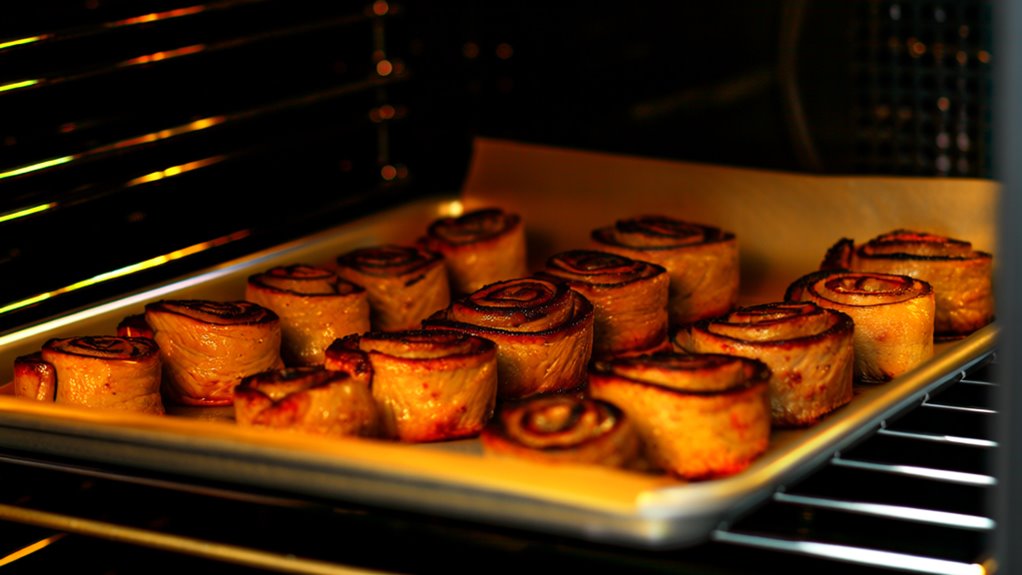
Then bake at 350°F for about 15 minutes to reach medium-rare doneness.
Let them rest before serving to keep the juices locked in for maximum flavor.
Keep going to uncover expert tips for perfect results.
Key Takeaways
- Preheat oven to 350°F (175°C) for medium-rare cooking of steak pinwheels.
- Bake pinwheels for about 15 minutes on a baking sheet for even cooking.
- Increase oven temperature to 375°F (190°C) and adjust time for well-done pinwheels.
- Use a meat thermometer; aim for internal temps of 125°F rare, 135°F medium-rare, 160°F well done.
- Let pinwheels rest at least 5 minutes after baking to retain juices and tenderness.
Selecting the Right Cut of Steak for Pinwheels
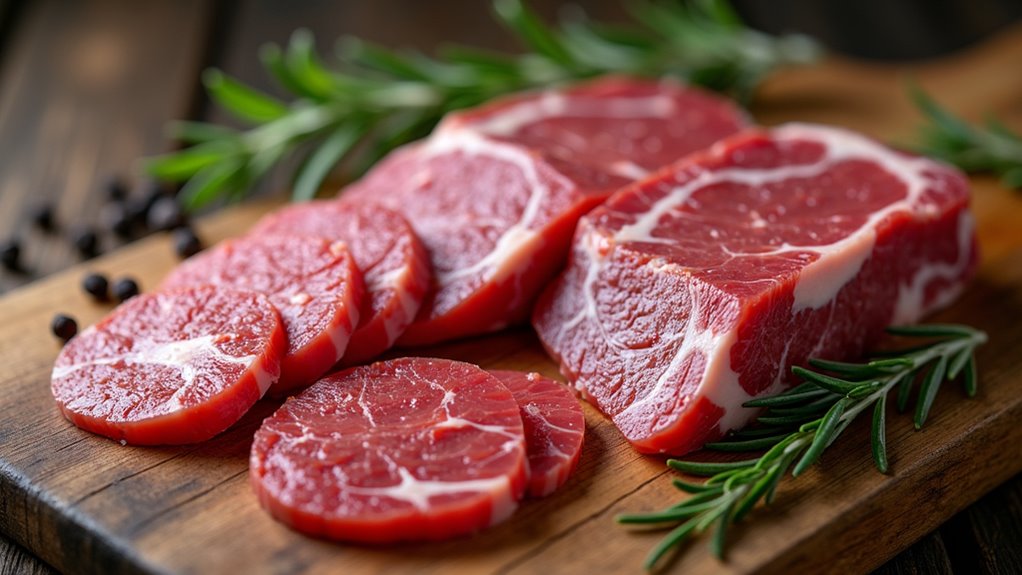
When selecting the right cut of steak for pinwheels, you’ll want to choose flank or skirt steak because their thinness makes them easy to roll. Both flank steak pinwheels and skirt steak are ideal due to their texture and ability to hold fillings well. Before you start, trim any excess fat to avoid flare-ups and guarantee better flavor absorption.
Butterflying the steak is essential—make short, careful cuts to open it up without slicing all the way through, aiming for a thickness between 1/4 and 1/2 inch. This thickness guarantees the steak cooks evenly and rolls smoothly. Also, pounding the steak to an even thickness helps prevent ripping while rolling and ensures uniform cooking throughout your pinwheels.
Preparing the Steak for Rolling
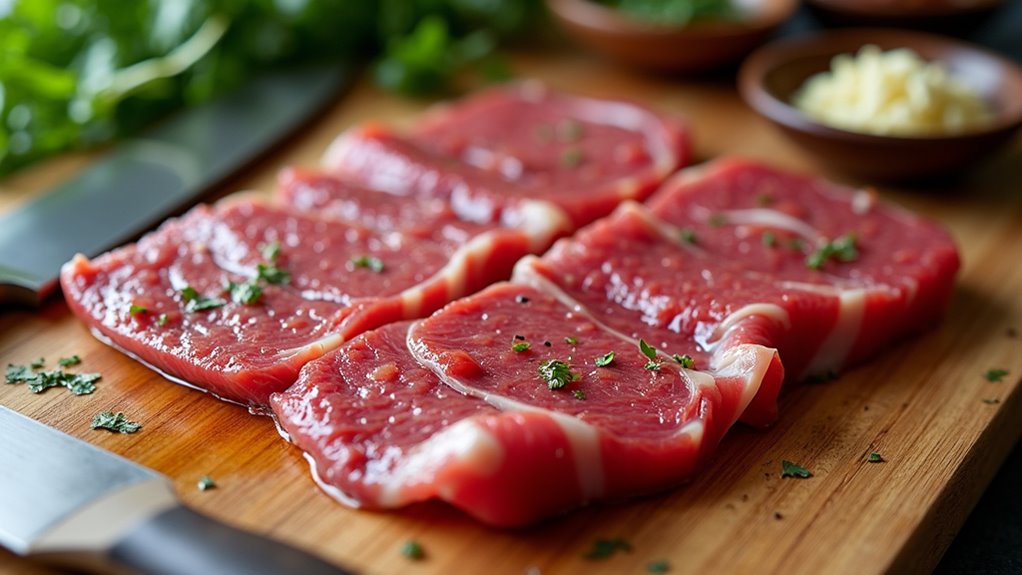
To get started, choose a flank or skirt steak and butterfly it carefully to about a quarter to half an inch thick for easy rolling. Make sure to trim any excess fat and season the meat well with salt and pepper to boost the flavor.
These steps will help you create a tender, flavorful base for your pinwheels.
Selecting the Steak
Although selecting the right cut might seem straightforward, choosing flank or skirt steak is essential because their thinness and flavor make them perfect for pinwheels. These cuts are naturally thin and tender, allowing you to easily create a rolled steak without it becoming too bulky or tough. When preparing your steak, trim any excess fat and the ends to guarantee even cooking and a neat appearance once rolled.
After butterflying the steak to about 1/4 to 1/2 inch thickness, you’ll have the ideal base for rolling. To keep your rolled steak intact during cooking, securely tie it every 2 inches with butcher twine. This step helps maintain shape and makes slicing your delicious pinwheels much easier after they’re done.
Butterflying Techniques
Since butterflying the steak properly is key to rolling it easily and cooking it evenly, you’ll want to make short, quick lengthwise cuts about four-fifths of the way through the meat. Use a sharp kitchen knife to guarantee clean slices that help maintain the steak’s structure and promote even cooking.
Start at one end and gradually lift the knife to keep the thickness consistent, aiming for about 1/4 to 1/2 inch. Mastering these butterflying techniques will make rolling the pinwheels simpler and improve stuffing distribution.
- Make cuts lengthwise, stopping before slicing through completely
- Use a sharp kitchen knife for precision and safety
- Maintain consistent thickness for even cooking
- Achieve a thickness ideal for rolling and stuffing distribution
Seasoning and Tenderizing
Before rolling your steak pinwheels, you’ll want to tenderize and season the meat properly to guarantee both flavor and ease of handling. Start by selecting flank or skirt steak, then use a meat mallet or rolling pin to gently tenderize it to a thickness of about 1/4 to 1/2 inch. Be careful not to pound too hard to avoid ripping the meat.
Next, lightly coat the steak with olive oil to help the seasoning stick and enhance the flavor. Then, season with salt and pepper generously for a well-rounded taste. If you have time, consider marinating the steak for a few hours to tenderize further, but it’s optional.
Finally, let the steak rest a few minutes after pounding so the fibers relax before rolling.
Choosing the Perfect Stuffing Ingredients
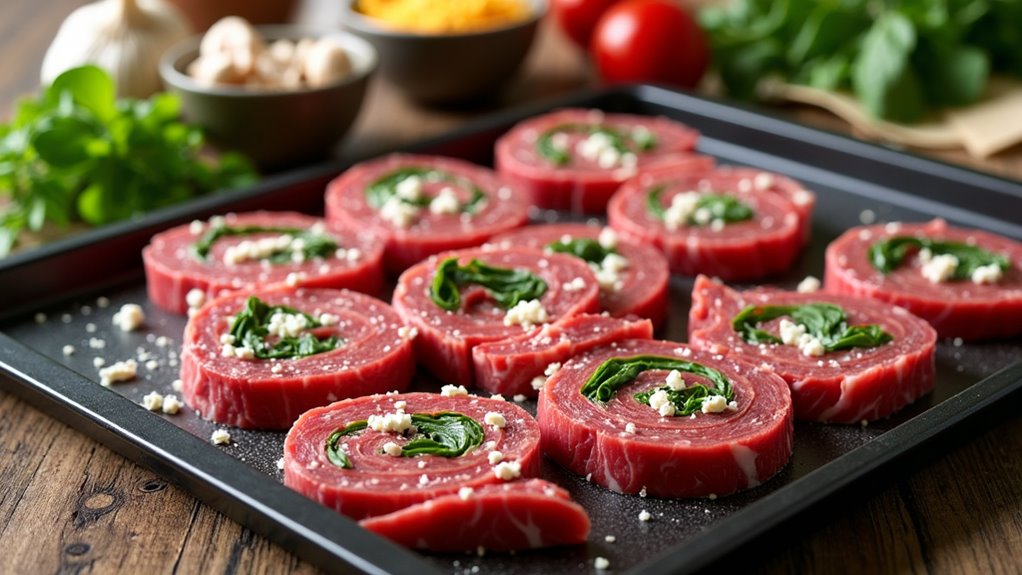
Selecting the right stuffing ingredients is key to making your steak pinwheels stand out. You want a blend that complements the beef while adding layers of flavor and texture. Combining creamy provolone cheese with fresh, seasonal ingredients can elevate your dish effortlessly.
Consider balancing richness with bright, fresh elements to keep things interesting. Try these stuffing ingredients for a perfect mix:
- Provolone cheese and cream cheese for a smooth, rich base
- Fresh spinach, sun-dried tomatoes, or artichoke hearts for texture and nutrition
- Prosciutto or thinly sliced ham to add a savory punch
- Herbs like garlic, chives, or Italian seasoning for aromatic depth
Mix and match to find your ideal flavor combination before rolling up your pinwheels!
How to Butterfly and Pound the Steak Thin
To start, pick a tender cut of steak that’s easy to butterfly and pound thin. Use a sharp, non-serrated knife to make a shallow cut along the length, opening the steak like a book for even thickness.
Then, cover it with plastic wrap and gently pound it to about 1/4 to 1/2 inch thick for uniform cooking.
Selecting the Right Steak
Choosing the right cut is key when making steak pinwheels, and flank or skirt steak works best because they’re thin and easy to roll. These cuts cook quickly and stay tender, especially when aiming for a medium internal temperature. Before cooking, you’ll butterfly and pound the steak thin to guarantee even cooking and easy rolling.
- Pick flank steak for a leaner option with a robust beef flavor.
- Use a sharp, non-serrated knife to prevent tearing while slicing.
- Pound the steak to about 1/4 to 1/2 inch thickness for uniform cooking.
- Keep the steak between plastic wrap while pounding to avoid mess and maintain texture.
This preparation guarantees your pinwheels cook evenly and stay juicy at medium doneness.
Butterfly Cut Technique
After picking your steak, the next step is mastering the butterfly cut technique. Using a sharp kitchen knife, make short, quick slices lengthwise, cutting about four-fifths through the meat without slicing all the way. This careful approach prevents the steak from falling apart and guarantees clean cuts.
A sharp kitchen knife is essential here to avoid slips and reduce injury risk. Once butterflied, pound the steak to an even thickness between 1/4 and 1/2 inch, which helps with easier rolling and promotes even cooking. The goal is a flattened piece that’s uniform in thickness, ready to be rolled with your fillings.
Mastering this butterfly cut technique sets the foundation for perfectly cooked steak pinwheels every time.
Pounding Steak Evenly
Begin by placing a sheet of plastic wrap over your butterflied steak to protect it from tearing as you pound. After you butterfly the steak by slicing it lengthwise almost through and opening it like a book, you’re ready to thin it out. Use a meat mallet to gently pound the meat, starting from the center and moving outward.
Your goal is a uniform thickness between 1/4 and 1/2 inch to guarantee easy rolling and even cooking.
- Use a sharp knife to butterfly the steak cleanly
- Cover steak with plastic wrap before pounding
- Pound gently with a meat mallet to avoid ripping
- Aim for consistent thickness for perfect pinwheels
This technique prevents juice loss and keeps your steak flavorful.
Assembling and Rolling the Steak Pinwheels
Once you’ve pounded the flank steak to about 1/4 inch thickness, lay it flat on a cutting board to prepare for filling. Take your butterflied flank steak and spread your chosen filling evenly across the surface, leaving a 1/2 inch border around the edges. This helps keep the filling contained during rolling.
Add extra layers like prosciutto, spinach, or cheese on top of the filling for added flavor and texture. Starting at one end, carefully roll the steak tightly to guarantee everything stays inside. You’ll secure it with kitchen twine or toothpicks later, but for now focus on creating a snug, even roll.
This tight assembly is key to maintaining shape and flavor as it cooks.
Securing Pinwheels With Kitchen Twine or Toothpicks
To keep your steak pinwheels from falling apart, you’ll want to secure them properly using either kitchen twine or toothpicks. Twine is great for a tight hold—just tie it every 2 inches with a double knot to maintain shape during cooking.
If you choose toothpicks, remember to space them evenly and remove them before serving to keep things safe.
Twine vs. Toothpicks
Securing your steak pinwheels properly is key to keeping their shape and filling intact during cooking, and you’ve got two main options: kitchen twine or toothpicks. Twine is generally preferred because it provides a more secure hold and allows for even cooking without puncturing the meat. Toothpicks are a quicker alternative but might slip out, risking spills.
- Twine should be cut into 24-inch lengths and tied every 2 inches for stability.
- Toothpicks work best when inserted at an angle to better secure the roll.
- Always remove toothpicks before serving to avoid hazards.
- Regardless of the method, tightly roll pinwheels to prevent filling leaks.
Choosing twine or toothpicks depends on your convenience and how secure you want your pinwheels.
Proper Twine Techniques
There are a few key twine techniques you’ll want to master to keep your steak pinwheels intact and easy to slice. Start by cutting lengths of twine about four times the width of your pinwheel. This gives you enough to tie secure knots without too much excess.
Space your twine wraps 1-2 inches apart to guarantee even slices after cooking. Always use a double knot to secure the twine tightly, preventing any filling from leaking out while in the oven. For extra security, you can insert toothpicks at the ends of the pinwheel before tying.
Once cooked, trim all excess twine to keep your presentation clean and safe for serving. Mastering these twine techniques assures perfectly cooked, well-shaped steak pinwheels every time.
Searing the Pinwheels Before Baking
Although baking will cook the steak pinwheels through, searing them first gives you a caramelized crust that locks in juices and boosts flavor. To do this, heat a skillet over medium-high heat and add olive oil. Place the pinwheels in the skillet, searing each side for 2-3 minutes until golden-brown.
This step enhances taste without overcooking the inside. Once seared, transfer the pinwheels to the oven to finish cooking to your desired doneness.
Keep in mind:
- Confirm the skillet is hot enough for a proper sear.
- Use enough oil to prevent sticking.
- Avoid overcrowding the skillet for even searing.
- Monitor closely to balance crust formation and internal cooking.
Preheating the Oven for Optimal Cooking
After searing your steak pinwheels to lock in flavor, the next step is to preheat your oven properly. Set the oven temperature to 350°F (175°C), which is ideal for even cooking and achieving a nicely caramelized crust. Be certain to allow at least 10-15 minutes for the oven to fully reach the desired temperature before placing your pinwheels inside.
Using an oven thermometer can help confirm the temperature is accurate, as some ovens run hotter or cooler than the dial indicates. If you prefer your steak pinwheels cooked to a higher doneness, you can preheat the oven to 375°F (190°C) for a faster cooking time, but remember to adjust the baking duration accordingly. Proper preheating guarantees your pinwheels cook evenly and stay juicy.
Baking Time and Temperature Guidelines
When you bake steak pinwheels at 350°F (175°C), you can expect them to reach a perfect medium-rare in about 15 minutes. To get the best results, place them on a baking sheet after searing for a caramelized crust.
If you prefer them more well-done, increase the oven temperature to 375°F (190°C) and bake for 5-10 minutes longer. Use a meat thermometer to check that the internal temperature hits at least 145°F (63°C) for safety. Remember to let rest for 5 minutes after baking to redistribute the juices.
- Preheat oven to 350°F (175°C) for medium-rare
- Use a baking sheet for even cooking
- Monitor doneness with a meat thermometer
- Adjust time for thickness and desired doneness
Checking Doneness and Resting the Pinwheels
To make certain your steak pinwheels are cooked just right, use a meat thermometer to check their internal temperature—aim for 125°F for rare, 135°F for medium-rare, or up to 160°F for well done. Doneness depends on your preference and the steak’s thickness, so adjust cooking time accordingly.
Once you remove the pinwheels from the oven, don’t cut into them immediately. Let them rest for at least 5 minutes to allow the juices to redistribute. This resting period guarantees each bite stays tender and flavorful by preventing juice loss.
Skipping this step can lead to a drier texture. By monitoring the internal temperature and allowing proper resting, you’ll consistently enjoy perfectly cooked, juicy steak pinwheels every time.
Frequently Asked Questions
How Long Do Pinwheels Take in the Oven?
Pinwheels usually take about 15 minutes in the oven at 350°F if you want them medium-rare. If you prefer them well done, plan on 20 to 25 minutes, depending on thickness. Using a meat thermometer helps you nail the perfect doneness, aiming for 125°F to 160°F.
If you sear them first, add a few extra minutes in the oven. Don’t forget to let them rest for 5 minutes before slicing!
How Long Should I Cook My Steak in the Oven at 350 Degrees?
You shouldn’t cook your steak at 350 degrees for an eternity—about 15 minutes is perfect for a medium-rare result. Use a meat thermometer to hit around 125°F for rare or up to 160°F if you like it well done.
Thicker cuts might take a bit longer, so keep an eye on the temperature. Don’t forget to let your steak rest for five minutes afterward to lock in those delicious juices.
What Is the Best Way to Cook Pinwheels?
The best way to cook steak pinwheels is to start by searing them in a hot skillet for 2-3 minutes per side to get a nice crust. Then, transfer them to a preheated oven at 350°F and bake for about 15 minutes, depending on how you like your steak cooked. Use a meat thermometer to check doneness, then let them rest for 5 minutes before slicing to keep them juicy and flavorful.
How Long for a Steak in the Oven at 400 Degrees?
Back in the days of knights and castles, you’d still want to cook your steak in the oven at 400°F for about 15 minutes if you like it medium-rare.
If you’re aiming for more doneness, just add a few extra minutes—20-25 for medium and up to 35 for well done.
Don’t forget to use a meat thermometer and let it rest before slicing so your steak stays juicy and tender.
Conclusion
Now that you know how to prepare and cook steak pinwheels perfectly, aren’t you excited to try them yourself? With the right cut, flavorful stuffing, and proper cooking times, you’ll have a delicious meal ready in no time. Just remember to sear before baking and let them rest for the juiciest results.
Cooking steak pinwheels in the oven is simple and rewarding. Follow the steps carefully to achieve tender, flavorful bites every time. So, why wait?
Grab your ingredients and impress everyone with these tasty, easy-to-make steak pinwheels tonight! Enjoy the perfect balance of flavors and the satisfaction of a well-cooked steak pinwheel meal.