How to Cook Pepper Squash in the Oven in 8 Easy Steps
To cook pepper squash in the oven, start by picking a firm, vibrant squash and wash it well.
Preheat your oven to 400°F.
Cut the squash in half lengthwise and scoop out the seeds.
Brush the cut sides with olive oil and season to taste.
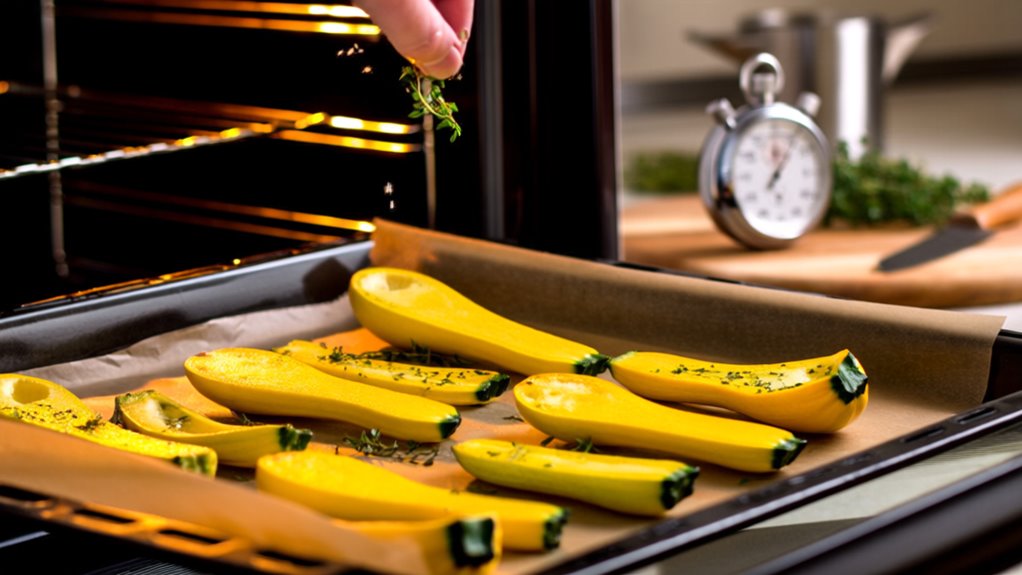
Place the squash cut-side down on a baking sheet, roast for 30–45 minutes until tender, then flip and roast a bit more for caramelization.
Keep going to uncover helpful tips for perfect results when roasting pepper squash in the oven.
Key Takeaways
- Select a firm, heavy pepper squash with vibrant, smooth skin and wash it thoroughly before cooking.
- Preheat the oven to 400°F (204°C) and position the rack in the center.
- Cut the squash in half lengthwise and scoop out seeds with a spoon for even roasting.
- Place squash cut-side down on a lined baking sheet and roast for 30-45 minutes until tender.
- Flip cut-side up, season, and roast 5-10 more minutes for caramelization, then store or serve.
Selecting the Perfect Pepper Squash
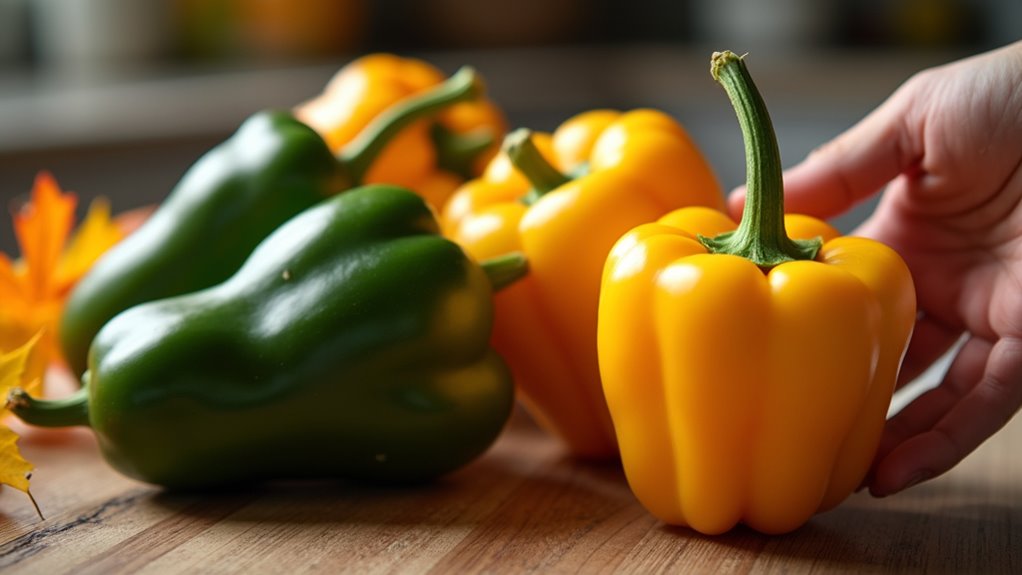
Choosing the perfect pepper squash starts with checking for firmness and weight; you want one that feels heavy for its size with smooth, glossy skin. A firm squash signals freshness, while a heavy feel indicates ideal density and ripeness. Look for a vibrant color—whether deep green, bright orange, or sunny yellow—depending on the variety, as this often means better flavor and nutrition.
Avoid any squash with soft spots, wrinkles, or mold, since these signs suggest spoilage. Also, aim for a uniform shape, which usually means the squash ripened evenly. Picking your pepper squash during peak season, late summer to early fall, will give you the freshest, most flavorful options.
Preparing Your Pepper Squash for Baking
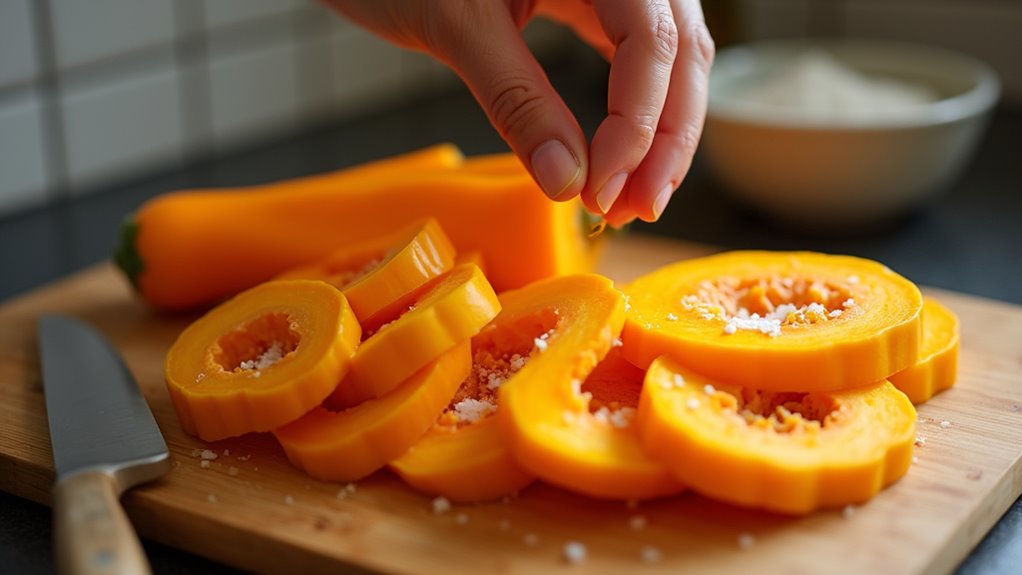
Start by choosing a ripe pepper squash that feels firm and has vibrant, smooth skin. Give it a good wash to remove any dirt, then carefully cut it in half lengthwise.
Finally, scoop out the seeds and consider brushing the cut sides with olive oil and seasoning before baking.
Selecting Quality Pepper Squash
A firm, heavy pepper squash with vibrant, unblemished skin is a reliable sign of freshness and flavor. When selecting quality pepper squash, look for one that feels dense and has a smooth, glossy exterior. These traits indicate ripeness and the best taste.
Avoid soft spots, wrinkles, or blemishes, as they suggest overripeness or spoilage. To keep your squash fresh, store it in a cool, dry place away from direct sunlight, which helps it last for several weeks. Choosing a firm, heavy-for-their-size squash with vibrant unblemished skin guarantees you’re getting the best quality for baking.
Taking these simple steps will make your pepper squash cooking experience much more enjoyable and delicious.
Prepping Squash for Oven
Once you’ve picked the perfect pepper squash, it’s time to prepare it for the oven. Start by washing and drying the squash thoroughly to remove any dirt or pesticides. Use a sharp knife to cut the squash in half lengthwise, exposing the cut sides.
Next, scoop out the seeds and stringy insides with a large spoon—feel free to discard the seeds or save them for roasting later. For extra flavor, brush the flesh with olive oil and season with salt and pepper. Then, place the squash halves cut-side down on a baking sheet lined with foil or parchment paper to catch any drippings.
This simple prep makes baking your pepper squash easy to make and guarantees even roasting for delicious results every time.
Preheating the Oven to the Right Temperature
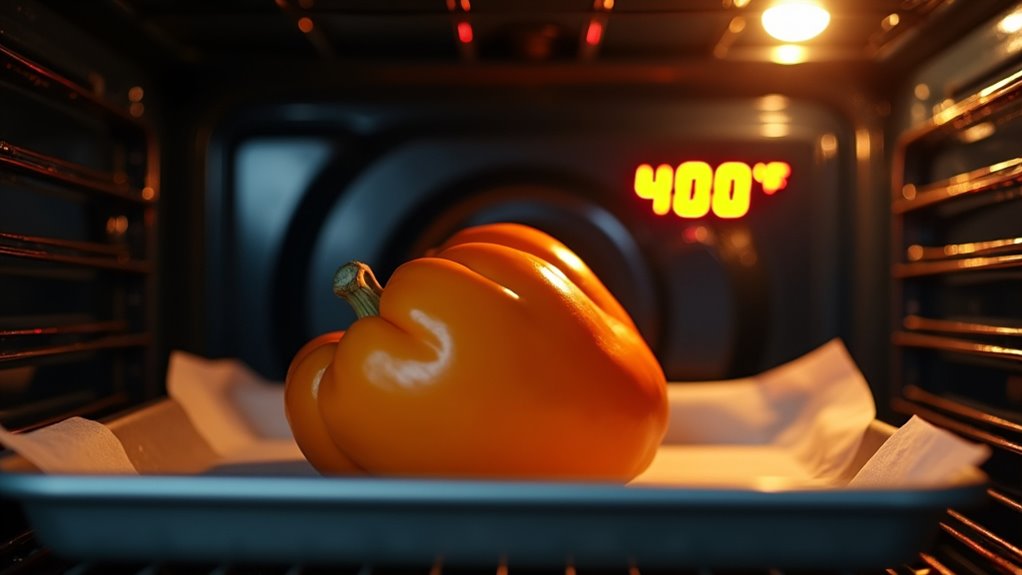
Why is preheating your oven to 400°F (204°C) essential when roasting pepper squash? A properly preheated oven guarantees ideal roasting by allowing even cooking and caramelization of natural sugars. This temperature helps avoid temperature fluctuations that can affect cooking time and texture.
Always position your oven rack in the center for uniform heat distribution. If you have an oven thermometer, use it to verify the actual temperature since ovens can vary.
| Step | Tip | Reason |
|---|---|---|
| Preheat to 400°F | Use oven thermometer | Avoid calibration discrepancies |
| Position rack center | Guarantee uniform heat | Even cooking |
| Wait 10-15 minutes | Let the oven fully preheat | Ideal roasting |
| Avoid door opening | Prevent temperature drops | Maintain cooking time accuracy |
Slicing and Seeding the Squash
Before you start cooking, make certain to wash your pepper squash thoroughly. Use a sharp knife to slice it lengthwise, then scoop out the seeds and fibrous bits with a spoon.
Removing all the seeds guarantees a smooth texture and even roasting.
Cutting Tips
To cut a pepper squash properly, start by washing and drying it thoroughly to remove any dirt. Following these cutting tips will make the process safer and easier:
- Use a sharp chef’s knife to slice the squash in half lengthwise, beginning just below the stem to maintain control and avoid injury. Exercise caution when applying pressure, as the tough skin requires steady, precise cuts. After halving, scoop out the seeds and fibrous strings to guarantee the best texture in your final dish.
- Keep your work surface stable and your fingers clear of the blade to prevent accidents.
Removing Seeds
After slicing your pepper squash in half lengthwise, you’ll want to remove the seeds and stringy pulp to guarantee a smooth texture when cooked. Use a large spoon to scoop out the seeds along with any fibrous stringy pulp from the center of each half. This step is essential for proper preparation, as leaving the seeds and pulp can affect the squash’s texture and taste.
If you like, you can save the seeds for roasting later—just make sure to clean and dry them thoroughly first. Once you’ve scooped out all the seeds and stringy pulp, your pepper squash is ready for seasoning or baking. This simple removal process sets the stage for perfectly cooked, tender squash every time.
Seasoning and Oiling the Squash Halves
One key step in seasoning and oiling your pepper squash halves is brushing the flesh with olive oil or melted butter, which boosts flavor and helps achieve a perfect roast. This not only enhances taste but also promotes caramelization.
To season effectively, follow these steps:
- Brush the cut sides evenly with olive oil or melted butter.
- Sprinkle salt and pepper to highlight the squash’s natural sweetness.
- Add herbs and spices like garlic powder, paprika, or Italian seasoning for a deeper flavor profile.
- Optionally, drizzle honey or maple syrup to balance savory notes with subtle sweetness.
Make certain the oil and seasonings are evenly spread to guarantee uniform cooking and ideal caramelization throughout the squash halves.
Arranging the Squash on the Baking Sheet
Brushing the squash halves with olive oil or melted butter sets the stage for arranging them on the baking sheet. Start by lining your baking sheet with parchment paper to prevent sticking and make cleanup easier. When arranging the squash on the baking sheet, place each half cut-side down.
This position promotes even roasting and keeps excess moisture from pooling. Make sure to space the squash apart to allow proper air circulation, which helps the edges crisp up nicely. If you’re roasting multiple squash varieties, group similar sizes together so they cook evenly.
Roasting the Squash Until Tender
While your oven heats to 400°F (204°C), verify your squash halves are placed cut-side down on a foil- or parchment-lined baking sheet.
To roast acorn squash until tender, follow these steps:
- Place the squash cut-side down on the baking sheet to guarantee even roasting and moisture retention.
- Roast in the preheated oven for 30 to 45 minutes until the flesh is tender when pierced with a knife.
- Flip the squash cut-side up, season with salt and pepper, then continue roasting for 5 to 10 minutes to caramelize the surface.
- Remove when the squash is soft, tender, and lightly golden.
This method assures perfectly roasted pepper squash with enhanced flavor from proper seasoning and roasting techniques.
Serving and Storing Your Roasted Pepper Squash
After roasting your pepper squash to perfection, you’ll want to serve it warm to highlight its natural sweetness and creamy texture. Garnishing with fresh herbs like parsley or basil not only adds a pop of color but also enhances the flavor, making your dish more inviting. To create a balanced meal, pair the roasted squash with proteins or grains, boosting both nutrition and satisfaction.
If you have leftovers, store them in an airtight container and place it in the refrigerator. This keeps the squash fresh for up to four days without compromising taste or texture. When reheating, warm it gently in the oven at 350°F, covered with foil and a splash of broth or water, preserving its delicious qualities.
Frequently Asked Questions
How to Cook Squash in the Oven Easily?
You can easily cook squash in the oven by first preheating it to 400°F. Slice the squash in half, scoop out seeds, and brush with olive oil. Season with salt and pepper, then place cut-side down on a baking sheet.
Roast for about 30-45 minutes until tender. For extra flavor, drizzle maple syrup before the last few minutes. Serve warm and enjoy a simple, delicious dish with minimal effort.
How Long to Bake Squash in the Oven at 350 Degrees?
You might be surprised how long it takes—usually between 60 to 90 minutes at 350°F to get your squash perfectly tender. Smaller squash can be ready in just 30-45 minutes, but bigger ones need more patience. Don’t forget to halve it and scoop out the seeds first.
Keep an eye on it; when a fork slides in easily, you know it’s done. Your patience will reward you with delicious, soft squash!
How Long Does It Take for Squash to Get Soft in the Oven?
It usually takes about 30 to 45 minutes for squash to start getting soft in the oven at 350°F. If you want it fully tender, expect closer to an hour, depending on the size and type.
Cutting the squash in half and placing it cut-side down helps speed things up. Don’t forget to check its softness with a fork—you can adjust the time based on how tender you want it.
What Temperature Do I Bake Squash At?
Think of baking squash like nurturing a golden treasure—350°F is your sweet spot, where heat gently transforms firm flesh into tender delight. This temperature lets your squash soften evenly without rushing the magic, ensuring every bite melts in your mouth.
If you want a bit of caramelized flair, you might tweak it higher, but 350°F is the reliable path to that perfect, cozy softness you’re craving.
Conclusion
Now that you’ve mastered roasting pepper squash, you might think the hard part’s over—but here’s the twist: the real magic happens when you taste that first bite. The tender, caramelized sweetness combined with your chosen seasoning will surprise you every time.
Don’t rush to serve it all; saving some will let those flavors deepen even more. So, are you ready to discover just how irresistible roasted pepper squash can be?
With these simple steps, cooking pepper squash in the oven becomes an easy and delicious experience. Enjoy the perfect balance of flavors and textures in every bite!